В этой статье12
- How FUE Extraction Devices Remove Hair Grafts
- What a fue machine Can and Cannot Do
- Punch Size, Hair Angle, and Graft Protection
- Motorised and Manual Extraction Approaches
- Why Donor Area Planning Matters More Than Device Marketing
- Safety Checks During FUE Extraction
- From Extracted Grafts to Natural Placement
- Expected Growth, Follow-Up, and How Results Are Assessed
- First 14 Days After FUE: Practical Care for the Donor and Recipient Areas
- A Realistic FUE Recovery Timeline: What May Happen Month by Month
- Planning Travel to Istanbul for an FUE Procedure
- Frequently Asked Questions
A fue machine is a device that helps a trained hair restoration team remove individual follicular units from the donor area during an FUE procedure. It can support accurate, consistent movements, but the final outcome still depends on clinical planning, graft handling, implantation technique, and the patient's donor hair quality.
- FUE extraction devices assist with harvesting grafts, but they do not replace the judgement of an experienced medical team.
- Punch size, depth control, angle, and speed should be selected according to the patient's hair and scalp characteristics.
- Careful graft handling after extraction is as important as the extraction step itself.
- FUE can provide natural-looking, lasting growth in suitable candidates when donor resources and treatment planning are appropriate.
- A personal assessment is needed to confirm whether FUE, Sapphire FUE, or DHI is suitable for your goals.
01How FUE Extraction Devices Remove Hair Grafts
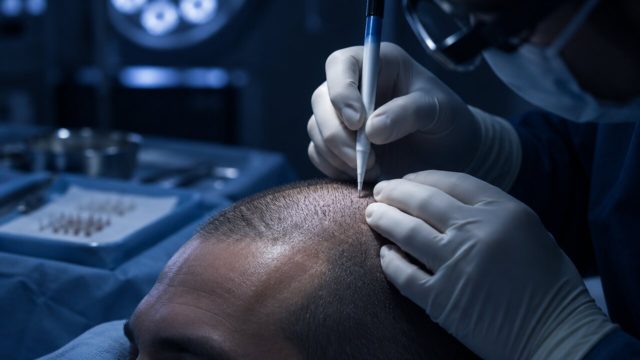
A fue machine is used during follicular unit extraction, commonly called FUE, to support the removal of individual follicular units from the donor area. A follicular unit is a naturally occurring group of one to several hairs. During the procedure, the medical team identifies suitable donor hairs, usually from the back and sides of the scalp, and uses a very small punch to separate each unit from the surrounding tissue before it is gently removed.
The device does not simply pull hairs from the scalp. The punch is positioned around the visible hair shaft and follows the direction of the follicle below the skin. This step requires attention because hair follicles may curve beneath the scalp in a different direction from the hair that is visible above it. If the angle, depth, or movement is poorly controlled, the graft may be damaged during extraction.
In a well-planned procedure, extraction is only one part of the process. The team must also protect the grafts after removal, keep them organised, prepare the recipient area, and place each graft at a suitable angle and density. For this reason, patients should view a device as a clinical tool within a wider treatment process, rather than as the sole factor behind a successful transplant.
02What a fue machine Can and Cannot Do
A modern FUE extraction device may use a motorised punch that rotates, oscillates, or moves in a controlled manner around the follicular unit. Depending on the system and the clinical plan, the settings can be adjusted to support careful dissection. Some procedures may also include manual steps, especially when the team considers them helpful for a particular donor area or hair type.
The device can help create consistent movements and may reduce physical strain during a large session. However, it cannot independently decide which grafts should be selected, how deeply to dissect, or where grafts should be implanted. These decisions require an assessment of the donor area, hair diameter, scalp condition, expected hair loss pattern, and the patient's realistic goals.
It is also important to understand that automation does not guarantee better results. A powerful or highly marketed device may sound reassuring, but the safety of extraction depends on how it is used. Your doctor should confirm the treatment plan, while the clinical team should use settings and techniques that are appropriate for your individual hair characteristics.
03Punch Size, Hair Angle, and Graft Protection
The punch is the small circular instrument that surrounds a follicular unit during extraction. Its diameter should be chosen carefully. A punch that is too large may remove more surrounding tissue than necessary, while one that is too small may increase the risk of harming the follicle if it does not match the graft structure. There is no single punch size that is ideal for every patient.
Hair angle is another important consideration. Donor hairs can emerge from the scalp at different angles, and curly or wavy hair may have more complex follicle paths under the skin. The extraction technique should respect these natural patterns. This is why direct assessment of the donor area is more useful than relying on general descriptions of a device or a standardised approach.
Once grafts are removed, they need to be handled gently and kept in suitable conditions until implantation. Excessive drying, rough handling, disorganisation, or unnecessary delay may affect graft quality. The extraction device plays no role in these later steps, but these steps can still influence growth. Patients should therefore ask about the full graft journey, not only the harvesting instrument.
04Motorised and Manual Extraction Approaches
FUE extraction can be performed with motorised assistance, manual punches, or a combination of methods. Motorised systems may support controlled and repeatable punch movement, which can be useful when many grafts are planned. Manual approaches can also be appropriate in selected cases and allow the operator to make direct tactile adjustments throughout the extraction process.
A fue machine should not be judged only by whether it is motorised or by the number of grafts it can potentially extract in a day. Faster extraction is not automatically better if it compromises donor care or graft integrity. In most patients, the right pace is one that allows the team to preserve grafts, review the donor area regularly, and maintain safe working conditions.
The most suitable approach may depend on the patient's hair curl, hair thickness, scalp firmness, graft characteristics, and planned graft number. Patients with finer hair or limited donor density may need especially conservative planning. A doctor-led consultation can help explain why one extraction approach may be preferred and what limitations may apply in an individual case.
05Why Donor Area Planning Matters More Than Device Marketing
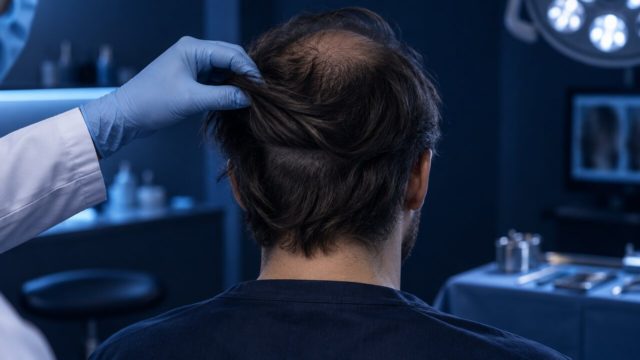
The donor area is a limited resource. Although FUE leaves small, scattered extraction points rather than a linear scar, taking too many grafts from one zone can make the donor area look thin. Safe donor management aims to distribute extraction carefully and preserve enough hair for a natural appearance, both now and if further hair loss develops later.
Before recommending a procedure, the medical team should review donor density, hair calibre, scalp visibility, and the stability of the hair loss pattern. A person with a strong donor area may have more options than someone with low density or widespread thinning. Even with advanced extraction equipment, a limited donor supply cannot be expanded without affecting the overall plan.
Good planning also considers the future. Hair loss may continue in areas that have not yet thinned noticeably, particularly in younger patients or those with an uncertain pattern. It may be appropriate to use a conservative hairline design or reserve grafts for possible future needs. Your doctor will confirm whether surgery is suitable and discuss what can reasonably be achieved.
06Safety Checks During FUE Extraction
A safe FUE procedure begins before the first graft is extracted. The team should confirm the medical history, assess scalp health, review allergies and medicines where relevant, and examine the donor and recipient areas. If there are signs of active scalp inflammation, infection, unstable hair loss, or another concern, the doctor may advise further evaluation before proceeding.
During extraction, the team should monitor the donor area and adjust the technique when needed. This may include checking the appearance of extracted grafts, observing how the scalp responds, and avoiding excessive concentration of extractions in one area. Local anaesthesia is typically used to improve comfort. At Acibadem Hair Transplant Center, needle-free anaesthesia is also available for eligible patients.
A fue machine is only one part of infection control and patient safety. A licensed clinical setting, sterile protocols, appropriate anaesthesia practice, and post-procedure instructions are equally important. Acibadem Hair Transplant Center is a dedicated hair restoration clinic in Istanbul licensed by the Turkish Ministry of Health. Patients should always receive clear information about who will perform each stage of their procedure.
07From Extracted Grafts to Natural Placement
After harvesting, grafts are sorted according to the number of hairs they contain and their intended role in the recipient area. Single-hair grafts are often valuable for creating a softer hairline, while grafts containing more hairs may support coverage behind it. The exact distribution depends on the person's existing hair, facial features, hair loss pattern, and available donor supply.
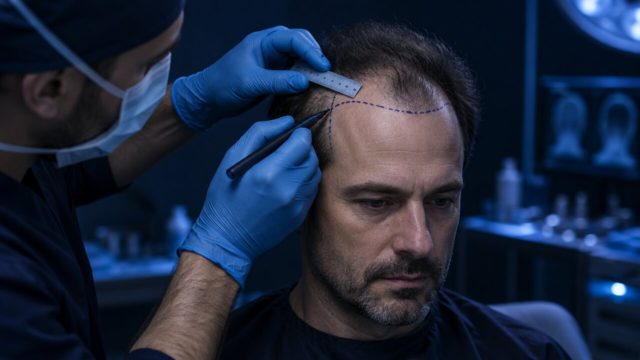
The recipient-site design strongly influences how natural a transplant looks. Hair does not grow straight out from the scalp in every direction. It changes angle across the hairline, temples, mid-scalp, and crown. For this reason, channels or implantation sites should be created with careful attention to direction, angle, spacing, and planned density.
At Acibadem Hair Transplant Center, Sapphire FUE and DHI techniques are available. These techniques have different procedural features, and neither should be considered automatically right for every patient. Following a free online hair analysis reviewed by doctors, the team can explain the potential options, limitations, and the treatment approach that may be appropriate for your goals.
08Expected Growth, Follow-Up, and How Results Are Assessed
FUE results develop gradually. Transplanted hairs commonly shed in the early recovery phase before new growth begins, which can be a normal part of the cycle. Visible improvement often takes several months, while a fuller assessment is generally made later as the transplanted hairs mature. Individual timing can vary because growth depends on biological factors as well as the procedure itself.
FUE can work well for suitable candidates, but it cannot restore unlimited density or stop future loss in non-transplanted hair. The quality of the donor area, realistic graft planning, scalp condition, and aftercare all contribute to the outcome. Patients should be cautious about claims that promise a specific cosmetic result without a proper medical assessment.
Acibadem Hair Transplant Center provides all-inclusive packages that include VIP transfer, a 4-star hotel, a care kit, and 12 months of follow-up. Results are measured by trichoscopic graft survival at month 12, with a documented 98% rate under a written guarantee. This measurement describes graft survival in the clinic's documented programme; your doctor will explain what it may mean in relation to your own treatment plan.
09First 14 Days After FUE: Practical Care for the Donor and Recipient Areas
The first two weeks are an important protection period because the recipient sites and donor extraction points are healing. Your clinic should give you written instructions that explain when and how to wash your scalp, sleep, travel, and return to normal activities. Follow these instructions rather than using advice from social media, as washing methods and timing may differ slightly between treatment plans.
In most cases, patients are asked to avoid touching, scratching, rubbing, or picking the transplanted area. Even when itching or small scabs develop, forceful contact may irritate the healing skin and could disturb newly placed grafts in the early stage. A care kit and a gentle washing routine may be provided. If crusting is present, it should normally be softened and removed only in the way and at the time advised by the clinical team.
Sleeping with the head elevated is commonly recommended for the first few nights to help manage swelling. Patients are also usually advised to avoid pressure or friction against the recipient area. Loose, clean clothing that does not need to be pulled tightly over the head can make dressing easier after the procedure. Your doctor will confirm when headwear is appropriate and what type is suitable during healing.
Strenuous exercise, swimming, sauna use, steam rooms, and heavy sun exposure are usually postponed during early recovery. These activities can increase sweating, friction, or irritation while the scalp is healing. Alcohol, smoking, and non-prescribed supplements or medicines should be discussed with the medical team because they may affect recovery or interact with prescribed treatment. Contact the clinic promptly if you notice increasing pain, spreading redness, discharge, fever, or another symptom that concerns you.
10A Realistic FUE Recovery Timeline: What May Happen Month by Month
Immediately after FUE, the donor area may have small extraction marks, while the recipient area may show tiny scabs and redness. Mild swelling can occur in some patients, particularly around the forehead or upper face. These effects are usually temporary, but their intensity and duration vary. The clinic should explain what is expected after your procedure and how to contact the team if you have concerns.
During the first two to four weeks, many transplanted hairs may shed. This can be worrying, but early shedding is commonly part of the normal hair-growth cycle and does not by itself mean that the follicles have failed. The scalp may look similar to its pre-procedure appearance for a period after the visible transplanted hairs shed. Existing non-transplanted hair may also continue to behave according to its own natural hair-loss pattern.
New transplanted growth often begins gradually over the following months. At first, the hairs can appear fine, uneven, or slower than expected in some areas. Density and hair calibre typically improve as the growth cycle progresses. The crown may appear to mature more slowly than the frontal hairline in some patients, and pre-existing hair can influence how full the overall result looks.
A more meaningful assessment is generally made later in the recovery process, when transplanted hairs have had time to mature. At Acibadem Hair Transplant Center, graft survival is assessed with trichoscopy at month 12. The clinic provides 12 months of follow-up within its all-inclusive packages, allowing patients to share progress and receive guidance throughout this period. Individual healing and visible growth timing can still vary, so your doctor will discuss the expected course for your treatment.
11Planning Travel to Istanbul for an FUE Procedure
International patients should plan their trip around both the procedure and the first stage of recovery. It is sensible to allow enough time for the initial post-procedure review and for the clinic to explain the first wash and aftercare routine. Avoid arranging a demanding sightseeing schedule, important business event, or long period in direct sun immediately after treatment, as rest and scalp protection are usually more appropriate.
Bring comfortable front-opening clothing, any regular medicines in their original packaging, and relevant medical information requested during your assessment. Before travelling, tell the clinic about allergies, long-term health conditions, medicines, supplements, previous scalp treatments, and any recent illness. This information helps the doctor assess safety and may affect whether treatment should proceed as planned.
For the journey home, patients should protect the scalp from rubbing against headrests, luggage, or tight clothing. Cabin conditions can feel drying, so follow the clinic's instructions about hydration and any recommended scalp care. Do not use an unapproved hat, spray, or product simply because it seems convenient for travel. The team can explain what is suitable for your stage of healing.
Acibadem Hair Transplant Center is a dedicated hair restoration clinic in Istanbul and offers all-inclusive packages with VIP transfer, a 4-star hotel, a care kit, and 12 months of follow-up. Patients can begin with a free online hair analysis reviewed by doctors; replies on WhatsApp are typically provided within around two hours. The assessment can help clarify travel timing, the likely procedure schedule, and whether FUE is an appropriate option before you make arrangements.
12Frequently Asked Questions
What hair restoration method did Elon Musk reportedly use?
There is no confirmed public medical record that states which treatment or procedure Elon Musk used for his hair. Photographs over time can suggest changes in hair appearance, but they cannot reliably confirm whether someone had a transplant, used medication, styling methods, or another approach. A qualified doctor should assess your own hair loss rather than using a celebrity's appearance as a treatment guide.
What is the cost of 1,000 FUE grafts?
The cost of 1,000 FUE grafts varies between clinics and can depend on the technique, clinical team, travel arrangements, donor complexity, and the services included. It would not be responsible to give a standard price without a treatment assessment. Also, 1,000 grafts may be too few, too many, or unsuitable for a particular goal, so your doctor should first confirm an appropriate graft plan.
Does an FUE hair transplant really work?
FUE can produce lasting, natural-looking growth when it is performed for a suitable candidate with careful donor planning and graft handling. The transplanted follicles are typically resistant to the pattern of hair loss affecting the recipient area, but results vary between patients. FUE cannot guarantee unlimited density or prevent further loss in existing, non-transplanted hair.
What is an FUE hair transplant machine?
An FUE hair transplant machine is a clinical extraction device that helps the team separate individual follicular units from the donor scalp using a small punch. It may be motorised and have adjustable settings to support controlled dissection. The device does not perform the entire transplant on its own; medical planning, graft care, and placement remain essential parts of the procedure.
Эта статья носит исключительно информационный характер и не заменяет профессиональную медицинскую консультацию.
Это руководство носит общий информационный характер и не заменяет консультацию врача. Решения о лечении принимаются после очной или онлайн-оценки врачом.