В этой статье8
- Losing hair after surgery: what it can mean
- Why the hair cycle changes after an operation
- The timeline: normal shedding versus warning signs
- When a hair transplant should be delayed
- How clinicians assess readiness for transplantation
- Supporting recovery while you wait
- Planning safely after COVID, illness, or major surgery
- Frequently Asked Questions
Losing hair after surgery is often a temporary form of shedding related to physical stress, illness, medication changes, or recovery. A hair transplant is usually delayed until the cause is understood, shedding has stabilised, and your doctor confirms that your scalp and overall health are ready.
- Temporary shedding after an operation often reflects a shift in the hair growth cycle rather than permanent follicle loss.
- Telogen effluvium commonly becomes noticeable several weeks to a few months after a physical stressor, including surgery or illness.
- An elective hair transplant is usually best postponed during active, unexplained, or rapidly worsening hair shedding.
- A medical review can help identify contributors such as iron deficiency, thyroid concerns, medication effects, infection, or pattern hair loss.
- Gentle scalp care, adequate nutrition, and follow-up with a qualified clinician can support recovery while the hair cycle resets.
01Losing hair after surgery: what it can mean
Losing hair after surgery can feel alarming, especially when you expected your recovery to focus only on the operated area. In many patients, however, increased shedding after an operation is a temporary response to physical stress on the body. Major surgery, pain, fever, blood loss, reduced food intake, infection, sleep disruption, and changes in medicines may all influence the hair growth cycle. The shedding may happen across the scalp rather than only near the surgical site, and it may become apparent after the main surgical recovery is already underway.
The most common explanation is telogen effluvium, a non-scarring shedding condition. Hair follicles normally move through growing, resting, and shedding phases at different times. After a significant stressor, more follicles than usual may enter the resting phase together. These hairs are then shed later, which is why hair fall does not always begin immediately after an operation. In most cases, the follicles remain alive and are capable of returning to growth once the trigger has passed.
Not every case of post-operative hair loss is the same. Some people already have genetic pattern hair loss, which may become more visible when temporary shedding reduces overall density. Local hair loss can also occur after prolonged pressure on one area of the scalp during a lengthy procedure, although this is less common. A sudden patch, scalp pain, redness, scaling, scarring, or hair loss affecting eyebrows or body hair should be assessed by a doctor rather than assumed to be routine recovery.
02Why the hair cycle changes after an operation
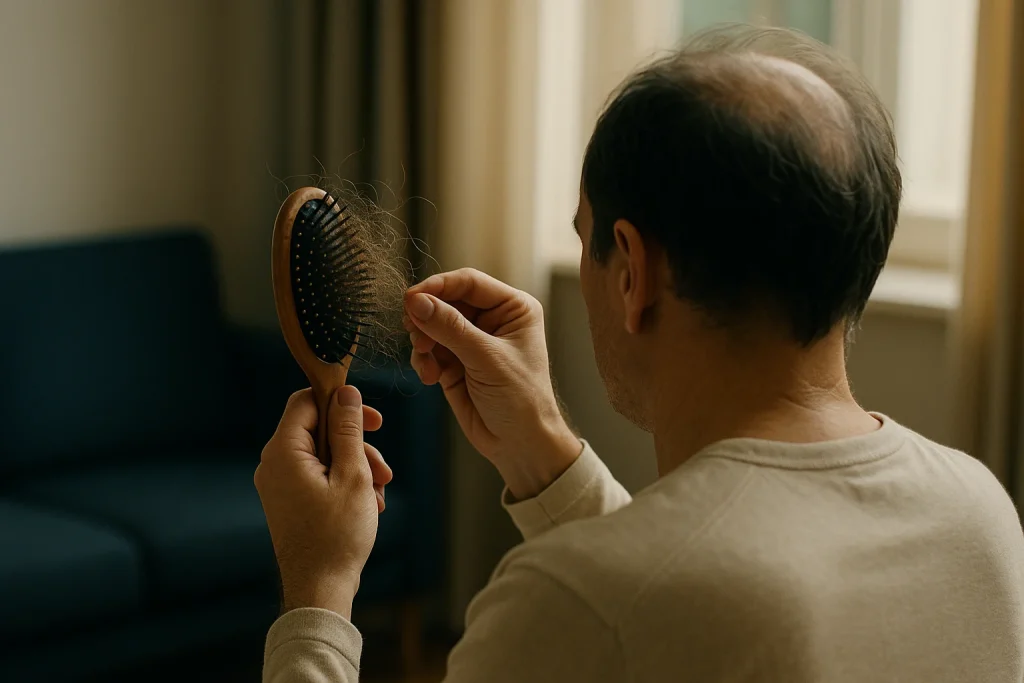
The hair cycle has three main stages: anagen, the active growth stage; catagen, a short transition stage; and telogen, a resting stage that ends with shedding. Normally, each follicle follows its own timetable. Physical stress can temporarily disturb this balance and move a larger group of hairs into telogen. The result is diffuse shedding, often noticed in the shower, on a pillow, or while brushing, rather than one clearly defined bald patch.
Surgery can place several demands on the body at once. Even a well-planned procedure may involve inflammation, altered sleep, anxiety, reduced appetite, temporary dietary limits, and recovery from anaesthesia. If the operation followed an accident, infection, childbirth, major weight change, or a period of serious illness, these combined factors may increase the chance of shedding. This does not mean that every person who has surgery will experience hair loss, and it does not prove that anaesthesia alone is the cause.
Recovery can also uncover factors that were present before surgery. Low iron stores, low protein intake, thyroid disorders, vitamin deficiencies, chronic inflammatory conditions, and some prescription medicines can contribute to diffuse shedding. Stopping or starting a medicine without medical guidance is not appropriate, but it is useful to bring a complete medication and supplement list to an assessment. Your doctor may decide whether blood tests, scalp examination, or referral to a dermatologist would be helpful.
03The timeline: normal shedding versus warning signs
With telogen effluvium, shedding often begins around two to three months after a trigger, although the timing can vary. This delay can make it difficult to connect the change with an operation, hospital stay, or illness. The shedding phase may continue for several months before gradually improving. New short hairs may appear along the hairline or parting as follicles return to the growth stage, but visible density usually recovers more slowly because hair grows gradually.
When losing hair after surgery, it is useful to observe the pattern rather than count every hair. Diffuse shedding from multiple areas of the scalp, with no major scalp symptoms, can fit a temporary cycle change. Photographs taken in the same lighting and hairstyle every four to six weeks may provide a clearer record than daily checking. Repeatedly pulling, brushing, or inspecting the hair can increase anxiety without showing the true trend.
Medical review is important if shedding is severe, continues to worsen, lasts longer than expected, or occurs with other symptoms. These may include fatigue, unexplained weight change, palpitations, irregular periods, scalp tenderness, thick scale, pus, circular bald areas, or changes in nails and skin. It is also sensible to seek review if the operation involved complications, if there was significant blood loss, or if you are concerned about nutritional intake during recovery. A clinician can distinguish temporary shedding from other hair and scalp conditions.
04When a hair transplant should be delayed
A hair transplant is an elective procedure that depends on careful planning, stable donor hair, and a healthy scalp. During active diffuse shedding, it may be difficult to predict the final density of both the recipient area and the donor area. Transplanting too early can make the design less reliable, especially if temporary shedding is masking underlying genetic hair loss or another condition that needs treatment first. Waiting is often a protective decision, not a lost opportunity.
Losing hair after surgery is one reason a transplant consultation should include a full recent health history. The doctor will usually ask about operations, hospital admissions, fever, infections, weight loss, major emotional stress, diet, and medication changes over the preceding months. If a reversible trigger is likely, the initial focus is generally on identifying it and allowing the hair cycle time to settle. The appropriate waiting period varies and should be confirmed by the treating doctor.
A transplant may also be postponed if there are signs of scalp inflammation, infection, uncontrolled medical conditions, poor wound healing, or uncertainty about the cause of hair loss. People with rapidly progressing thinning, suspected scarring alopecia, or patchy autoimmune hair loss may need dermatological assessment before surgical planning. A responsible plan considers long-term donor preservation as well as the appearance of the hairline today. No clinic can responsibly guarantee that surgery is appropriate before this assessment is complete.
05How clinicians assess readiness for transplantation
A readiness assessment begins with the story behind the shedding. The clinician may ask when hair loss started, whether it is diffuse or localised, whether it followed a specific event, and whether relatives have pattern hair loss. Scalp examination helps identify miniaturised hairs, inflammation, dandruff-like scale, broken hairs, or signs of scarring. These findings can help separate a temporary shedding episode from androgenetic hair loss and other causes that may need different management.
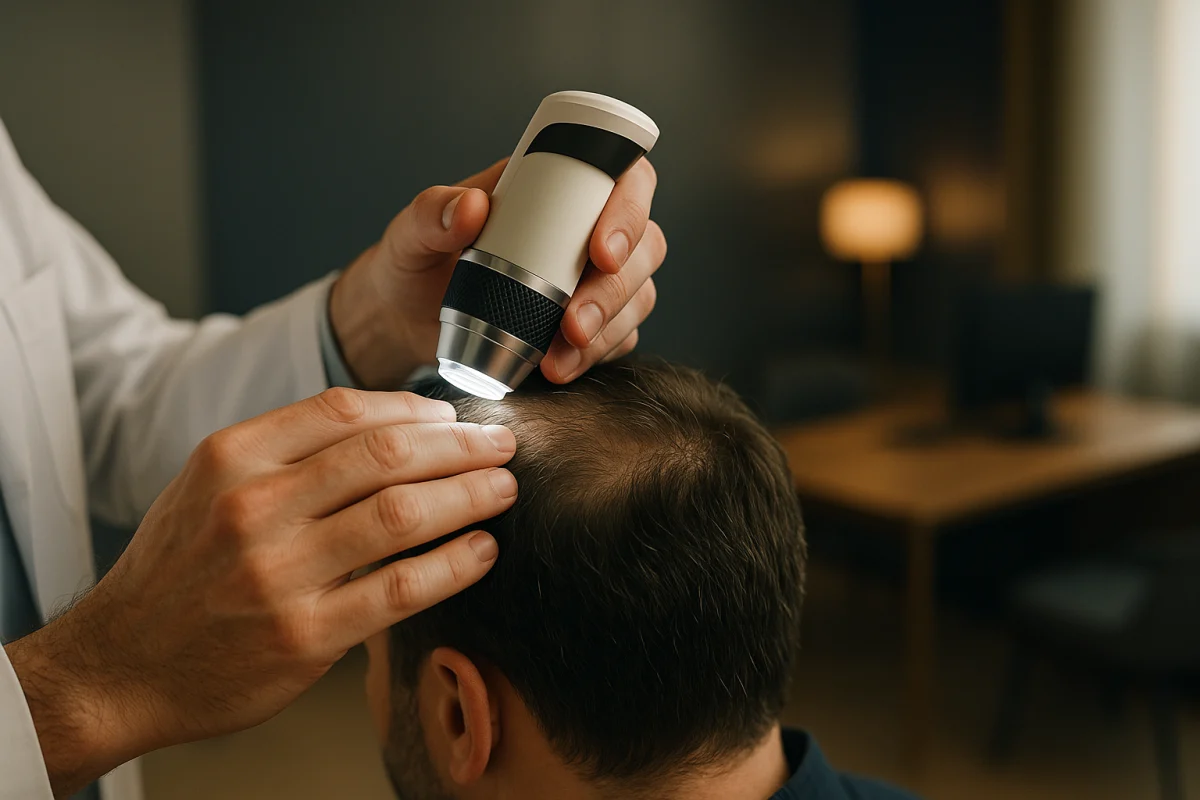
Trichoscopy, a close examination of the scalp and follicles, can add useful detail without surgery. It may show variation in hair shaft thickness associated with pattern hair loss or features suggesting another scalp condition. Depending on your history, a doctor may recommend medical evaluation or laboratory testing before deciding on transplantation. The aim is not to delay care unnecessarily; it is to make sure that a procedure is performed for the right indication and at the right time.
At Acibadem Hair Transplant Center in Istanbul, patients can begin with a free online hair analysis reviewed by doctors. Clear scalp photographs and an accurate health history help the team provide preliminary guidance, although an online review does not replace appropriate medical examination when symptoms need investigation. The clinic is licensed by the Turkish Ministry of Health and offers Sapphire FUE and DHI techniques when a patient is considered medically suitable for treatment.

06Supporting recovery while you wait
The most helpful approach during temporary shedding is usually to support general recovery rather than chase a rapid cosmetic fix. Aim for regular meals with sufficient protein and a varied intake of iron-containing foods, vegetables, fruits, and other nutrient-rich foods, unless your medical team has given you dietary restrictions. Staying hydrated, sleeping as well as recovery allows, and following your surgeon's instructions remain important. Supplements are not automatically beneficial and can be unsuitable in excess, so they are best discussed with a clinician when deficiency is suspected.
Hair care should be gentle while shedding is active. Avoid tight hairstyles, aggressive brushing, frequent high-heat styling, harsh chemical treatments, and any scalp practice that causes burning or irritation. Use a mild cleansing routine that suits your scalp, and do not assume that washing causes hair loss; hairs found during washing often were already in the shedding phase. If you have a recent scalp incision or procedure, follow the wound-care instructions from your surgical team before applying any topical product.
Emotional support matters because visible shedding can affect confidence and increase stress. Try to judge progress over weeks rather than day by day, and discuss your concerns openly at follow-up appointments. If genetic pattern hair loss is also present, a doctor may explain evidence-based medical options that may be appropriate for your health profile. These options require individual assessment, particularly after surgery, during illness recovery, or when other medicines are being used.
07Planning safely after COVID, illness, or major surgery
COVID-19 and other febrile illnesses can trigger telogen effluvium in some people, particularly after a more severe infection or a difficult recovery. Hair shedding may become noticeable roughly two to three months after infection, but the timing is not identical for everyone. This type of loss is usually diffuse, and many people see gradual improvement as their health and hair cycle recover. Persistent symptoms after COVID, ongoing fever, nutritional difficulties, or new scalp changes should be reviewed before considering elective treatment.
For patients who are losing hair after surgery or illness, timing a transplant should include more than the appearance of the hair alone. Full recovery from the original condition, stable general health, medication review, and the absence of active unexplained shedding are all relevant. Your treating doctor and hair restoration doctor can advise on whether elective surgery is reasonable, particularly if you have had complications or continue to experience fatigue, breathing concerns, or other symptoms.
Once the shedding pattern has settled and the cause has been assessed, a transplant consultation can focus on realistic planning. This includes the quality of the donor area, the expected progression of any underlying pattern hair loss, the hairline design, and aftercare capacity. Acibadem Hair Transplant Center provides all-inclusive packages that can include VIP transfer, a 4-star hotel, a care kit, and 12 months of follow-up for eligible patients. Treatment decisions, however, should always be based on medical suitability rather than travel timing or cosmetic urgency.
08Frequently Asked Questions
When can hair shedding start after COVID-19?
Hair shedding linked to COVID-19 often becomes noticeable around two to three months after the infection, although some people notice it earlier or later. It commonly presents as diffuse shedding and may reflect telogen effluvium after illness. If hair loss is patchy, painful, severe, or persistent, a doctor can assess for other causes.
How can men support regrowth when their hair is thinning?
The best approach depends on the cause of thinning. Men with gradual pattern hair loss may benefit from a medical assessment to discuss suitable evidence-based treatments, while diffuse shedding may require attention to a recent illness, stressor, diet, or medical condition. A clinician can examine the scalp and advise whether medical treatment, observation, lifestyle support, or later transplant planning is appropriate.
What signs suggest telogen effluvium is improving?
Possible recovery signs include less hair collecting during washing or brushing, a more stable parting, and the appearance of short new hairs in areas that were previously less dense. Hair density usually returns gradually because new growth needs time to gain length. Improvement can be uneven, so photographs taken several weeks apart may be more useful than daily observation.
Which home approaches may help with hair fall and regrowth?
Home care can support healthy recovery but cannot reliably cure every cause of hair loss. Gentle hair handling, adequate protein and balanced nutrition, good sleep, stress management, and avoiding harsh chemical or heat treatments are sensible measures for many people. Oils, masks, and supplements have limited evidence for treating medical hair loss, and irritating scalp products or high-dose supplements should be avoided without professional guidance.
Эта статья носит исключительно информационный характер и не заменяет профессиональную медицинскую консультацию.
Это руководство носит общий информационный характер и не заменяет консультацию врача. Решения о лечении принимаются после очной или онлайн-оценки врачом.