В этой статье9
- Обзор
- Is hairline transplant permanent? The clinical answer
- Why donor selection matters for a stable hairline
- How a natural hairline is designed to age well
- The growth timeline after hairline grafting
- What can affect long-term graft survival and appearance
- Possible limitations and risks to understand before treatment
- Planning a hairline transplant with future hair loss in mind
- Frequently Asked Questions
A hairline transplant can provide long-lasting growth because transplanted follicles are usually taken from genetically more stable donor areas. However, is hairline transplant permanent depends on donor quality, surgical planning, ongoing hair loss, and long-term scalp health; your doctor will assess these factors before treatment.
- Transplanted hairline grafts usually retain the growth characteristics of the donor area.
- A natural-looking result depends on conservative hairline design, correct graft selection, and careful placement.
- Native hair behind or around the transplanted area may continue to thin over time.
- Visible growth develops gradually, while the most reliable assessment is commonly made around month 12.
- Long-term planning should consider future hair loss, donor supply, and the possibility of further treatment.
01Hairline Grafts: Long-Term Growth and Stability
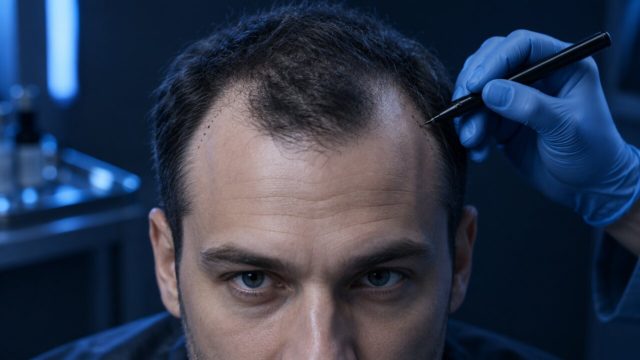
A hairline transplant is designed to restore or refine the frontal hairline using follicles taken from a more resistant donor area, usually at the back or sides of the scalp. For people asking is hairline transplant permanent, the short clinical answer is that transplanted follicles can continue growing for many years when they are healthy, properly handled, and placed into suitable scalp tissue. Still, permanence should not be understood as a fixed promise. The long-term appearance also depends on how the surrounding natural hair changes with age.
Hairline grafts are living follicular units, not artificial implants. After they are transferred, they need to establish a new blood supply and enter their normal growth cycle. In most patients, the transplanted follicles preserve many of the biological characteristics of their original donor location. This is why donor assessment is a central part of planning. If the donor hair is stable and the procedure is appropriately indicated, the transplanted hair can remain a durable part of the hairline.
Long-term stability is not only about whether individual grafts survive. It is also about whether the hairline still looks balanced ten, fifteen, or twenty years later. A low or sharply defined hairline may look appealing immediately after surgery but may not suit future facial changes or further hair thinning. Experienced planning therefore aims for a soft, age-appropriate, and sustainable result rather than simply placing the greatest possible number of grafts at the front.
02Is hairline transplant permanent? The clinical answer
Is hairline transplant permanent? In many suitable patients, transplanted grafts are expected to be long-lasting because they are selected from areas that are typically less affected by pattern hair loss. This principle is often described as donor dominance: follicles tend to continue behaving more like the hair in the area from which they came. However, each person’s pattern of hair loss, family history, donor density, hormones, medical background, and age can influence the outlook.
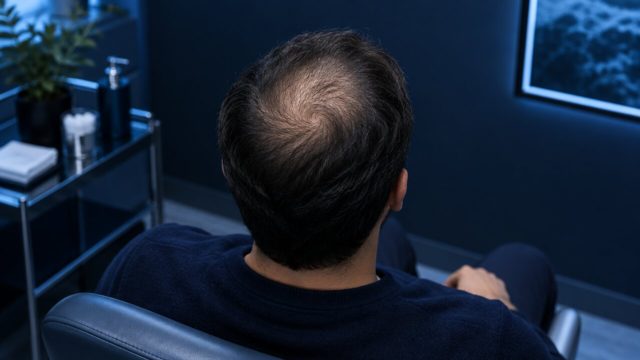
It is important to separate transplanted hair from existing hair. The transplanted grafts may remain stable while the original hair around them continues to become finer or thinner. This can create a difference in density behind the new hairline if hair loss progresses. For this reason, doctors generally assess the full scalp rather than focusing only on the frontal area. A long-term plan may include monitoring, medical management where appropriate, or discussion of whether a future procedure could be needed.
No clinic can responsibly guarantee that every person will have the same lifelong cosmetic appearance. Healing quality, scalp condition, smoking, certain medical conditions, medications, and adherence to aftercare can all affect results. At Acibadem Hair Transplant Center, results are measured through trichoscopic graft survival at month 12, with a documented 98% rate under a written guarantee. Your doctor will explain what this documented month-12 measurement means for your individual treatment plan and what it does not predict about future native-hair loss.
03Why donor selection matters for a stable hairline
The donor area is the foundation of a hairline transplant. Before recommending surgery, the medical team should examine donor density, hair calibre, curl pattern, scalp flexibility, and signs of thinning within the potential donor zone. A donor area that appears dense at first glance may still show miniaturisation on closer examination. Using follicles from a zone that may thin later can reduce the long-term reliability of the result.
Hairline work needs more than enough grafts; it needs the right grafts in the right place. Fine, naturally single-hair follicular units are usually preferred at the very front because they can create a softer transition between forehead skin and hair. Grafts containing multiple hairs may be useful farther behind the leading edge, where more visual density is needed. Placing thicker multi-hair grafts too low or too abruptly can make a hairline look plug-like rather than natural.
Conservative extraction is also essential. Removing too many follicles from the donor area can make that area look visibly reduced, particularly if the hair is cut short later in life. The surgeon must protect both the recipient hairline and the donor reserve. During a doctor-reviewed online hair analysis, photographs can provide an initial indication, but an in-person clinical examination is typically needed before final graft numbers, technique, and suitability are confirmed.
04How a natural hairline is designed to age well
A stable-looking hairline is carefully designed around the person’s face, age, hair characteristics, and likely future pattern of loss. The most natural hairlines are rarely perfectly straight. They normally include small, irregular transitions, varied hair directions, and a gradual increase in density from the front backward. These details help avoid an artificial line that becomes more noticeable under bright light or as the person gets older.
Hairline height is one of the most important long-term decisions. Lowering the hairline aggressively can use a large number of grafts and may leave fewer donor resources for the mid-scalp or crown if those areas thin later. It may also create a youthful hairline that no longer matches the face in later decades. A doctor will usually discuss a placement that restores proportion while preserving flexibility for the future.
Angle and direction matter as much as position. Frontal hairs usually emerge at a low angle and follow a forward or slightly diagonal direction before blending into the existing hair. If grafts are placed too upright, they can appear less natural and may be harder to style. Techniques such as Sapphire FUE and DHI can be selected according to clinical needs, hair characteristics, and the planned placement approach; your doctor will confirm which option is appropriate.
05The growth timeline after hairline grafting
The early recovery period can be emotionally confusing because the final result is not visible straight away. Small crusts commonly form around the recipient sites during the first days, and patients receive instructions on washing and protecting the area. Temporary redness, mild swelling, numbness, or sensitivity may occur. These effects vary between patients and should be discussed with the clinic if they are severe, persistent, or accompanied by concerning symptoms.
Many transplanted hairs shed in the first weeks after the procedure. This phase, often called shock shedding of the transplanted shafts, can be a normal part of the cycle and does not necessarily mean that the follicles have been lost. The follicles remain beneath the skin and typically begin producing new hairs over the following months. Existing native hair can also temporarily shed after surgery in some patients, especially where it was already weak or miniaturised.
New growth is usually fine at first and becomes more visible gradually. Changes are commonly assessed over several months, with texture, calibre, coverage, and styling ability continuing to mature over time. The month-12 point is often used for a meaningful result review because the growth cycle takes time. At Acibadem Hair Transplant Center, trichoscopic evaluation is used at month 12 to document graft survival, alongside 12 months of follow-up included in all-inclusive care packages.
06What can affect long-term graft survival and appearance
Surgical technique is important, but it is only one part of the outcome. Follicles can be affected by how they are harvested, stored, prepared, and implanted, as well as by the blood supply of the recipient area. Careful handling reduces avoidable trauma to grafts. The team should also consider whether the scalp has scarring, inflammation, infection, or another condition that could interfere with healing or make surgery unsuitable at that time.
Aftercare supports the healing process. Patients are commonly asked to avoid rubbing or picking at grafts, protect the scalp from impact, follow washing instructions, and avoid certain activities for a period advised by the medical team. Smoking and heavy alcohol intake may negatively affect healing in some people. It is also important to tell the doctor about all medicines, supplements, allergies, and health conditions before treatment, as some may require additional assessment.
Long-term appearance is strongly influenced by ongoing hair loss. Even when graft survival is excellent, a person may notice reduced density if untreated native hair continues to thin behind the transplanted zone. This is one reason a realistic discussion before surgery matters. The answer to is hairline transplant permanent should always include both graft longevity and the possibility that the overall hair pattern may change as the years pass.
07Possible limitations and risks to understand before treatment
A hair transplant is a surgical procedure and has limitations. It cannot create unlimited density, and it cannot restore every area of extensive hair loss if donor supply is limited. The number of available grafts must be shared thoughtfully between present cosmetic needs and potential future needs. Patients with rapidly progressing hair loss, unstable donor hair, some scalp diseases, or unrealistic expectations may need further assessment or may not be suitable for surgery at that stage.
Possible short-term effects can include swelling, itching, temporary discomfort, scabbing, redness, and temporary shedding. Less common but important risks include infection, bleeding, prolonged numbness, poor growth, folliculitis, scarring, or an unnatural result if planning or placement is inadequate. A medical consultation should cover these risks, the expected recovery period, and the steps used to reduce them. Needle-free anaesthesia may be available for appropriate patients, but your doctor will confirm whether it is suitable for you.
A cosmetic limitation is that transplanted hair does not stop the natural ageing process. Hair shafts can become finer or change in texture over time, and skin and facial proportions continue to change. A result that looks good long term usually comes from preserving a natural transition, avoiding overuse of donor hair, and creating a plan that can adapt if further hair loss occurs. Open discussion before surgery is safer than expecting a single procedure to solve every future concern.
08Planning a hairline transplant with future hair loss in mind
Long-term planning begins with a clear diagnosis. Hair loss can have different causes, and not every receding hairline is caused by the same process. A doctor may ask about the timing of hair loss, family history, medical history, scalp symptoms, previous treatments, and lifestyle factors. Examination of the scalp and donor area helps determine whether a transplant is likely to be useful and whether the pattern appears stable enough for thoughtful surgical planning.
Photographs and trichoscopic assessment can help establish a baseline for future comparison. They can also show variations in hair shaft thickness and donor density that are difficult to judge without magnification. For international patients, Acibadem Hair Transplant Center offers a free online hair analysis reviewed by doctors, with WhatsApp replies typically within around two hours. This initial review can help explain the next steps, although it does not replace a full clinical assessment or final treatment decision.
When surgery is appropriate, all-inclusive packages can simplify practical arrangements by including VIP transfer, a 4-star hotel, a care kit, and 12 months of follow-up. The clinic is a dedicated hair restoration clinic in Istanbul and is licensed by the Turkish Ministry of Health. Patients from 38 countries have been treated over 12 years. These details can support a well-organised patient journey, but the most important decision remains whether the proposed hairline plan is medically appropriate, natural in design, and sensible for your future hair needs.
09Frequently Asked Questions
How long can a hairline transplant last?
In suitable patients, transplanted hairline grafts can continue growing for many years because they are usually taken from a more stable donor area. Their long-term appearance also depends on future thinning of the surrounding native hair, donor quality, and a conservative design. Your doctor can explain the expected outlook after examining your scalp and donor area.
What are the main downsides of a hair transplant?
Potential downsides include the surgical recovery period, temporary shedding, discomfort, visible redness or scabbing, and the possibility of complications such as infection, scarring, or poor growth. Donor hair is limited, and existing hair may continue to thin after the procedure. An overly low or poorly designed hairline can also look less natural over time, which is why careful planning is important.
What may happen 20 years after a hair transplant?
Twenty years later, transplanted follicles may still be growing, particularly when they were taken from a stable donor region. However, surrounding native hair may have thinned, and changes in hair texture, density, scalp skin, and facial appearance can affect the overall look. Some patients may consider further treatment or another procedure if donor availability and medical assessment allow.
How much would a hairline transplant cost?
The cost depends on the number of grafts needed, the technique selected, donor characteristics, the complexity of the hairline design, and what is included in the treatment package. A safe quote should follow a doctor-reviewed assessment rather than a fixed online estimate. You can request a free online hair analysis to receive information based on your visible hair pattern and treatment needs.
Эта статья носит исключительно информационный характер и не заменяет профессиональную медицинскую консультацию.
Это руководство носит общий информационный характер и не заменяет консультацию врача. Решения о лечении принимаются после очной или онлайн-оценки врачом.