В этой статье9
- Hairline Restoration Turkey: Start With Long-Term Planning
- Why a Conservative Hairline Usually Ages Better
- Assessing Hair Loss Before Choosing Graft Numbers
- Turning Facial Proportions Into a Natural Design
- Choosing Sapphire FUE or DHI for the Hairline
- Donor Area Protection and Graft Allocation
- What to Expect in Istanbul and During the 12-Month Follow-Up
- Questions to Settle Before You Commit to Treatment
- Frequently Asked Questions
Hairline restoration turkey should begin with a conservative design that respects your age, family pattern of hair loss, facial proportions and available donor hair. A doctor should assess whether transplantation, medical management, or a staged plan is appropriate before any graft number or hairline position is confirmed.
- A lower, denser hairline is not always the most natural or sustainable choice over time.
- Hair-loss stability, donor capacity and future hair-loss risk should guide every hairline design.
- Single-hair grafts placed at irregular angles can help create a softer and more natural front edge.
- A graft estimate is meaningful only after a clinical review of the hairline, scalp and donor area.
- Hair transplant results usually develop gradually, with the final assessment commonly taking place around month 12.
01Hairline Restoration Turkey: Start With Long-Term Planning
A hairline transplant can improve the frame of the face, but the best plan is rarely the lowest possible line. For patients considering hairline restoration turkey, a conservative approach means designing for both the present and the years ahead. It considers the way natural hair changes with age, the possibility of further thinning behind the transplanted area, and the limited supply of donor grafts. The aim is generally to create a hairline that looks believable now and continues to look appropriate as the patient gets older.
The starting point is a medical assessment rather than a picture of someone else’s hairline. Your doctor will review the pattern and speed of hair loss, scalp condition, family history, medication use, previous procedures, and the density and quality of the donor area. These details help identify whether the front line is stable enough to restore and whether it should be approached in one procedure or in stages. A young patient with ongoing recession may need a more guarded design than a patient whose loss has been stable for many years.
At Acibadem Hair Transplant Center in Istanbul, a free online hair analysis can be reviewed by doctors before travel planning. Clear photographs of the front, top, sides and donor area are useful for an initial discussion, although an in-person examination remains important before treatment. The clinic is licensed by the Turkish Ministry of Health and focuses on hair restoration care. A plan should always be confirmed clinically, because photographs cannot fully show scalp flexibility, hair calibre, miniaturisation or donor density.
02Why a Conservative Hairline Usually Ages Better
A natural adult hairline is not a straight, sharply drawn border. It usually has small changes in height, subtle asymmetry, a softer transition at the front, and temples that suit the face. Trying to recreate a very low teenage hairline can use a large number of grafts and may look less convincing later in life. Conservative planning does not mean accepting a poor result. It means choosing a position and shape that are proportionate, durable and compatible with likely future hair loss.
Future recession is one of the central concerns. Native hair behind a newly transplanted hairline can continue to become finer if the underlying hair-loss process remains active. If this happens, a patient may see a gap between the front grafts and the thinning area behind them. For this reason, doctors may discuss medical management where clinically appropriate, a more conservative front line, or preserving grafts for future work. The most suitable option depends on the individual and should never be assumed from age alone.
Density also needs to be planned carefully. The first centimetre of the hairline often receives special attention because it is highly visible, while the areas behind it may require grafts to create enough visual support. A very dense frontal line without enough coverage behind it may not give the balanced appearance a patient expects. Your doctor may therefore recommend distributing grafts across the frontal zone rather than concentrating every available graft at the lowest edge.
03Assessing Hair Loss Before Choosing Graft Numbers
A graft number is not a standard package for every person. It is an estimate based on the size of the area to be restored, existing hair density, hair thickness, curl pattern, skin-to-hair contrast, donor quality and the design goal. In hairline restoration turkey consultations, asking for the maximum possible number without this assessment can lead to an unrealistic plan. A responsible recommendation explains what the grafts are intended to achieve and what areas may need to be prioritised.
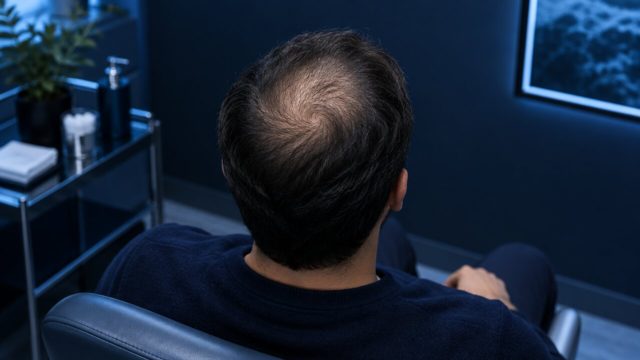
The doctor will usually distinguish between a receding hairline, temple recession, diffuse frontal thinning and a broader pattern of loss affecting the mid-scalp or crown. These patterns use grafts differently. Restoring only the corners may require a different strategy from rebuilding a complete frontal band. If the crown is also thinning, donor grafts may need to be reserved. This is especially relevant for patients who may want future coverage as their hair-loss pattern develops.
Grafts and hairs are not the same measurement. One graft, also called a follicular unit, can contain one or more hairs. Single-hair grafts are commonly valuable at the leading edge because they can create a refined transition, while multi-hair grafts may support density further behind. The exact graft composition varies from person to person. During planning, it is reasonable to ask how the estimated grafts would be divided between the hairline, temples and frontal area, rather than focusing only on one total number.
04Turning Facial Proportions Into a Natural Design
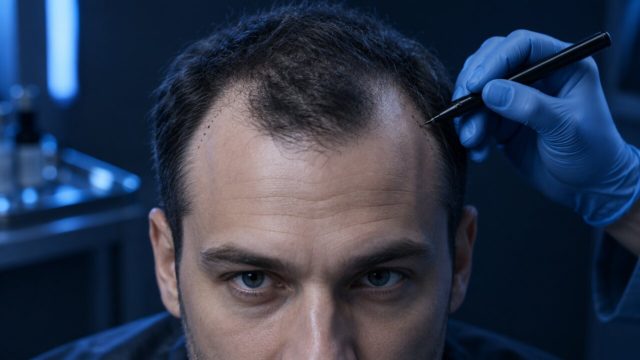
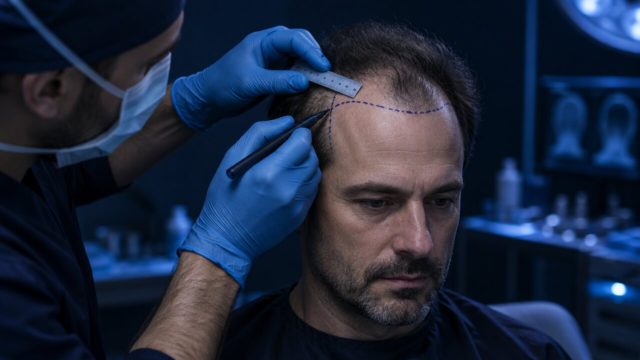
Hairline design is a clinical and aesthetic process, not simply a matter of drawing a line across the forehead. Doctors assess facial proportions, forehead height, eyebrow position, temple shape, head size and the direction in which the native hair grows. They also look at how the patient wears their hair and whether the hairline will be visible in everyday styles. The goal is usually a harmonious frame for the face rather than a copied shape from a celebrity photograph or a filtered image.
The central part of the hairline is often designed with mild irregularity. Natural hairlines tend to have tiny variations rather than a uniform row of hairs. This does not mean creating a visibly uneven result; it means avoiding an artificial ruler-straight appearance. Fine single-hair grafts may be placed in front of slightly stronger grafts to make the transition look softer. Angle, direction and spacing are as important as the number of grafts used.
Temple points require particular caution because they can strongly influence the perceived shape of the face. Overly low or sharp temples may demand many grafts and can be difficult to match if surrounding hair recedes later. In some patients, modest temple restoration provides better balance than attempting a very aggressive shape. Your doctor will confirm what is appropriate after assessing your facial structure, hair-loss pattern and donor availability. Bringing older photographs can help show your previous natural hairline, but they should guide rather than dictate the design.
05Choosing Sapphire FUE or DHI for the Hairline
Sapphire FUE and DHI are two techniques that may be considered for hair restoration, but neither technique automatically guarantees a better hairline. The choice depends on the treatment plan, hair characteristics, recipient area and the medical team’s assessment. With FUE, follicular units are individually extracted from the donor area and then placed into prepared recipient sites. Sapphire instruments may be used when creating channels. With DHI, grafts are implanted using a specialised implantation approach after extraction.
For a hairline, the precision of placement matters greatly. Grafts need to follow the natural forward direction and acute angle of frontal hair growth. The clinical team should select and position grafts in a way that supports a gradual, natural-looking transition. Technique names alone do not describe the quality of design, graft handling or long-term planning. Patients should instead ask how their hairline will be mapped, how grafts will be sorted, and how the team will protect the donor area.
Needle-free anaesthesia is available at Acibadem Hair Transplant Center for suitable patients who prefer this option. Suitability, medical history and anaesthesia planning must be reviewed by the clinical team. A procedure can be comfortable for many patients, but it remains a medical treatment with recovery requirements and potential risks. Before proceeding, patients should receive clear guidance on preparation, aftercare, expected shedding, temporary redness or swelling, and when to contact the clinic.
06Donor Area Protection and Graft Allocation
The donor area, most often at the back and sides of the scalp, is a finite resource. Protecting it is one of the most important parts of a conservative hairline strategy. Even when a patient has strong donor density, removing too many grafts can reduce the visual density of the donor area or limit options for future procedures. A safe extraction estimate is individual and can only be confirmed after direct assessment of density, hair calibre, scalp characteristics and long-term needs.
For hairline restoration turkey, the question is not only how many grafts can be extracted today. It is also how many should be used today. A patient with early recession and a family history of advanced loss may benefit from reserving some donor capacity. Conversely, a patient with stable, localised frontal recession may have a different allocation plan. Doctors typically explain these trade-offs so that patients understand why a recommended design may be more conservative than the line shown in an inspiration image.
Good donor management also includes careful extraction distribution and realistic expectations about coverage. Hair transplantation redistributes existing follicles; it does not create new donor hair. Fine hair, coarse hair, straight hair and curly hair can all create different visual effects after transplantation. The doctor may use this information to recommend an appropriate density target. It is better to have a design that uses donor hair wisely than a very ambitious first procedure that leaves limited flexibility for the future.
07What to Expect in Istanbul and During the 12-Month Follow-Up
International patients often want to know how treatment fits into a short visit to Istanbul. After the remote assessment and initial discussion, the clinic can explain travel timing, preparation and the expected appointment schedule. Acibadem Hair Transplant Center offers all-inclusive packages that include VIP transfer, a 4-star hotel, a care kit and 12 months of follow-up. Package content and medical suitability should be confirmed directly with the clinic before booking, as each patient’s clinical plan may differ.
The early recovery period is not the final result. Transplanted hairs commonly shed after the procedure before new growth begins, which can be surprising if it has not been explained in advance. New growth usually appears gradually, and the rate of visible change differs between patients. The hairline may continue to mature in texture and coverage over many months. Patients should follow washing instructions, activity guidance and review appointments provided by their clinical team rather than relying on general advice found online.
At month 12, Acibadem Hair Transplant Center measures results through trichoscopic graft survival and documents a 98% rate under its written guarantee. Terms and eligibility for any guarantee should be reviewed carefully before treatment. Trichoscopic assessment can provide an objective way to review graft survival, but it does not remove the importance of realistic expectations about cosmetic density, continuing native hair loss and individual healing. Follow-up gives the patient an opportunity to discuss progress and any future planning with the clinical team.
08Questions to Settle Before You Commit to Treatment
Before deciding on a procedure, ask what hair-loss pattern the doctor sees and whether it appears stable. Ask where the proposed hairline will sit, why that position was selected, and whether it allows for future recession. It is also useful to ask how many grafts are estimated for the front, temples and any thinning behind the hairline. Clear answers can help you compare a long-term clinical plan with a plan focused only on a dramatic immediate change.
You should also understand who will perform each stage of care, what aftercare is included, and how the clinic follows international patients after they return home. Ask about expected recovery, possible complications, signs that require medical contact, and any factors that could affect suitability. A reputable consultation should leave room for questions and should not pressure you to proceed with a hairline position that feels too low or a graft number that has not been properly explained.
For patients seeking hairline restoration turkey, cost is naturally an important consideration, but it should be reviewed alongside safety, donor preservation, technique, follow-up and the details of what is included. A personalised quotation normally requires a doctor-reviewed assessment because the clinical work varies by graft estimate and treatment needs. Acibadem Hair Transplant Center receives patients from 38 countries and has focused on hair restoration for 12 years. WhatsApp enquiries typically receive a reply within about two hours, helping patients begin with an informed discussion rather than an assumption.
09Frequently Asked Questions
What does hairline restoration cost in Turkey?
Hairline restoration costs in Turkey vary because each plan depends on the required graft estimate, the technique selected, donor-area assessment, the level of thinning and the services included in the treatment package. A reliable price should be given only after a doctor-reviewed hair analysis. Ask for a written explanation of what is included, such as transfers, accommodation, aftercare and follow-up, rather than comparing a headline price alone.
What has Elon Musk used to regrow his hair?
There is no confirmed public medical record stating exactly which treatment or treatments Elon Musk has used for his hair. Online discussions often speculate about hair transplantation, medication or other approaches, but speculation is not medical evidence. A personal result seen in public photographs cannot determine what would be suitable for another person.
How much does it cost to restore a hairline?
The cost to restore a hairline depends on the size and shape of the area, the number and type of grafts needed, donor characteristics, technique and aftercare arrangements. Small temple work and a full frontal hairline are very different procedures, so one fixed figure would not be reliable. A clinic should assess your hair loss and provide an individual written plan before confirming cost.
How much are 5000 grafts in Turkey?
A 5000-graft procedure does not have one standard price in Turkey, and not every patient is medically suitable for that number of grafts. The appropriate graft count should be based on donor capacity, the extent of hair loss and the need to preserve grafts for the future. If a large graft number is suggested, ask how it was calculated and how donor-area safety will be assessed.
Эта статья носит исключительно информационный характер и не заменяет профессиональную медицинскую консультацию.
Это руководство носит общий информационный характер и не заменяет консультацию врача. Решения о лечении принимаются после очной или онлайн-оценки врачом.