В этой статье8
- how many grafts do i need for hairline: a practical estimate
- What changes the graft count for a new hairline?
- Hair characteristics, skin contrast, and visual coverage
- How many grafts do i need for hairline density and design?
- Donor area assessment and planning for future hair loss
- How Sapphire FUE and DHI may be used for hairline work
- What to expect from consultation to month 12
- Frequently Asked Questions
Most hairline restoration procedures use approximately 800 to 2,500 grafts, but the right number depends on the size of the area, the desired hairline shape, hair characteristics, and donor capacity. A doctor should assess your scalp and donor area before confirming a graft plan, because a natural result depends on careful design as well as graft quantity.
- Hairline restoration commonly requires 800 to 2,500 grafts, although individual needs can fall outside this range.
- A lower or wider hairline does not automatically require more grafts; the planned shape and density are equally important.
- Fine, single-hair grafts are typically placed at the leading edge to create a soft, natural-looking transition.
- Protecting donor reserves is important because future hair loss may affect the overall long-term plan.
- A trichoscopic assessment helps doctors evaluate donor quality, hair characteristics, and the likely graft requirement.
01how many grafts do i need for hairline: a practical estimate
If you are asking how many grafts do i need for hairline restoration, a typical estimate is between 800 and 2,500 grafts. Smaller procedures that refine a mildly receding front may need fewer grafts, while rebuilding a more advanced recession or creating a broader frontal zone may require more. This range is only a starting point. The final number should be based on a medical examination of the recipient area, donor area, hair thickness, curl pattern, and the future risk of continued hair loss.
A graft is a small unit of scalp tissue containing one to several hairs. It is not the same as one hair. For this reason, two patients receiving the same graft number may see a different visual effect. A patient with thicker or curlier hair may achieve stronger coverage with fewer grafts than someone with very fine, straight hair. Doctors consider both graft count and the number of hairs per graft when planning the frontal hairline.
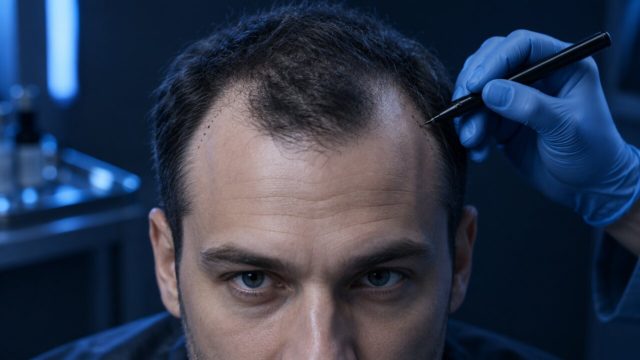
Hairline work is often focused on detail rather than maximum coverage. The front edge is highly visible and needs an irregular, age-appropriate pattern rather than a straight line of uniform density. In most patients, the first rows are built with carefully selected single-hair grafts. Behind this transition zone, grafts with more hairs can gradually increase density. This layered approach helps the result blend with existing hair when it grows.
02What changes the graft count for a new hairline?
The size of the area being restored is one of the main factors. A small temple recession or slight corner fill may require a relatively limited number of grafts. A patient with deeper recession across both temples and the central forelock will usually need more. Doctors measure the planned area in square centimetres, but they also assess how much existing hair remains. Native hairs can contribute to coverage, while a completely bare area generally needs more transplanted grafts.
The position of the proposed hairline also matters. Lowering a naturally high hairline can enlarge the recipient area quickly, particularly if the patient also wants the corners filled. A very low hairline may use a large portion of the available donor supply and may not remain suitable if natural hair loss progresses later. For that reason, doctors typically recommend a mature hairline that suits the patient’s facial proportions, age, family history, and expected long-term pattern of hair loss.
Desired density affects the estimate, but density must be planned safely. A very dense appearance can be attractive in photographs, yet the scalp needs adequate blood supply and the donor area has limits. It is usually better to create a realistic density that looks natural in everyday light than to overpack grafts in a small area. Your doctor will confirm whether a denser first session is appropriate or whether a staged approach should be considered.
03Hair characteristics, skin contrast, and visual coverage
Hair shaft diameter is important in hairline restoration. Thick hair shafts generally create more visual volume than fine shafts, so fewer grafts may provide an acceptable cosmetic effect. However, very coarse hairs may need especially careful placement at the front because the hairline should remain soft. Fine hairs can look natural at the edge, but a larger graft number may be needed behind the edge to create the impression of fullness.
Hair texture also changes how the result appears. Wavy or curly hair can provide broader visual coverage because it does not lie flat against the scalp. Straight hair may reveal more scalp between shafts, especially when wet or under strong overhead lighting. The contrast between scalp colour and hair colour is another consideration. When contrast is high, the scalp can be more visible, and the graft plan may need to account for this without exceeding safe donor limits.
Hair direction is as important as graft number. Natural frontal hairs emerge at shallow angles and change direction gradually around the corners and temples. Grafts placed too upright or in a regular pattern can look less natural even when the count is high. An experienced medical team plans the angle, direction, and distribution of each zone so that the transplanted hair follows the patient’s existing growth pattern as closely as possible.
04How many grafts do i need for hairline density and design?
When considering how many grafts do i need for hairline density, it helps to separate the hairline into zones. The leading edge needs a feathered transition, usually using single-hair grafts placed with intentional irregularity. The frontal band behind it builds density, while the temple points and corners need a conservative design that matches the rest of the scalp. Each zone has a different purpose, so a graft plan should not simply divide the total number evenly across the front.
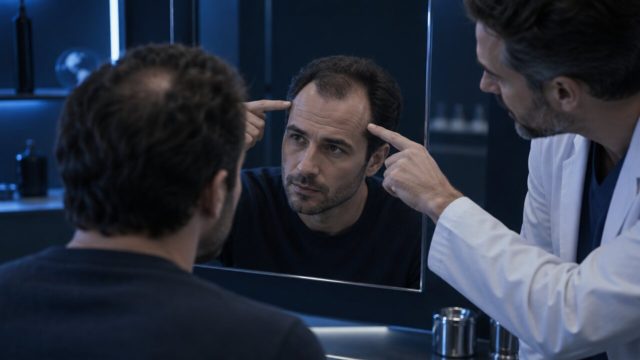
A natural hairline is not perfectly symmetrical. Small variations in height, direction, and spacing are normal and help avoid an artificial appearance. During planning, the doctor considers facial balance, forehead size, eyebrow position, and the existing hairline. A slightly uneven but well-designed hairline often looks more believable than a sharply drawn, perfectly straight line. Patients should also remember that a design suitable at age 25 may not be the best long-term choice at age 45.
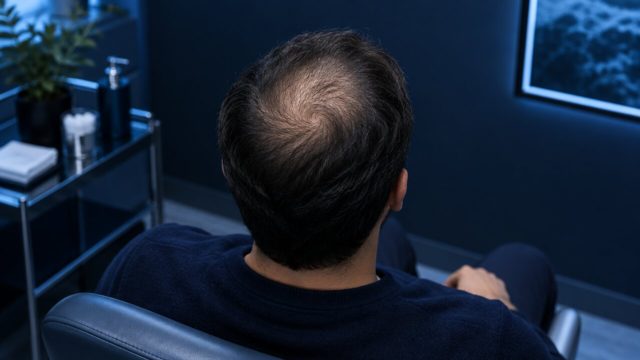
It is common to focus on the front because it frames the face, but the area behind the hairline should not be ignored. If the frontal line is restored while significant thinning continues immediately behind it, the overall appearance can become unbalanced. In some cases, the doctor may recommend distributing grafts through the frontal third rather than concentrating all of them in a very low front edge. This decision depends on the current pattern and the available donor supply.
05Donor area assessment and planning for future hair loss
The donor area, usually at the back and sides of the scalp, determines how many grafts can be harvested safely. A doctor assesses donor density, hair calibre, scalp condition, and the distribution of permanent hairs. Taking too many grafts can make the donor area appear thinner. A responsible plan aims to preserve a natural-looking donor area while providing enough grafts to improve the recipient area.
When patients ask how many grafts do i need for hairline restoration, the answer should also include a discussion of future hair loss. Male and female pattern hair loss can progress over time, and existing non-transplanted hair may continue to thin. A conservative design can help preserve grafts for later needs, such as the mid-scalp or crown. Your doctor may discuss medical evaluation, monitoring, or future treatment options where clinically appropriate, but suitability varies between individuals.
Not everyone is an appropriate candidate for immediate hairline transplantation. Active scalp inflammation, certain medical conditions, unstable hair loss, limited donor reserves, or unrealistic expectations may change the recommendation. Some patients may benefit from waiting until the pattern is clearer or until a scalp condition is managed. A thorough consultation is designed to identify these issues before any procedure is planned, rather than using a standard graft package for every patient.
06How Sapphire FUE and DHI may be used for hairline work
Sapphire FUE and DHI are two techniques that may be considered for hairline restoration. With Sapphire FUE, grafts are extracted individually and recipient channels are created before placement. With DHI, grafts are typically placed using an implantation tool after extraction. Neither technique automatically guarantees a better result. The most suitable option depends on the patient’s scalp, hair characteristics, graft plan, and the doctor’s clinical assessment.
For a hairline, the crucial elements are gentle graft handling, accurate placement angles, and thoughtful selection of follicular units. The procedure must protect the grafts while allowing the team to create the fine direction changes needed at the frontal edge. Anaesthesia is required for hair transplant procedures, and needle-free anaesthesia may be available for suitable patients. Your medical team will explain the anaesthesia process, possible risks, and whether this option is appropriate for you.
At Acibadem Hair Transplant Center, a dedicated hair restoration clinic in Istanbul licensed by the Turkish Ministry of Health, planning is based on individual assessment rather than a fixed graft promise. The clinic offers Sapphire FUE and DHI techniques. Its results are measured by trichoscopic graft survival at month 12, with a documented 98% rate under written guarantee. Individual cosmetic results, density, and hair growth patterns can still vary, and your doctor will discuss realistic expectations before treatment.
07What to expect from consultation to month 12
A proper consultation starts with clear photographs and a review of your hair loss history, medical history, and goals. The doctor examines the donor and recipient areas and may use trichoscopy to look more closely at hair density and shaft characteristics. The proposed hairline can then be discussed in relation to your facial features and future hair loss risk. This is the stage where an estimated graft range becomes a more specific clinical plan.
After a transplant, the treated area commonly forms small crusts during the early healing period. Transplanted hairs often shed in the first weeks, which is a usual part of the cycle and does not by itself indicate graft loss. New growth generally begins gradually over the following months. Hair growth timing, texture changes, and density development differ between patients, so regular follow-up is useful for monitoring recovery and addressing questions.
Final hairline maturation is commonly assessed around 12 months, although some patients continue to notice refinement after this point. Acibadem Hair Transplant Center provides all-inclusive packages that include VIP transfer, a 4-star hotel, a care kit, and 12 months of follow-up. Patients can begin with a free online hair analysis reviewed by doctors, with WhatsApp replies typically available within around two hours. An online review can provide guidance, while the final decision remains subject to medical assessment.
08Frequently Asked Questions
How long does it take to become a DO?
In the United States, becoming a Doctor of Osteopathic Medicine, or DO, typically requires a four-year undergraduate degree, four years of medical school, and residency training that usually lasts three to seven years depending on the specialty. Some doctors also complete fellowship training. Requirements differ by country, so the exact pathway depends on the local medical education and licensing system.
What are the benefits of seeing a DO?
A DO is a fully trained physician in the United States and can diagnose illness, prescribe medication, perform surgery, and practise across medical specialties after completing the required training and licensing. Osteopathic medical education includes a whole-person approach and training in osteopathic manipulative treatment. The best choice of doctor depends on their qualifications, experience, communication, and the care you need.
Can DOs practise internationally?
A DO may be able to practise internationally, but this is not automatic. Each country has its own rules for recognising medical degrees, verifying training, passing licensing examinations, and granting registration. A doctor should check the requirements of the destination country’s medical licensing authority before planning to work there.
What does the term ADO doctor mean?
ADO doctor is not a standard, universally recognised medical degree title. In some conversations, it may be a mistaken reference to a DO, meaning Doctor of Osteopathic Medicine, while in other settings it may have a local meaning. It is best to ask for the clinician’s full professional title, medical degree, specialty, and licensing authority.
Эта статья носит исключительно информационный характер и не заменяет профессиональную медицинскую консультацию.
Это руководство носит общий информационный характер и не заменяет консультацию врача. Решения о лечении принимаются после очной или онлайн-оценки врачом.