В этой статье9
- Обзор
- Hairline lowering turkey: choosing the right approach
- Scalp advancement and hair transplantation compared
- Safety, candidacy and realistic medical screening
- How a natural hairline is designed
- Preparing for an Istanbul treatment journey
- Recovery milestones after hairline treatment
- Long-term planning after a lower hairline
- Frequently Asked Questions
Planning hairline lowering surgery in Istanbul starts with confirming why the hairline appears high and which method fits your anatomy, hair quality and future hair-loss pattern. For people researching hairline lowering turkey, a doctor-reviewed assessment can help compare scalp advancement surgery with a hair transplant-based approach before travel is arranged.
- Hairline lowering can involve scalp advancement surgery, a hair transplant, or a staged combination in selected patients.
- A stable donor area, realistic expectations and careful hairline design are important for a natural-looking plan.
- Safety depends on medical screening, sterile clinical standards, qualified care and clear aftercare instructions.
- Costs vary by the technique, treatment scope, travel package and whether more than one session is needed.
- A remote assessment is useful for initial planning, but an in-person medical examination confirms suitability.
01Planning Hairline Lowering Surgery in Istanbul
A high hairline can affect how a person feels about their facial balance, hairstyle choices or confidence in photographs. Planning hairline lowering surgery in Istanbul is not simply about moving the front hairline forward by a certain number of centimetres. It involves understanding the cause of the high hairline, checking the quality of the scalp and donor hair, and creating a design that should still look appropriate as the face and hair change over time. People searching for hairline lowering turkey should begin with a medical assessment rather than choosing a technique based only on before-and-after images.
There are two main ways to address a high frontal hairline. Scalp advancement, sometimes called forehead reduction surgery, moves the hair-bearing scalp forward after an incision near the hairline. A hair transplant places individual grafts into the frontal area to build or reshape the hairline gradually. These are different procedures with different recovery patterns, limitations and suitability criteria. In some cases, a doctor may discuss a staged plan, particularly when both lowering and softening the hairline edge are being considered.
Istanbul is a major destination for international hair restoration patients, but convenience should not replace clinical planning. A responsible process includes discussing medical history, current and family hair-loss patterns, scalp characteristics, medications and personal goals. It is also important to speak openly about what can be achieved safely. A carefully planned result usually focuses on proportion and natural direction rather than making the hairline as low as possible.
02Hairline lowering turkey: choosing the right approach
The phrase hairline lowering turkey may describe several different goals. Some people have naturally high foreheads with otherwise dense hair. Others have a receding frontal hairline related to genetic hair loss, previous hairstyles that caused traction, scars, or a history of surgery. These situations can look similar from a distance, but they do not always require the same treatment. Identifying the underlying reason helps the doctor decide whether scalp advancement, hair transplantation or another strategy is more appropriate.
Scalp advancement may be considered when the scalp has sufficient mobility and the person has stable hair growth behind the existing hairline. During this surgical approach, the frontal scalp is advanced and the incision is closed near the new hairline position. It can provide an immediate change in hairline position, but it also creates a surgical scar that needs to heal. The amount of advancement is limited by scalp laxity and should be assessed by a qualified surgeon in person.
A hair transplant may be more suitable when a softer, irregular or lower-looking hairline is needed, when there is concern about future recession, or when scalp advancement is not appropriate. Transplanted grafts can be placed with attention to angle, density and single-hair distribution at the leading edge. However, growth is gradual, and the final appearance develops over months rather than immediately. Your doctor will explain which approach is clinically realistic for your individual features.
03Scalp advancement and hair transplantation compared
Scalp advancement is a surgical forehead reduction technique, while a hair transplant redistributes hair follicles from a donor area to the frontal scalp. The procedures differ in how they create coverage. Advancement changes the position of existing hair-bearing scalp. Transplantation adds follicles to selected areas and can refine the shape of a hairline. Understanding this difference is useful because online discussions may use the term hairline lowering for both procedures, even though the treatment journey is not the same.
For an advanced hairline with good density, scalp mobility may be one factor in considering surgical lowering. Even then, the hairline should be planned conservatively. A very low or overly straight result may not look natural over time, especially if genetic thinning later develops behind it. In some patients, a hair transplant after scalp advancement may be discussed to camouflage a scar or create a softer transition, but this is not necessary or suitable in every case.
For a transplant-based plan, donor availability is essential. The donor area must provide enough healthy follicles without creating visible overharvesting. At Acibadem Hair Transplant Center, Sapphire FUE and DHI techniques are available for hair restoration planning. The method is selected according to clinical needs rather than as a promise of a specific outcome. A doctor should also consider whether medical management or observation is advisable when active hair loss is suspected.
04Safety, candidacy and realistic medical screening
Like any surgical or minimally invasive procedure, hairline lowering carries potential risks. These may include bleeding, swelling, discomfort, infection, delayed healing, altered sensation, scarring, uneven hairline placement and dissatisfaction with the cosmetic result. With a transplant, additional considerations can include temporary shedding of existing hair, folliculitis, uneven growth, poor graft survival or changes in the donor area. Risk cannot be reduced to zero, but appropriate screening, sterile conditions and careful aftercare are important safeguards.
A consultation should cover health conditions, smoking or nicotine use, allergies, medicines and supplements, previous scalp procedures, and any history of abnormal scarring or wound-healing problems. People with unstable hair loss, inflammatory scalp conditions, insufficient donor density or unrealistic expectations may not be ideal candidates for immediate treatment. This does not automatically mean no options exist; it means that timing and method need medical consideration. Your doctor will confirm suitability after reviewing the relevant information.
An ethical treatment plan also considers future change. The frontal hairline is one of the most visible areas of the scalp, and it can be difficult to revise an aggressive design later. For this reason, a mature-looking outline, appropriate density and a small degree of natural irregularity are often important. A good consultation should include the possible limitations, the need for further treatment in some cases and the difference between early healing and final cosmetic maturation.
05How a natural hairline is designed
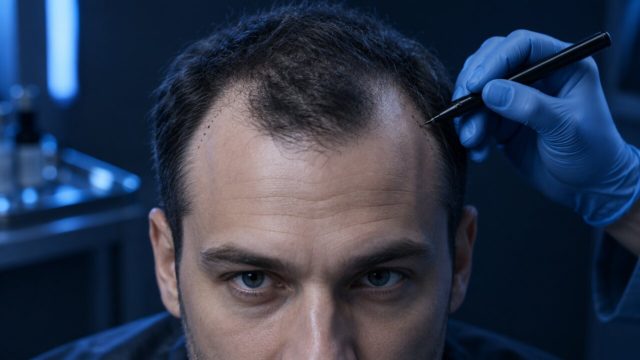
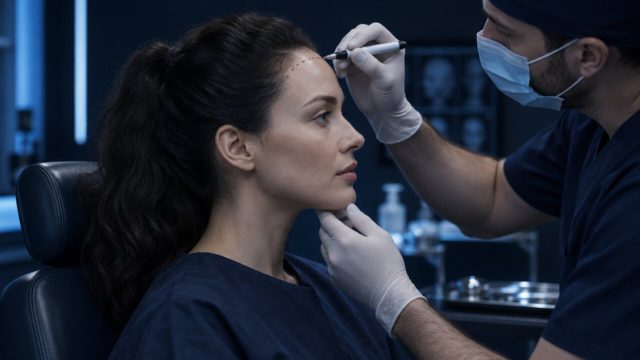
Natural hairlines are rarely perfectly straight or uniformly dense. They usually contain a softer transition zone with finer single hairs at the front, followed by gradually greater density behind it. When planning a transplant, the medical team may map the forehead proportions, facial shape, temple angles, existing hair direction and the likely pattern of future hair loss. The purpose is to create a hairline that blends with the person’s features rather than appearing drawn on.
Hairline lowering turkey plans should also account for gender expression, hairstyle preferences and whether the patient wants a rounded, flatter or more defined frontal contour. These preferences matter, but they must be balanced with donor supply and the need to preserve a natural long-term appearance. Photographs taken in standard lighting can support planning, although they cannot replace direct examination of the scalp, skin and hair calibre.
Density expectations need careful discussion. A transplanted hairline may look fuller as growth matures, yet it may not match the density of untouched youthful hair in every patient. Dense packing is not always safer or more natural, especially where blood supply, scalp condition or limited donor resources are concerns. A medically led design prioritises graft placement, angle and distribution, not only the total number of grafts.
06Preparing for an Istanbul treatment journey
International patients benefit from organising the clinical and travel steps in the right order. A free online hair analysis can provide an initial review before booking travel. At Acibadem Hair Transplant Center, online submissions are reviewed by doctors, and WhatsApp replies are typically provided within about two hours. Clear photographs of the front, sides, top and donor area, together with a brief medical history, can help the team begin a preliminary discussion.
A preliminary online assessment is not a final diagnosis or a substitute for examination. You may be asked for further images or details if the first photographs do not show scalp density, hairline position or donor quality clearly enough. Once you arrive, an in-person review should confirm the treatment plan, medical suitability and practical details. Patients should be prepared to ask about the procedure, expected recovery, medication instructions, follow-up and what signs require medical contact.
The centre is a dedicated hair restoration clinic in Istanbul licensed by the Turkish Ministry of Health. Its all-inclusive packages include VIP transfer, a 4-star hotel, a care kit and 12 months of follow-up. Travel arrangements should still allow adequate time for the planned procedure, immediate review and a comfortable return journey. It is sensible to avoid scheduling important social events immediately after treatment because early swelling, redness or scabbing can be visible.
07Recovery milestones after hairline treatment
Recovery differs between scalp advancement surgery and hair transplantation. After scalp advancement, patients may have a dressing, swelling around the forehead, tenderness and a visible incision while the area heals. After a transplant, small crusts around implanted follicles and temporary redness are common early features. The treating team will provide specific washing, sleeping, exercise and medication instructions. Following these instructions closely supports uncomplicated healing and protects the treated area.
In most transplant patients, the implanted hairs shed during the first weeks after the procedure before new growth begins. This shedding phase can be emotionally difficult if it is unexpected, but it is commonly part of the normal growth cycle. Early new hairs may be fine or uneven before gradually maturing. A final cosmetic assessment generally takes many months, so photographs taken too soon may not reflect the eventual result.
For hair transplant cases, Acibadem Hair Transplant Center measures results through trichoscopic graft survival at month 12 and documents a 98% rate under its written guarantee. This clinic measure does not mean that every individual will experience an identical cosmetic result, because hair growth, scalp biology, healing and adherence to aftercare can vary. Continuing the scheduled follow-up is useful for reviewing progress and raising any concerns at the appropriate stage.
08Long-term planning after a lower hairline
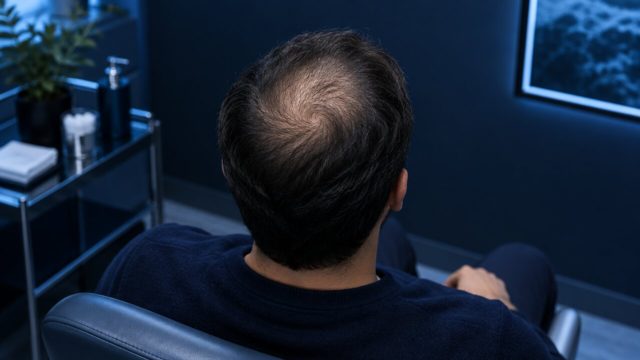
A successful-looking hairline should fit the future as well as the present. If a patient has a family history of progressive hair loss, the area behind a newly lowered hairline may thin later. This can change the overall appearance even when the transplanted hairs remain. During planning, the doctor may therefore recommend a conservative design, reserve donor hair for the future, or discuss whether waiting and monitoring is the safer choice.
Protecting the scalp after treatment includes attending follow-up appointments, avoiding trauma to the area during early healing and discussing any concerns promptly. Patients should not begin, stop or change medicines based on general online information. If ongoing hair loss is a concern, a doctor can discuss medically appropriate options after considering personal health factors. The goal is not only an improved frontal outline but also a plan that remains manageable over time.
Patients from 38 countries have visited Acibadem Hair Transplant Center over 12 years, often because Istanbul can combine medical care with organised travel support. Even so, the most valuable part of the process is informed decision-making. Take time to compare the available approaches, understand the limits of each method and choose a plan based on medical assessment rather than urgency. A natural result usually begins with a careful, long-term view.
09Frequently Asked Questions
What does hairline lowering surgery cost in Turkey?
There is no single fixed cost for hairline lowering surgery in Turkey. The total can vary according to whether scalp advancement surgery, a hair transplant or a combined approach is suitable, as well as the treatment scope, clinical needs and travel arrangements. After reviewing your photographs and medical information, the clinic can provide a clearer treatment and package discussion.
Is hairline lowering surgery risky?
Hairline lowering surgery has potential risks, as do all surgical procedures. These can include swelling, bleeding, infection, scarring, altered sensation, delayed healing and an outcome that does not meet expectations; hair transplantation has its own risks, including temporary shedding and variable growth. A proper medical assessment, licensed clinical care and following aftercare instructions help manage risk, but cannot eliminate it completely.
How much does hairline lowering surgery cost overall?
The overall cost depends on the chosen technique and the individual treatment plan. A scalp advancement procedure and a transplant-based hairline procedure involve different clinical steps, recovery needs and possible future sessions. It is best to request a written, individual quotation after a doctor-reviewed assessment rather than relying on general online figures.
Can I get a hairline transplant in Turkey?
Yes, hairline transplantation is available in Turkey for suitable candidates. It uses donor follicles, usually from the back or sides of the scalp, to create or refine the frontal hairline. At Acibadem Hair Transplant Center, Sapphire FUE and DHI techniques are available, and a doctor will confirm whether your donor area, hair-loss pattern and goals make a transplant appropriate.
Эта статья носит исключительно информационный характер и не заменяет профессиональную медицинскую консультацию.
Это руководство носит общий информационный характер и не заменяет консультацию врача. Решения о лечении принимаются после очной или онлайн-оценки врачом.