
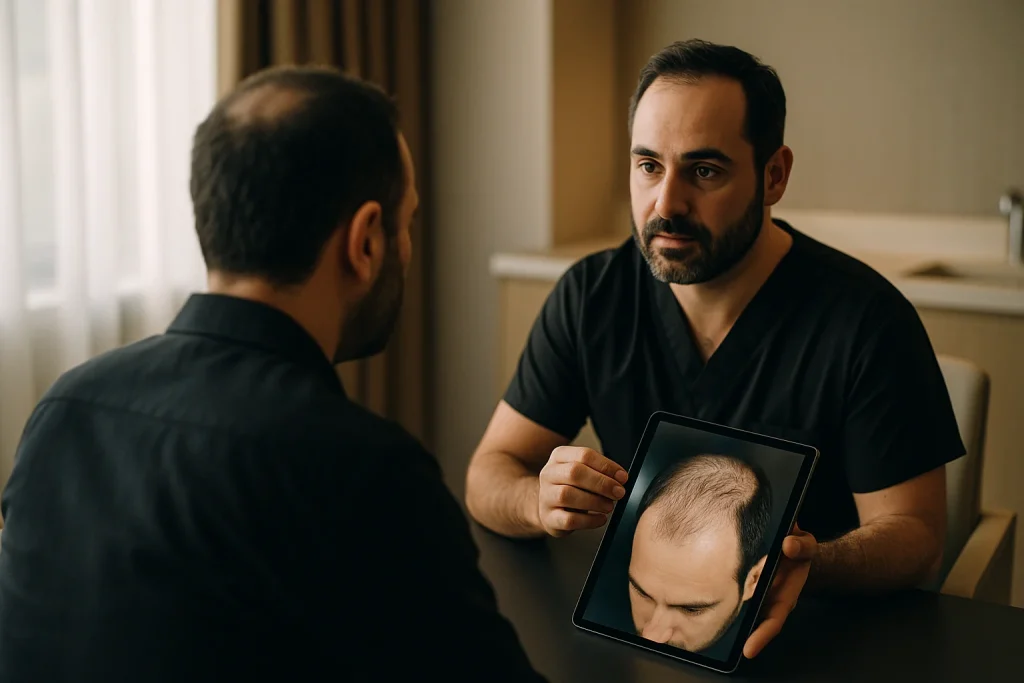
Knowing how to control dht usually means identifying the cause of hair loss and discussing evidence-based treatment with a qualified doctor before surgery. Medicines that lower DHT may help suitable patients preserve existing hair, while a transplant redistributes healthy donor follicles rather than stopping future hair loss.
- DHT is a hormone that can gradually miniaturise genetically sensitive scalp follicles.
- Prescription treatment may reduce DHT activity, but suitability and possible side effects require medical review.
- Vitamins can correct a documented deficiency but do not directly block DHT in most patients.
- Saw palmetto has limited and inconsistent evidence compared with prescription options.
- Managing ongoing hair loss before and after transplantation can help protect non-transplanted hair.
01Why DHT matters before a hair transplant
Understanding how to control dht is an important part of planning a hair transplant when pattern hair loss is suspected. A transplant can improve coverage by moving follicles from a stable donor area to thinning areas, but it does not automatically protect the surrounding native hair. If ongoing hormonal hair loss is not assessed, untreated hairs around the transplanted grafts may continue to become finer over time.
Dihydrotestosterone, commonly called DHT, is one factor involved in androgenetic alopecia, also known as male or female pattern hair loss. Not everybody responds to DHT in the same way. The main issue is usually inherited follicle sensitivity, not simply having a high level of the hormone. In genetically susceptible areas, DHT can shorten the growth phase of the hair cycle and gradually miniaturise the follicle.
This is why a careful consultation should look beyond the visible bald area. Your doctor may consider the pattern and speed of thinning, family history, donor density, scalp health, medicines and relevant medical history. They may also consider other possible causes of shedding, such as illness, nutritional deficiency, inflammatory scalp conditions or hormonal changes, before recommending any medical or surgical approach.
02How to control dht: begin with a medical assessment
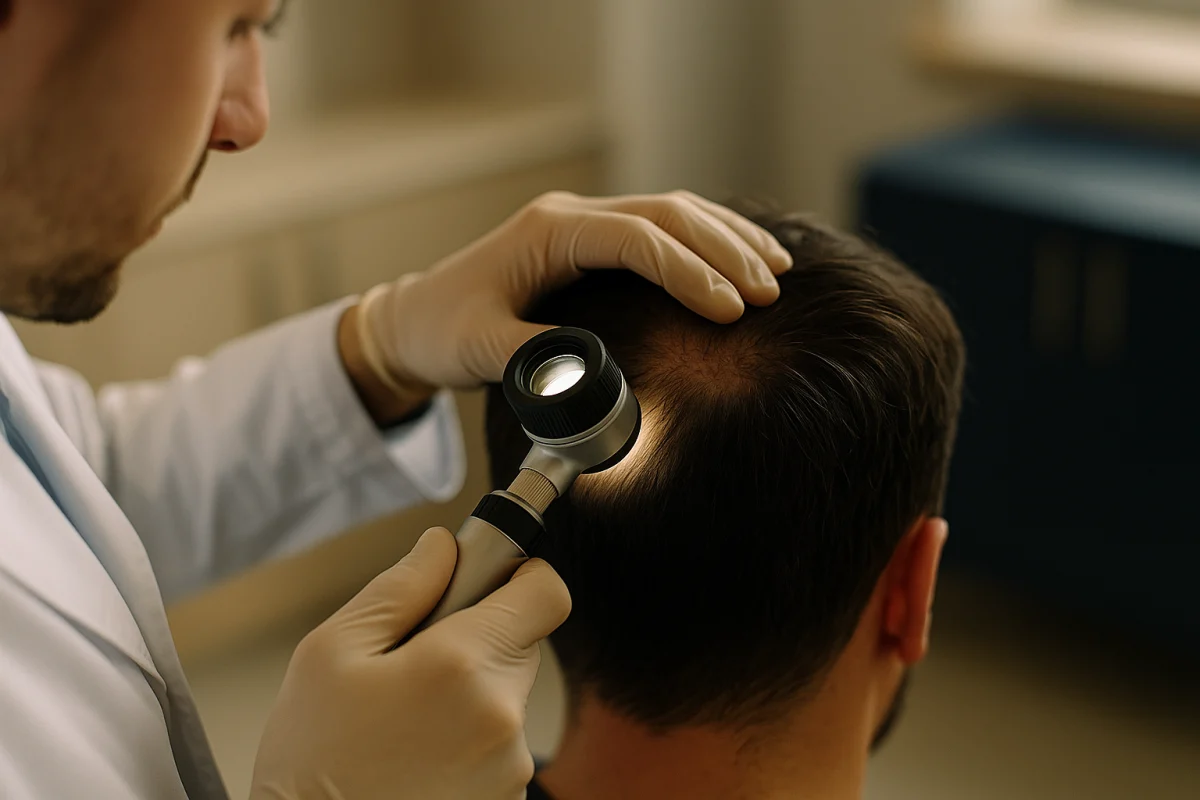
For most people, the safest answer to how to control dht begins with an accurate diagnosis rather than a supplement or treatment chosen online. Pattern hair loss has recognisable features, but diffuse shedding and thinning can have several causes. A doctor may assess the scalp and hair shafts, review your history and, when clinically appropriate, request tests or refer you for further evaluation.
Assessment is especially important for women, younger patients, people with sudden shedding and anyone with scalp discomfort, scaling or patchy hair loss. These situations may not follow the usual pattern of DHT-related thinning. Treating the wrong cause can delay appropriate care and may not improve hair density. A hair transplant is generally considered only after the cause and likely pattern of loss are understood.
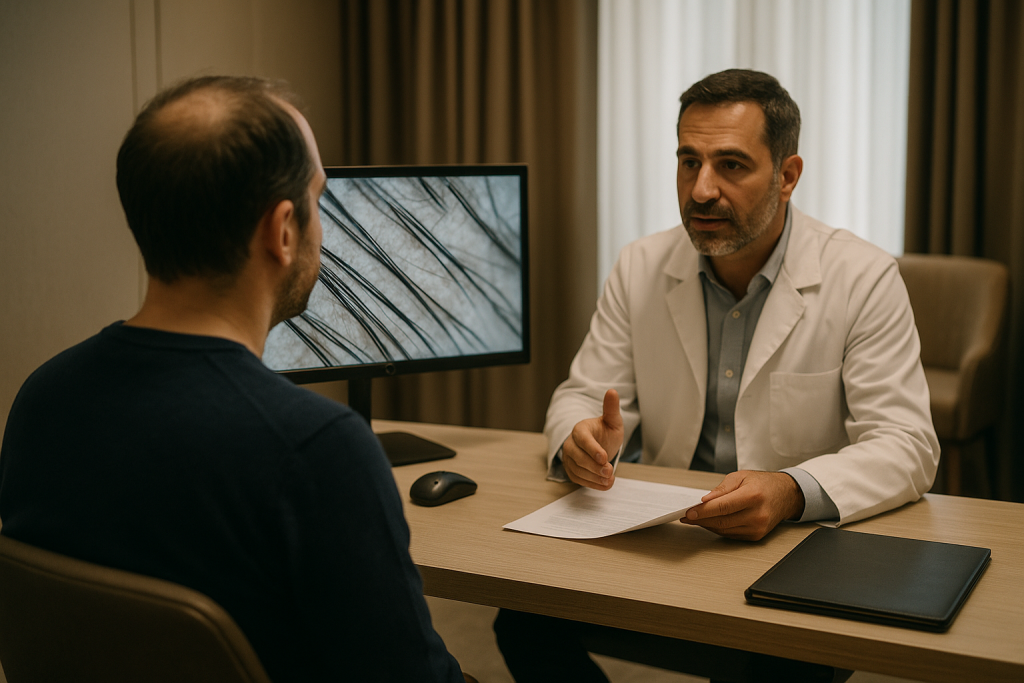
Photographs and trichoscopic examination can help document the condition of the hair before treatment. This creates a useful baseline for future comparison. Doctors can then discuss whether the aim is to slow further loss, improve hair growth, prepare for transplantation or combine these goals in a realistic long-term plan.
03Prescription options that may reduce DHT activity
Prescription medicines that reduce the conversion of testosterone into DHT are commonly discussed for suitable patients with androgenetic alopecia. These medicines act on an enzyme involved in DHT production. They can lower DHT levels or activity, but they are not appropriate for everyone, and the choice of medicine, dose and formulation should be made by a prescribing doctor.
When patients ask how to control dht with medication, it is important to understand that treatment is usually ongoing rather than a one-time solution. Any benefit may take several months to become visible because hair growth follows a slow cycle. If treatment is discontinued, the hormone-related effect generally reduces over time, and genetically susceptible hair may again progress along its natural pattern.
Potential adverse effects can include sexual, mood-related or breast-related symptoms in some patients, among other considerations. The likelihood and relevance of risks vary between individuals. Women who are pregnant, may become pregnant or are planning pregnancy require particularly careful medical guidance, as certain DHT-lowering medicines may not be suitable. Your doctor will explain the expected benefits, limitations, monitoring and safety considerations before prescribing.
04Topical treatments and the role of hair growth support
Some hair loss treatments are applied to the scalp rather than taken by mouth. Certain topical approaches may support the growth cycle or reduce local hormone-related activity, depending on the formulation and the doctor’s recommendation. A topical route does not automatically mean there are no side effects, because absorption and scalp irritation can still occur in some patients.
Hair growth stimulants work differently from DHT-lowering treatments. They may help keep follicles in an active growth phase, but they do not directly block DHT. In selected cases, a doctor may discuss one approach or a combination approach, based on the diagnosis, the degree of miniaturisation and individual health factors. It is not advisable to combine medicines without professional guidance.
Consistency matters with any medically recommended scalp treatment. Frequent switching between products, irregular use or stopping treatment too early can make it difficult to judge whether it is helping. Your doctor may recommend follow-up photographs or scalp assessment after an appropriate interval. This allows treatment to be adjusted according to clinical progress rather than short-term expectations.
05Saw palmetto, vitamins and other supplements
Saw palmetto is often marketed as a natural way to manage DHT, but the available evidence for hair loss remains limited and less consistent than for established prescription treatments. Some small studies suggest it may influence pathways related to DHT, yet this does not prove that it will prevent hair loss or produce a comparable result for every patient. Product quality and ingredient strength can also vary between supplements.
Vitamins do not directly block DHT in most patients. However, correcting a genuine deficiency may be important for normal hair production and overall health. Nutrients often discussed in relation to hair include iron, vitamin D, zinc, vitamin B12 and protein, but taking high doses without a documented need can be unhelpful or, in some cases, harmful. Blood tests and dietary review should be guided by a healthcare professional when indicated.
Biotin is another commonly promoted supplement, but it is not a proven DHT blocker. It may be useful in the uncommon situation of a true deficiency, not as a routine answer for pattern hair loss. Biotin supplements can also interfere with some laboratory test results. Tell your doctor about all supplements and herbal products before testing, prescribing or scheduling a procedure.
06Lifestyle steps that support scalp and hair health
Lifestyle measures cannot permanently switch off DHT or change inherited follicle sensitivity. Still, a balanced diet, adequate protein intake, regular sleep, stress management and avoidance of smoking can support general health and may help reduce factors that worsen shedding. These habits should be seen as supportive measures, not replacements for diagnosis and medically appropriate treatment.
Crash dieting and rapid weight loss can trigger temporary increased shedding in some people. Restrictive eating patterns may also make it harder to meet iron, protein and micronutrient needs. If hair loss began after a significant dietary change, illness or stressful event, a medical review can help distinguish temporary shedding from ongoing androgenetic hair loss.
Gentle hair and scalp care can also be helpful. Avoiding repeated traction from very tight hairstyles, excessive heat exposure and harsh chemical processing may reduce breakage and traction-related damage. These steps will not reverse follicle miniaturisation caused by DHT, but they can help preserve the appearance and condition of the existing hair while the underlying issue is evaluated.
07Timing DHT management around hair transplant treatment
Before a transplant, the clinical team will usually assess whether hair loss appears stable enough for surgery and whether medical management may be useful first. This is particularly relevant for younger patients and for people with active thinning across the frontal, mid-scalp or crown areas. A mature hairline design and realistic graft planning should account for possible future hair loss.
In a dedicated hair restoration clinic, how to control dht may be discussed as one element of a wider treatment plan rather than as a substitute for transplantation. Donor follicles used in Sapphire FUE or DHI procedures are generally selected from areas that are more resistant to DHT. However, the native hairs between and behind the implanted grafts can still be vulnerable if they are genetically sensitive.
Your surgical and medical plan should also include clear instructions about current medicines and supplements. Do not stop, start or change prescribed treatment solely because a procedure is scheduled. Your doctor will confirm which products, if any, need adjustment before or after surgery based on their safety profile and your individual medical history.
08Long-term follow-up after transplantation
A hair transplant is best viewed as a long-term hair restoration strategy, not a permanent cure for progressive hair loss. Transplanted follicles may continue to grow in their new location, while untreated native hair can still change with age and genetics. Follow-up gives patients an opportunity to discuss density, scalp condition, shedding and whether ongoing medical management remains appropriate.
Visible early changes after transplantation can include temporary shedding of transplanted hairs before new growth begins. This is a normal part of the recovery process for many patients and should not be confused with a DHT-related treatment failure. Your clinic should provide clear aftercare instructions and explain when to contact the team if you have concerns about healing or unexpected symptoms.
At Acibadem Hair Transplant Center in Istanbul, patients can begin with a free online hair analysis reviewed by doctors. The clinic is licensed by the Turkish Ministry of Health and offers Sapphire FUE and DHI techniques, with needle-free anaesthesia available. For suitable patients who proceed with treatment, all-inclusive packages include VIP transfer, a 4-star hotel, a care kit and 12 months of follow-up; your doctor will confirm the most appropriate plan after assessment.

09Practical aftercare: protecting grafts and scalp treatment in the first weeks
After a hair transplant, protecting the recipient area is the immediate priority. Newly implanted grafts need time to settle, so patients should follow the clinic’s washing, sleeping and activity instructions carefully. In the first days, this commonly includes avoiding rubbing, scratching, pressure from hats or helmets, and direct high-pressure shower water on the grafted area. Your surgical team will explain when and how to begin gentle washing with the products provided in your care kit.
It is also important to tell the clinic about every medicine, topical product and supplement you use. This includes DHT-lowering treatment, hair growth stimulants, herbal products and scalp cosmetics. Do not apply a topical treatment to the recipient area or restart a medicine simply because it was part of your previous routine. The timing can differ according to the procedure, scalp healing and your medical history, so your doctor will confirm a safe plan.
Redness, mild swelling, crusting and temporary sensitivity can occur during early healing. However, worsening pain, spreading redness, discharge, fever or unexpected bleeding should be reported to the clinical team promptly. Avoid trying to remove crusts early or using unapproved home remedies, as this can irritate the scalp and may disturb healing grafts. Clear aftercare communication is especially valuable for international patients returning home after treatment.
10Hair transplant timeline: when DHT management and growth changes are reviewed
Hair transplant recovery and hair growth happen gradually. During the first one to two weeks, the focus is usually on wound healing and careful washing. The visible transplanted hairs may shed in the following weeks. This temporary shedding is common and does not necessarily mean that the follicles have been lost. The implanted follicles remain under the skin and later begin a new growth cycle.
In many patients, early new growth may start to become noticeable from around three to four months, although this timing varies. Hair often appears fine at first and may continue to mature in texture and coverage over subsequent months. Crown areas can sometimes appear slower to develop than the frontal hairline because of differences in blood supply, existing hair and the planned distribution of grafts. Your clinic can explain what is realistic for your specific treatment area.
Monitoring native hair is as important as monitoring transplanted growth. Follow-up photographs, scalp review and discussion of any prescribed DHT management can help identify continuing thinning in surrounding areas. At Acibadem Hair Transplant Center, results are measured by trichoscopic graft survival at month 12, with a documented 98% rate under written guarantee. This clinical measurement is different from a promise about cosmetic density, which depends on factors such as donor supply, hair characteristics, the area treated and future native-hair loss.
11Candidacy nuances: when treatment before surgery may be more appropriate
Not every person with thinning hair should proceed directly to a transplant. Patients with very recent or rapidly progressing shedding may need investigation and observation first. A transplant does not treat temporary shedding caused by a recent illness, major stress, nutritional problem or other medical condition. In these situations, the priority is usually to identify and manage the underlying cause before making a surgical decision.
Age alone does not decide candidacy, but younger adults with an evolving hairline need particularly cautious planning. If future hair loss is likely, placing a very low or dense hairline too early may use donor grafts that could be needed later. A doctor may recommend medical management, regular monitoring or a more conservative hairline design to preserve options for the future.
Donor-area assessment is also essential. The hair at the back and sides of the scalp must have adequate density and suitable quality for safe extraction. People with diffuse thinning, unstable donor hair, certain scalp disorders or unrealistic expectations may not be suitable for immediate transplantation. A doctor-reviewed online hair analysis can provide an initial opinion, but final candidacy and treatment planning require a full clinical assessment.
12Planning travel to Istanbul without interrupting your care plan
International patients should organise travel so that surgery and early recovery are not rushed. It is sensible to allow enough time for pre-procedure assessment, treatment, the first wash or aftercare review if scheduled, and comfortable travel home. Avoid planning demanding sightseeing, strenuous exercise, swimming, sauna visits or work commitments immediately after the procedure, as early recovery requires gentle scalp care and reduced physical strain.
Before travelling, prepare a written list of your regular medicines, allergies, previous procedures and relevant medical conditions. Bring medicines in their original packaging where possible, and keep them in hand luggage if you are flying. Do not assume that a medication should be stopped for travel or surgery; share the information with the clinic in advance so the medical team can advise appropriately.
Acibadem Hair Transplant Center is a dedicated hair restoration clinic in Istanbul, licensed by the Turkish Ministry of Health. Its all-inclusive packages include VIP transfer, a 4-star hotel, a care kit and 12 months of follow-up for suitable patients who proceed with treatment. Patients can request a free online hair analysis reviewed by doctors, with WhatsApp replies typically provided within around two hours. This can help you discuss your current hair loss treatment and travel questions before making arrangements.
13Frequently Asked Questions
Can DHT be stopped permanently?
DHT cannot usually be stopped permanently in a safe, practical way because it is a naturally produced hormone with roles in the body. Prescription treatments may lower DHT production or activity while they are being used, but their effect generally does not continue after treatment is stopped. A doctor can explain whether treatment is suitable and how it should be monitored.
What exactly is dihydrotestosterone, or DHT?
DHT is a hormone made from testosterone through the action of an enzyme in the body. In people with genetically sensitive scalp follicles, it can contribute to progressive follicle miniaturisation and pattern hair loss. DHT is not the only cause of hair shedding, so proper assessment remains important.
Does saw palmetto genuinely block DHT?
Saw palmetto may have some effect on pathways related to DHT, but evidence for treating hair loss is limited and results are inconsistent. It should not be assumed to work like a prescription DHT-lowering medicine. Speak with a doctor before using it, particularly if you take other medicines or have an upcoming hair transplant.
Which vitamins can help block DHT?
No vitamin is considered a direct, proven DHT blocker. Nutrients such as iron, vitamin D, zinc, vitamin B12 and adequate protein can support healthy hair when a real deficiency is present. A doctor can advise whether testing is needed instead of recommending high-dose supplements without evidence of deficiency.
Tento článok slúži len na všeobecné informačné účely a nenahrádza odbornú lekársku radu.
 06
 12