
V tomto článku12
- Prehľad
- Read Your Pattern Before You Plan a Hairline
- Stability Matters More Than a Birthday
- Protect the Donor Area for Your Future
- A Conservative Hairline Can Age Better
- Hair Transplant at 24: Surgical and Non-Surgical Planning
- Set Realistic Expectations for the First Year and Beyond
- How a Doctor-Led Assessment Supports a Safer Choice
- Plan Your Istanbul Trip Around the First Recovery Days
- Practical Aftercare: The First Two Weeks Need Careful Handling
- A Month-by-Month Timeline Helps You Avoid Unnecessary Worry
- Frequently Asked Questions
A hair transplant at 24 may be suitable for some people, but age alone does not decide it. Your doctor will usually assess whether your hair-loss pattern is stable enough, whether the donor area is strong, and whether a long-term graft plan can protect a natural appearance as you age.
- A suitable transplant decision at 24 depends more on hair-loss stability and donor quality than on age alone.
- Early male or female pattern hair loss can continue after surgery, so future loss must be part of the plan.
- A conservative hairline and careful graft use can help preserve options for the future.
- Medical assessment may help clarify whether non-surgical treatment should be considered before surgery.
- A doctor-led hair analysis can assess photographs, scalp visibility, family history and likely long-term needs.
01Is a Hair Transplant at 24 Right for Your Hair Loss Pattern?
At 24, it is understandable to want a clear solution when thinning hair affects confidence, social life, or work. However, a hair transplant at 24 is not automatically right or wrong. The main question is whether your current pattern gives enough information to plan a natural-looking result that can still make sense if hair loss continues in later years. A proper assessment looks beyond the area you would like to cover today.
Hair transplantation moves follicles, usually from the more resistant donor zone at the back and sides of the scalp, into thinning or bald areas. It does not stop the underlying process that may be causing ongoing hair loss. If surrounding native hair becomes thinner after surgery, the transplanted area can appear less balanced unless the original design allowed for future changes.
For this reason, younger patients are commonly assessed with a long-term view. Your doctor may consider the shape and speed of your hair loss, the density and quality of the donor area, visible miniaturisation of existing hairs, family history, general health, and your expectations. These factors can be more useful than a single age number when deciding whether surgery is appropriate now.
02Read Your Pattern Before You Plan a Hairline
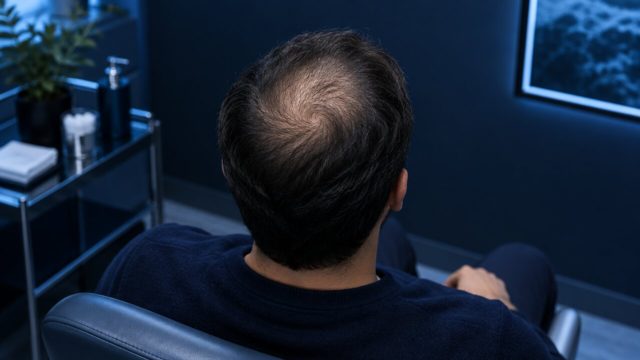
Hair loss does not follow the same course for everyone. Some people notice gradual recession at both temples, while others first see thinning at the crown, a widening part line, or diffuse reduction across the top of the scalp. A pattern that appears mild at 24 may remain slow for years, but it may also develop further. This is why the location of loss matters as much as the amount of loss.
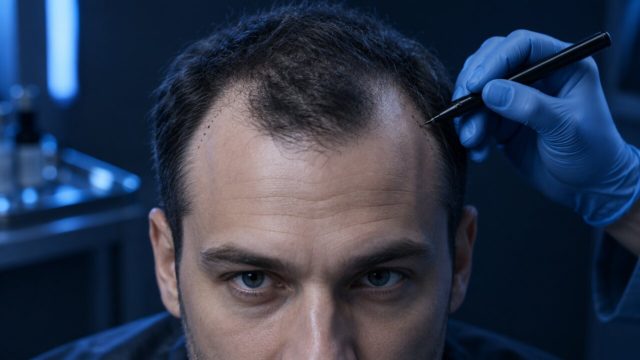
A clinical hair assessment can help distinguish a stable-looking pattern from one that is actively changing. Doctors may review clear photographs taken from several angles, examine the donor region, and use trichoscopy to look at hair shaft variation and follicle density. These findings can support a cautious recommendation, although no assessment can predict every future change with certainty.
Family history may provide useful context, but it is not a guarantee of how your own hair loss will progress. Looking at close relatives can suggest possible tendencies, yet each person has a different combination of genetics, hormones, health factors, and lifestyle influences. Your doctor will interpret this information together with your current scalp findings rather than relying on family history alone.
03Stability Matters More Than a Birthday
There is no universal age at which hair transplantation suddenly becomes suitable. In most patients, a more stable pattern makes planning easier because the surgeon can better estimate where future thinning may occur. At 24, signs of stability may include a pattern that has changed slowly over time, a hairline that is not rapidly receding, and enough donor reserve for both current and possible future needs.
Rapid recent shedding or quickly expanding thinning deserves careful review before surgery. Hair loss can be linked to genetic pattern loss, but it can also be influenced by stress, illness, nutritional issues, scalp inflammation, certain medicines, or other health-related factors. A doctor may recommend investigating the cause first, especially when the hair loss pattern is sudden, patchy, or unusual.
In some cases, waiting and monitoring can be a sensible part of the treatment plan rather than a missed opportunity. This may allow the pattern to become clearer and give time to evaluate non-surgical options with a qualified doctor. If surgery is later considered, a better understanding of the pattern can help protect the donor area and support a more natural design.
04Protect the Donor Area for Your Future
The donor area is one of the most important limits in hair restoration. Although donor hair is often more resistant to genetic thinning, it is not unlimited. Every graft used in a first procedure is a graft that cannot be placed elsewhere later. At a younger age, conserving this resource is especially important because future coverage needs may be larger than they appear today.
A responsible plan does not aim to use the highest possible number of grafts simply to create a very dense result in one area. Instead, it considers how to distribute grafts where they will have the strongest visual effect while keeping enough reserve if further loss develops. The front hairline, mid-scalp, and crown can compete for the same donor supply over time.
Donor assessment includes more than hair count. Hair thickness, texture, curl, colour contrast between hair and skin, density, and the size of the thinning zone can all influence visual coverage. For example, thicker or curlier hair may create a fuller appearance with fewer grafts than fine straight hair. Your doctor will explain what the donor area can realistically support.
05A Conservative Hairline Can Age Better
Many people in their twenties understandably request a low, straight, dense hairline similar to the one they had as teenagers. In long-term planning, this approach may create difficulties. A very low hairline uses many grafts and may look less natural if the rest of the scalp continues to thin. It can also leave fewer options for rebuilding the middle or crown later.
A carefully designed hairline usually reflects adult facial proportions, existing hair characteristics, and the likely direction of future hair loss. It does not need to look severe or artificial to be age-appropriate. Small irregularities, soft transitions, and gradual density changes can help create a more natural visual result when planned by an experienced medical team.
This does not mean every younger patient must accept obvious recession. Rather, the goal is to balance present confidence with future flexibility. A conservative design may be especially valuable where there is strong family history of advanced hair loss, signs of thinning behind the hairline, or limited donor density. Your doctor will discuss the reasoning behind the proposed design before treatment.
06Hair Transplant at 24: Surgical and Non-Surgical Planning
When a hair transplant at 24 is being considered, surgery should be discussed as one part of a broader hair restoration plan. Depending on the cause and pattern of loss, a doctor may discuss medical management options intended to support existing hair. These options are not suitable for everyone and may have possible risks or side effects, so they should only be considered after a proper medical consultation.
For patients who are suitable for surgery, Sapphire FUE and DHI are two commonly used approaches. In Sapphire FUE, follicular units are extracted individually and placed into carefully created recipient channels. DHI involves implantation with a specialised implanter. The most suitable technique depends on scalp characteristics, the planned coverage area, graft handling, and the clinical plan rather than a technique name alone.
Needle-free anaesthesia may be available for patients who are concerned about the injection process. Your medical team will explain the anaesthesia approach, expected sensations, aftercare requirements, and any relevant health considerations before the procedure. A clear discussion of comfort, safety, recovery, and realistic density is essential before giving consent to any surgical treatment.
07Set Realistic Expectations for the First Year and Beyond
Hair transplant growth is gradual. In the first days after treatment, small scabs and temporary redness are common. The transplanted hairs often shed during the early recovery period, which can worry patients but is typically part of the normal cycle. New growth usually begins gradually over the following months, while the final appearance takes longer to develop.
At Acibadem Hair Transplant Center, results are measured by trichoscopic graft survival at month 12, with a documented 98% rate under a written guarantee. This measurement concerns graft survival under the clinic's stated conditions; it does not mean that every patient will have identical density, hair-loss progression, or cosmetic outcome. Individual results can vary according to hair characteristics, healing, donor capacity, and ongoing native hair loss.
A successful result should be judged not only by how it looks in photographs at 12 months, but also by how well it fits the patient’s likely future pattern. Transplanted follicles can continue to grow for many years, while non-transplanted native hair may still become thinner. Long-term follow-up and a future-minded plan are therefore particularly important for people who begin treatment in their twenties.
08How a Doctor-Led Assessment Supports a Safer Choice
A good consultation should give you more than a graft estimate. It should explain what may be causing the hair loss, whether the pattern appears stable, what can realistically be achieved with available donor hair, and what could happen if thinning continues. You should also have the opportunity to ask about recovery, possible complications, expected timelines, and whether a future procedure may be needed.
Acibadem Hair Transplant Center is a dedicated hair restoration clinic in Istanbul licensed by the Turkish Ministry of Health. The clinic offers free online hair analysis reviewed by doctors, with WhatsApp replies typically within around two hours. Clear, high-quality images from the front, top, sides, crown, and donor area can help the team make an initial review, though an online review does not replace clinical assessment when this is needed.
For international patients, all-inclusive packages can include VIP transfer, a 4-star hotel, a care kit, and 12 months of follow-up. The clinic has welcomed patients from 38 countries over 12 years. Before making travel or treatment decisions, ask for a written plan that explains the recommended approach, the limits of the donor area, aftercare steps, and the factors that could affect your long-term result.
09Plan Your Istanbul Trip Around the First Recovery Days
International patients should allow enough time in Istanbul for the planned procedure, the first post-operative check if scheduled, and clear travel instructions from the medical team. Avoid arranging a rushed departure immediately after treatment. Your clinic will confirm when it is appropriate to fly and what documents, medicines, and aftercare items you should carry with you.
Before travelling, share a complete medical history, current medicines, allergies, and any recent illness with the clinic. Do not stop prescribed medication or start supplements simply for a hair transplant without advice from the doctor who manages your care. It is also sensible to ask in advance about fasting instructions, comfortable clothing for procedure day, and any activities to avoid before treatment.
Acibadem Hair Transplant Center provides all-inclusive packages that can include VIP transfer, a 4-star hotel, a care kit, and 12 months of follow-up. Keeping transfers and accommodation simple can be helpful during the early recovery period, when you may prefer to rest rather than manage busy transport arrangements. Your treatment coordinator can explain the itinerary and what is included before you travel.
10Practical Aftercare: The First Two Weeks Need Careful Handling
The first days after a hair transplant are important because the newly placed grafts need time to settle. Your medical team will give you specific washing and care instructions. In general, patients are asked not to rub, scratch, pick scabs, or apply unapproved products to the recipient area. Even if itching occurs, it is important to follow the clinic's guidance rather than disturb the scalp.
Sleeping position, head protection, and washing technique should be discussed before you leave the clinic. Many patients are advised to minimise pressure and friction on the transplanted area during the early recovery period. Loose, front-opening clothing can also be more practical than garments that need to be pulled over the head. Your doctor will confirm when normal hair washing, hats, exercise, and sun exposure can be resumed safely.
Contact the medical team promptly if you have symptoms that concern you, such as increasing pain, marked swelling, spreading redness, discharge, fever, or an unexpected reaction to medication. Some redness, scabbing, mild swelling, and temporary numbness can occur after surgery, but only your clinical team can assess whether a symptom is within the expected recovery process. Keep all planned follow-up appointments, including remote reviews where offered.
11A Month-by-Month Timeline Helps You Avoid Unnecessary Worry
During the first one to two weeks, scabs usually clear gradually with the instructed washing routine, while redness can last longer in some patients depending on skin type and healing. The appearance immediately after surgery is not the final result. The transplanted hairs may look short and uneven at this stage, and the scalp can still be sensitive.
In the following weeks, many patients notice shedding of the transplanted hair shafts. This is often known as shedding or shock loss and can be a normal part of the recovery cycle. Existing native hair near the treated area may also appear temporarily thinner in some cases. This period can be emotionally difficult, especially for younger patients hoping for a quick change, but it does not by itself show the final graft outcome.
Early new growth typically starts gradually over the months that follow, rather than appearing all at once. Coverage, hair calibre, and styling options usually continue to develop throughout the first year. At Acibadem Hair Transplant Center, graft survival is assessed trichoscopically at month 12, with a documented 98% rate under written guarantee. Your individual cosmetic appearance may still vary because density, hair texture, healing, and continued loss of native hair are different for each patient.
12Frequently Asked Questions
What can you expect 20 years after a hair transplant?
Twenty years after a hair transplant, transplanted follicles may still grow because they are commonly taken from a more resistant donor area. However, the surrounding non-transplanted hair can continue to thin over time, which may change the overall appearance. A conservative hairline and careful use of grafts can help preserve options if future treatment is needed.
Why does hair loss seem to affect Gen Z so early?
Genetic pattern hair loss can begin in the late teens or twenties, so some Gen Z adults are noticing it at an earlier life stage. Greater awareness through social media, close-up photos, and more open discussion may also make early changes more noticeable. Sudden or unusual shedding should be reviewed by a doctor because hair loss can have causes other than genetic pattern loss.
What happens 10 years after a hair transplant?
After 10 years, transplanted hair may continue growing, but native hair around it may have changed. Some patients remain satisfied with their coverage, while others may need their plan reviewed if hair loss has progressed. The outcome at 10 years depends on the original design, donor reserve, genetic pattern, medical management where appropriate, and individual healing.
Is 25 too early for a hair transplant?
Being 25 is not automatically too early for a hair transplant. The key considerations are whether the hair-loss pattern seems stable, whether the donor area is adequate, and whether the planned design leaves room for possible future thinning. A doctor-led assessment can help determine whether surgery, monitoring, or another approach is most appropriate.
Tento článok slúži len na všeobecné informačné účely a nenahrádza odbornú lekársku radu.
Tento sprievodca slúži na všeobecné informovanie a nenahrádza lekársku konzultáciu. O liečbe sa rozhoduje po osobnom alebo online posúdení lekárom.