V tomto článku8
- Prehľad
- How hair transplant hairline design is planned
- Why a natural hairline has controlled irregularity
- Graft choice, placement angle and density at the frontal edge
- Choosing a hairline that can age well
- From consultation markings to implantation day
- Healing, growth timeline and evaluating the final hairline
- Frequently Asked Questions
Hair transplant hairline design is the process of planning the position, shape, density and irregularity of a new frontal hairline so it suits the patient’s face and future hair-loss pattern. A natural result typically depends on conservative placement, fine single-hair grafts at the edge and a plan that protects the appearance as the patient ages.
- A natural hairline is usually irregular in a controlled way, rather than perfectly straight or symmetrical.
- The lowest possible hairline is not always the most suitable choice for long-term appearance.
- Single-hair grafts are typically selected for the visible leading edge of the hairline.
- Hair characteristics, facial proportions, donor supply and expected future loss all affect the design plan.
- A doctor-led assessment is important because a hairline transplant should be planned as a long-term procedure.
01Hairline Design in Transplant Surgery for Natural Results
Hair transplant hairline design is one of the most important parts of transplant surgery because the hairline is the feature people see first. It frames the forehead, influences facial balance and can affect whether transplanted hair appears naturally grown or surgically placed. Although graft implantation is technically important, even well-growing grafts may look less convincing if the new hairline is too low, too straight, too dense at the front or unsuitable for the person’s likely future hair loss.
A successful design is not based on copying one standard template. In most patients, the surgeon assesses forehead height, face shape, age, sex, natural hair direction, existing hairline pattern, hair calibre and the amount of donor hair available. The aim is generally to create a hairline that looks appropriate now while still looking believable years later. This is why a conservative plan can often be preferable to an aggressively low or sharply defined one.
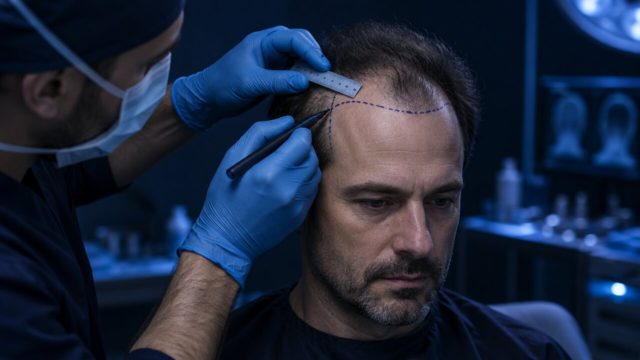
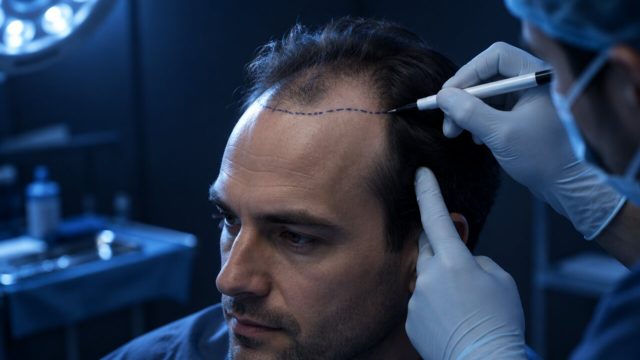
During a consultation, the proposed line is usually discussed before any grafts are placed. The doctor may mark several reference points on the forehead and show how small changes can alter the overall look. This conversation gives the patient an opportunity to explain their preferences, but final planning should remain medically responsible. A design must respect the limits of the donor area and the possibility that native hair may continue to thin.
02How hair transplant hairline design is planned
Hair transplant hairline design normally begins with facial analysis rather than a simple measurement from the eyebrows. Doctors consider the upper, middle and lower areas of the face, the width of the temples and the way the forehead meets the existing hair. A hairline that is technically low can make some faces look disproportionate, while a slightly higher, softer line may create a more balanced and mature appearance. The plan should also consider whether the patient normally wears their hair forward, back or to one side.
Age is especially relevant. A naturally youthful hairline is often lower and may have a different temple shape than a mature hairline. Reproducing a very low adolescent line for an adult with ongoing genetic hair loss may require too many grafts and may not age well. For this reason, surgeons commonly use a mature, age-appropriate starting position. Your doctor will confirm whether the requested position is realistic in relation to current hair loss and long-term donor management.
The design also includes the temple points and temporal recessions, not only the central frontal edge. These areas help create a natural transition from the forehead to the side of the scalp. Rebuilding them can be complex because hairs grow at very acute angles and in changing directions. In selected patients, careful temple work can improve facial framing, but it should not be added routinely when donor reserves or future treatment priorities suggest a more conservative approach.
03Why a natural hairline has controlled irregularity
Natural hairlines are not drawn with a ruler. They contain small changes in height, uneven groupings and subtle variation from one side to the other. This does not mean that the hairline should look random. Instead, the surgeon creates controlled irregularity that reflects the way natural hairs emerge. A perfectly straight line with identical spacing may be more noticeable, particularly in bright light, when the hair is wet or when it is worn short.
The first few rows are often called the transition zone. In this area, carefully selected fine grafts can create a softer edge between the forehead skin and fuller hair behind it. The density is typically built gradually rather than placed at the maximum possible level from the very first millimetre. This gentle progression can make the hairline appear less abrupt and may reduce the visual contrast between transplanted and existing hair.
Small details such as micro- and macro-irregularities may be used in appropriate cases. Micro-irregularity refers to very subtle shifts in the front edge, while macro-irregularity refers to broader, gentle changes across the overall hairline shape. Both should be planned with restraint. Overly exaggerated zigzags can look artificial too. The desired outcome is an edge that appears naturally formed, not a pattern that looks deliberately uneven.
04Graft choice, placement angle and density at the frontal edge
The type of graft placed at the hairline matters as much as its location. Follicular units may contain one, two or more hairs, but the finest single-hair grafts are typically reserved for the most visible front edge. Thicker or multi-hair grafts may be used further behind where greater visual density is needed. If coarse multi-hair grafts are placed too close to the forehead, the result can appear plug-like or overly dense in a way that does not resemble a natural hairline.
Hair transplant hairline design also depends on the angle and direction of every recipient site. Frontal hairs generally emerge forward at a low angle, then follow the chosen styling direction. If hairs are implanted too upright, they can look unnatural and may be difficult to style. The direction changes near the corners and temple areas, which is why these zones require careful surgical planning. Existing hair direction is an important guide whenever native hairs remain.
Density should be considered in context. A dense hairline may sound desirable, but density alone does not guarantee a natural visual result. Hair thickness, curl, colour contrast between hair and scalp, and the density behind the hairline all influence coverage. A very dense front placed ahead of sparse mid-scalp hair can create an isolated appearance. In many cases, a balanced distribution of grafts across priority areas is more useful than concentrating every available graft at the front.
05Choosing a hairline that can age well
Hair loss is often progressive, particularly in people with androgenetic alopecia. A hairline plan should therefore look beyond the first year after surgery. Native hair behind a transplanted frontal line may continue to miniaturise over time, potentially creating a gap between the new hairline and the remaining hair. Doctors assess the current pattern, family history and scalp examination findings when considering this risk, although no clinician can predict future hair loss with complete certainty.
A mature hairline can preserve donor grafts for areas that may need attention later, such as the mid-scalp or crown. The donor supply is limited, so every graft used at a very low frontal position is a graft that cannot be used elsewhere in the future. This is particularly important for younger patients or those with diffuse thinning. A responsible consultation should include a discussion of priorities, possible progression and whether medical management may be considered alongside surgery.
Hair transplant hairline design should also account for changing appearance with age. Skin texture, facial contours, grey hair and hairstyle preferences can change over decades. A line that is modestly conservative today can often remain harmonious as these changes occur. By contrast, an unusually low, dense and sharply shaped hairline may draw attention later if hair loss advances behind it. Long-term planning is therefore a key part of natural-looking transplant work, not a compromise in quality.
06From consultation markings to implantation day
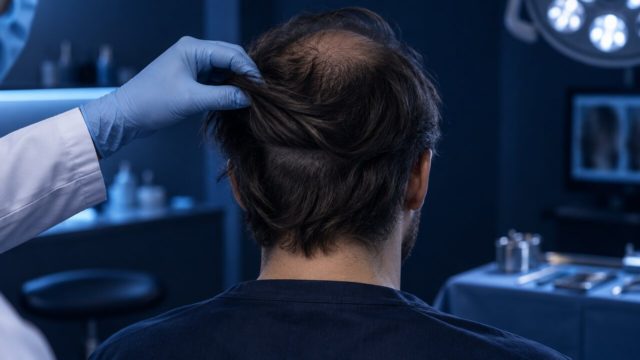
The process generally starts with a detailed review of the scalp, donor area and hair characteristics. At Acibadem Hair Transplant Center, international patients can begin with a free online hair analysis reviewed by doctors, with WhatsApp replies typically available within around two hours. An online review can help with early planning, but an in-person examination and medical assessment remain important before any procedure is confirmed.
On the procedure day, the hairline is usually marked while the patient is sitting upright so facial proportions can be assessed in a natural position. The team and patient can review the proposed line before surgery starts. After the plan is confirmed, grafts are harvested and prepared, then implanted according to the agreed design. Sapphire FUE and DHI are both techniques that may be considered, depending on the clinical plan, hair characteristics and area being treated.
Comfort measures may also be discussed before treatment. Needle-free anaesthesia is available at the clinic, although suitability and the anaesthesia approach are confirmed by the medical team. The procedure itself is only one part of the journey. Post-procedure instructions, careful washing and follow-up help support healing. Acibadem Hair Transplant Center provides all-inclusive packages that include VIP transfer, a 4-star hotel, a care kit and 12 months of follow-up for eligible patients.
07Healing, growth timeline and evaluating the final hairline
Immediately after surgery, the transplanted area usually has small crusts and temporary redness. This early appearance is not the final result. The transplanted hairs commonly shed during the initial weeks, which can be expected as the follicles enter a resting phase. New growth often starts gradually in the following months, but the pace and visual change vary between patients. Your medical team will explain the aftercare schedule and what signs should be reported.
As new hairs grow, the hairline may initially look lighter or less even than expected because different follicles enter growth at different times. Fine hairs at the leading edge can take time to gain length and contribute to the soft transition that was planned. Styling choices can also influence how the hairline appears during this period. It is generally more meaningful to assess the developing result over months rather than making conclusions in the early healing stage.
At Acibadem Hair Transplant Center, results are measured by trichoscopic graft survival at month 12, with a documented 98% rate under a written guarantee. This measurement relates to graft survival rather than a promise of one identical cosmetic outcome for every patient. Final appearance still depends on individual factors such as donor hair quality, existing hair loss, healing and adherence to aftercare guidance. A follow-up review allows the medical team to assess growth and discuss the result in context.
08Frequently Asked Questions
What can the coverage from 3,000 hair grafts look like?
Three thousand grafts can create very different visual coverage from one person to another. Hair thickness, curl, colour contrast, the number of hairs within each graft, the size of the treated area and the desired density all affect the result. In some cases, this number may be directed mainly to the frontal zone and mid-scalp, while in others it may be spread more widely; a doctor can explain what is realistic after assessing the donor area.
How long can a transplanted hairline last?
Transplanted follicles are usually taken from an area that is more resistant to genetic hair loss, so they can continue growing for many years in most suitable patients. However, the surrounding native hair may still thin over time, which can change the overall appearance of the hairline. Long-term planning, follow-up and appropriate medical guidance are important parts of maintaining a balanced result.
What may happen 20 years after a hair transplant?
Twenty years after a transplant, the implanted follicles may still be growing, but the appearance can be affected by ageing and continued loss of non-transplanted hair. Some people may notice thinning behind the transplanted area or changes in density elsewhere on the scalp. This is why a conservative, future-focused design and careful use of the donor area are important from the beginning.
What can 2,000 hair grafts look like after transplantation?
Two thousand grafts may provide noticeable improvement, especially when focused on a smaller area such as a receding frontal hairline or limited frontal thinning. It may not be enough to create high density across a large area, particularly if the crown and mid-scalp also need coverage. The likely visual effect should be discussed in relation to hair calibre, scalp contrast and the number of priority areas.
Tento článok slúži len na všeobecné informačné účely a nenahrádza odbornú lekársku radu.
Tento sprievodca slúži na všeobecné informovanie a nenahrádza lekársku konzultáciu. O liečbe sa rozhoduje po osobnom alebo online posúdení lekárom.