
V tomto článku8
- Pattern Hair Loss: Why the Cause Matters Before Surgery
- What Hair Transplant Effectiveness Means in Practice
- Donor Area Quality Sets the Limits of Coverage
- How Sapphire FUE and DHI Can Support a Natural Design
- The Recovery Timeline: When Results Usually Become Visible
- Protecting Existing Hair Is Part of Long-Term Success
- How to Judge Whether a Clinic’s Plan Is Realistic
- Frequently Asked Questions
Hair transplant effectiveness for pattern hair loss is typically high when a person has a stable, healthy donor area and a treatment plan that respects future hair loss. Transplanted follicles usually continue to grow long term, but surgery does not stop further thinning in the surrounding, non-transplanted hair.
- A hair transplant redistributes permanent donor follicles; it does not create new hair or cure pattern hair loss.
- Natural-looking results depend on donor supply, realistic graft planning, hair characteristics and surgical technique.
- Visible growth develops gradually, while the more meaningful result is commonly assessed around 12 months after surgery.
- Existing non-transplanted hair can continue to thin, so long-term planning and medical follow-up may be important.
- A doctor-reviewed assessment is needed to confirm whether surgery is appropriate for your pattern of hair loss.
01Pattern Hair Loss: Why the Cause Matters Before Surgery
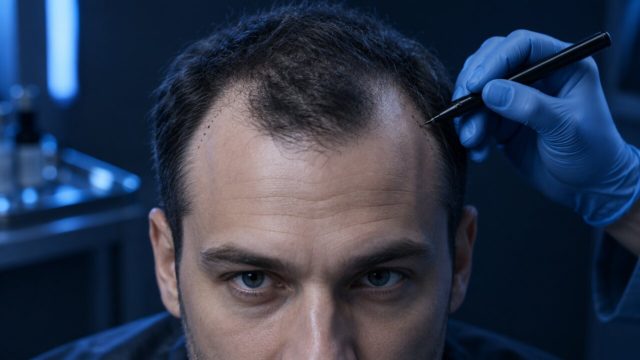
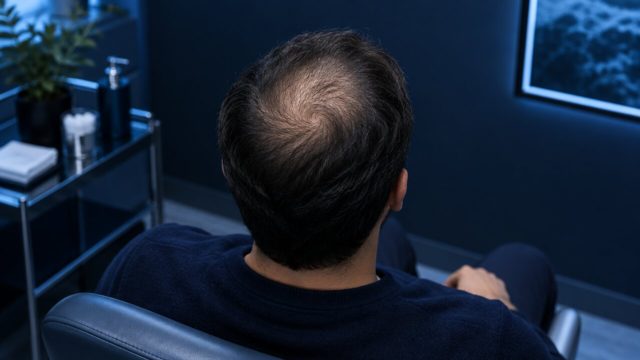
Hair transplant effectiveness starts with understanding the cause and pattern of thinning. Pattern hair loss is a progressive condition influenced by genetics and hormones. In men, it often appears as a receding hairline, thinning at the crown, or both. In women, it more commonly causes diffuse thinning over the top of the scalp while the frontal hairline may remain relatively preserved. A transplant can improve visible density in selected areas, but it cannot remove the biological tendency for susceptible native hairs to become finer over time.
During surgery, follicles are usually taken from the back and sides of the scalp, known as the donor area. These hairs are generally more resistant to the processes that cause pattern hair loss. After they are placed into thinning or bald areas, they tend to retain many of their donor-area characteristics. This is the principle that makes transplantation a useful option for many suitable patients. However, the donor area is limited, so every graft must be planned carefully rather than used simply to create the greatest possible density in one session.
Not all hair shedding is pattern hair loss. Temporary shedding can follow illness, stress, nutritional changes, hormonal shifts, certain medicines, or scalp inflammation. Some people also have conditions that cause patchy hair loss or scarring, where surgery may not be suitable until the condition is fully assessed and controlled. A clinical examination, scalp history and, where needed, further medical evaluation help identify the likely cause. Your doctor will confirm whether the pattern is stable enough and whether transplantation is a reasonable approach.
02What Hair Transplant Effectiveness Means in Practice
Hair transplant effectiveness is not only about whether grafts grow. It also includes whether the hairline looks age-appropriate, whether the density matches the available donor supply, whether graft direction follows the natural growth pattern, and whether the result continues to look balanced as a person ages. A technically successful procedure can still feel disappointing if expectations were unrealistic or if future thinning was not considered from the beginning.
In most suitable patients, implanted follicles shed their visible shafts shortly after surgery and then enter a resting phase. New growth commonly begins gradually over the following months. Coverage, texture and visual density continue to improve as hairs mature, so early photographs can be misleading. Clinics often assess the more established outcome at about month 12, although crown areas and individual growth cycles may take longer to show their full cosmetic effect.
At Acibadem Hair Transplant Center, results are measured by trichoscopic graft survival at month 12. The clinic documents a 98% graft survival rate under its written guarantee. This measurement refers to graft survival in the clinic’s documented protocol; it does not mean that every patient will achieve the same cosmetic density, nor does it predict the future behaviour of non-transplanted hair. Individual outcomes still depend on medical suitability, donor characteristics, scalp condition and adherence to aftercare guidance.
03Donor Area Quality Sets the Limits of Coverage
The donor area is one of the strongest predictors of what can be achieved. Doctors assess the number of usable follicles, hair thickness, curl or wave, colour contrast between hair and scalp, scalp flexibility, and the stability of the donor zone. Coarser or wavy hair may create more visual coverage than very fine, straight hair at the same graft number. Lower contrast between hair and scalp can also make thinning less noticeable, while high contrast may require more strategic placement.
A careful plan protects the appearance of the donor area as well as the recipient area. Taking too many grafts from one zone can leave the back or sides looking visibly thin, particularly with short hairstyles. For this reason, a responsible surgical plan usually spreads extraction appropriately and preserves follicles for possible future needs. The number of grafts that is safe for one person may be unsuitable for another person with a different donor density or hair loss pattern.
Age and the expected progression of hair loss also matter. A very low, dense hairline may look appealing in the short term, but it may not remain natural if hair loss advances behind it. Doctors generally consider facial proportions, family history and the current distribution of thinning when designing the hairline. A conservative, long-term design can provide a more harmonious appearance over time and may use the available donor supply more effectively.
04How Sapphire FUE and DHI Can Support a Natural Design
Sapphire FUE and DHI are methods used to extract and implant hair follicles, but neither technique can overcome limited donor supply or an unsuitable diagnosis. In Sapphire FUE, individual follicular units are extracted and recipient channels are created with sapphire blades before implantation. The method can support precise channel creation and control of angle, direction and distribution when performed by an experienced team and selected appropriately for the patient.
DHI also uses individually extracted follicles, with implantation commonly performed using a specialised implanter tool. It may be considered when the surgical plan requires controlled placement between existing hairs or in particular areas of the scalp. The best method is not automatically the newest or most heavily advertised one. Your doctor should recommend a technique according to the hair loss pattern, donor characteristics, existing hair, required graft number and the desired design.
Naturalness depends especially on the front hairline and transition zones. Single-hair grafts are often selected for the leading edge, while naturally occurring groups of hairs may be used behind it to build fullness. The angle of placement should follow the surrounding hair, particularly at temples, the frontal hairline and crown whorls. At Acibadem Hair Transplant Center in Istanbul, Sapphire FUE and DHI are available after a doctor-reviewed plan. Needle-free anaesthesia is also available for patients who are suitable for it.
05The Recovery Timeline: When Results Usually Become Visible
Immediately after surgery, small scabs, redness and mild swelling can occur. These effects are usually temporary, but the exact recovery experience varies by individual and by the extent of the procedure. Patients are normally given instructions on washing, sleeping position, activity restrictions and when to return to normal routines. It is important not to scratch, rub or dislodge newly placed grafts during the early healing period, as this is when they are most vulnerable.
Many patients notice shedding of the transplanted hair shafts in the first weeks after the procedure. This is commonly called shock shedding and is usually part of the normal hair cycle after transplantation. The follicle beneath the skin can remain in place even when the visible shaft falls out. New hairs often begin to appear after several months, initially fine and uneven. This stage requires patience because growth is not uniform across every area of the scalp.
By around six to nine months, many people see a clearer cosmetic change, although the final appearance is still developing. Around month 12 is often the point at which doctors can make a more meaningful assessment of growth, density and hair direction. Some patients, especially those with crown work, may continue to see maturation beyond that point. Follow-up visits or remote reviews allow the clinical team to monitor healing and answer questions during the process.
06Protecting Existing Hair Is Part of Long-Term Success
A transplant moves resistant follicles into an area of loss, but it does not stop pattern hair loss in the native hairs around them. This is a central point when discussing hair transplant effectiveness over the long term. If surrounding hairs continue to miniaturise, a previously dense-looking area can appear thinner again even though the transplanted follicles are still growing. This can create an uneven pattern unless the possibility was considered in the original design.
Depending on the diagnosis and medical history, a doctor may discuss non-surgical approaches that can help manage ongoing pattern hair loss. These may not be suitable for everyone and can involve benefits, limitations and potential side effects. They should not be started or stopped based only on online information. A qualified doctor can explain whether medical treatment, observation, scalp care or another approach is appropriate in an individual situation.
Long-term planning may also include accepting that additional surgery could be considered in the future if donor supply allows and hair loss progresses. This is not always necessary, and it should never be assumed in advance. A well-designed first procedure aims to preserve options by avoiding unnecessary donor depletion and an overly aggressive hairline. Healthy habits, attendance at follow-up reviews and early discussion of new shedding can support more informed decisions over the years.
07How to Judge Whether a Clinic’s Plan Is Realistic
A reliable consultation should focus on your diagnosis, donor area, goals and long-term hair loss risk rather than only offering a graft number. Ask how the hairline will be designed, how the donor area will be protected, which professional performs each stage, and how the clinic measures results. It is also useful to ask what aftercare is provided and how concerns are managed after you return home. Clear answers support informed consent and more realistic expectations.
For international patients, continuity of care matters even after travel is complete. Acibadem Hair Transplant Center is a dedicated hair restoration clinic in Istanbul licensed by the Turkish Ministry of Health. It has welcomed patients from 38 countries over 12 years. The clinic provides a free online hair analysis reviewed by doctors, with WhatsApp replies typically within about two hours, so prospective patients can begin with a preliminary discussion before making travel decisions.
All-inclusive packages at the center include VIP transfer, a 4-star hotel, a care kit and 12 months of follow-up. These services can make the treatment journey more organised, but they do not replace a medical assessment or guarantee a particular aesthetic outcome. The most useful next step is to share clear photographs and medical history for doctor review. Your doctor can then confirm candidacy, discuss suitable techniques and explain what a realistic improvement may look like for your pattern of hair loss.
08Frequently Asked Questions
What success rate can I expect from a hair transplant?
Success can be described in different ways, including graft survival, visible growth, natural appearance and patient satisfaction. In suitable patients, transplanted follicles typically grow long term, but no clinic can responsibly guarantee the same cosmetic result for every person. At Acibadem Hair Transplant Center, trichoscopic graft survival is documented at 98% at month 12 under a written guarantee.
What does 3,000 hair grafts cost in the United States?
There is no single standard price for 3,000 grafts in the United States. The total can vary substantially according to the city, surgical method, clinic facilities, team experience, whether the price is per graft or package-based, and what follow-up is included. Request a written, itemised quotation and confirm whether consultation, medicines, aftercare and any future reviews are included.
What can happen 10 years after a hair transplant?
Transplanted donor follicles often continue growing after 10 years because they are generally resistant to pattern hair loss. However, non-transplanted hairs may continue to thin, which can change the overall appearance. Some people remain satisfied with one procedure, while others may need medical management or may discuss further surgery if donor supply and clinical assessment allow.
Has Donald Trump had a hair transplant?
It is not appropriate to confirm or speculate about any individual’s medical history without reliable, consented information. Public appearance alone cannot determine whether someone has had a hair transplant, uses hair styling techniques, or has another explanation for their hair appearance. A personal assessment is the only reliable way to discuss whether transplantation may be suitable for you.
Tento článok slúži len na všeobecné informačné účely a nenahrádza odbornú lekársku radu.
Tento sprievodca slúži na všeobecné informovanie a nenahrádza lekársku konzultáciu. O liečbe sa rozhoduje po osobnom alebo online posúdení lekárom.