V tomto článku9
- Start with the reason for hair loss, not the procedure name
- Understand how FUE, Sapphire FUE, DHI, and FUT differ
- What is the best hair restoration method for your pattern?
- Compare donor-area management before comparing marketing terms
- Look at graft placement, hairline design, and survival monitoring
- Compare recovery, risks, and practical treatment experience
- Place surgery within a long-term hair preservation plan
- Use a practical checklist before choosing a clinic or technique
- Frequently Asked Questions
The best surgical hair restoration method depends on your hair-loss pattern, donor hair quality, scalp characteristics, goals, and long-term treatment plan. FUE, Sapphire FUE, DHI, and FUT can all be appropriate in selected patients, so a doctor-led assessment is the safest way to compare them.
- No single surgical technique is best for every patient; suitability depends on the donor area, degree of loss, and realistic goals.
- FUE and DHI are methods of placing grafts, while Sapphire FUE describes a type of blade used during recipient-site creation.
- The quality of graft handling, natural hairline planning, and donor-area management can matter as much as the technique name.
- Medical treatment may help protect existing hair, while a transplant redistributes permanent donor follicles rather than creating new hair.
- A written treatment plan should explain graft numbers, expected coverage, recovery, risks, follow-up, and any future hair-loss considerations.
01Start with the reason for hair loss, not the procedure name
When asking what is the best hair restoration method, it is important to begin with the cause and pattern of hair loss. Surgical hair restoration is usually designed for stable or progressing pattern hair loss when the donor area has enough healthy follicles. It may not be suitable as a first step for every type of shedding, patchy hair loss, scalp inflammation, or sudden change in density. A doctor should assess the scalp and medical history before recommending a procedure.
Hair transplantation works by moving hair follicles from a donor area, commonly the back and sides of the scalp, to areas with reduced density. The procedure does not create new follicles or stop the underlying process of hair loss. For this reason, a careful plan considers both the area that needs treatment now and the possibility that existing non-transplanted hair may continue to thin over time.
A consultation should also explore the patient’s priorities. Some people are mainly concerned about a receding hairline, while others want better coverage through the mid-scalp or crown. The available donor supply, hair calibre, curl pattern, skin-to-hair contrast, and the size of the thinning area can all influence what can be achieved. A responsible recommendation focuses on an age-appropriate, natural-looking design rather than promising maximum density everywhere.
02Understand how FUE, Sapphire FUE, DHI, and FUT differ
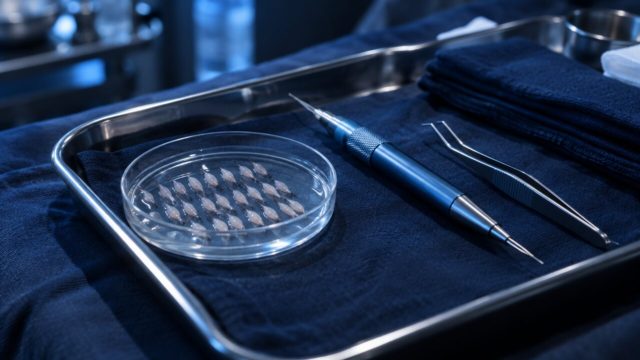
Follicular Unit Extraction, usually called FUE, removes individual follicular units from the donor area and places them into tiny recipient sites in the thinning area. Each follicular unit may contain one or more hairs. Because the grafts are extracted individually, FUE usually leaves small dot-like scars rather than one linear scar. The donor area is normally trimmed or shaved to allow accurate harvesting, although the exact preparation depends on the planned procedure.
Sapphire FUE follows the same general graft-extraction approach as FUE. The term refers to the use of sapphire blades when creating recipient sites for the grafts. These blades may allow precise site creation in appropriate cases, but they do not replace the need for sound surgical planning, gentle graft handling, and correct angle control. The method should be selected because it suits the patient’s needs, not because of a technique label alone.
Direct Hair Implantation, known as DHI, is generally described as a method of placing extracted grafts with a specialised implantation tool. In many cases, this can combine recipient-site creation and graft placement in one step. DHI may be useful when the team wants controlled placement around existing hair or in selected smaller areas. However, it is not automatically better than FUE with pre-made sites; the right choice depends on the treatment zone, graft characteristics, and the clinical plan.
Follicular Unit Transplantation, or FUT, involves removing a narrow strip of donor scalp, then separating it into follicular units under magnification. FUT can be considered for selected patients, particularly when a linear donor scar is acceptable and the surgeon believes it can preserve donor supply effectively. It is a different surgical approach with different recovery considerations. Not every clinic offers it, and not every patient is a suitable candidate for it.
03What is the best hair restoration method for your pattern?
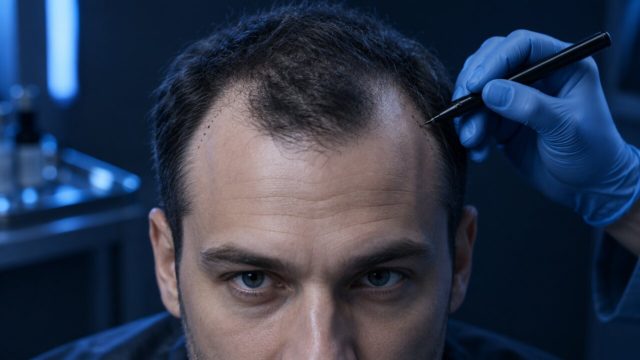
For a patient with early temple recession and strong donor density, a carefully limited FUE or DHI procedure may be considered. The aim is often to restore framing around the face while keeping enough donor hair available for the future. Hairline work requires particular attention because direction, single-hair graft placement, irregularity, and density transitions strongly affect whether the result looks natural as the person ages.
For diffuse thinning across the top of the scalp, the decision can be more complex. Placing grafts between existing miniaturised hairs may require careful management to reduce stress on the native hair. In some patients, medical treatment and observation may be recommended before surgery, especially if the hair loss appears active. A transplant can improve the appearance of density, but it cannot safely provide unlimited coverage over a large area.
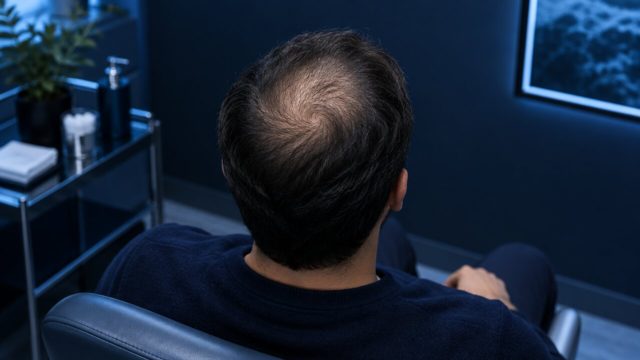
Crown restoration also needs realistic planning. The crown can require many grafts because hair grows in a circular pattern and the area may appear larger under bright light. A surgeon may prioritise the frontal hairline and mid-scalp first, depending on the patient’s pattern and long-term donor capacity. This is why photos alone cannot determine the ideal technique or graft number.
The question what is the best hair restoration method is therefore less about finding one winner and more about matching the method to the clinical situation. A good plan identifies what should be treated, what should be protected, and what may need to remain a future priority. Your doctor will confirm whether surgery is appropriate and which approach is technically suitable.
04Compare donor-area management before comparing marketing terms
The donor area is a limited resource. Every extracted graft should be planned with future appearance in mind, because removing too many follicles from one zone can reduce density there. During an assessment, the medical team should examine donor density, hair thickness, scalp flexibility where relevant, and the distribution of follicles across the safe donor area. These factors help guide a conservative extraction strategy.
FUE is often associated with a shorter hairstyle because it avoids a single linear scar, but it still leaves small extraction marks. Their visibility can vary according to skin type, healing, extraction pattern, haircut length, and the number of grafts taken. FUT leaves a linear scar, which may be more noticeable with very short hair. Neither scar pattern should be described as invisible, and every surgical procedure has healing-related uncertainty.
Patients should ask how the proposed graft count was calculated and whether it protects donor appearance. A high graft number is not automatically a better plan. The number needed depends on the size of the recipient area, existing hair, desired density, hair characteristics, and future risk of progression. A clinic should be willing to explain the balance between present improvement and preserving options for later.
At Acibadem Hair Transplant Center, the treatment plan is based on a doctor-reviewed assessment rather than a standard package recommendation. The dedicated hair restoration clinic in Istanbul is licensed by the Turkish Ministry of Health. Patients can begin with a free online hair analysis, and replies on WhatsApp are typically provided within around two hours for initial guidance.
05Look at graft placement, hairline design, and survival monitoring
A transplant result depends on much more than how grafts are removed. Recipient-site angle, direction, depth, and distribution influence how transplanted hair grows and how it blends with the native hair. Hair in the front generally grows forward at a shallow angle, while the crown follows a changing spiral pattern. Placing grafts without respecting these patterns can produce an unnatural appearance even if the grafts grow.
Hairline design should be individual rather than copied from a photograph or a celebrity. A very low or overly straight hairline may use too many grafts and may not suit future hair loss. In most patients, a mature, softly irregular hairline with fine single-hair grafts at the leading edge can create a more natural transition. Denser multi-hair grafts may be used behind the hairline when clinically appropriate.
Graft survival is another important subject to discuss. Patients should ask how a clinic measures results and at what time point. At Acibadem Hair Transplant Center, results are measured by trichoscopic graft survival at month 12, with a documented 98% rate under written guarantee. Individual visual density and final cosmetic appearance can still vary because they are influenced by hair characteristics, scalp condition, healing, and the original extent of hair loss.
When comparing providers or methods, look for clear information about who plans the procedure, how grafts are handled, and how outcomes are followed. Terms such as dense packing or maximum grafts are not enough on their own. A safe comparison includes clinical assessment, informed consent, realistic discussion of limitations, and a follow-up pathway after the operation.
06Compare recovery, risks, and practical treatment experience
Recovery after hair transplantation is usually manageable, but it still requires planning. Small crusts and redness in the recipient area are common during the early healing period, while the donor area may feel tender or tight depending on the method used. Patients are normally given instructions about washing, sleeping position, sun exposure, exercise, headwear, and when to return to normal activities. Your medical team should provide instructions specific to your procedure.
Transplanted hairs often shed in the weeks after surgery before new growth becomes visible. This shedding phase can be concerning if it is unexpected, so patients should understand the growth timeline before treatment. Early new growth may be fine and uneven. In many patients, the appearance continues to develop over several months, and assessment at month 12 provides a more meaningful view of the result.
Possible risks include swelling, temporary shock loss of existing hair, folliculitis, numbness, infection, poor growth, visible scarring, and an unnatural-looking design. Although serious complications are uncommon with appropriate medical care, no surgical procedure is risk-free. Patients with medical conditions, scalp disorders, blood-clotting concerns, or certain medications need individual medical review before making a decision.
Comfort options can also be discussed without allowing them to become the main decision factor. Needle-free anaesthesia is available at Acibadem Hair Transplant Center for suitable patients. It may help make the anaesthesia stage more comfortable, but your doctor will confirm whether it is appropriate for you and explain the full process, including standard safety measures.
07Place surgery within a long-term hair preservation plan
A hair transplant redistributes follicles; it does not treat every cause of hair loss or guarantee that native hair will remain unchanged. Many patients with androgenetic hair loss benefit from discussing medical options that may help slow further miniaturisation. These options can have side effects and may not be suitable for everyone, so they should be considered with a qualified doctor rather than started solely from online information.
Topical treatments, oral medicines, low-level light devices, scalp products, and nutritional supplements are often presented as alternatives to surgery. Their role differs greatly. Some medical treatments have evidence for selected forms of pattern hair loss, while shampoos and cosmetic products may mainly improve hair feel or reduce breakage. No product should be assumed to replace a properly planned transplant when significant follicle loss has already occurred.
The best long-term plan may combine observation, medical management where appropriate, and surgery at the right time. Younger patients or those with rapidly changing loss may need particularly cautious hairline planning. Waiting can sometimes provide clearer information about the pattern, while early medical care may help preserve existing hair. A doctor can explain the advantages and limitations of each route after assessment.
If you are comparing what is the best hair restoration method, ask which parts of the plan address existing hair and which parts address areas that are already bald. This simple question helps distinguish realistic advice from overly broad claims. The goal is usually not to recreate teenage density, but to achieve an improvement that looks balanced, durable, and appropriate for the available donor supply.
08Use a practical checklist before choosing a clinic or technique
Before committing to a procedure, ask for a clear diagnosis or working assessment, a map of the planned recipient area, and an explanation of the donor strategy. You should understand the proposed graft range, why that range is suitable, whether one or more sessions may be needed, and what outcome is realistic for your degree of loss. Be cautious of plans that offer an exact graft number without a proper assessment of the donor area.
Ask how the clinic supports international patients before and after the procedure. Acibadem Hair Transplant Center has welcomed patients from 38 countries over 12 years. Its all-inclusive packages can include VIP transfer, a 4-star hotel, a care kit, and 12 months of follow-up, helping patients organise the practical parts of their visit to Istanbul while maintaining access to aftercare guidance.
Written information matters. Consent documents should explain the technique, anticipated recovery, possible risks, medicines or medical conditions that need disclosure, and the follow-up schedule. If a guarantee is discussed, ask what it covers, how it is documented, and how the result is assessed. Clear answers are a sign of an organised clinical process, while vague promises should be approached carefully.
Finally, give yourself time to compare recommendations. The most suitable choice is usually the one that respects donor limitations, addresses the pattern of hair loss, and provides a believable long-term plan. A free online hair analysis can be a useful first step, but it should lead to doctor-reviewed guidance rather than replace a full clinical assessment.
09Frequently Asked Questions
Which option is most effective for regrowing hair?
The most effective option depends on the cause of hair loss. For pattern hair loss, doctor-supervised medical treatment may help maintain or improve existing miniaturised hair in suitable patients, while transplantation can restore hair to areas where follicles have been permanently lost. A medical assessment is needed because treatment for sudden shedding, scarring hair loss, or scalp disease is different.
What does 3,000 hair grafts cost in the United States?
There is no single reliable price for 3,000 grafts in the USA because fees vary by city, clinic, surgical method, team experience, donor complexity, and what is included in aftercare. A written quote should state whether the price is per graft or per session and whether medicines, follow-up visits, and additional procedures are included. Patients should avoid choosing only by the lowest advertised figure.
How did Matthew McConaughey reportedly regrow his hair?
There is no verified public medical record that confirms exactly how Matthew McConaughey’s hair changed. Public comments and media reports should not be treated as clinical evidence or as proof that a particular product or method will work for another person. Hair appearance can also be affected by styling, lighting, hair length, medical treatment, and natural variation.
Is there a hair restoration product that really works?
Some doctor-recommended medical treatments can be effective for selected people with pattern hair loss, but suitability, expected benefit, and possible side effects vary. Cosmetic shampoos, oils, and supplements may improve the feel or appearance of hair but should not be assumed to regrow lost follicles. A doctor can help identify whether a product is appropriate for the cause of your hair loss.
Tento článok slúži len na všeobecné informačné účely a nenahrádza odbornú lekársku radu.
Tento sprievodca slúži na všeobecné informovanie a nenahrádza lekársku konzultáciu. O liečbe sa rozhoduje po osobnom alebo online posúdení lekárom.