V tomto článku8
- Prehľad
- Separate a genuine advance from a marketing label
- Look for clinical evidence, not only impressive images
- Check safety, regulation and the quality of follow-up
- Assess transplant tools by the result they support
- Interpret celebrity stories, online photos and early drug news carefully
- Use a structured consultation to make a realistic decision
- Frequently Asked Questions
New hair restoration technology should be judged by reliable clinical evidence, appropriate regulation, safety information and realistic long-term results, not by a dramatic before-and-after image alone. Ask whether the treatment is established, who it is suitable for, how outcomes are measured and what follow-up is provided.
- A new treatment is not automatically a proven or appropriate treatment for every type of hair loss.
- The strongest evidence usually comes from well-designed human studies with clear methods and longer follow-up.
- For hair transplantation, graft handling, surgeon-led planning and post-procedure care matter as much as the device or technique name.
- Celebrity stories and social media photos cannot confirm a diagnosis, treatment plan or individual result.
- A doctor-reviewed assessment can help separate realistic options from early-stage claims.
01New Hair Restoration Technology: How to Assess Evidence
When patients hear about new hair restoration technology, it is understandable to feel hopeful and curious. Hair loss can affect confidence, daily routines and self-image, so a new product, procedure or device may sound like an immediate answer. However, a treatment can be innovative without being fully tested, widely available or suitable for your specific cause of hair loss. The most useful question is not simply whether a technology is new. It is whether there is good evidence that it is safe, effective and relevant to your needs.
Hair restoration includes several different areas: medical treatments intended to slow hair loss, methods that may support scalp health, surgical transplantation, imaging tools and experimental approaches that aim to influence hair follicle activity. These options do not all have the same purpose. A technology that improves planning for a transplant is different from a medicine designed to reactivate follicles, and neither replaces a proper diagnosis of the reason for hair thinning.
A careful assessment starts with the basics. Find out what type of hair loss is being treated, how the technology is supposed to work, and whether it has been studied in people with a similar condition. Your doctor should also consider your age, pattern of hair loss, donor area, medical history and expectations. This approach can reduce the risk of spending time and money on claims that are not yet supported by reliable clinical information.
02Separate a genuine advance from a marketing label
In hair restoration, words such as advanced, breakthrough, next generation and revolutionary are often used in advertising. These terms do not have a single medical definition. A clinic or company may use them to describe a new instrument, a revised version of an established method or an early-stage treatment that is still being researched. Marketing language may be useful for introducing an idea, but it does not tell you how well the idea performs in real patients.
A meaningful advance should have a clear practical benefit. For example, it may help the clinical team assess the scalp more accurately, extract grafts with less trauma, control the angle of implantation or monitor healing more closely. Even then, the benefit needs to be demonstrated rather than assumed. A device that looks sophisticated may not necessarily create a better result if the treatment plan, graft handling and medical oversight are weak.
It is also important to distinguish an established technique from an experimental one. Sapphire FUE and DHI are established hair transplant approaches that may be selected according to a patient's hair characteristics and treatment goals. By comparison, a newly announced follicle-related compound or cell-based treatment may still be in laboratory work or early human trials. Ask directly whether the option is routine clinical care, available only in a research setting, or not yet available to patients at all.
03Look for clinical evidence, not only impressive images
The quality of evidence matters more than the number of posts, videos or testimonials. A first step may be laboratory research showing that an ingredient affects follicle cells. This can be scientifically interesting, but it does not prove that the same effect will happen safely on a human scalp. Small early studies in people can offer useful signals, yet they may not answer important questions about the ideal dose, long-term safety or which patients benefit most.
Stronger evidence generally comes from well-designed clinical studies that explain who took part, what treatment was used, what comparison was made and how results were measured. For hair loss, credible outcome measures may include standardised photographs, hair counts, hair shaft measurements and trichoscopic assessment. A good report should also state how long participants were followed, because a short-term change may not reflect a durable result through the hair growth cycle.
When evaluating new hair restoration technology, look for information beyond the headline result. Was the research published in a peer-reviewed medical journal or only announced in a press release? Were side effects reported? Did participants have the same kind of hair loss as you? Was there a comparison group? A responsible provider should be comfortable discussing uncertainty and limitations, rather than presenting preliminary findings as a guaranteed transformation.
04Check safety, regulation and the quality of follow-up
Safety should be assessed before excitement. Every treatment, including a non-surgical one, can have limitations, side effects or situations in which it is not appropriate. A topical or oral treatment may have medical considerations. A procedure that involves injections, energy-based devices or scalp manipulation may require specific hygiene standards, trained professionals and a plan for managing complications. Do not assume that an option is risk-free because it is described as natural, painless or non-invasive.
Regulation is another useful check, although it is not the only one. Approval or clearance can mean different things in different countries, and it may apply to a device rather than a claimed cosmetic outcome. Ask where the treatment is legally offered, what it is authorised to do, and whether the provider can explain its regulatory status in clear language. If the answer relies only on vague statements such as internationally certified, request more specific information.
Follow-up is especially important because hair growth is gradual. Initial shedding, healing and visible growth may happen at different times, depending on the treatment. A quality care pathway should tell you who to contact after the procedure, when progress will be reviewed and how concerns will be assessed. At Acibadem Hair Transplant Center, patient care includes 12 months of follow-up as part of its all-inclusive packages, helping patients stay connected with the clinical team during the recovery period.
05Assess transplant tools by the result they support
For surgical hair restoration, the newest-looking tool is rarely the only factor that shapes the outcome. Hair transplantation depends on accurate diagnosis, realistic hairline design, donor-area planning, careful extraction, graft preservation, implantation technique and aftercare. A tool may assist one stage of this process, but it cannot compensate for an unsuitable candidate, an overharvested donor area or a design that does not match future hair loss patterns.
Modern transplant practice may include high-magnification assessment, detailed scalp imaging, refined extraction instruments and implantation tools designed to support controlled placement. Sapphire FUE uses a sapphire blade during the channel-opening stage, while DHI uses an implanter approach for placement. Neither technique should be presented as universally best. Your doctor will confirm which approach, if any, is appropriate after reviewing your donor supply, hair calibre, scalp condition and desired coverage.
New hair restoration technology in transplantation should therefore be assessed through measurable standards, not only through the name of the instrument. Ask how grafts are counted and handled, who performs each part of the procedure, how the donor area is protected and how growth will be monitored. At our dedicated hair restoration clinic in Istanbul, results are measured by trichoscopic graft survival at month 12, with a documented 98% rate under a written guarantee. This is a specific measurement approach, not a promise that every individual will have the same cosmetic result.
06Interpret celebrity stories, online photos and early drug news carefully
Celebrity hair stories attract attention because visible changes can appear dramatic. However, photographs cannot confirm the cause of hair loss, the treatment used, the timing of treatment, styling choices, lighting or photo editing. A public figure may have used medical therapy, a transplant, hair fibres, different grooming, several approaches together or none of the options suggested online. It is not safe to build your own treatment plan around an unverified public story.
The same caution applies to treatments discussed in news reports, including PP405 and other compounds being developed for hair loss. Early research may be encouraging, particularly if it explores a new biological pathway, but development takes time. Before a medicine can be routinely offered, researchers and regulators typically need more information about effectiveness, safety, dosage, appropriate users and long-term outcomes. Announcements about funding, trials or future plans are not confirmation that a treatment is ready for general patient use.
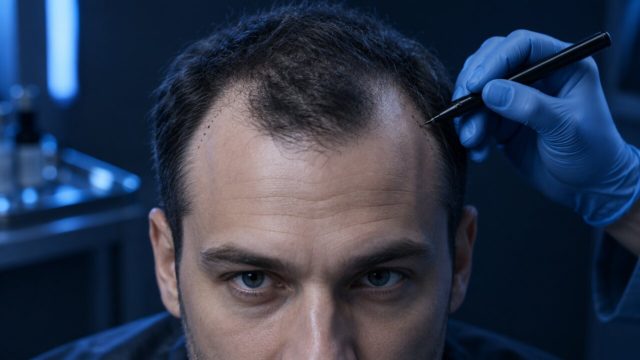
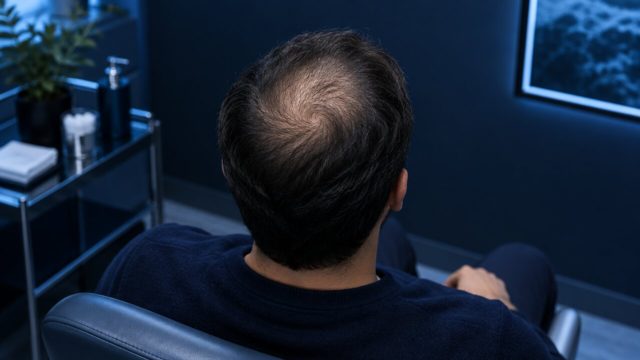
Before-and-after galleries can still be helpful when they are used responsibly. Look for consistent lighting, similar hair length, comparable angle, clear timing and a realistic explanation of what was done. For transplant results, ask whether the images show the donor area as well as the recipient area and whether the result is shown after sufficient growth time. A trustworthy discussion will also explain that individual density depends on donor capacity and the extent of hair loss.
07Use a structured consultation to make a realistic decision
A reliable consultation should feel like an assessment, not a sales presentation. The clinician should ask about when your hair loss began, whether it is continuing, family history, scalp symptoms, previous treatments and general health. In some patients, sudden shedding, patchy loss, inflammation or scalp discomfort may need medical investigation before a cosmetic treatment is considered. Identifying the pattern of hair loss is essential because different conditions may need different care.
Prepare practical questions in advance. You may ask what diagnosis is suspected, what evidence supports the recommended option, what alternatives exist and what may happen if you wait. If transplantation is discussed, ask about the proposed number of grafts, donor-area limits, the expected appearance over time and whether future loss could change the result. Clear answers should be specific to the consultation, while remaining realistic about uncertainty.
International patients can start with a free online hair analysis reviewed by doctors at Acibadem Hair Transplant Center. Replies are typically provided on WhatsApp within about two hours, allowing patients to ask initial questions before travelling. The centre is licensed by the Turkish Ministry of Health and has welcomed patients from 38 countries over 12 years. An online assessment is a useful first step, but your doctor will confirm suitability and final planning through the appropriate clinical evaluation.
08Frequently Asked Questions
When is PP405 likely to become available for patients?
PP405 is not currently a routine, established hair loss treatment for the general public. Its availability will depend on the progress of clinical trials, safety findings and regulatory decisions, so no reliable public date should be assumed. Until those steps are complete, it is best viewed as an investigational approach rather than a confirmed treatment option.
How did Matthew McConaughey reportedly restore his hair?
Matthew McConaughey has publicly attributed his hair improvement to a topical treatment, but independent medical details have not been confirmed. Public comments and photographs cannot establish a diagnosis, exact treatment plan or outcome. His experience should not be treated as evidence that the same approach will work for another person.
What has Elon Musk used for hair growth?
Elon Musk has not publicly confirmed a complete medical record or exact hair restoration plan. Changes seen in public photographs have led to reports and speculation about hair transplantation, but the technique, timing and any additional treatments cannot be verified from images. A doctor should assess your own hair loss rather than using a celebrity comparison.
What are the newest technologies used in hair transplantation?
Current advances include improved scalp assessment, refined FUE extraction tools, sapphire blades for channel opening, DHI implantation methods and trichoscopic monitoring of graft growth. These tools support different stages of treatment, but they do not replace clinical skill, donor-area planning or aftercare. Sapphire FUE and DHI are available at Acibadem Hair Transplant Center, subject to doctor assessment.
Tento článok slúži len na všeobecné informačné účely a nenahrádza odbornú lekársku radu.
Tento sprievodca slúži na všeobecné informovanie a nenahrádza lekársku konzultáciu. O liečbe sa rozhoduje po osobnom alebo online posúdení lekárom.