
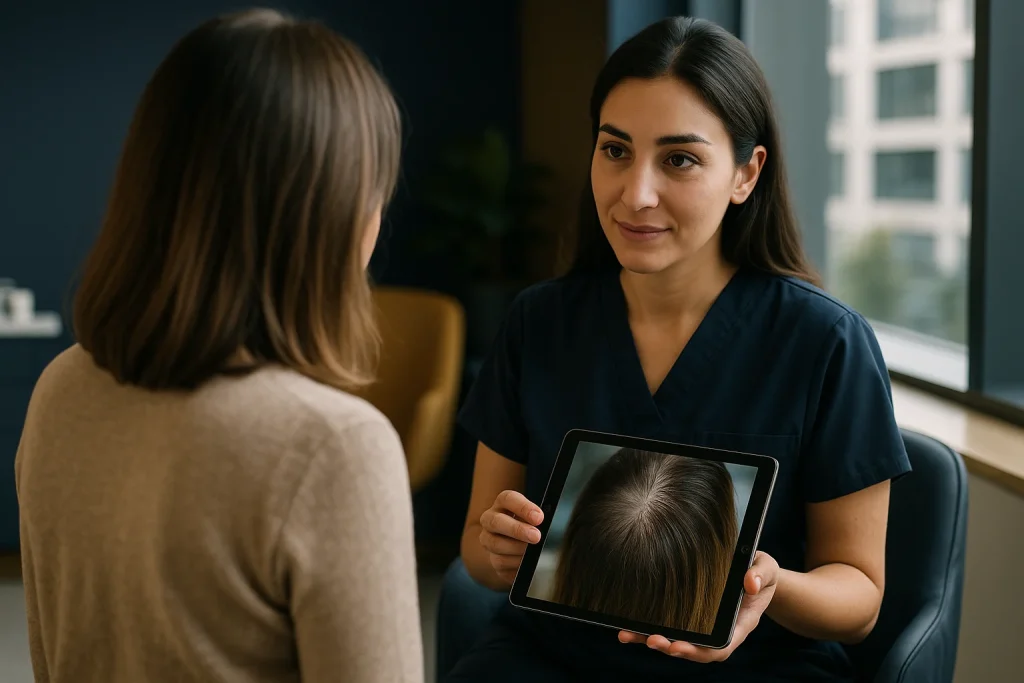
Learning how to reduce dht in females naturally can be a useful part of supporting scalp and hair health, but natural measures do not reliably block DHT in the same way as prescribed treatment. Before considering a hair transplant, a doctor should identify the cause of shedding, assess whether loss is stable, and discuss appropriate medical options.
- Female hair thinning can have several causes, so high DHT should not be assumed without a proper medical assessment.
- Balanced nutrition, stress management, gentle hair care, and treatment of underlying deficiencies may support hair health but do not directly eliminate scalp DHT.
- Doctors may use blood tests, scalp examination, and trichoscopy to distinguish androgen-related thinning from other forms of hair loss.
- A hair transplant is usually considered only after the cause of hair loss is understood and ongoing loss is reasonably controlled.
- Women with sudden shedding, scalp symptoms, menstrual changes, acne, or increased facial hair should seek medical evaluation promptly.
01Reducing Dht in Women Before Considering Hair Transplant
For women experiencing thinning hair, the first priority is to understand why it is happening. Searches for how to reduce dht in females naturally are common, especially when the scalp becomes more visible around the part line or crown. However, DHT is only one possible factor in female hair loss. Hormonal changes, iron deficiency, thyroid disease, rapid weight loss, stress, medication, inflammatory scalp conditions, and inherited sensitivity can also contribute. A careful assessment is more helpful than trying to treat one hormone without knowing the full picture.
DHT, short for dihydrotestosterone, is a hormone made from testosterone. In genetically sensitive hair follicles, it may gradually shorten the growth phase of the hair cycle and lead to finer, shorter hairs over time. This pattern is often described as female pattern hair loss or androgen-related hair thinning. Not every woman with thinning hair has high DHT levels in the blood. In many patients, follicles are simply more sensitive to normal hormone levels, which is why a scalp and medical evaluation matters.
Before hair transplantation, doctors generally look for a stable pattern of loss and a healthy donor area at the back and sides of the scalp. If active shedding continues, transplanted hair may grow while surrounding native hair keeps thinning, which can affect the overall appearance. Addressing hormonal, nutritional, medical, and scalp-related factors first may help create a more predictable foundation for long-term planning.
02How to reduce dht in females naturally: realistic expectations
Natural approaches may support general hormonal and scalp health, but they should be viewed realistically. There is no proven natural method that completely stops or “kills” DHT on the scalp. Some dietary patterns, plant-based ingredients, and lifestyle changes are discussed online for hormone balance, yet their effects on female scalp DHT are usually limited, variable, or not well established. It is safer to avoid treating supplements as a replacement for medical assessment or prescribed care.
A balanced diet with adequate protein, iron, zinc, vitamin D, vitamin B12, and essential fatty acids supports normal hair production when these nutrients are lacking. This does not mean that taking extra supplements will improve hair growth in everyone. Excessive supplementation can be harmful, and iron should not be taken without appropriate advice or testing. A doctor may recommend blood tests when symptoms, diet, medical history, or the pattern of hair loss suggests a possible deficiency.
Sleep, regular physical activity, and stress reduction can also be worthwhile supportive measures. Severe or prolonged stress may trigger a shedding condition called telogen effluvium, sometimes several months after the stressful event. Stress management does not directly block DHT, but it may reduce an additional burden on the hair cycle. Gentle routines such as walking, yoga, relaxation exercises, and consistent sleep schedules can be practical parts of a wider hair health plan.
03Recognising possible androgen-related hair thinning
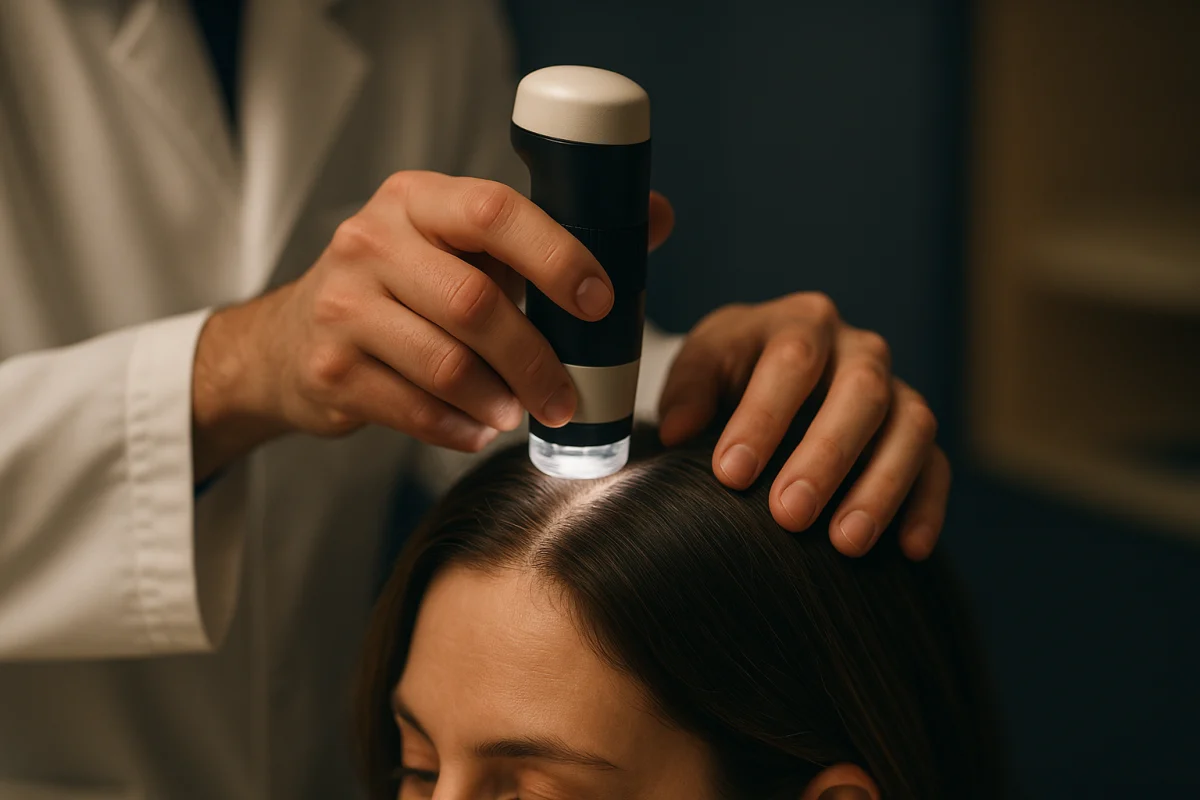
Female pattern hair loss often develops gradually. Many women first notice widening of the central part, reduced density over the crown, or difficulty creating their usual hairstyle. The frontal hairline may remain relatively preserved, unlike the more receding pattern often seen in men. Hair strands can become finer before there is obvious loss of density, so early changes may be subtle. A doctor can use scalp examination and trichoscopy, a magnified assessment of the scalp and hair shafts, to look for miniaturisation.
Possible signs of higher androgen activity can include persistent acne, increased facial or body hair, oily skin, irregular menstrual cycles, or difficulty with ovulation. These features do not confirm high DHT by themselves, and many have causes unrelated to DHT. When they occur together with scalp thinning, a doctor may consider an endocrine assessment. Conditions such as polycystic ovary syndrome can involve androgen-related symptoms, but diagnosis requires a full clinical review rather than a single sign or home test.
Sudden, patchy, painful, itchy, or heavily inflamed hair loss should not be treated as routine DHT-related thinning. Patchy loss may indicate an autoimmune or fungal condition, while burning, scaling, pustules, or marked redness may suggest inflammation that needs prompt care. Similarly, rapid diffuse shedding after illness, childbirth, surgery, major stress, or a restrictive diet can have a different cause and may require a different approach.
04Why a medical review should come before supplements
A medical review can help identify factors that are treatable and may improve without surgery. Depending on symptoms and history, a clinician may ask about family hair patterns, menstrual health, recent illness, pregnancy, medications, diet, emotional stress, and hair practices. They may also examine the scalp for inflammation and assess whether hair density is changing mainly at the crown, throughout the scalp, or in patches.
Blood testing is not necessary for every patient, but it may be appropriate when a doctor suspects anaemia, low iron stores, thyroid dysfunction, vitamin deficiency, or hormonal imbalance. Results should be interpreted in context. For example, a normal hormone level does not always exclude follicle sensitivity, and a low nutrient result does not always explain all hair changes. A professional review connects the findings with the clinical pattern rather than relying on one result alone.
It is important to tell your doctor about any herbal product, vitamin, hormone-related supplement, or medicine you use. Some supplements marketed for hair or hormone balance may interact with medication, alter laboratory results, or be unsuitable during pregnancy or breastfeeding. Women who are pregnant, trying to conceive, breastfeeding, or have a history of hormone-sensitive conditions should be especially cautious and discuss options with an appropriately qualified clinician.
05Lifestyle and scalp care that can support healthier hair
When people ask how to reduce dht in females naturally, a scalp-friendly daily routine is often a sensible starting point, even though it is not a direct DHT treatment. Wash the scalp often enough to remove oil, sweat, and product build-up, using a product suited to your skin sensitivity. Clean hair does not cause hair loss. In fact, avoiding washing because of shedding can leave loose hairs in place and make the next wash appear more dramatic.
Reduce repeated traction and breakage by avoiding very tight ponytails, braids, extensions, or styles that pull on the hairline for long periods. Limit harsh bleaching, excessive heat, and frequent chemical processing if the hair is fragile. These measures cannot reverse follicle miniaturisation, but they may reduce avoidable shaft damage and make existing hair look fuller. A wide-tooth comb, lower heat settings, and careful detangling are simple adjustments that many patients find manageable.
Dietary changes should focus on consistency rather than restrictive rules. Include sufficient protein from suitable foods, as hair shafts are largely made of protein. Aim for varied meals that include vegetables, fruit, whole grains, and sources of healthy fats, while adapting choices to your own medical and cultural needs. Crash diets and rapid weight changes can disrupt the hair cycle. If appetite, weight, or digestion has changed significantly, discuss this with a healthcare professional.
06Medical treatment options for DHT-related female hair loss
If androgen-related thinning is diagnosed, a doctor may discuss evidence-based medical treatment to slow progression and encourage thicker growth in suitable patients. The right option depends on the diagnosis, age, medical history, pregnancy plans, current medicines, and the degree of hair loss. Some treatments work by supporting the hair growth cycle, while others may be considered to reduce androgen effects. Your doctor will explain expected benefits, possible side effects, monitoring needs, and whether a treatment is appropriate for you.
Hair treatment takes time because follicles grow slowly. In most patients, meaningful assessment requires several months, and early shedding can occur with certain treatments as hair cycles adjust. Stopping an effective treatment may allow the underlying hair loss process to continue again. For this reason, it is useful to discuss a long-term maintenance plan before beginning treatment rather than expecting an immediate or permanent change.
Not all women need hormone-related medication, and these medicines are not appropriate for everyone. They can have important precautions, particularly for women who could become pregnant. Self-medicating with products obtained online is not recommended. A qualified clinician should confirm the diagnosis and select treatment only after considering safety, contraception requirements where relevant, and other health factors.

07When can a hair transplant be considered for women?
A hair transplant may be considered for selected women with stable hair loss, adequate donor hair, and realistic expectations. It is not usually the first step when shedding is active, the diagnosis is uncertain, or the donor area is also becoming thin. A transplant redistributes healthy follicles from a donor zone to areas with reduced density; it does not stop the biological process affecting non-transplanted hair. This is why stabilisation and planning are central to a safe approach.
During a transplant consultation, doctors assess the pattern and extent of thinning, hair shaft characteristics, scalp condition, and donor density. They also consider whether a medical or non-surgical plan may provide a better first option. In women, preserving natural density and avoiding an unnatural-looking result are particularly important. The number of grafts that can be safely harvested varies from person to person, so no responsible clinic should promise a fixed result before examination.
At Acibadem Hair Transplant Center, a dedicated hair restoration clinic in Istanbul licensed by the Turkish Ministry of Health, free online hair analysis is reviewed by doctors before travel planning. Sapphire FUE and DHI techniques are available for suitable candidates. The team can explain whether transplantation may be appropriate after reviewing the visible pattern, medical history, and donor area, while an in-person assessment remains important for final planning.
08Preparing for a consultation and protecting long-term results
Prepare for a hair consultation by noting when the thinning began, whether it followed an illness or life event, and which areas have changed most. Bring or share a list of medicines and supplements, previous blood results if available, and clear photographs showing progression over time. This information can help the doctor distinguish long-standing pattern thinning from recent diffuse shedding and decide whether further investigations may be useful.
Women considering how to reduce dht in females naturally should also be open about pregnancy plans, menstrual changes, skin symptoms, and family history of thinning. These details are private but clinically relevant because they influence which investigations and treatments may be safe. A good consultation should leave you with a clear understanding of the likely diagnosis, alternatives to surgery, potential limitations, and the maintenance that may be needed after a transplant.
Long-term hair care is usually a combination of realistic expectations, regular follow-up when advised, and protection of the existing hair. If a transplant is performed, aftercare and follow-up support are important parts of the process. Acibadem Hair Transplant Center provides all-inclusive packages that can include VIP transfer, a 4-star hotel, a care kit, and 12 months of follow-up. Results are assessed using trichoscopic graft survival at month 12, with a documented 98% rate under written guarantee; individual cosmetic outcomes can still vary according to each patient’s hair and clinical circumstances.
09Frequently Asked Questions
Can anything naturally eliminate DHT from the scalp?
No natural method has been proven to completely eliminate DHT from the scalp. A nutritious diet, stress management, and gentle scalp care may support general hair health, but they do not reliably block DHT. If androgen-related hair loss is suspected, a doctor can discuss appropriate assessment and evidence-based treatment options.
Which symptoms may suggest high DHT or androgen activity in women?
Possible signs include gradual crown or part-line thinning, acne, increased facial or body hair, oily skin, and irregular periods. These symptoms do not prove that DHT is high, as they can have different causes. A clinician may recommend scalp examination and, where appropriate, hormone or other blood tests.
Is it possible to reverse DHT-related hair loss in women?
Some women may see improved density or thicker-looking hair when the cause is identified and treated early, but full reversal is not always possible. Results depend on how long follicles have been miniaturising, the underlying diagnosis, and response to treatment. A hair transplant may be considered for selected patients when loss is stable and the donor area is suitable.
At what age are DHT levels highest?
DHT levels generally rise after puberty and are often higher during early adult years, but levels vary considerably between individuals. In women, hair thinning related to androgen sensitivity may become more noticeable around hormonal transitions, including after menopause, even when measured DHT is not unusually high. Follicle sensitivity and overall hormonal balance can be as relevant as the DHT level itself.
Tento článok slúži len na všeobecné informačné účely a nenahrádza odbornú lekársku radu.
 06
06 12
12