
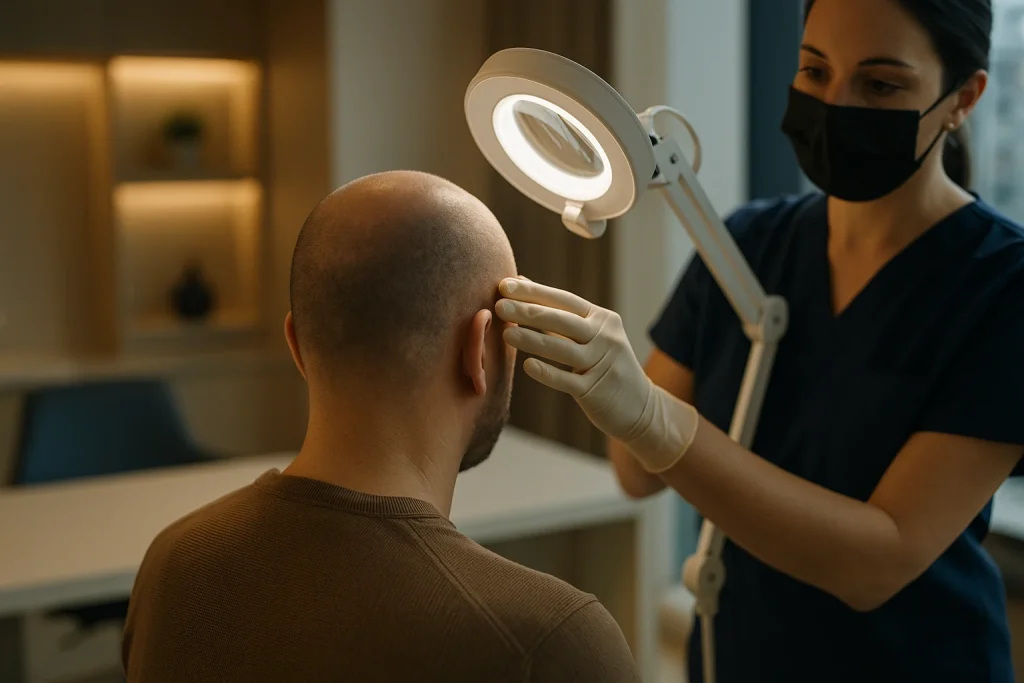
A scalp dermaroller should not be used on a newly transplanted scalp unless your hair transplant doctor has clearly approved it. Microneedling may be considered later for selected patients, but using it too early can disturb healing skin, increase infection risk, and potentially affect grafts.
- Do not use a dermaroller on the recipient or donor area while crusts, redness, tenderness, or open skin are present.
- A doctor should confirm when the scalp has healed enough for any microneedling treatment after a hair transplant.
- Microneedling may support some non-surgical hair-loss plans, but it is not a replacement for a correctly planned hair transplant or medical assessment.
- The main downsides include pain, irritation, bleeding, infection, scarring, and possible worsening of scalp inflammation when used incorrectly.
- Minoxidil and dermarolling work differently, and the most suitable approach depends on the cause of hair loss and your scalp condition.
01Why hair transplant recovery comes first
After a hair transplant, the priority is protecting the transplanted follicles and allowing the scalp barrier to heal. A scalp dermaroller creates tiny controlled punctures in the skin. Although this may be appropriate in some clinical contexts, it is not suitable for a scalp that is still recovering from follicular unit extraction or direct hair implantation. Newly placed grafts need time to settle, while the donor area also needs to close and recover without unnecessary friction or trauma.
In the early recovery period, patients may experience small crusts, swelling, redness, itching, tightness, or temporary sensitivity. These changes can be normal parts of healing, but they also mean the skin is more vulnerable. Rolling needles over a healing area may remove crusts too forcefully, introduce bacteria, cause bleeding, or create inflammation around follicles that are still establishing their blood supply.
Your post-operative instructions should always take priority over general information online. The appropriate timeline can differ according to the technique used, the size of the procedure, healing progress, medications, and any existing scalp condition. Your doctor will examine or review your recovery and confirm when normal washing, exercise, cosmetic products, and any scalp procedure can be safely resumed.
02When a scalp dermaroller may be considered
A scalp dermaroller may be considered only after full healing and only when there is a clear clinical reason to use it. In non-surgical hair-loss care, microneedling is sometimes used as an additional approach for people with certain types of thinning. It aims to create very small channels in the skin and trigger a controlled wound-healing response. However, the quality of the evidence, the method used, and the response can vary between patients.
After transplantation, microneedling is not usually an essential part of standard recovery. The transplanted follicles are placed during surgery, and their long-term growth depends on careful planning, graft handling, recipient-site preparation, and healthy healing. A dermaroller cannot improve an incorrectly planned procedure, replace appropriate medical treatment for ongoing hair loss, or guarantee denser results in the transplanted area.
If microneedling is discussed at a later stage, a doctor should first check for ongoing redness, folliculitis, dandruff, eczema, psoriasis, acne-like bumps, sensitivity, or signs of infection. It may also be unsuitable for people who form abnormal scars, have a bleeding concern, use certain medicines, or have a condition that affects wound healing. A professional assessment is important before putting needles on the scalp.
03Understanding graft security and the healing timeline
Hair grafts are particularly delicate immediately after placement. During the first days, rubbing, pressure, scratching, tight headwear, or accidental injury can affect the recipient area. A dermaroller combines repeated pressure with sharp needles, so it is not a safe early-recovery tool. Even if a patient feels generally well, the scalp may not yet have completed the deeper stages of repair.
Later in recovery, the visible appearance of the scalp can be misleading. Crusts may have disappeared and washing may feel comfortable, yet skin remodelling and follicle adaptation continue over time. Transplanted hairs often shed before new growth begins, which can be worrying but is commonly part of the cycle after surgery. Using a needling device during this period without medical approval may create irritation without providing a proven benefit.
Instead of adding unapproved treatments, follow the clinic’s aftercare plan, wash as instructed, protect the scalp from injury and excessive sun exposure, and attend or complete recommended follow-up reviews. At Acibadem Hair Transplant Center, follow-up is included for 12 months in all-inclusive packages, allowing the care team to monitor recovery and discuss appropriate next steps if concerns arise.
04Potential benefits and limits of microneedling for hair loss
Microneedling has attracted attention because controlled skin injury may stimulate wound-healing signals and may improve the penetration of some topical treatments. For certain patients with pattern hair loss, it may be used alongside a broader medical plan. This does not mean that every person with thinning hair should use a home dermaroller, and it does not establish microneedling as a universal solution for hair regrowth.
Hair loss has many possible causes, including genetic pattern hair loss, stress-related shedding, nutritional issues, hormonal changes, inflammatory scalp disease, traction, autoimmune conditions, and medication effects. Each cause needs a different approach. For example, a scalp with active inflammation may need treatment of the underlying condition rather than repeated microneedling, which could aggravate irritation.
A scalp dermaroller should therefore be viewed as a possible adjunct, not a diagnosis or a standalone cure. Before beginning any hair-loss routine, it is sensible to understand why shedding or thinning is happening. A free online hair analysis reviewed by doctors can help patients begin this conversation, but an in-person assessment may still be needed when symptoms are complex or the scalp looks unhealthy.
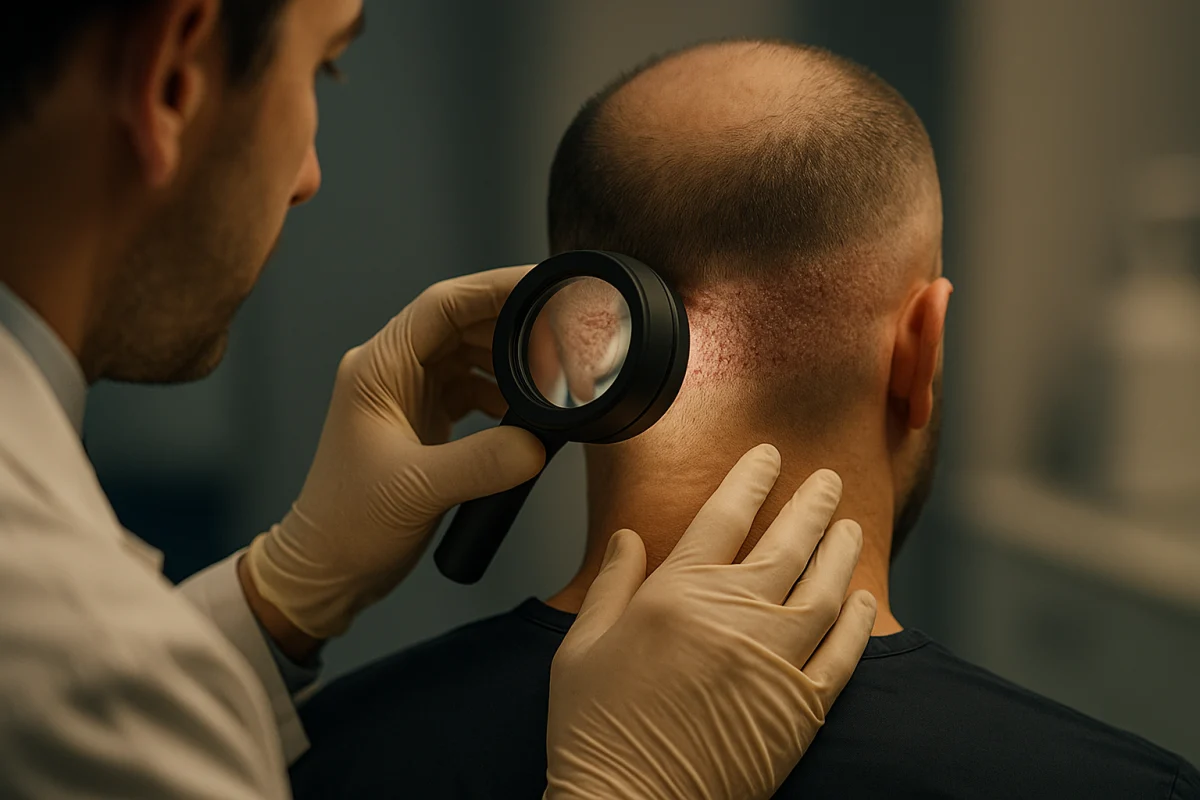
05Why needle length and technique matter
Dermarollers are sold with different needle lengths, but a longer needle does not automatically mean a better outcome. Needle length affects how deeply the device may enter the skin and how much irritation it can cause. Home devices can also be difficult to use evenly on curved scalp areas, especially near the hairline, crown, temples, or areas with existing hair that catches in the roller.
A 0.5 mm device is commonly discussed online for hair regrowth, but it is not appropriate to assume that it will work for every scalp or every type of hair loss. Clinical approaches can use different devices, depths, intervals, preparation methods, and hygiene standards. These details matter because an unsuitable technique may cause unnecessary inflammation or damage rather than a useful controlled response.
If a doctor considers microneedling appropriate, they may advise on whether professional treatment or a carefully supervised home plan is more suitable. Do not share a roller with another person, use a damaged device, or apply it to broken, infected, sunburned, or inflamed skin. Cleaning alone does not remove every risk, especially if the device has become worn or contaminated.
06Risks that are especially relevant after surgery
The most common immediate effects of dermarolling can include discomfort, pinpoint bleeding, redness, tenderness, and short-term scalp sensitivity. These effects may be more significant when the device is used too aggressively, too often, or over irritated skin. On a post-transplant scalp, these reactions can be difficult to distinguish from a recovery concern, which may delay appropriate medical review.
Infection is an important risk because needles create openings in the skin. A roller that has not been properly cleaned, a scalp touched with unwashed hands, or applying unsuitable products after needling can introduce irritants or microorganisms. Signs such as increasing pain, spreading redness, warmth, swelling, discharge, fever, or pustules require prompt medical attention rather than further home treatment.
Repeated trauma can also lead to prolonged inflammation, post-inflammatory colour changes, flare-ups of existing dermatitis, and in rare cases scarring. People sometimes press harder because they expect visible bleeding or stronger discomfort to produce better results. This is not a safe assumption. More injury does not reliably mean more hair growth, and it may be particularly harmful in areas that have undergone hair restoration.
07Dermarolling, minoxidil, and combination plans
Dermarolling and minoxidil are not directly interchangeable treatments. Minoxidil is a topical medicine used for certain hair-loss patterns, while microneedling is a procedure that creates controlled micro-injuries. Some treatment plans may include both, but this should not be interpreted as proof that a combination is necessary, safe for everyone, or more effective for every patient.
Applying topical products too soon after needling may increase irritation or absorption through the temporarily disrupted skin barrier. This may be relevant for minoxidil and for cosmetic serums, oils, or products with fragrance and active ingredients. A doctor can advise whether a product should be paused around a microneedling session and when it can be restarted. Patients should not make changes based only on online routines.
Following a hair transplant, doctors may recommend a medical plan to help preserve existing non-transplanted hair when appropriate. This decision depends on the pattern of hair loss, medical history, future hair-loss risk, and treatment tolerance. A careful plan is more valuable than comparing one popular method against another, because preserving native hair and supporting scalp health are both long-term considerations.
08Safer next steps for patients considering a dermaroller
If you are thinking about using a dermaroller after hair transplantation, first contact your clinic and explain where you want to use it, how long it has been since surgery, and whether you have any symptoms. Clear photographs may help the care team assess visible healing remotely, although an in-person examination may be recommended if there are signs of inflammation or another scalp problem.
Patients travelling to Istanbul for treatment can also plan questions about recovery before surgery. Acibadem Hair Transplant Center is a dedicated hair restoration clinic licensed by the Turkish Ministry of Health and provides Sapphire FUE and DHI techniques. The team can explain the recovery plan, including what should be avoided in the first stages and when individual activities may be reviewed by a doctor.
The safest approach is usually simple: do not rush to add procedures while grafts and skin are healing. Focus on gentle aftercare, follow the written instructions you receive, and ask before introducing a roller, exfoliant, topical medicine, supplement, or salon treatment. This protects your investment in surgery and helps ensure that any additional treatment is based on your scalp’s real condition rather than a general trend.
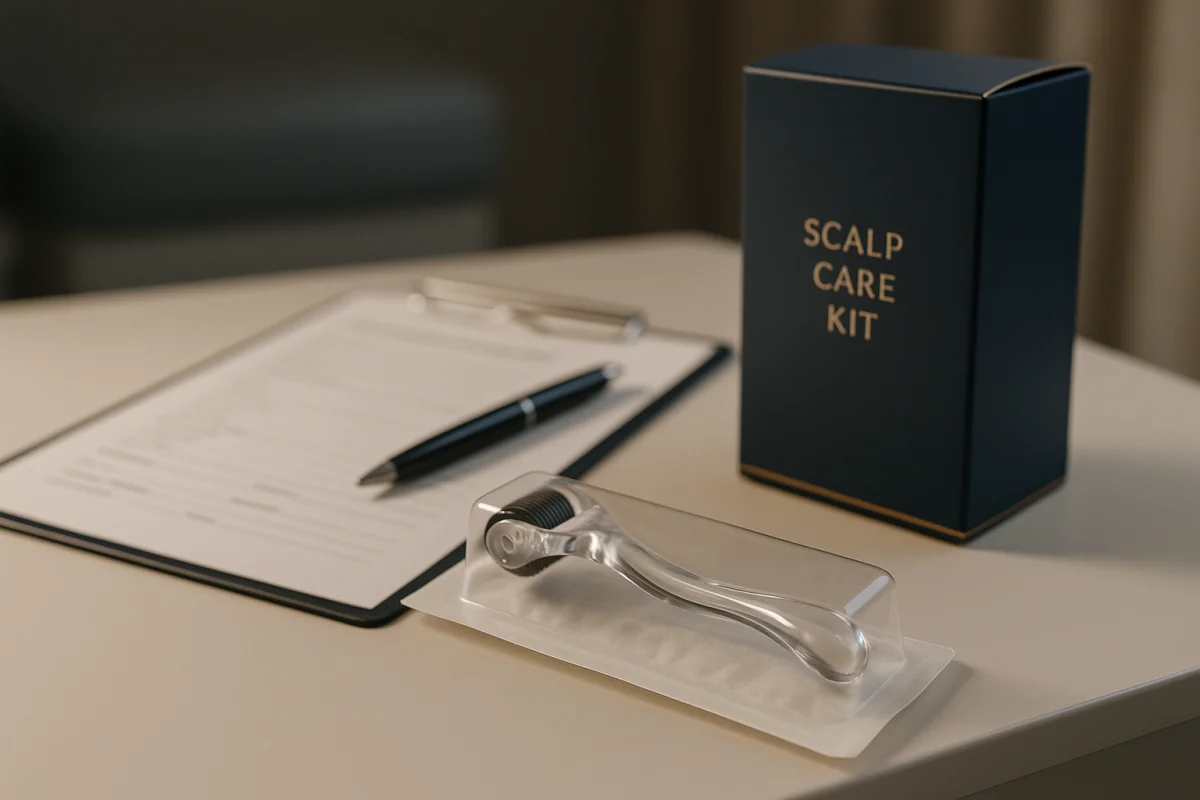
09Practical aftercare before the scalp is ready for any needling
In the first stage after a hair transplant, keep aftercare simple and gentle. Use only the washing method, lotion, shampoo, sprays, and medicines included in or specifically approved within your written plan. Wash your hands before touching the scalp, avoid rubbing with a towel, and do not pick at crusts or scratch itching skin. A dermaroller, scalp scrub, exfoliating brush, chemical peel, or vigorous massage should not be added during this period unless your doctor has directly approved it.
It is also sensible to avoid situations that can expose the healing scalp to friction, sweat, dirt, or accidental impact. This may include contact sports, swimming pools, sea swimming, saunas, steam rooms, and very intense exercise until your clinic says these activities can be resumed. Sun protection is important as well: a healing scalp can be sensitive to sun exposure, but any hat or head covering should be worn only as instructed so it does not rub against the recipient area.
If you are unsure whether a product or activity is safe, ask before trying it. This includes dry shampoo, hair fibres, styling wax, hair dye, oils, anti-dandruff products, and salon treatments. Products that seem mild can still sting or leave residue on recently treated skin. Careful early aftercare is more useful than trying to speed up growth with extra procedures.
10A realistic recovery timeline: what patients may notice
Recovery after hair transplantation happens in stages, and the exact pace differs between patients. In the first days, visible crusting, mild redness, swelling, or tightness can occur. The recipient and donor areas may look different from one another, especially after follicular unit extraction. During this stage, graft protection is the priority, and dermarolling should be avoided completely unless a doctor gives an exceptional instruction.
Over the following weeks, the scalp often becomes more comfortable and crusts usually clear with correct washing. Transplanted hair shafts may then shed. This is commonly called shedding or shock loss, and it does not necessarily mean that the grafts have failed. It is important not to react to this phase by using a roller, stronger products, or frequent new treatments. The follicles continue their biological adjustment below the skin.
New growth is usually gradual rather than immediate. Early hairs can appear fine, uneven, or lighter in texture before they mature. Density, hair direction, and coverage should be assessed over months, not day by day in a mirror. At Acibadem Hair Transplant Center, all-inclusive packages include 12 months of follow-up, which gives patients an opportunity to share progress photographs and ask about recovery changes. The clinic measures results using trichoscopic graft survival at month 12, with a documented 98% rate under written guarantee.
11Travel planning for international hair transplant patients
International patients should plan recovery needs before flying home. Ask the clinic when travel is appropriate for your procedure, how to protect the recipient area during the journey, and which aftercare items should remain in hand luggage. Avoid placing heavy bags in overhead lockers if this creates a risk of bumping the scalp. During the trip, follow the advice provided about hydration, medicines, sleeping position, and avoiding pressure on treated areas.
Choose loose, comfortable clothing that does not need to be pulled tightly over the head after surgery. If headwear is permitted, use only the type and timing recommended by the clinic. It is helpful to arrange a calm first few days after returning home, with time for gentle washing and rest rather than immediate work travel, crowded events, or demanding physical activity.
Acibadem Hair Transplant Center in Istanbul supports international patients with all-inclusive packages that include VIP transfer, a 4-star hotel, a care kit, and 12 months of follow-up. Before travel, patients can request a free online hair analysis reviewed by doctors. Replies are available on WhatsApp within approximately two hours, helping patients clarify practical questions before making arrangements.
12Frequently Asked Questions
Can using a dermaroller on the scalp be beneficial?
It may be beneficial for selected people with certain types of hair thinning when it is part of a doctor-guided plan. It is not suitable for every cause of hair loss, and it should not be used on a newly transplanted or irritated scalp. Your doctor can assess whether microneedling is appropriate for you.
Does a 0.5 mm dermaroller help with hair regrowth?
A 0.5 mm dermaroller is often discussed in relation to hair regrowth, but its effectiveness is not guaranteed and depends on the cause of hair loss, technique, treatment schedule, and scalp health. It is not a universal solution and may cause irritation if used incorrectly. After a hair transplant, wait for direct approval from your doctor before using any needle device.
Is dermarolling more effective than minoxidil?
Dermarolling and minoxidil work in different ways, so one is not automatically better than the other. Minoxidil may be appropriate for some patients with pattern hair loss, while microneedling may sometimes be considered as an additional treatment. A doctor can help determine which option, if any, fits your diagnosis and recovery stage.
What are the disadvantages of a dermaroller for the scalp?
Possible disadvantages include pain, redness, bleeding, scalp irritation, infection, worsening of dermatitis, and potential scarring when the device is used improperly. Risks increase when the roller is not clean, is used too forcefully, or is applied to damaged skin. It can also delay proper care if a person tries to self-treat an underlying scalp condition.
Tento článok slúži len na všeobecné informačné účely a nenahrádza odbornú lekársku radu.
 06
06 12
12