
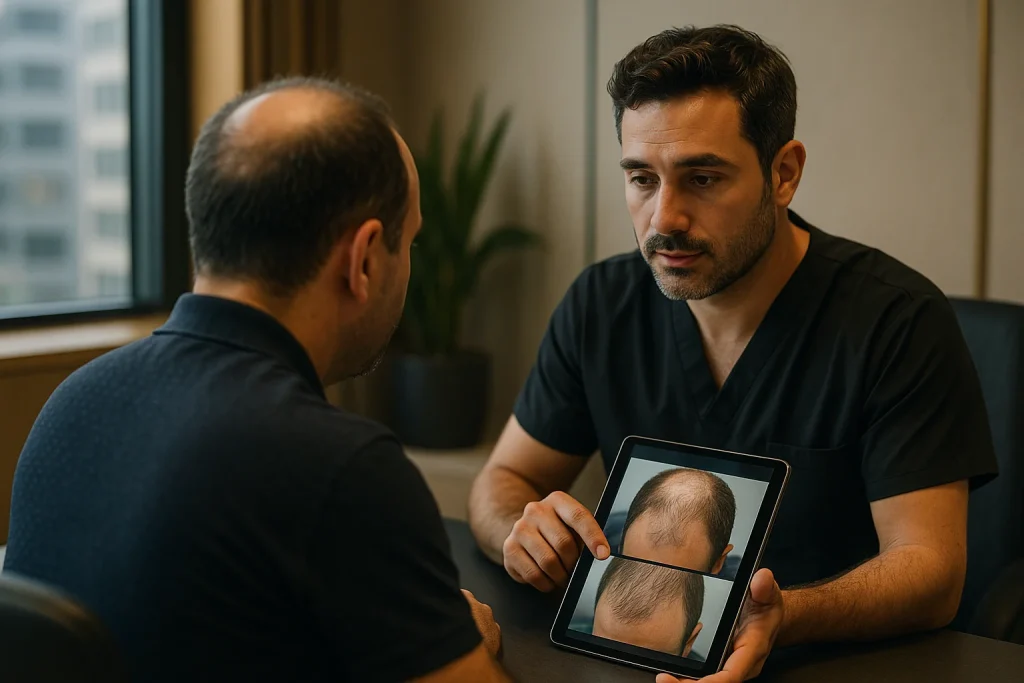
Scarring alopecia treatment focuses first on identifying and controlling the inflammation or injury that has damaged the follicles. A hair transplant may be considered only when the condition has been inactive and the scalp is clinically stable, as confirmed by a dermatologist or hair restoration doctor.
- Scarring alopecia can permanently damage hair follicles, so early medical assessment is important.
- The priority of treatment is usually to stop active inflammation and preserve remaining hair.
- Hair transplantation is not usually advised while scarring alopecia is active or unstable.
- A stable scalp, realistic expectations and an adequate donor area are important for transplant candidacy.
- Nutrition can support general hair health, but it cannot replace medical treatment for follicle-destroying conditions.
01Scarring Alopecia Treatment and Hair Transplant Candidacy
Scarring alopecia treatment is aimed at protecting the hair follicles that are still alive and reducing the process causing damage in the scalp. Unlike common pattern hair loss, scarring alopecia can destroy follicles and replace them with scar tissue. Once a follicle has been permanently destroyed, it does not usually regrow hair on its own. This is why timely assessment by a dermatologist is especially important when there is scalp pain, burning, itching, redness, scaling, pustules or rapidly enlarging areas of hair loss.
Hair transplant candidacy depends much more on disease control than on the visible size of the bald area. Transplanting into an actively inflamed scalp can place new grafts at risk and may worsen irritation in some people. Doctors therefore typically look for evidence that the condition has been quiet for a sustained period before discussing surgery. The exact timeframe and assessment method depend on the type of scarring alopecia and the individual clinical findings.
At Acibadem Hair Transplant Center in Istanbul, a free online hair analysis can help start the conversation, but it does not replace an in-person medical diagnosis. Photos and history may indicate whether further dermatology assessment is needed before any surgical planning. Your doctor will confirm whether transplantation is appropriate only after reviewing scalp stability, the donor area and your wider medical history.
02What scarring alopecia means for the hair follicle
Scarring alopecia, also called cicatricial alopecia, is a group of conditions in which inflammation, infection, trauma or another scalp disorder damages the follicle structure. The body may then form fibrous scar tissue where a follicle once produced a hair. The scalp can look smooth and shiny, but it can also show changes in colour, scaling, crusting or uneven texture. Hair loss may occur in small patches, a band around the hairline or more widespread areas.
There are several forms of scarring alopecia. Some are mainly driven by inflammation around the follicle, while others may follow burns, surgery, injury, severe infection or certain skin diseases. Examples of inflammatory forms include lichen planopilaris, frontal fibrosing alopecia, central centrifugal cicatricial alopecia and folliculitis decalvans. These conditions can look similar to other hair loss problems, so self-diagnosis can be misleading.
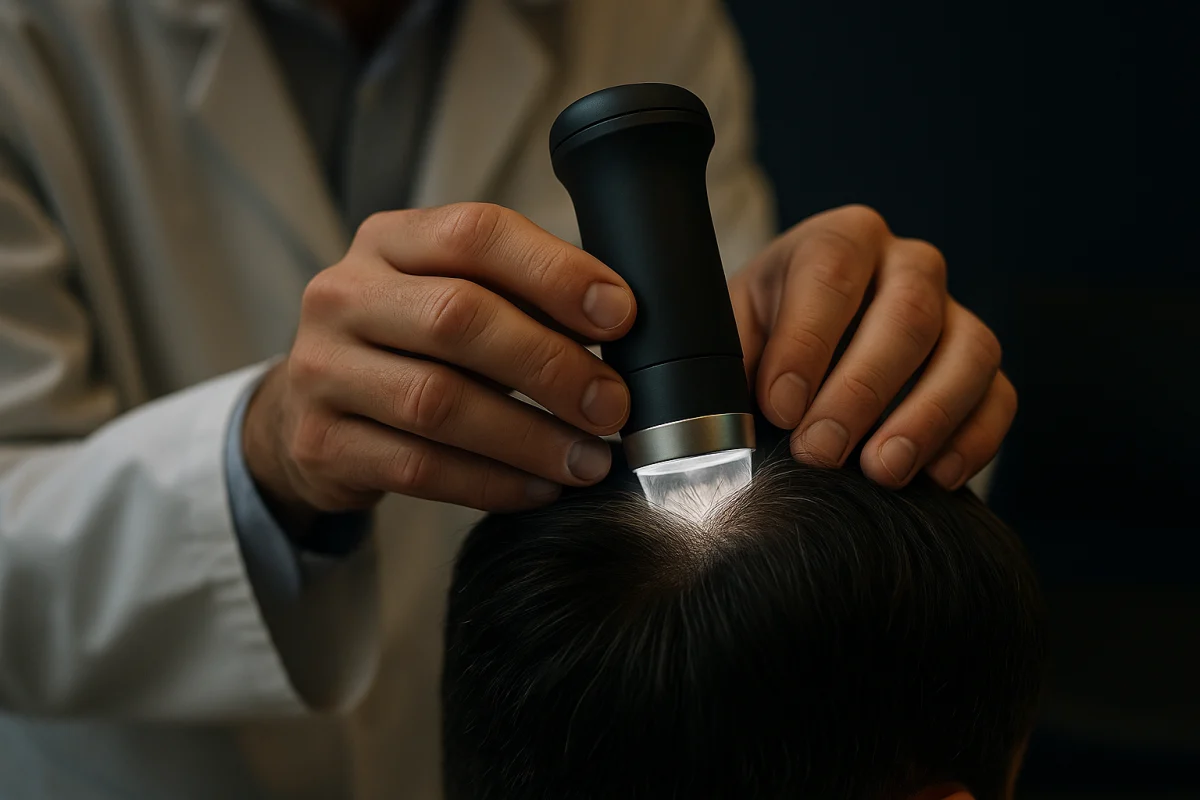
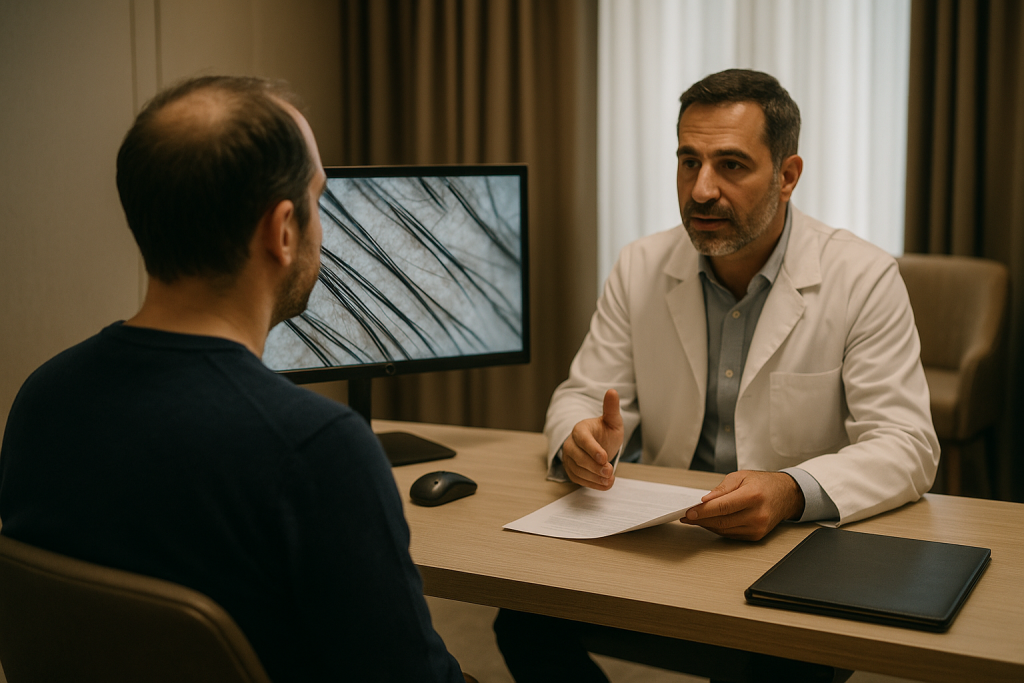
A dermatologist may examine the scalp with trichoscopy, which uses magnification to look for follicle openings, broken hairs, redness and other signs of activity. In some cases, a scalp biopsy is needed to identify the condition more clearly and guide treatment. Blood tests may also be considered when the doctor suspects another health issue. A clear diagnosis matters because the approach to treatment can differ considerably between conditions.
03How doctors assess whether the disease is active
Active scarring alopecia may cause symptoms such as tenderness, itching, burning, pain, increased shedding, redness, pustules or visible scale around hairs. However, not every patient has obvious symptoms. A scalp can appear calm while subtle inflammation continues beneath the surface. For this reason, doctors combine your symptom history with examination findings and, when needed, dermoscopy or biopsy results.
Follow-up appointments help show whether the condition is stable over time. The doctor may compare scalp photographs, check whether the edges of a patch have changed and review signs of inflammation at repeat visits. If treatment has been prescribed, response and side effects are also monitored. Stability means more than simply seeing no new bald area for a few weeks.
It is useful to report changes promptly, especially new discomfort, spreading patches, crusting or drainage. Avoiding harsh traction, chemical irritation and repeated scratching can also reduce unnecessary stress on an already sensitive scalp. These measures do not cure an inflammatory condition, but they may support scalp comfort while the underlying cause is being investigated and managed.
04Scarring alopecia treatment options before surgery
The best scarring alopecia treatment is the one that matches the diagnosed cause and the level of current activity. For inflammatory forms, a dermatologist may use anti-inflammatory treatments applied to the scalp, injected into selected areas or taken by mouth. The aim is generally to reduce inflammation, relieve symptoms and prevent further follicle loss, rather than to promise regrowth from scarred skin.
If bacteria, yeast or another infection is contributing, treatment may focus on controlling that problem. In other cases, management may include gentle scalp-care guidance and treatment for an associated skin condition. Your doctor may discuss the expected benefits, possible adverse effects and the need for regular monitoring. It is important not to begin prescription medicines, supplements or strong topical products without professional advice.
Some patients also have non-scarring hair loss at the same time, such as androgenetic hair loss or temporary shedding. Treating these conditions may improve the appearance of remaining hair, but it does not change the permanent nature of established scarring. A thorough examination helps separate the different causes so that the care plan has realistic goals.
05When a hair transplant may be considered
Hair transplantation may be an option for selected people with stable scarring alopecia or stable scars from injury, burns or previous procedures. The central question is whether the recipient scalp can support transplanted follicles without renewed inflammation damaging them. In most patients with inflammatory scarring alopecia, surgery is postponed until the treating doctor considers the condition inactive and stable over time.
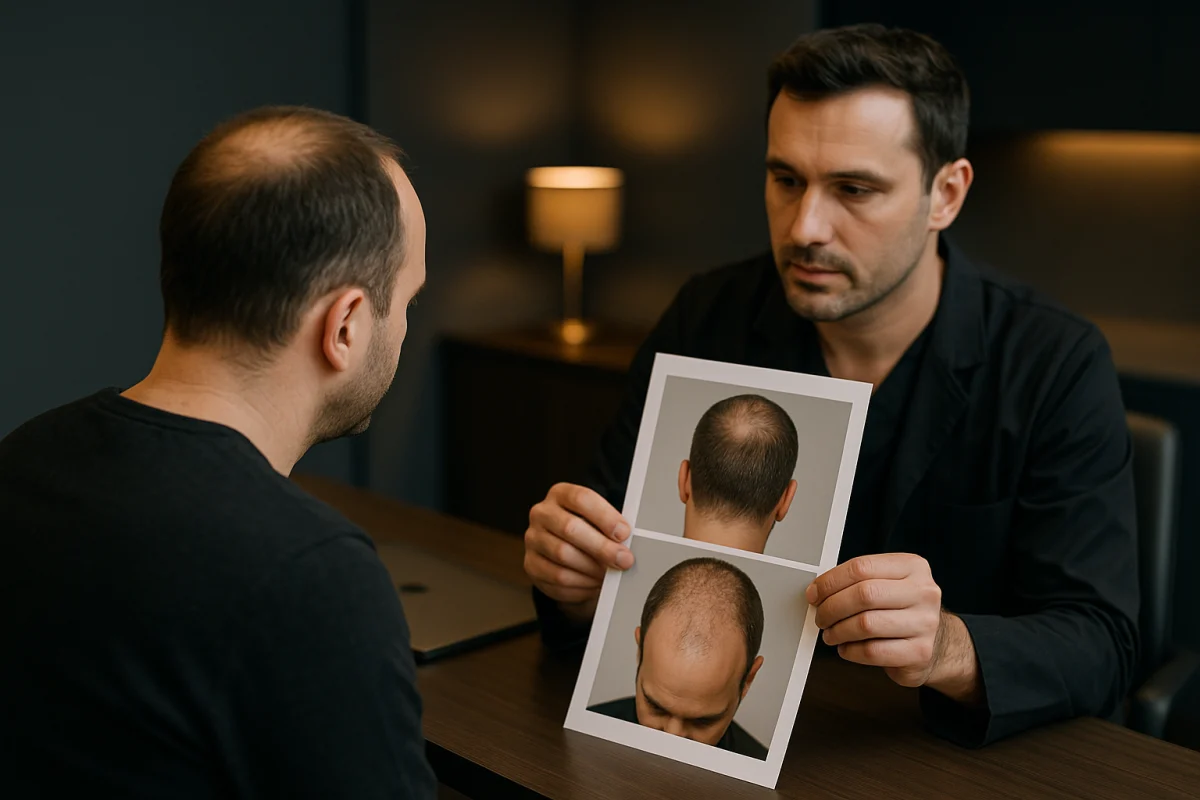
During a candidacy assessment, the medical team reviews the pattern and cause of hair loss, scalp quality, donor hair density, hair characteristics and expectations. Areas with very thick, tight or poorly supplied scar tissue may be more challenging to transplant. Test grafting may sometimes be discussed by the doctor to observe healing and early growth in a small area before planning a larger procedure. This is a clinical decision, not a guarantee of success.
Sapphire FUE and DHI are hair restoration techniques that may be considered when a patient is medically suitable. The technique alone cannot overcome active disease or poor recipient scalp conditions. At our dedicated hair restoration clinic in Istanbul, doctors assess suitability carefully before making a treatment recommendation. A procedure should be planned around safety and long-term scalp stability, not urgency.
06What results to expect from transplantation into scarred scalp
A transplant into stable scar tissue can sometimes improve coverage and restore a more natural frame to the face or scalp. Results are often less predictable than a transplant performed on healthy, non-scarred skin because blood supply, tissue thickness and inflammation history can vary. Graft survival, growth direction and final density may therefore be different from those expected in standard pattern hair loss surgery.
The surgeon may plan a conservative density and may recommend more than one session if appropriate. This can help protect the recipient area and make the outcome look gradual and balanced. Existing hair may also continue to change over time, particularly if there is a separate form of hair loss. Careful long-term planning is important for this reason.
At Acibadem Hair Transplant Center, results are measured by trichoscopic graft survival at month 12, with a documented 98% rate under written guarantee for eligible cases. This clinic measure should not be understood as a promise that every person with scarring alopecia will have the same outcome. Your doctor will explain the specific uncertainties associated with scarred scalp tissue and whether surgery is a reasonable option for you.
07Preparing for consultation and protecting your scalp
Bring a clear timeline of your hair loss to your consultation. Include when it began, whether it spread quickly or slowly, scalp symptoms, previous diagnoses, medications, allergies and any treatments you have tried. If you have older photographs, they may help show progression. This information can be more useful than trying to estimate hair loss from memory alone.
Before a possible transplant consultation, avoid concealing important scalp symptoms with unreported products or treatments. Tell the medical team about topical medicines, tablets, injections, supplements and cosmetic procedures. It is also helpful to mention autoimmune conditions, skin infections, hormonal conditions and recent illnesses. These details allow the doctor to assess safety and decide if additional specialist review is needed.
If you are travelling for care, a structured plan can make follow-up easier. Our all-inclusive packages can include VIP transfer, a 4-star hotel, a care kit and 12 months of follow-up for suitable patients. Needle-free anaesthesia is also available. However, logistical support does not replace the need for local dermatology follow-up when an inflammatory scalp condition requires ongoing medical management.
08Food, wellbeing and realistic long-term care
A balanced diet supports general health and normal hair production in follicles that remain healthy. Protein, iron, zinc, vitamin D, vitamin B12 and other nutrients are important, but needs vary between individuals. Restrictive diets or untreated nutritional deficiencies can contribute to shedding in some people. A clinician can decide whether testing is appropriate before recommending supplements.
There is no specific food plan proven to reverse established scar tissue in scarring alopecia. Eating a varied diet with adequate protein, vegetables, fruit, whole grains and healthy fats is generally a sensible foundation unless you have a medical reason to follow another plan. If you follow a vegetarian, vegan or restrictive diet, discussing nutrition with a qualified clinician may be useful. Avoid high-dose supplements unless they have been recommended, as more is not always better.
Living with permanent or uncertain hair loss can affect confidence and emotional wellbeing. It is reasonable to ask about cosmetic camouflage, hairstyle changes, headwear, counselling or support communities while medical treatment is underway. Scarring alopecia treatment often requires patience, regular review and realistic goals. Protecting remaining hair and controlling activity are meaningful achievements, even when full regrowth is not possible.
09Aftercare considerations when scarred scalp has been transplanted
After a hair transplant, the recipient area needs gentle care while the grafts settle. This is particularly important when skin has previously been affected by scarring, inflammation or injury. Your surgical team will provide written washing instructions, explain when to start cleansing and show you how to avoid rubbing, scratching or direct pressure on the grafted area. Follow these instructions closely rather than using a routine designed for non-surgical hair care.
In the first days, it is generally important to protect the scalp from accidental contact, friction and unapproved cosmetic products. Avoid picking at crusts or flakes, even if the area feels itchy. Use only the products and medicines approved by your medical team. If you have an existing dermatology treatment plan, the transplant doctor and your dermatologist should clarify when each topical or oral treatment can be restarted safely.
Contact the clinic or your local doctor promptly if you notice increasing pain, spreading redness, warmth, swelling, discharge, fever, pustules or a return of symptoms that previously indicated disease activity. These signs do not always mean that scarring alopecia has returned, but they require professional assessment. Regular follow-up is especially valuable because subtle inflammation may need attention before it affects the transplanted or remaining hair.
10Hair growth timeline after transplant in stable scarring alopecia
The early appearance after surgery is not the final result. Small scabs usually form around transplanted grafts as part of normal healing, and the transplanted hairs often shed during the first weeks. This shedding can be concerning, but it does not automatically mean the grafts have failed. The follicles remain beneath the skin and typically enter a temporary resting phase before new growth begins.
In many hair transplant patients, new hairs start to become noticeable over the following months, then gradually gain length, thickness and coverage. Growth is commonly uneven at first. In a scarred recipient area, the pace and consistency of growth may be less predictable because tissue quality and blood supply can differ across the scalp. Your doctor may use photographs and trichoscopic assessment during follow-up to monitor progress objectively.
A meaningful cosmetic result is usually judged many months after the procedure rather than in the early healing period. At our clinic, graft survival is assessed trichoscopically at month 12 for eligible cases. For patients with scarring alopecia, this review also considers whether the underlying condition has remained quiet. Any decision about further treatment or a second session should be based on healing, scalp stability and available donor hair.
11Planning international travel and follow-up care
International patients should plan their trip around both the procedure and the early recovery period. Before travelling, keep digital copies of your diagnosis, biopsy report if available, current prescriptions, allergy information and recent scalp photographs. These records can help the hair restoration team understand your history, while also helping your local dermatologist continue care after you return home.
Do not assume that travel arrangements mean you can skip local medical review. People with inflammatory scarring alopecia may still need ongoing monitoring and prescription management from a dermatologist in their home country. It is sensible to identify who will provide this care before surgery, particularly if you have had recent symptoms or need regular treatment to maintain scalp stability.
For suitable patients, Acibadem Hair Transplant Center in Istanbul offers all-inclusive packages with VIP transfer, a 4-star hotel, a care kit and 12 months of follow-up. Our team can explain the expected appointment schedule and remote follow-up process before travel. Free online hair analysis is reviewed by doctors, with WhatsApp replies usually provided within around two hours, but final suitability for transplantation remains a medical decision after proper assessment.
12Frequently Asked Questions
Can scarring alopecia be reversed?
Established scarring alopecia cannot usually be fully reversed because the affected follicles may have been permanently destroyed and replaced by scar tissue. Early diagnosis and treatment may help slow or stop further loss in many cases. If the scalp becomes stable, a doctor may later assess whether hair transplantation or cosmetic options are suitable.
Is scarring alopecia genetic?
Some forms of scarring alopecia may have a family tendency, but they are not all inherited in a simple or predictable way. Immune activity, scalp conditions, hair-care practices, injury and other factors can also play a role depending on the diagnosis. A dermatologist can explain the likely causes after examining your particular pattern of hair loss.
What is the best treatment for scarring alopecia?
There is no single best treatment for every type of scarring alopecia. The most appropriate approach depends on the cause, whether inflammation is active and the symptoms present. A dermatologist may use anti-inflammatory, antimicrobial or other targeted treatments to preserve remaining follicles and monitor progress.
What should you eat if you have alopecia?
A varied diet with sufficient protein and nutrient-rich foods can support overall hair health. Foods providing iron, zinc, vitamin D, vitamin B12 and essential fats may be important, but diet cannot regenerate follicles lost to scarring alopecia. Speak with a healthcare professional before taking supplements, especially if you have symptoms of a deficiency or a restricted diet.
Tento článok slúži len na všeobecné informačné účely a nenahrádza odbornú lekársku radu.
 06
06 12
12