V tomto článku9
- What Stem Cell Hair Restoration Before and After Photos Can Show
- Why Hair Photos Can Look More Dramatic Than the Result
- A Practical Checklist for Reviewing Before-and-After Images
- Stem Cell Hair Restoration Before and After: Questions to Ask
- Current Evidence and the Limits of Regenerative Claims
- How Established Hair Transplant Results Should Be Documented
- Red Flags in Online Photo Galleries and Social Media
- Choosing a Safer Next Step for Hair Loss Concerns
- Frequently Asked Questions
Stem cell hair restoration photos can be interesting, but a before-and-after image alone cannot prove that a treatment caused new, lasting hair growth. Check whether the photos are standardised, whether the diagnosis is clear, and whether the provider explains the limits of current evidence and follow-up.
- Before-and-after photos should be taken with matching lighting, angle, hair length, styling, and timing.
- Many treatments described as stem cell hair restoration are still developing, and their methods are not standardised.
- A visible change in a photo may reflect hair styling, medication, lighting, temporary shedding recovery, or a different treatment.
- Hair loss diagnosis matters because androgenetic hair loss, alopecia areata, scarring alopecia, and shedding disorders need different approaches.
- A medical consultation should include realistic discussion of evidence, risks, alternatives, and the plan for long-term follow-up.
01What Stem Cell Hair Restoration Before and After Photos Can Show
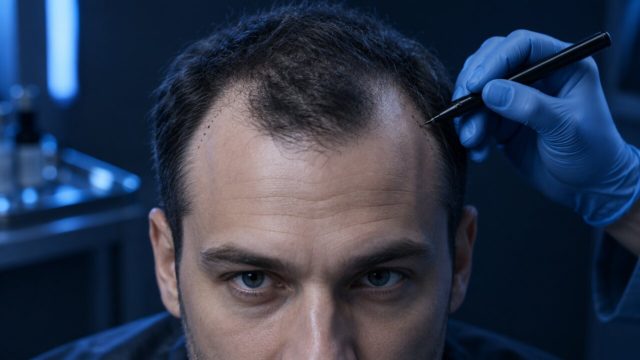
Stem cell hair restoration before and after photos may show a change in hair appearance over time, but they do not automatically show that stem cells created new hair follicles or produced permanent regrowth. A photograph records one moment under particular conditions. It cannot reveal the exact diagnosis, the treatment protocol, the patient’s use of medicines, the health of the scalp, or whether other procedures were performed at the same time. For this reason, photos are best viewed as a starting point for questions rather than final proof that a treatment works.
In hair restoration marketing, the term stem cell treatment can refer to several very different approaches. It may describe laboratory research, injections using cells or cell-related materials, fat-derived preparations, platelet-based treatments, or products marketed with regenerative language. These approaches do not necessarily have the same biological action, manufacturing standards, safety profile, or clinical evidence. Patients should ask exactly what is being placed into the scalp, where it comes from, how it is prepared, and whether it is being offered as established care or as an investigational approach.
A credible image set can sometimes help you understand a provider’s aesthetic work, especially when the same patient is photographed over a long period. However, meaningful assessment requires more than looking for a denser hairline. It also requires knowing the date of each photo, whether the hair was wet or dry, whether fibres or concealers were used, and whether the patient had a hair transplant, medical treatment, or another intervention. A doctor should interpret photographs alongside scalp examination and, where appropriate, trichoscopic assessment.
02Why Hair Photos Can Look More Dramatic Than the Result
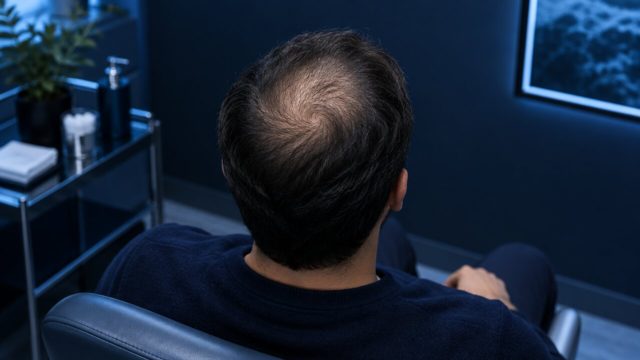
Hair is highly sensitive to presentation. A photo taken from above under strong direct light can make thinning look more severe, while softer lighting, a lower camera angle, and darker surroundings can make the same hair appear fuller. Blow-drying, brushing direction, curl pattern, hair dye, and the use of styling products can also change scalp visibility. Even a small difference in how the head is tilted may alter the apparent width of the parting or the density at the crown.
Hair length is another important variable. Short hair may expose the scalp more clearly, while longer hair can overlap sparse areas and create coverage. In some images, the before photo is taken after a short haircut and the after photo is taken after several months of growth. That comparison may be visually appealing, but it is not a controlled way to judge follicle density. The same applies when an after photo uses a different hairstyle, a more flattering parting, or hair that has been professionally styled.
Temporary changes in shedding can also be mistaken for true regrowth. Some people experience increased shedding after illness, stress, weight change, childbirth, nutritional problems, or medication changes. If that trigger improves, hair may recover naturally over time. A photo sequence that begins during active shedding and ends after recovery may look impressive, yet it may not demonstrate that a regenerative treatment was responsible. The patient’s history and a doctor’s diagnosis are therefore essential context.
03A Practical Checklist for Reviewing Before-and-After Images
Start by looking for standardisation. The strongest photo comparisons use the same view, distance, head position, background, lighting, camera settings, and hair condition. The hair should ideally be similar in length and dry in both images, without heavy styling or cosmetic camouflage. Ask whether the clinic can show several angles, including the frontal hairline, temples, mid-scalp, crown, and donor area where relevant. One carefully selected image rarely gives a complete picture.
Next, check the timeline. Hair biology moves slowly, and a very early after photo may not tell you much about durable improvement. Images should state how many months passed after treatment and whether there were any additional sessions. If a surgical transplant is involved, early changes can include shedding of transplanted hairs before subsequent growth. If a provider shows only an immediate post-treatment image, it may demonstrate procedure completion, but it cannot demonstrate final growth.
Then look for clinical context. A responsible case presentation explains the patient’s pattern of hair loss, the likely diagnosis, the treatment plan, and whether the result is typical or unusual. It should also clarify whether medicines, topical treatment, low-level light therapy, nutritional correction, or transplantation were used. A single treatment may not be the reason for the outcome shown. Photos without this information should be interpreted cautiously, regardless of how convincing they first appear.
04Stem Cell Hair Restoration Before and After: Questions to Ask
When reviewing stem cell hair restoration before and after claims, ask the provider to define the procedure in simple medical terms. Is it a treatment using a patient’s own tissue, a cell culture product, a cell-free preparation, or another regenerative method? Is the material processed on the same day, and what quality controls are used? General phrases such as “activates dormant follicles” or “repairs the scalp” may sound promising, but they do not explain the actual treatment or demonstrate a predictable result.
It is also reasonable to ask what evidence supports the exact protocol being offered. Research in hair follicle biology and regenerative medicine is active, but laboratory findings do not automatically become reliable routine treatments for patients. Studies may involve small groups, different patient types, short follow-up periods, or methods that cannot be compared directly. Your doctor can explain whether the available evidence is preliminary, whether results vary, and how the treatment compares with established options for your diagnosis.
Finally, ask how success is measured. Patient satisfaction and photographs can be useful, but objective assessment may include standardised photography, hair counts in a defined area, hair shaft measurements, and trichoscopy. You should also ask what happens if improvement does not occur, how adverse effects are monitored, and whether there is a plan for continued hair loss. A transparent clinic should not imply that a single regenerative procedure can reliably stop every type of hair loss.
05Current Evidence and the Limits of Regenerative Claims
Stem cells play an important role in normal hair follicle cycling, which is why they are of major scientific interest. Researchers are studying ways to influence follicle activity, reduce inflammation, improve the scalp environment, and potentially develop new regenerative therapies. This scientific interest should not be confused with a guarantee that commercially marketed stem cell procedures can consistently regrow hair in everyday clinical practice. The quality and maturity of evidence may differ greatly between approaches.
In most patients with pattern hair loss, a clinician will first consider the diagnosis, the stability of ongoing loss, family history, medical history, scalp findings, and the patient’s goals. Evidence-based management may include medical approaches when clinically suitable, lifestyle or nutritional assessment where indicated, and surgical planning for selected candidates. A regenerative treatment, if discussed, should be presented with its uncertainties rather than as a replacement for careful diagnosis and long-term management.
Be cautious with language that suggests damaged follicles can always be revived or that completely bald scalp areas will routinely grow dense new hair after injections. Long-standing follicle loss and scarring conditions can have different biological limits from early thinning. Scarring alopecia in particular needs prompt specialist assessment because the priority may be controlling inflammation and protecting remaining follicles. A responsible provider will explain what may be realistic for your individual pattern instead of relying on dramatic general claims.
06How Established Hair Transplant Results Should Be Documented
Hair transplantation is different from an injection-based regenerative claim because it redistributes existing follicles from a donor area to areas of thinning. Whether Sapphire FUE or DHI is considered, suitability depends on donor supply, hair characteristics, the pattern and pace of loss, scalp condition, and long-term planning. A good result is not simply the appearance of density in one image. It should also consider a natural hairline, appropriate graft placement, donor-area protection, and the possibility of future hair loss.
For transplant cases, standardised photos should include the donor area as well as the recipient area. They should identify the stage of recovery and avoid presenting immediate post-procedure redness or implanted grafts as final growth. In many patients, visible growth develops gradually after the initial recovery period, while the final appearance takes time to mature. Your doctor will confirm the expected timeline for the selected technique and explain why individual progress can vary.
At Acibadem Hair Transplant Center, a dedicated hair restoration clinic in Istanbul licensed by the Turkish Ministry of Health, results are measured by trichoscopic graft survival at month 12. The clinic documents a 98% graft survival rate under written guarantee. This measurement relates to graft survival in the clinic’s hair transplant process; it should not be interpreted as a promise of a specific cosmetic outcome, hair density, or suitability for every patient.
07Red Flags in Online Photo Galleries and Social Media
Be careful when every case appears extraordinary, every patient has the same hair loss pattern, or no result shows limitations. Real clinical outcomes vary because donor hair quality, degree of thinning, age, hair colour contrast, curl, scalp health, and treatment adherence differ between people. A gallery that only shows tightly cropped hairlines and never shows crown areas, donor areas, or less dramatic improvements may not provide enough information to make an informed decision.
Other warning signs include vague claims of permanent regrowth, pressure to book immediately, unclear consent for images, and refusal to explain the product or procedure. Be particularly cautious if the provider cannot say who evaluates your scalp, what qualifications the medical team has, or what happens if you develop pain, swelling, infection, unexpected shedding, or no visible change. Any medical procedure should include discussion of possible risks, contraindications, aftercare, and appropriate contact arrangements.
Testimonials can be sincere, but they are personal experiences rather than scientific proof. A patient may also be using several treatments without mentioning all of them in a short video or social media post. Instead of deciding from one story, look for consistent documentation, a clear medical explanation, and an opportunity to ask questions without pressure. For international patients, it is especially helpful to understand the follow-up plan before travelling.
08Choosing a Safer Next Step for Hair Loss Concerns
The safest next step is usually a medical assessment that identifies the likely type of hair loss before choosing a treatment. A clinician may ask about the onset and speed of loss, family history, recent illness, dietary changes, medications, hormonal factors, scalp symptoms, and previous treatments. Examination may include close scalp assessment and trichoscopy. This process helps separate common pattern hair loss from temporary shedding, inflammatory scalp disease, or forms of hair loss that need different care.
If you are considering photos from a clinic abroad, request a clear written outline of what is included, who will perform each stage, what follow-up is available, and what results can realistically be expected. Acibadem Hair Transplant Center offers free online hair analysis reviewed by doctors, with WhatsApp replies typically within around two hours. For patients who proceed with hair transplantation, all-inclusive packages can include VIP transfer, a 4-star hotel, a care kit, and 12 months of follow-up.
Stem cell hair restoration before and after images should never be the only reason to choose treatment. Use them to prepare informed questions, then discuss your medical history and goals with a qualified doctor. An honest consultation may confirm that a regenerative option is not suitable, that established treatment is more appropriate, or that further assessment is needed first. Clear information and realistic planning are more valuable than a perfect-looking online photograph.
09Frequently Asked Questions
Does stem cell hair restoration really work for hair loss?
Stem cell-based approaches for hair restoration are an active area of research, but results can vary and methods marketed under this name are not all the same. Some approaches may be offered with limited or developing evidence, so they should not be viewed as a guaranteed way to regrow hair. A doctor should confirm your diagnosis and explain the evidence, possible risks, and established alternatives.
What is the cost of stem cell treatment for hair regrowth?
The cost can vary widely depending on the country, the exact material or procedure used, the number of sessions, medical supervision, and follow-up arrangements. A price alone does not indicate whether a treatment is appropriate, safe, or supported by strong evidence. Ask for a written plan that clearly explains what the fee includes and what additional care may be needed.
What treatment did Elon Musk reportedly use for his hair?
There is no reliable public medical record confirming any individual’s private hair treatment, so it is not appropriate to state what Elon Musk used. Online comparisons of public photographs cannot establish a diagnosis or prove that a specific procedure was performed. Treatment decisions should be based on your own scalp assessment rather than celebrity speculation.
How long might stem cells take to regrow hair?
There is no single proven timeline because treatments described as stem cell hair restoration differ and results are not predictable. Hair growth itself is gradual, and any genuine change would usually need months of follow-up and standardised assessment to evaluate. Your doctor can explain the expected review schedule for the specific treatment being discussed.
Tento článok slúži len na všeobecné informačné účely a nenahrádza odbornú lekársku radu.
Tento sprievodca slúži na všeobecné informovanie a nenahrádza lekársku konzultáciu. O liečbe sa rozhoduje po osobnom alebo online posúdení lekárom.