V tomto článku9
- Prehľad
- How thyroid imbalance changes the hair-growth cycle
- Recognising thyroid hair shedding versus permanent pattern loss
- Why thyroid hair shedding should be stable before surgery
- Medical assessment and tests before transplant planning
- When regrowth may happen after thyroid treatment
- Preparing for a transplant after thyroid levels are controlled
- Follow-up, realistic expectations, and professional support
- Frequently Asked Questions
Thyroid hair shedding should usually be assessed and medically stabilised before hair transplant planning. In many patients, diffuse shedding improves after the thyroid disorder is appropriately treated, while a transplant may be considered later if there is confirmed permanent pattern hair loss and a stable donor area.
- Thyroid hormone imbalance can cause diffuse shedding across the scalp rather than only a receding hairline or crown thinning.
- Hair growth often takes several months to respond after thyroid levels are brought into the target range.
- A hair transplant is usually postponed while thyroid-related shedding is active or thyroid treatment is still being adjusted.
- Some people have both thyroid-related shedding and genetic pattern hair loss, which need separate assessment.
- A doctor-led diagnosis helps confirm whether transplantation is appropriate and when it can be planned safely.
01Thyroid-Related Hair Shedding and Transplant Timing
Thyroid hair shedding is commonly linked to an imbalance in thyroid hormones, which influence many body functions, including the normal hair-growth cycle. When hormone levels are too low or too high, more hairs may move from the growing phase into the resting and shedding phases. This can make the hair look less dense over several weeks or months. Because the underlying cause may be medically treatable, the first step is usually to assess and stabilise thyroid health rather than to rush into a hair transplant.
For transplant timing, the direct answer is that active thyroid-related shedding should generally be investigated before surgery is planned. A transplant moves healthy follicles from the donor area to thinning areas, but it does not correct a hormone imbalance. If shedding is ongoing, it may be difficult to judge the true extent of permanent hair loss, plan a natural hairline, or predict how the surrounding native hair will behave after the procedure.
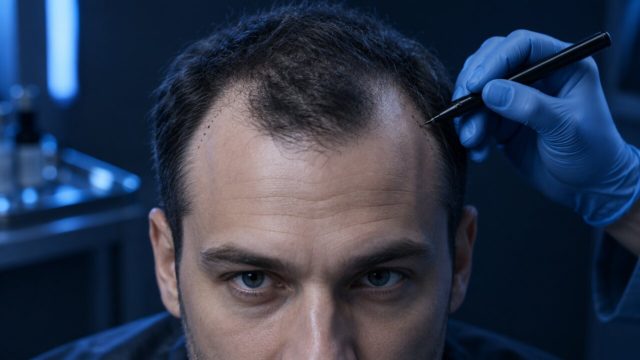
Your doctor may review your symptoms, medical history, prescribed medicines, and thyroid blood-test results. They may also consider whether you have a separate type of hair loss, such as androgenetic alopecia, also called genetic pattern hair loss. Once thyroid levels and symptoms are stable, a hair-restoration doctor can assess scalp density, donor capacity, and whether surgery is suitable for your individual situation.
02How thyroid imbalance changes the hair-growth cycle
Each hair follicle naturally moves through a growing phase, a transition phase, a resting phase, and a shedding phase. Thyroid hormones help support this cycle. In hypothyroidism, where the thyroid is underactive, hair may become dry, coarse, brittle, or slower-growing, and diffuse thinning can develop. In hyperthyroidism, where the thyroid is overactive, hair may also become finer and shed more easily.
The shedding is often noticed during washing, brushing, or after seeing more hair on a pillow or clothing. Unlike a typical male-pattern recession or crown loss, thyroid-related loss may affect the scalp more evenly. Some people also notice changes in the eyebrows or body hair. However, hair symptoms alone cannot confirm a thyroid diagnosis because several conditions can produce similar signs.
Physical stress on the body can also affect the hair cycle. Starting treatment, changing medication doses, pregnancy, illness, rapid weight changes, iron deficiency, and emotional stress may happen at the same time as thyroid disease. For this reason, a full medical assessment is important. It helps avoid assuming that every episode of thinning comes from one cause.
03Recognising thyroid hair shedding versus permanent pattern loss
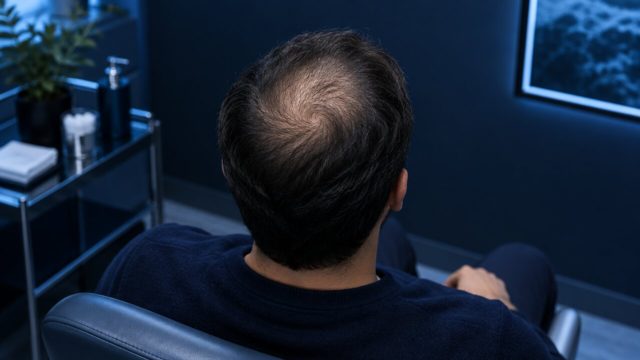
Thyroid hair shedding is often diffuse, meaning that thinning is spread across a wider area of the scalp. It may start after thyroid hormone levels have been abnormal for some time, but the timing is not always clear because hair responds slowly to changes inside the body. In many cases, the scalp skin looks normal, without scarring, redness, or sharply defined bald patches.
Genetic pattern hair loss has a different pattern in many patients. Men may notice recession at the temples, a thinning crown, or both. Women may notice a widening central part or reduced density over the top of the scalp while keeping the frontal hairline. These changes can occur independently of thyroid disease, and thyroid imbalance may make an existing pattern appear more noticeable.
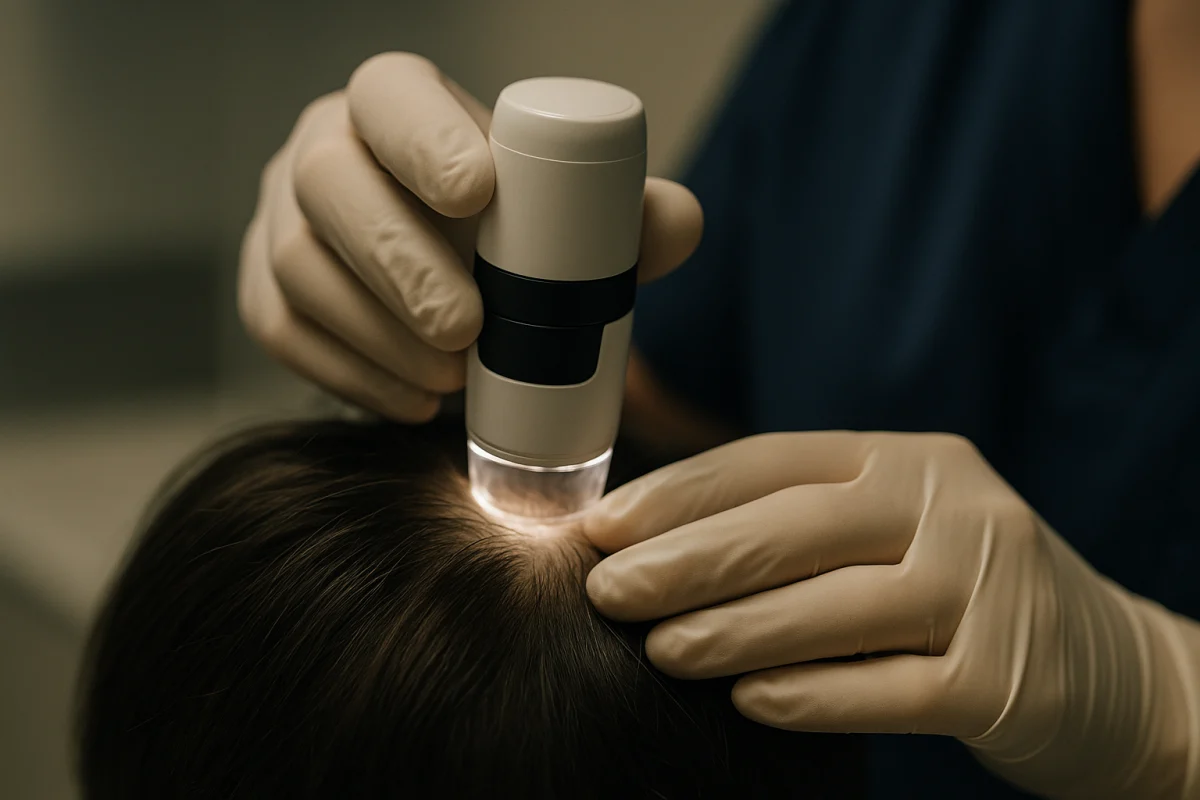
A trichoscopic scalp examination can help a clinician look at follicle size variation, hair-shaft diameter, scalp condition, and the distribution of thinning. Photographs taken in consistent lighting may also help track change over time. A diagnosis should not rely only on online images, because a detailed medical history and, where appropriate, laboratory assessment are also important.
04Why thyroid hair shedding should be stable before surgery
A hair transplant is best planned when the cause of hair loss is understood and the pattern is reasonably stable. With thyroid hair shedding, the density of existing hair can change after treatment begins. If surgery is performed during a temporary shedding phase, native hair may later recover, which can alter the appearance of the transplanted area and make the original design less appropriate.
Active shedding can also make it harder to assess the donor area at the back and sides of the scalp. This area must contain enough stable follicles for safe harvesting. If the donor area is temporarily affected by diffuse shedding, a surgeon may prefer to wait, repeat the assessment, and plan only after the picture is clearer. Protecting donor reserves is an important part of responsible long-term planning.
There is no single waiting period that applies to everyone. Your endocrinology doctor and hair-restoration doctor will consider whether your hormone tests are stable, whether symptoms are controlled, how long shedding has been present, and whether there is evidence of permanent pattern hair loss. In most patients, a period of observation after treatment adjustment gives more reliable information for surgical decisions.
05Medical assessment and tests before transplant planning
Before considering surgery, your doctor may ask about fatigue, weight changes, temperature sensitivity, bowel changes, palpitations, menstrual changes, skin changes, family history, and previous hair-loss episodes. These questions can help identify whether thyroid dysfunction or another medical factor may be involved. It is also important to mention all medicines, supplements, and recent changes in treatment.
Thyroid testing is usually organised by the clinician managing your general or endocrine health. The exact tests depend on your history and may include measurements that show how the thyroid is being regulated and how much hormone is available in the body. Your doctor may also consider testing for other causes of diffuse shedding when clinically appropriate, such as nutritional deficiencies or anaemia.
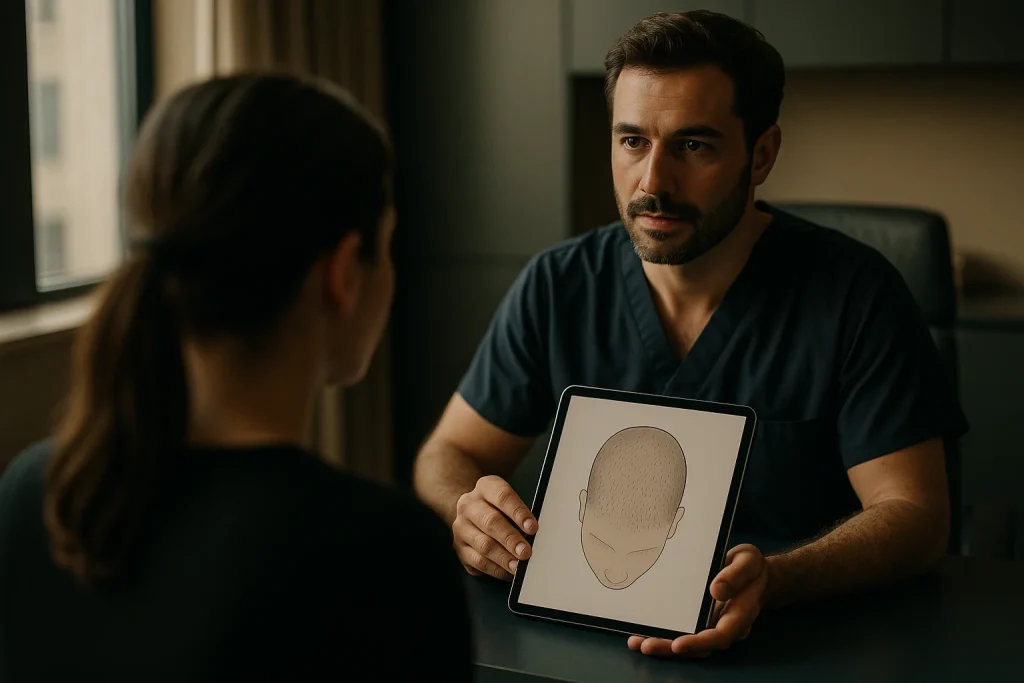
At a hair-restoration consultation, the scalp and donor area should be examined rather than assessed only from the recipient area. The doctor may discuss your family pattern of hair loss, previous medical treatment, and realistic goals. A proposed transplant should take future hair loss into account, particularly if genetic thinning may continue after thyroid levels have been corrected.
06When regrowth may happen after thyroid treatment
When thyroid dysfunction is the main trigger, hair shedding may reduce after the condition is appropriately managed. However, hair growth is slow, and visible improvement commonly takes time. The follicles need to return to a more balanced cycle, then new hairs need to grow long enough to add visible coverage. This process may take several months and can vary between patients.
It is also possible to see short-term shedding around the time thyroid treatment starts or changes. This does not always mean the treatment is harming the hair. The body may be responding to the hormone shift, and the hair cycle may be catching up with changes that happened earlier. Any new or worsening hair loss should still be discussed with the prescribing doctor, especially if it is severe, persistent, or accompanied by other symptoms.
Not all thinning will necessarily reverse if another condition is present at the same time. For example, thyroid treatment may improve diffuse shedding while genetic pattern loss continues gradually. This is why follow-up photographs, clinical examination, and a clear timeline are useful. They help distinguish recovery from ongoing progressive thinning before a decision about transplantation is made.
07Preparing for a transplant after thyroid levels are controlled
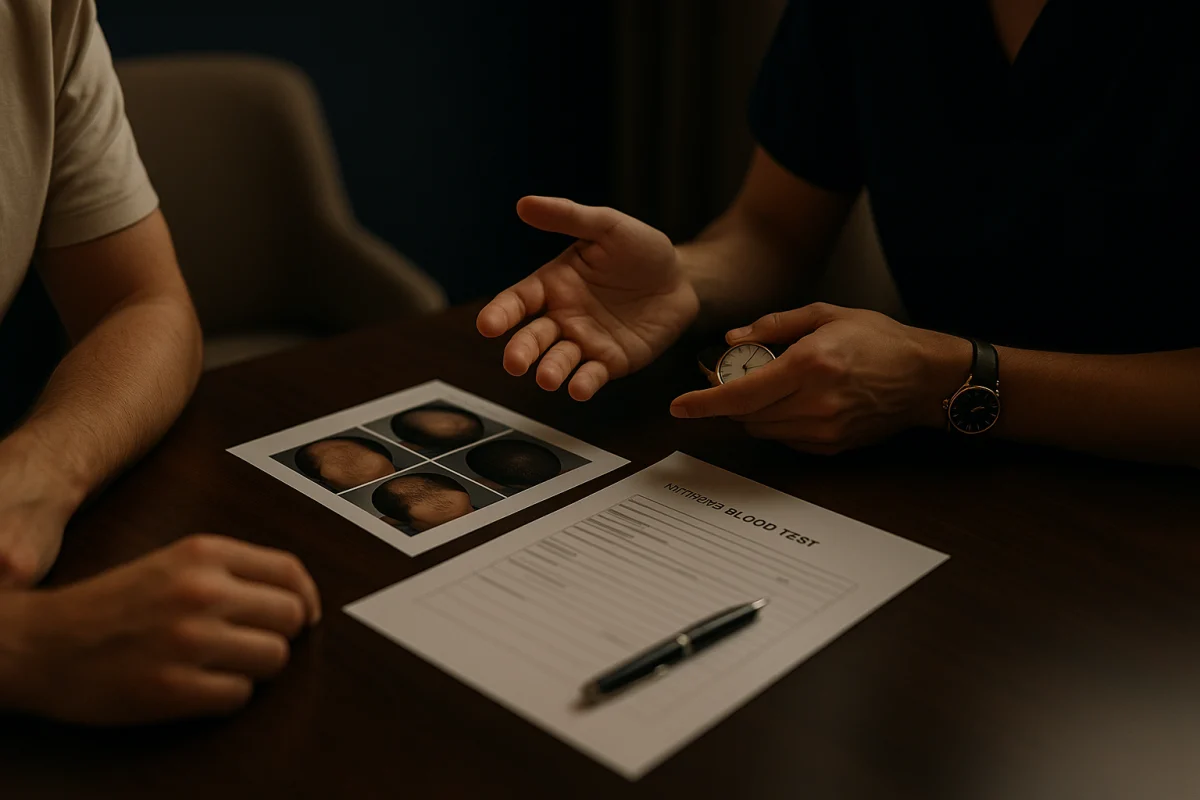
When your doctors confirm that thyroid disease is well controlled and your hair-loss pattern is stable enough to assess, transplant planning can begin. The consultation should cover the distribution of hair loss, hair characteristics, donor density, scalp health, and the amount of coverage that can be achieved safely. A conservative plan may be recommended when future thinning remains possible.
Sapphire FUE and DHI are two techniques that may be considered depending on the person’s scalp, hair characteristics, treatment goals, and surgical plan. Both involve careful handling of grafts, but the best technique is not the same for every patient. Your doctor will explain the expected advantages and limitations in your case, rather than selecting a method based only on a trend or a general preference.
Patients should disclose thyroid medication, dose changes, other health conditions, allergies, and supplements before surgery. Do not stop or alter prescribed thyroid treatment for a hair procedure without advice from the doctor who manages it. A coordinated approach between your medical team and the hair-restoration clinic supports safer preparation and more reliable follow-up.
08Follow-up, realistic expectations, and professional support
Following a transplant, the transplanted hairs usually go through a normal adjustment period before new growth becomes visible. The timing of visible growth differs between patients, and native hair can continue to change over time. If thyroid disease remains well controlled, it may reduce one potential trigger for diffuse shedding, but it cannot prevent genetic hair loss or guarantee a particular cosmetic result.
Regular follow-up is valuable because it allows the team to review healing, scalp condition, native-hair stability, and patient concerns. If new diffuse shedding develops after surgery, it should be evaluated rather than assumed to be a normal transplant result. A prompt review may identify a thyroid change, nutritional issue, medicine change, stress-related shedding, or another cause that needs medical attention.
Acibadem Hair Transplant Center is a dedicated hair restoration clinic in Istanbul licensed by the Turkish Ministry of Health. International patients can request a free online hair analysis reviewed by doctors, with WhatsApp replies typically within around two hours. This initial review can help clarify whether a person should first seek medical stabilisation, arrange further assessment, or discuss a future surgical plan.
09Frequently Asked Questions
Can hair loss linked to an underactive thyroid improve?
In many patients, hair shedding linked mainly to an underactive thyroid can improve after thyroid hormone levels are appropriately treated and stabilised. Visible regrowth is gradual and may take several months because hair grows slowly. Recovery may be incomplete if genetic pattern hair loss, nutritional deficiency, or another condition is also present.
Which shampoo is suitable for thyroid-related hair thinning?
No shampoo can correct a thyroid hormone imbalance or reliably reverse thyroid-related shedding. A gentle shampoo that suits your scalp and hair type may help reduce dryness or breakage, but it is not a medical treatment for the underlying cause. If you have itching, scaling, redness, or sudden worsening loss, ask a doctor or dermatologist for advice.
Can a thyroid disorder ever be associated with hair regrowth?
Hair regrowth may occur when a thyroid disorder is successfully treated and the follicles return to a more balanced growth cycle. Thyroid disease itself does not usually create extra hair growth on the scalp; rather, correction of the imbalance may allow previously affected hair to recover. The outcome depends on the cause of thinning and whether another hair-loss condition is present.
Can thyroid hormone replacement medicine trigger hair loss?
Some people notice temporary shedding when starting thyroid hormone replacement or when the dose is changed, as the body and hair cycle adjust. Ongoing shedding may also occur when the dose is not yet appropriate or when another cause of hair loss exists. Do not stop prescribed medicine on your own; speak with the prescribing doctor, who can review symptoms and blood tests.
When can someone with thyroid disease consider a hair transplant?
A transplant is typically considered after thyroid levels are stable, symptoms are controlled, and the hair-loss pattern has been assessed over time. The doctor should confirm that there is adequate stable donor hair and that permanent hair loss is present where surgery is being considered. Timing is individual, so a medical and trichoscopic evaluation is important.
Tento článok slúži len na všeobecné informačné účely a nenahrádza odbornú lekársku radu.
Tento sprievodca slúži na všeobecné informovanie a nenahrádza lekársku konzultáciu. O liečbe sa rozhoduje po osobnom alebo online posúdení lekárom.