
Dht blocking may help slow further thinning in people with androgenetic hair loss, which can make long-term hair transplant planning more stable. It does not create new follicles or replace a transplant, and the right approach depends on your diagnosis, medical history, future hair-loss pattern, and donor supply.
- DHT-related thinning can continue after a hair transplant unless the underlying hair loss is appropriately managed.
- A hair transplant redistributes resistant donor follicles but does not stop loss in untreated native hair.
- Prescription DHT-lowering medicines can have side effects, so a doctor should assess suitability and monitor treatment.
- Vitamins are important for correcting proven deficiencies, but they are not established DHT-blocking treatments.
- A long-term plan should consider hair-loss progression, donor capacity, age, family history, and realistic future goals.
01Why dht blocking matters before a hair transplant
Dht blocking is often discussed before hair transplant surgery because it may help protect vulnerable existing hairs from ongoing androgenetic hair loss. DHT, short for dihydrotestosterone, is a hormone made from testosterone. In genetically susceptible scalp follicles, it can gradually shorten the growth phase of the hair cycle and make each new hair finer. This process is called follicular miniaturisation. A transplant can add hair to selected areas, but it does not automatically stop miniaturisation in the non-transplanted hair around it.
For long-term planning, the main question is not simply whether a patient can have surgery today. It is whether the current hairline, crown, and mid-scalp may continue to change over the coming years. If native hair continues to thin quickly after a transplant, the contrast between transplanted and non-transplanted areas may become more visible. Your doctor will usually assess the pattern of loss, rate of change, family history, scalp condition, and quality of the donor area before discussing a surgical design.
Not every form of hair loss is driven by DHT. Sudden shedding, patchy hair loss, scalp inflammation, nutritional deficiency, thyroid conditions, medication effects, and stress-related shedding can require different assessment and treatment. This is why a clinical diagnosis is important before choosing medicines, supplements, or surgery. Treating the wrong cause may delay appropriate care and may not protect future hair density.
At Acibadem Hair Transplant Center, a free online hair analysis can be reviewed by doctors before patients travel to Istanbul. This early review can help identify whether the visible pattern appears suitable for further medical assessment and long-term surgical planning. An online review cannot replace an in-person examination when one is clinically needed, but it can help patients ask better questions before making decisions.
02How DHT affects native hair and transplanted follicles
In androgenetic hair loss, scalp follicles have different levels of genetic sensitivity to DHT. Follicles in the frontal hairline, temples, mid-scalp, and crown are commonly more sensitive. Over time, hairs in these areas may become shorter, lighter, and thinner until the scalp appears less dense. The process is usually gradual, which is why patients may first notice more scalp visibility in bright light, a widening part line, or a receding hairline.
Hair transplant surgery typically moves follicles from the more resistant donor zone at the back and sides of the scalp to areas of thinning. These donor follicles generally retain much of their resistance after relocation. However, resistance is relative rather than absolute, and individual outcomes vary. The transplanted hair and the original hairs next to it can behave differently over time, so natural-looking design depends on planning for future change rather than only filling today’s gaps.
A common long-term concern is shock loss, which refers to temporary shedding that can occur in hairs around the treated area after surgery. In some patients, already miniaturised native hairs may not fully recover. This does not mean surgery caused androgenetic hair loss, but it highlights why preserving existing hair is an important part of the discussion. A surgeon may recommend waiting, using medical treatment where appropriate, or choosing a conservative design if the pattern is still changing.
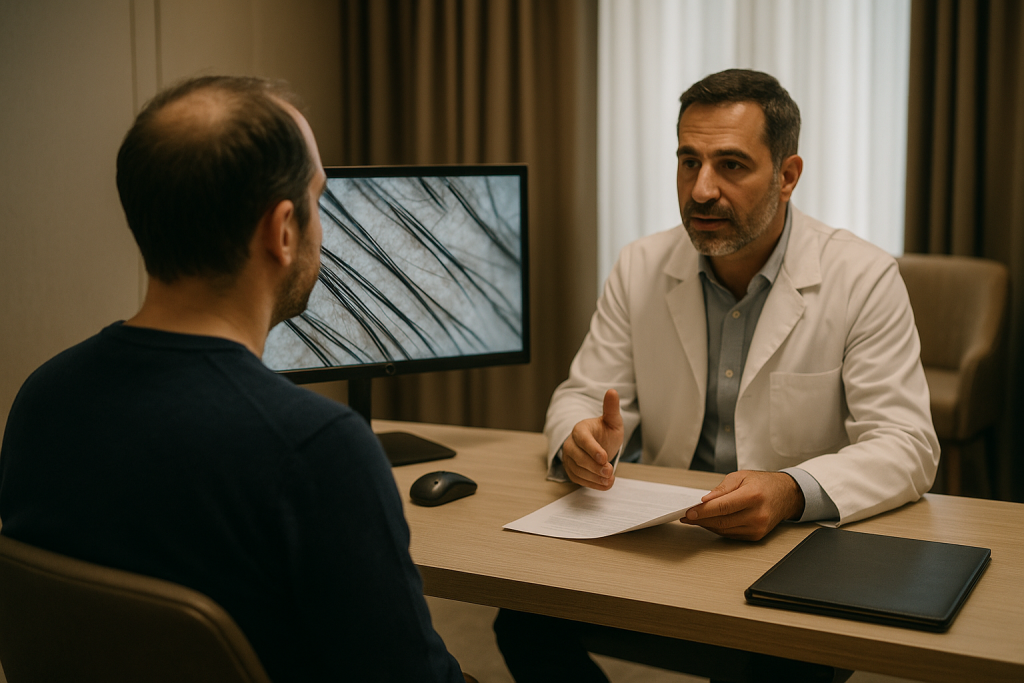
Trichoscopic assessment can help doctors examine differences in hair shaft thickness, follicular density, and signs of miniaturisation. This type of close scalp examination may support a more informed treatment plan. At Acibadem Hair Transplant Center, results are measured by trichoscopic graft survival at month 12, with a documented 98% rate under written guarantee. This measurement concerns graft survival and should not be understood as a guarantee of a particular cosmetic result or future stability of native hair.
03dht blocking options and medical assessment
When people refer to dht blocking, they usually mean treatments that reduce the conversion of testosterone to DHT or reduce DHT activity in hair follicles. Prescription options may be considered for some adults with androgenetic hair loss after medical assessment. These medicines can be effective for some patients, but response, tolerability, and suitability differ. They should not be started, stopped, or changed based only on online advice or a hair transplant consultation.
Doctors may discuss oral or topical prescription approaches depending on the patient’s sex, medical history, reproductive plans, current medicines, pattern of hair loss, and personal preferences. Possible side effects can include sexual, mood, breast-related, or hormonal effects, although not every patient experiences them. The risks, benefits, and uncertainties should be discussed carefully with a qualified doctor. Pregnant people and those who may become pregnant must follow medical advice about avoiding exposure to certain DHT-lowering medicines.
Other medical options may work through different mechanisms and are sometimes used to support hair growth rather than directly lower DHT. Whether they are appropriate depends on the diagnosis and health profile. Some treatments require monitoring of blood pressure, scalp tolerance, or other factors. A balanced plan does not assume that every patient needs the same medication or that medicine is always required before surgery.
Over-the-counter shampoos, serums, and supplements are often marketed with strong claims about DHT. Their evidence and formulation quality vary widely. A product being described as natural does not make it proven, safe for everyone, or equivalent to prescription treatment. If you are considering any product, bring its full ingredient list to your doctor or pharmacist, especially if you have medical conditions or take regular medication.
04Planning a hairline that can still look natural later
A youthful, low hairline may look appealing in the short term, but it can create challenges if hair loss progresses behind it. The frontal hairline is highly visible and uses valuable donor grafts. For this reason, experienced planning usually aims for an age-appropriate position, irregular natural detail, and enough density to frame the face without exhausting the donor area. The best design is often one that leaves options for the future.
The crown can require a large number of grafts because hair grows in a circular pattern and the area may expand as hair loss progresses. A patient with early crown thinning may need a different strategy from someone with stable frontal recession. In some cases, the front and mid-scalp are prioritised because they have the strongest visual effect in everyday life. Your doctor will explain which areas may be realistic to cover now and which may need to remain lower priority.
Dht blocking can be part of this planning conversation when native hair is miniaturising around the intended transplant zone. If a doctor considers medical treatment suitable, stabilising hair loss before surgery may help clarify the true pattern and reduce the chance of creating isolated-looking transplanted islands. However, treatment response cannot be guaranteed, and some patients may still experience future thinning despite appropriate care.
The timing of surgery matters as much as the technique. Younger patients or people with a rapidly changing pattern may benefit from observation and medical evaluation before committing to an aggressive surgical plan. Conversely, a patient with a stable pattern, a strong donor area, and clear goals may be a suitable candidate sooner. A responsible recommendation should be individual and should include the possibility that more than one procedure may be needed over a lifetime.
05Donor area management is a lifetime resource
The donor area is not an unlimited source of hair. Each person has a finite number of follicles that can be harvested while maintaining a natural appearance at the back and sides of the scalp. Hair characteristics also matter. Thickness, curl, colour contrast between hair and skin, and donor density can affect the visual coverage that surgery can achieve. A careful plan protects this resource rather than trying to solve every area of loss in one session.
Sapphire FUE and DHI are two techniques that may be used in hair restoration, but neither technique removes the need for sound long-term planning. Sapphire FUE involves creating recipient sites with sapphire blades, while DHI generally uses an implantation tool to place grafts. The most appropriate method depends on factors such as the recipient area, existing hair, graft requirements, and the clinical plan. Your doctor will confirm which approach may be suitable.
Overharvesting can make the donor region look thinner, particularly if future sessions are needed. For this reason, a clinic should assess donor density and scalp characteristics before proposing graft numbers or extensive coverage. Good planning also considers whether facial hair or body hair might be discussed in limited circumstances, although these sources have different characteristics and are not a simple replacement for scalp donor hair.
Patients should be cautious about plans that promise dense coverage of a large bald area without discussing donor limitations, ongoing hair loss, or future needs. A realistic consultation includes trade-offs. It may be better to achieve balanced coverage in high-impact areas than to pursue density that cannot be maintained. This is especially relevant when DHT-sensitive native hair remains at risk around the transplant.
06Preparing for surgery while managing ongoing hair loss
Before hair transplant surgery, patients are usually asked to provide a medical history, information about current medicines, allergies, previous procedures, and relevant health conditions. The doctor may advise on which medicines or supplements should be continued, paused, or avoided around surgery. Do not stop prescribed medication without guidance from the clinician who manages it. Clear disclosure is important for safety, including information about smoking, alcohol use, and previous scalp treatments.
If a DHT-related treatment is part of your care, ask the prescribing doctor how it fits into the surgical timeline. There is no single rule that applies to everyone. The decision may depend on how long you have used it, whether you have side effects, whether the hair-loss pattern appears stable, and whether there are other health considerations. A transplant clinic can coordinate its recommendations with your medical team, but your own prescribing clinician remains important for medication decisions.
Patients should also understand that transplanted hairs often shed during the early healing period before new growth becomes visible. This expected phase can feel worrying, especially for people who are closely monitoring density. Growth is gradual, and final maturation commonly takes many months. Follow-up appointments and clear post-operative instructions can help clinicians monitor healing and answer concerns appropriately.
Acibadem Hair Transplant Center offers all-inclusive packages that include VIP transfer, a 4-star hotel, a care kit, and 12 months of follow-up. Needle-free anaesthesia is also available for suitable patients. These services are designed to support the treatment journey, but they do not replace the need for proper medical assessment, careful aftercare, and realistic expectations about healing and long-term hair-loss management.
07Nutrition, supplements, and misleading DHT claims
Nutrition supports general health and normal hair growth, but it should not be presented as a substitute for diagnosing androgenetic hair loss. Low levels of nutrients such as iron, vitamin D, zinc, or vitamin B12 may contribute to shedding in some people, particularly when a true deficiency is present. Testing and treatment should be guided by a clinician. Taking high doses of supplements without a documented need may cause harm and may not improve hair density.
No vitamin is established as a reliable DHT blocker. Some vitamins and plant-based ingredients are promoted online for this purpose, but marketing language often goes further than the available clinical evidence. If a deficiency is confirmed, correcting it may support healthy hair production, but it does not necessarily reverse DHT-driven follicular miniaturisation. It is helpful to separate supportive nutrition from treatments intended to influence hormone-related hair loss.
Biotin is a common example of a supplement that is frequently linked to hair benefits. It may be helpful for people with a genuine deficiency, which is uncommon in many otherwise healthy adults. It is not a proven treatment for androgenetic hair loss, and high-dose biotin can interfere with certain laboratory test results. Tell your healthcare professional about all supplements before blood testing or surgery.
A sustainable routine is usually less dramatic than online advertisements suggest. Eating a varied diet, managing diagnosed medical conditions, avoiding smoking, treating scalp disease, and following doctor-recommended treatment may all have a place in overall hair care. The goal is not to chase a single miracle ingredient, but to understand the cause of hair change and use evidence-informed options that fit your health needs.
08Reviewing results and adjusting a long-term strategy
Long-term hair transplant planning continues after the procedure. Follow-up allows the clinical team to assess healing, hair growth, scalp comfort, and the appearance of both transplanted and native hair. Photographs taken under consistent conditions can be useful for tracking change, since day-to-day lighting and styling can make density appear very different. If you notice sudden shedding, scalp pain, redness, scaling, or patchy loss, seek medical advice rather than assuming it is a normal part of recovery.
For patients using prescription treatment, periodic review with the prescribing doctor is important. The doctor can discuss benefits, side effects, adherence, and whether the original plan remains appropriate. Hair loss can change with age, hormonal changes, health conditions, or medication changes. Revisiting the plan does not mean treatment has failed; it is a practical part of managing a progressive condition.
Some patients may later consider a second procedure to improve density or address areas that progressed over time. This decision should be based on the remaining donor supply, the stability of the current result, the patient’s health, and realistic goals. A second procedure is not automatically necessary, and it should never be assumed at the beginning without a clear explanation of why it may be considered.
International patients can contact Acibadem Hair Transplant Center for a doctor-reviewed online hair analysis, with WhatsApp replies typically within around two hours. The clinic has welcomed patients from 38 countries over 12 years and is licensed by the Turkish Ministry of Health. A consultation can help you understand available options, but the final treatment plan should always be confirmed after appropriate medical evaluation.
09Frequently Asked Questions
Is blocking DHT good for you?
Blocking DHT may be helpful for some people with androgenetic hair loss because DHT can contribute to follicle miniaturisation in genetically susceptible scalps. However, DHT also has roles in the body, and prescription DHT-lowering treatment is not appropriate for everyone. A doctor should review your medical history, potential benefits, side effects, and reproductive considerations before recommending treatment.
What are possible signs of low DHT?
Possible symptoms discussed with DHT-lowering treatment can include changes in sexual function, libido, mood, or breast tenderness, but these symptoms are not specific to low DHT and can have many causes. Some people have no noticeable symptoms, while others may experience side effects that need medical review. If you develop concerning changes while using any hormone-related medicine, speak with the prescribing doctor promptly.
What vitamin is a DHT blocker?
There is no vitamin that is clinically established as a reliable DHT blocker for hair loss. Vitamins can be important when a blood test confirms a deficiency, but correcting a deficiency is different from treating DHT-driven androgenetic hair loss. A doctor can advise whether testing, nutritional support, or another treatment approach is appropriate.
How can I clear a DHT blockage?
DHT does not usually create a physical blockage that needs to be cleared from the scalp. In androgenetic hair loss, the issue is genetic sensitivity of follicles to DHT, which can lead to gradual miniaturisation. If you are concerned about symptoms, side effects, or hair thinning, seek assessment from a qualified doctor rather than trying to detox or reverse hormone changes with unproven products.
Bu yazı yalnızca genel bilgilendirme amaçlıdır; profesyonel tıbbi tavsiyenin yerini tutmaz.
 06
06 12
12