Bu yazıda13
- Why curl pattern changes surgical planning
- Understanding black hair restoration and donor assessment
- Diagnosing traction, scarring and active scalp conditions
- FUE and DHI for tightly curled donor hair
- Hairline design, density and natural visual coverage
- Preparing for surgery and protecting scalp health
- Recovery, grooming and long-term follow-up
- Choosing a safe clinic in Istanbul
- A practical first 10 days after surgery
- What the hair growth timeline may look like
- Candidacy factors that need extra discussion
- Planning travel to Istanbul for hair restoration
- Frequently Asked Questions
Black hair restoration can be performed surgically when hair loss is stable and the donor area is suitable. Tightly curled hair requires careful planning because the curve continues beneath the skin, so an experienced medical team should assess the scalp, donor supply and goals before recommending treatment.
- Tightly curled hair needs a specialised extraction approach because each follicle may curve below the scalp.
- A scalp and donor-area assessment is essential to distinguish transplant-suitable hair loss from inflammatory or scarring conditions.
- FUE and DHI may both be considered, but the best technique depends on the hair, scalp and treatment plan.
- Graft numbers and costs cannot be estimated reliably without a medical assessment of donor density and the area to be covered.
- Careful aftercare and long-term follow-up support healing and allow the medical team to monitor growth progress.
01Why curl pattern changes surgical planning
Black hair restoration requires a surgical plan that respects both the visible curl pattern and the shape of the hair follicle beneath the skin. In many people with tightly curled or coiled hair, the follicle follows a curved path through the scalp instead of growing in a relatively straight line. This can make graft extraction more technically demanding. If an instrument does not follow this curve correctly, the risk of damaging the follicle, known as transection, may increase. A careful assessment helps the team select suitable instruments, angles and extraction settings before surgery begins.
Hair characteristics are not the same in every Black patient. Hair may be coiled, curly, wavy or relatively straight, while shaft thickness, density, scalp contrast and curl tightness also vary. These details affect how the donor area is evaluated and how grafts are placed to create a natural-looking result. The goal is not simply to move a certain number of grafts. It is to preserve available donor hair and design coverage that fits the person’s facial proportions, existing hair pattern and likely future hair loss. Your doctor will confirm what is medically appropriate after assessment.
02Understanding black hair restoration and donor assessment
A successful black hair restoration consultation begins with diagnosis, not with a graft number. The clinician reviews the pattern and speed of hair loss, family history, medical history, medicines, scalp symptoms and previous hair practices. Photos and close scalp examination can help identify whether the hair loss appears consistent with androgenetic hair loss, traction-related loss, a scalp disorder or another cause. These conditions may need different treatment plans, and surgery is not appropriate for every type of hair loss.
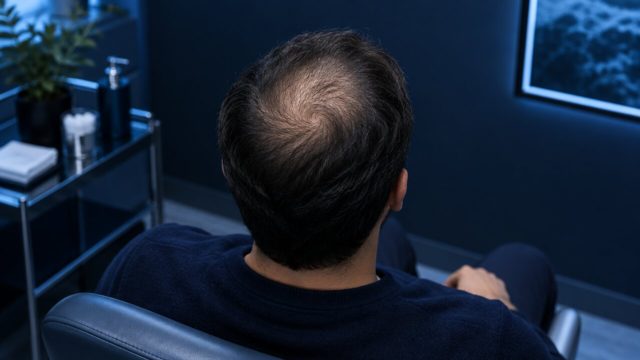
The donor area, usually at the back and sides of the scalp, is assessed for density, hair calibre, curl pattern and long-term stability. Even when the hair appears dense, the usable donor supply is limited and must be managed carefully. Curly hair can sometimes provide useful visual coverage because each shaft takes up more space once it grows, but this does not mean that every patient has a large surgical donor reserve. Overharvesting can make the donor area look thinner. A responsible plan balances today’s cosmetic priorities with future needs.
03Diagnosing traction, scarring and active scalp conditions
Traction alopecia is an important consideration for patients who have regularly worn tight braids, extensions, weaves, cornrows, locs, tight ponytails or other high-tension styles. It often affects the hairline, temples or areas where repeated pulling has occurred. In early stages, reducing tension and addressing contributing factors may help protect remaining hairs. In longstanding cases, follicles may be permanently damaged, and transplantation may be discussed only after the condition is stable and the scalp is suitable.
Some forms of hair loss involve inflammation and scarring. These conditions can cause burning, itching, tenderness, scaling, pustules or smooth areas where follicle openings are no longer visible. Transplanting into an active inflammatory scalp can place grafts at risk and may worsen the situation. For this reason, the medical team may advise further assessment or treatment before considering surgery. A history of raised scars or keloids should also be discussed openly. It does not automatically rule out a procedure, but it is relevant to risk planning and informed consent.
04FUE and DHI for tightly curled donor hair
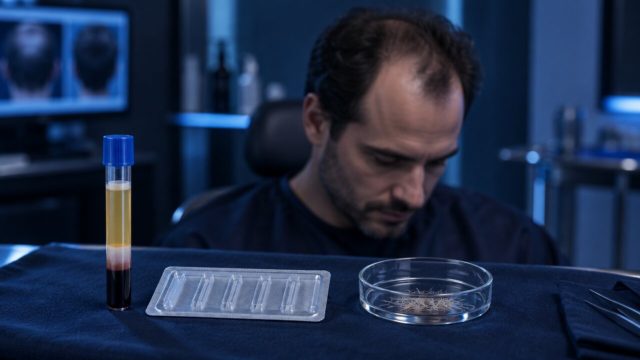
Follicular Unit Extraction, often called FUE, removes naturally occurring follicular units one by one from the donor area. For tightly curled hair, the extraction process requires close attention to the direction of the follicle under the scalp. The surgeon or extraction team may use a technique and punch choice adapted to the individual hair characteristics. Sapphire FUE is one approach available at Acibadem Hair Transplant Center. However, the name of a technique alone does not determine suitability or outcome; diagnosis, donor management and careful handling remain central.
Direct Hair Implantation, known as DHI, is another method that may be used for placing grafts into recipient areas. It can support controlled placement angles and distribution in selected cases. Whether DHI, FUE or a combined approach is considered will depend on the size of the area, the quality of donor hair, the desired hairline and the clinical plan. During black hair restoration, placement direction is especially important because new hairs should blend with the natural curl pattern rather than grow at an unnatural angle. Your doctor will explain the potential benefits and limitations of each option.
05Hairline design, density and natural visual coverage
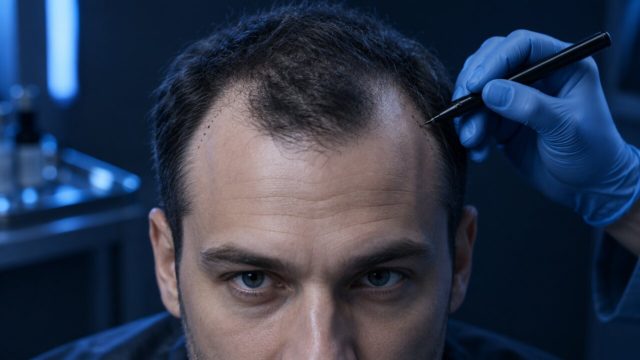
A natural hairline should be age-appropriate, individual and designed conservatively. A very low or sharply straight hairline may use too many grafts and may not look natural if hair loss progresses later. For men, the frontal hairline and temple areas often need detailed planning because they frame the face. For women, the plan may focus on traction-affected edges, central thinning or another pattern depending on the diagnosis. Fine single-hair grafts are commonly reserved for the leading edge when clinically suitable, while larger follicular units can support density behind it.
Curly and coiled hair can create a strong appearance of fullness as it grows and bends away from the scalp. This may allow an aesthetic result with a measured distribution of grafts rather than trying to create very high density everywhere. Still, visual coverage depends on several factors, including hair-to-skin contrast, hair shaft thickness, curl pattern, donor quality and the extent of the recipient area. A realistic discussion should include the possibility that more than one session may be considered in some patients, especially where hair loss is extensive. No clinic can guarantee an identical density to untouched hair.
06Preparing for surgery and protecting scalp health
Preparation starts with an honest medical review. Patients should tell the clinical team about chronic conditions, allergies, regular medication, supplements, previous scalp procedures and any tendency to scar unusually. The team may give instructions about medicines, smoking, alcohol, hair products and scalp care before the procedure. These instructions are individual and should be followed exactly. Avoiding unapproved home remedies or chemical treatments around the procedure date can help reduce unnecessary irritation of the scalp.
Many international patients also want to know how comfort is managed during the procedure. Local anaesthesia is typically used for hair transplant surgery, and needle-free anaesthesia is available at Acibadem Hair Transplant Center for eligible patients. The doctor will confirm whether it is appropriate in each case. Patients should also plan for practical needs such as loose clothing, travel support and enough time for early recovery. A dedicated hair restoration clinic should provide clear pre-operative information, consent discussions and a way to ask questions before making a decision.
07Recovery, grooming and long-term follow-up
After surgery, small crusts, temporary redness and mild swelling can occur, particularly during the first days. The clinic will provide washing and aftercare instructions designed to protect the newly placed grafts. Patients are usually asked not to rub, scratch or expose the scalp to friction while healing. Tight hairstyles, hair fibres, harsh chemicals, heat styling and scalp camouflage products may need to be avoided for a period advised by the medical team. Returning to these practices too early may disturb healing skin or place tension on vulnerable hairs.
Transplanted hair commonly sheds before new growth becomes visible, which can be worrying but is often part of the normal cycle after transplantation. Growth develops gradually, and the appearance changes over several months. Long-term follow-up allows the team to review healing, discuss scalp care and assess progress using appropriate clinical methods. At Acibadem Hair Transplant Center, all-inclusive packages include a care kit and 12 months of follow-up. The clinic measures results through trichoscopic graft survival at month 12 and documents a 98% rate under a written guarantee; individual cosmetic results can still vary.
08Choosing a safe clinic in Istanbul
When considering surgery abroad, patients should look beyond before-and-after images. Ask who performs each clinical step, how the diagnosis is made, whether the clinic is licensed, how donor harvesting is controlled and what follow-up is available after returning home. Clear answers about risks, limitations, recovery and possible future hair loss are signs of responsible communication. A clinic should not pressure patients into choosing a graft number or procedure before reviewing suitable medical information and scalp images.
Acibadem Hair Transplant Center is a dedicated hair restoration clinic in Istanbul licensed by the Turkish Ministry of Health. It has treated patients from 38 countries over 12 years and offers free online hair analysis reviewed by doctors, with WhatsApp replies typically within around two hours. Its all-inclusive packages can include VIP transfer, a 4-star hotel, a care kit and 12 months of follow-up. An online review can provide initial guidance, but it does not replace the final in-person medical examination and consent process before treatment.
09A practical first 10 days after surgery
The first 10 days are mainly about protecting the recipient area while the grafts settle. Patients are usually advised to sleep with the head elevated for the first nights if this is included in their aftercare instructions, as this may help limit swelling. The clinic may also recommend avoiding pressure from hats, helmets, pillow friction or tight head coverings. If swelling, bleeding, increasing pain, fever, discharge or other unexpected symptoms occur, patients should contact their clinical team promptly rather than trying to manage the issue with unapproved products.
Washing instructions vary by clinic and procedure, so patients should follow the schedule provided by their medical team. In general, early washing is performed gently, without direct high-pressure water, rubbing or picking at crusts. Crusts should loosen naturally according to the clinic’s guidance. For patients with coiled or tightly curled hair, it is particularly important not to detangle, brush, comb closely to the scalp or use oils and leave-in products unless the medical team confirms that these are safe during healing. Hair washing may feel unfamiliar during this period, but forceful cleansing can irritate healing skin.
10What the hair growth timeline may look like
Visible change after a transplant is gradual. During the early weeks, transplanted shafts may shed while the follicles remain under the skin. This temporary shedding is commonly expected and does not by itself show that the procedure has failed. The recipient area may then look similar to, or temporarily less full than, it did before surgery. Patients should avoid judging the final result during this stage and should use follow-up appointments to raise any concerns.
New growth often begins gradually over the following months, although the timing and rate vary between individuals. Early hairs can appear fine, uneven or different in texture before they mature. With Afro-textured hair, the emerging curl pattern may take time to become more consistent as the shafts lengthen. A fuller cosmetic change is typically assessed later in the recovery process rather than after only a few months. At Acibadem Hair Transplant Center, trichoscopic graft survival is measured at month 12, which provides a clinical way to document graft survival alongside the patient’s visual progress.
11Candidacy factors that need extra discussion
Hair transplantation may not be the first step for every patient with thinning edges or reduced density. A person with rapidly progressing loss, diffuse shedding across the scalp, recent postpartum shedding, nutritional concerns, scalp discomfort or unexplained patchy loss may need further medical assessment before a surgical plan is considered. Surgery redistributes existing donor follicles; it does not stop an underlying condition from continuing. Establishing whether the pattern is stable is therefore important for protecting both the transplanted area and the remaining native hair.
Patients with a history of scalp micropigmentation, previous transplant procedures, chemical burns, frequent relaxer use or repeated traction from styling should mention this during consultation. These factors may affect scalp condition, donor planning or the appearance of the final result. People considering a very dense hairline restoration should also understand the long-term donor commitment involved. A conservative plan can leave more options available if hair loss changes over time. The final decision should be based on an in-person examination, donor assessment and informed discussion of limitations.
12Planning travel to Istanbul for hair restoration
International patients should plan their trip around the need for rest and early aftercare, rather than treating the procedure as a same-day tourist activity. It is sensible to arrive with sufficient time before the appointment, keep the first recovery days relatively quiet and avoid scheduling demanding work, long excursions or activities that cause heavy sweating. Patients should also consider how they will travel home without putting pressure on the scalp and should pack loose, front-opening clothing to avoid pulling garments over the head after surgery.
Before travelling, patients can ask what documents, photographs and medical information are needed for the initial review and final consultation. They should disclose medicines, allergies and relevant medical history accurately, including any treatment for scalp conditions. Acibadem Hair Transplant Center offers doctor-reviewed free online hair analysis before travel, and its all-inclusive packages can include VIP transfer, a 4-star hotel, a care kit and 12 months of follow-up. Patients should still confirm their individual itinerary, procedure schedule and post-travel contact arrangements directly with the clinic before booking flights.
13Frequently Asked Questions
Can Black hair be restored with a transplant?
In many cases, Black hair can be restored with a transplant if the cause of hair loss has been diagnosed, the scalp is stable and there is adequate donor hair. Tightly curled follicles need careful extraction and placement techniques. A doctor should first rule out active scarring or inflammatory conditions and assess whether surgery is suitable.
What does a hair transplant for a Black man cost?
The cost for a Black man’s hair transplant varies according to the extent of hair loss, donor complexity, number of sessions, technique, destination and what is included in the treatment package. Curved follicles may require additional surgical care, but a reliable quote should follow a clinical review rather than be based only on a photograph or a standard graft package. Requesting a doctor-reviewed assessment is the safest way to receive an appropriate estimate.
What is the price of an Afro hair transplant?
There is no single price for an Afro hair transplant because Afro-textured hair includes many different curl patterns, donor densities and treatment needs. The final plan may also depend on whether the concern is androgenetic hair loss, traction alopecia or another diagnosis. A clinic should explain the proposed procedure, inclusions, follow-up and any limitations before providing a confirmed quotation.
How much would 3,000 hair grafts cost?
The cost of 3,000 grafts depends on the clinic, country, technique, complexity of the donor extraction and whether travel, accommodation, medication or aftercare are included. Importantly, 3,000 grafts are not appropriate for every patient and should not be selected without a donor-area assessment. Your doctor can advise whether that number is realistic and safe for the coverage area being considered.
Bu yazı yalnızca genel bilgilendirme amaçlıdır; profesyonel tıbbi tavsiyenin yerini tutmaz.
Bu rehber genel bilgilendirme amaçlıdır ve tıbbi muayenenin yerini tutmaz. Tedavi kararları, bir doktorun yüz yüze ya da online değerlendirmesinden sonra verilir.