
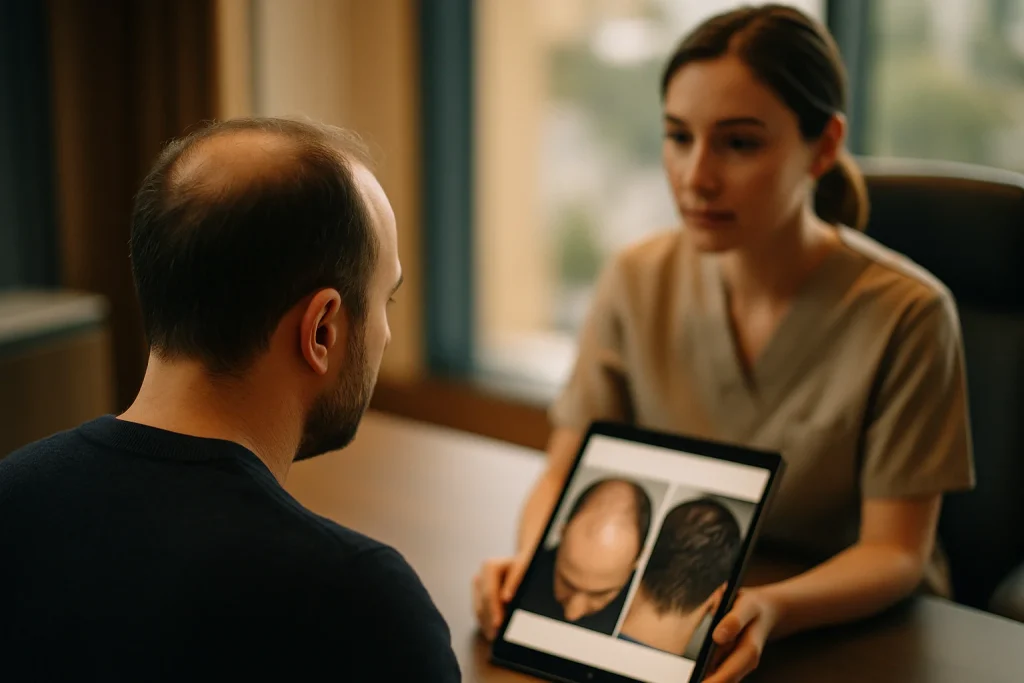
Scalp microblading can visually soften hairline gaps by placing pigment-like strokes in the skin, while a hair transplant moves living follicles to create growing hair. Scalp microblading is usually a temporary cosmetic camouflage option; a transplant may offer a more lasting solution when the donor area, hair-loss pattern and medical assessment are suitable. A doctor should assess the cause and stability of hair loss before either treatment.
- Scalp pigmentation can create the appearance of greater hair density, but it does not grow new hair.
- A hair transplant places living follicles into selected hairline gaps and requires an adequate donor area.
- Hairline design should consider future hair loss, facial proportions, age and the quality of existing hair.
- Pigment treatments usually need maintenance over time, whereas transplanted hair follows a longer healing and growth timeline.
- A medical assessment helps identify whether hair loss is stable enough for a hairline restoration plan.
01What scalp microblading can and cannot do for hairline gaps
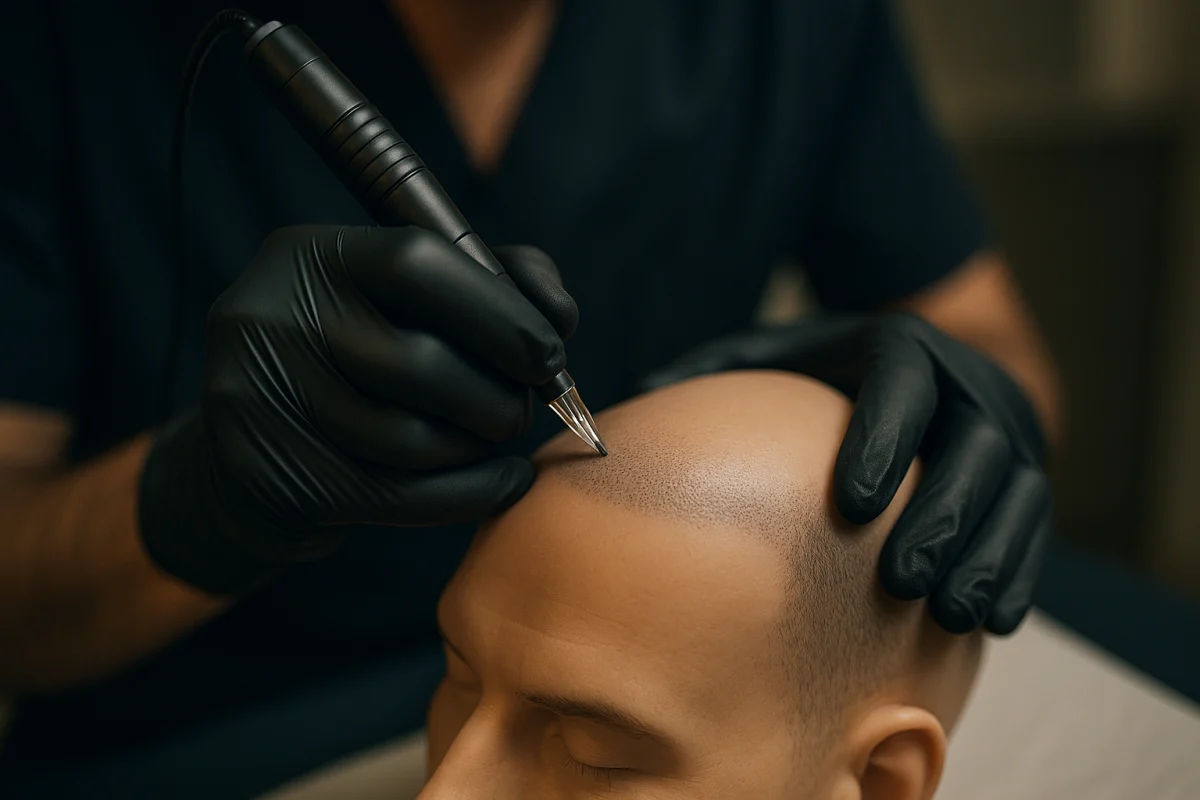
Scalp microblading is a term often used for cosmetic pigment work that imitates the look of short hairs or adds visual shading to sparse areas. For hairline gaps, it may make the border between the forehead and existing hair look more even without surgery. The treatment does not add real hair, restore inactive follicles or change the underlying reason for thinning. Its role is primarily visual camouflage.
The exact technique matters. Traditional microblading uses fine manual strokes, while scalp micropigmentation commonly uses a specialised device to place tiny pigment impressions that resemble closely cut follicles or a shadow of density. On the scalp, practitioners may use one approach, the other, or language that overlaps. Before booking, patients should ask which method is planned, where pigment will be placed and whether the provider has specific experience with hairline work.
This option may be considered by people with small, stable gaps, a receding-looking outline, scars or diffuse thinning that is not suitable for immediate surgery. It can also be used alongside existing hair to reduce the contrast between scalp and hair. However, if hair continues to thin behind a newly pigmented line, the visual result can become less natural over time. A careful plan should therefore consider the likely future pattern of hair loss, not only the gap visible today.
02How a hair transplant restores a natural-looking hairline
A hair transplant is a surgical procedure that relocates follicles from a donor area, usually at the back or sides of the scalp, to areas with thinning or absent hair. Once established, these follicles can produce hair that can be washed, cut and styled. For selected patients with hairline gaps, this can provide genuine hair coverage rather than an optical effect.
At Acibadem Hair Transplant Center in Istanbul, Sapphire FUE and DHI are available techniques for eligible patients. In Sapphire FUE, follicles are typically extracted individually and implanted into carefully prepared recipient sites. DHI generally involves placing extracted follicles with a dedicated implantation instrument. Your doctor will confirm which method, if any, is appropriate based on the donor area, the condition of the scalp, the number of grafts available and the desired hairline design.
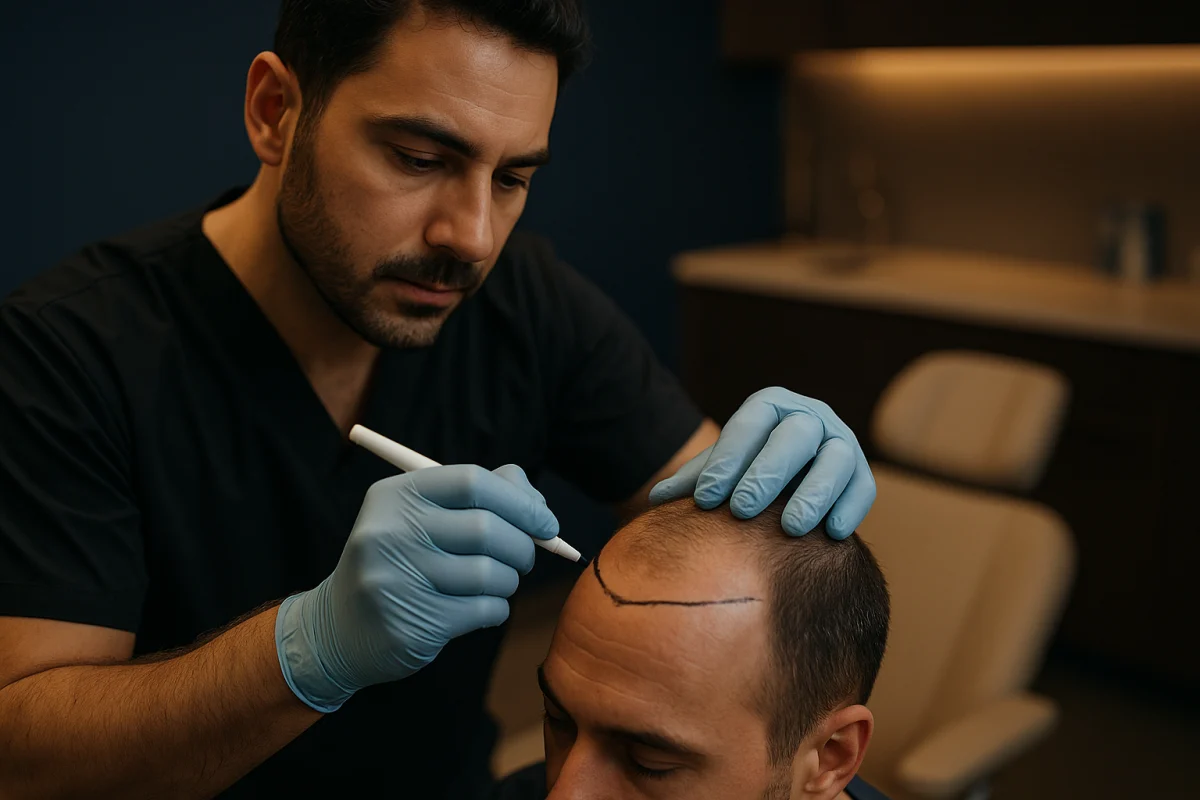
The artistry of hairline transplantation is especially important. Hair at the front of the scalp naturally grows at changing angles and with a softer, irregular transition rather than in a perfectly straight row. A conservative design often helps protect the appearance if further hair loss develops. In most patients, transplanted hair sheds in the early healing phase before new growth gradually becomes visible over subsequent months, so this is not an instant solution.
03Scalp microblading versus transplantation: the main differences
The clearest difference is that scalp microblading creates an illusion, while transplantation aims to create new growing hair in the treated location. Pigment may be useful when a person wants a non-surgical change, has limited donor supply or prefers a close-shaved appearance. A transplant may be more suitable when there is a stable hair-loss pattern, good-quality donor hair and a goal of adding length, texture and styling flexibility to the hairline.
The treatment experience is also different. Cosmetic pigmentation is usually completed over one or more sessions, and the skin may need time to settle before a final result can be judged. Hair transplantation involves extraction and implantation, followed by a recovery period and a staged growth process. Needle-free anaesthesia is available at our clinic for suitable patients, although your medical team will discuss the anaesthesia approach and any limitations before treatment.
Neither route should be chosen solely because it seems quicker. A pigment-based hairline can look convincing when colour, density and placement match the person’s complexion and existing hair. Yet it cannot move naturally in the same way as longer hair, and it may be less convincing if the hair is worn wet or if thinning progresses. Transplanted hair can blend with surrounding growth, but its result depends on factors such as graft survival, scalp health, donor characteristics and adherence to aftercare.
04Who may be a candidate for each approach
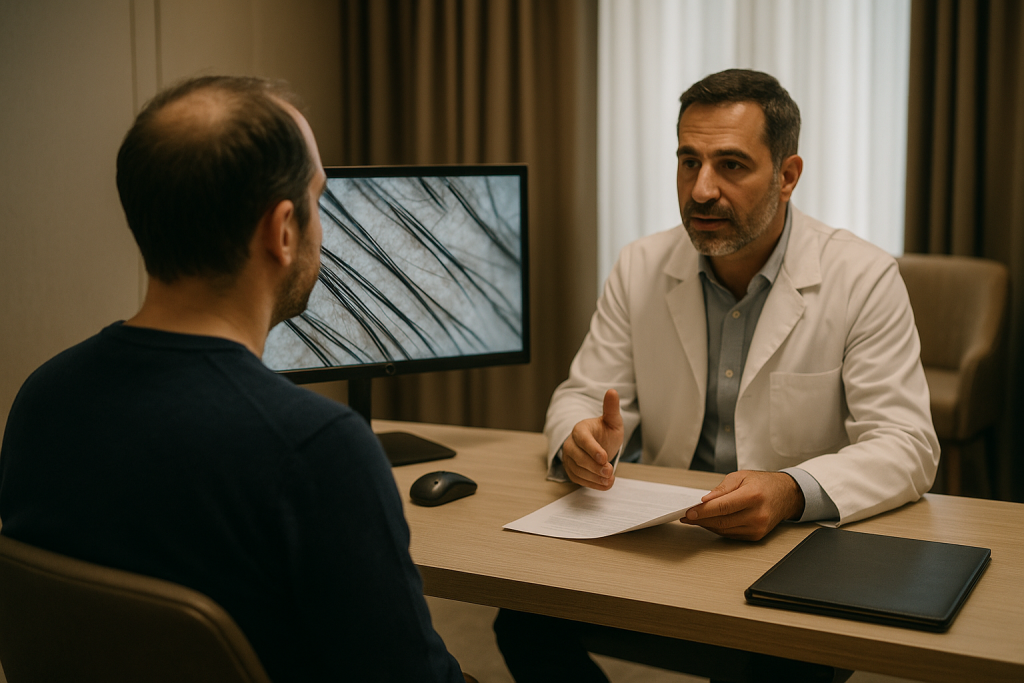
Suitability begins with identifying why the gap is present. Some people have a naturally high or uneven hairline, while others notice recession related to hereditary hair loss, traction, inflammation, previous surgery or scarring. Sudden shedding, redness, itching, scaling or painful areas should be medically assessed before a cosmetic procedure is considered. Treating the appearance without understanding active scalp disease may not be appropriate.
Scalp microblading may appeal to patients with a small area to camouflage, particularly if they do not want surgery at this stage. It may also be discussed for people whose donor area is not sufficient for the coverage they want. A patch test, a review of allergies and a discussion about skin type are sensible steps. People with active skin infection, poorly controlled inflammatory conditions or a tendency to problematic scarring may need to postpone or avoid pigment treatment, depending on clinical advice.
Hair transplant candidacy is more selective than many people expect. The doctor typically examines donor density, follicle quality, scalp laxity where relevant, hair-loss stability, family history and expectations. Younger patients or those with ongoing rapid recession may be advised to take a conservative approach because an aggressively low hairline can be difficult to maintain later. An online hair analysis reviewed by doctors can be a useful first step, but a final treatment recommendation requires appropriate clinical assessment.
05Longevity, maintenance and the changing nature of hair loss
Pigment placed in the scalp usually fades gradually rather than remaining unchanged forever. The duration varies with the pigment method, depth, skin type, sun exposure, immune response, skincare habits and the intensity of the original treatment. In many cases, periodic refresh sessions are needed to maintain colour and definition. It is important to ask about likely maintenance before treatment, rather than assuming that a cosmetic result will be permanent.
A transplant has a different long-term profile. Once transplanted follicles have healed and begun growing, they generally continue to grow as hair. However, the native hair around them may still thin with time. For this reason, a good plan aims to blend the transplant with both current hair and a realistic future appearance. Your doctor may discuss medical management of hair loss when clinically appropriate, but this should always be based on an individual medical review.
Some patients consider combining scalp microblading with transplantation. For example, a transplant may establish a soft frontal hairline, while carefully placed pigmentation may reduce the visual contrast in areas where adding more grafts is not ideal. This can be a valid strategy in selected cases, but the order and timing must be planned carefully. Pigment should not compromise surgical planning, and any recent procedure should be fully healed before another intervention is considered.
06Safety, realism and choosing a qualified provider
Both options involve the scalp and should be approached with appropriate hygiene, informed consent and realistic expectations. With pigmentation, possible concerns include infection, allergic reaction, colour change, uneven fading and an unnatural-looking hairline if the work is poorly planned. With transplantation, potential risks can include swelling, temporary crusting, infection, altered sensation, shock shedding and uneven growth. Your clinician will explain the relevant risks and aftercare in detail before you decide.
A natural result is not only about filling a gap. It depends on the position of the frontal line, the softness of its edge, the colour match, the density transition and how the result suits the patient’s age and facial features. Be cautious about designs that are too dark, too straight or too low. These may look striking immediately after treatment but can be harder to blend if hair loss changes in later years.
Ask practical questions during consultation. Request an explanation of the planned method, the number of sessions or estimated graft range, the expected recovery, the maintenance needs and the limits of what can be achieved. At Acibadem Hair Transplant Center, patients can receive a free online hair analysis reviewed by doctors, with WhatsApp replies typically within around two hours. The clinic is licensed by the Turkish Ministry of Health and provides 12 months of follow-up within its all-inclusive packages, which also include VIP transfer, a 4-star hotel and a care kit.
07Making a confident decision about your hairline
Start by defining your goal in simple terms. Do you want to make a small gap less visible, create the look of density with very short hair, or regain hair that can grow and be styled? Your answer can help clarify whether cosmetic pigmentation, hair transplantation or no procedure at this time may be the more sensible discussion. Photographs taken in consistent lighting can also help show whether the issue is a true gap, diffuse thinning or simply a contrast between light scalp and dark hair.
Consider the time horizon as well as the immediate appearance. Pigment may offer a relatively fast cosmetic change but normally requires future maintenance. A transplant needs patience during healing and growth, but it may provide living hair in the treated area when candidacy is suitable. No technique can stop all future hair loss by itself, so planning for change is one of the most important parts of a safe and natural-looking hairline strategy.
A consultation should leave you with a clear understanding of what is possible and what is uncertain. At our dedicated hair restoration clinic in Istanbul, treatment planning is based on medical review rather than a one-size-fits-all hairline. For transplant patients, results are measured through trichoscopic graft survival at month 12, with a documented 98% rate under written guarantee. This measure relates to graft survival and should not be understood as a promise of an identical cosmetic outcome for every patient.
08Frequently Asked Questions
Is pigment-based microblading possible on the scalp?
Yes, cosmetic pigment techniques can be performed on the scalp to imitate the appearance of follicles or add visual density. The most suitable technique may be described as microblading or scalp micropigmentation, depending on the method used. A qualified provider should assess scalp health, skin characteristics and the cause of hair loss first.
For how long do scalp pigment results usually last?
Scalp pigment results usually fade gradually, and maintenance sessions are commonly needed. How long the appearance remains clear can vary with the technique, pigment, skin type, sun exposure and individual skin response. Your provider should explain the expected refresh schedule for the specific method proposed.
What is the usual price of scalp micropigmentation?
The cost usually varies according to the size of the area, the number of sessions required, the complexity of the hairline and the provider’s experience. It is best to request a written, personalised quotation after an assessment rather than relying on a general online figure. Patients should also ask whether future touch-up sessions are included or charged separately.
Does scalp micropigmentation genuinely improve the appearance of thinning?
It can improve the visual appearance of thinning by reducing the contrast between visible scalp and existing hair. It does not create hair growth or restore lost follicles, so results depend on realistic design, suitable pigment placement and stable expectations. For some patients, it works well as camouflage; for others, hair transplantation or another medical approach may be more appropriate.
Bu yazı yalnızca genel bilgilendirme amaçlıdır; profesyonel tıbbi tavsiyenin yerini tutmaz.
 06
06 12
12