

A vitamin d3 supplement for hair loss may be appropriate when a blood test confirms low vitamin D, but it is not a substitute for diagnosing the cause of hair loss or planning a hair transplant. Before surgery, your doctor will review your health, medicines and test results to decide whether correction is needed and safe.
- Low vitamin D can be associated with some forms of hair shedding, but it is rarely the only cause of hair loss.
- Blood testing is the reliable way to identify vitamin D deficiency; symptoms alone cannot confirm it.
- Do not start high-dose vitamin D shortly before a hair transplant without medical guidance.
- Correcting a confirmed deficiency may support general health and a healthy scalp environment, but it does not guarantee new hair growth or graft survival.
- A pre-transplant assessment should also consider your hair-loss pattern, donor area, nutrition, medicines and medical history.
01Why vitamin D matters before a hair transplant
Vitamin D has several roles in the body, including bone health, immune function and normal skin processes. It is also involved in the activity of hair follicles, which are the small structures in the skin that produce hairs. For this reason, people researching a vitamin d3 supplement for hair loss often ask whether taking it before a hair transplant can improve the result. The direct answer is that a supplement may be useful if you have a confirmed deficiency, but it cannot replace a full hair-loss assessment or create a guaranteed surgical outcome.
Hair loss can happen for many reasons. Common examples include genetic pattern hair loss, temporary shedding after illness or stress, thyroid disorders, iron deficiency, inflammatory scalp conditions, some medicines and nutritional problems. Vitamin D status can be one part of this picture. However, a low result does not automatically mean that vitamin D is the main reason for thinning. Your doctor will interpret the result together with your symptoms, scalp examination, family history and the pattern of hair loss.
Before hair transplant surgery, the main aim is to make sure your condition is understood and that you are medically prepared. A transplant redistributes healthy follicles from the donor area to thinning areas; it does not stop every form of future hair loss. Identifying a correctable deficiency can be sensible as part of broader preparation. It may support your general wellbeing while the scalp heals, but clinical decisions should be based on medical review rather than assumptions from online information.
02Low vitamin D and the different patterns of hair shedding
Research and clinical practice have found associations between low vitamin D levels and several hair and scalp conditions. These can include diffuse shedding, where hair appears to fall from many areas of the scalp, as well as some autoimmune and inflammatory hair conditions. An association does not prove that one factor caused the other. Many patients with low vitamin D have genetic hair loss as well, and many patients with genetic hair loss have normal vitamin D levels.
Androgenetic alopecia, often called male or female pattern hair loss, is driven mainly by genetic sensitivity of follicles to hormones. It often causes gradual recession, crown thinning or widening of the part line. Vitamin D correction alone does not usually reverse this pattern. A hair transplant may be considered for suitable candidates with stable enough loss, adequate donor hair and realistic expectations. Your doctor may also discuss medical options intended to help protect existing non-transplanted hair, where clinically appropriate.
Telogen effluvium is another common reason for noticeable shedding. It can occur several weeks or months after a trigger such as fever, surgery, rapid weight change, major stress, childbirth or a restrictive diet. Low vitamin D may coexist with this type of shedding, but other causes should be considered too. When diffuse shedding is active, a doctor may recommend investigating and stabilising the underlying trigger before deciding whether hair transplant surgery is the right next step.
03Vitamin d3 supplement for hair loss: what testing can tell you
A vitamin d3 supplement for hair loss should ideally follow a blood test that shows whether your vitamin D level is low. Vitamin D3 is a form of vitamin D commonly used in supplements. Testing provides a clearer starting point than guessing based on fatigue, hair shedding, skin tone, time spent indoors or the season. Those factors can affect risk, but they cannot reliably diagnose deficiency in an individual patient.
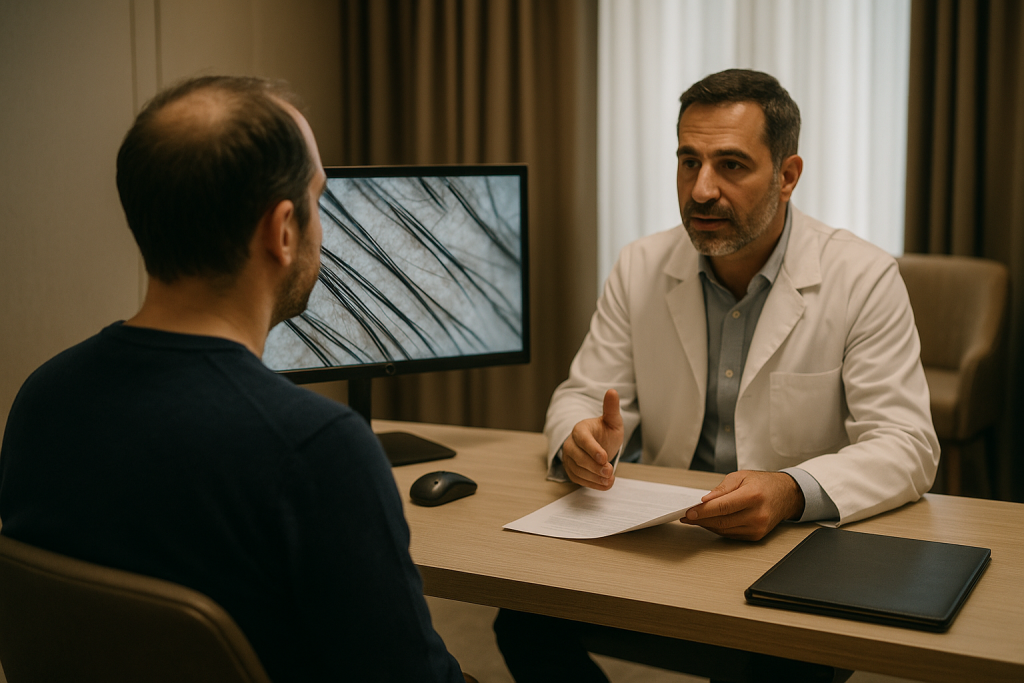
Your doctor may request vitamin D testing as part of a wider assessment when your history suggests a possible deficiency or when shedding is diffuse. Depending on your symptoms and medical background, other tests may also be considered. These can include investigations related to iron stores, thyroid function, blood count or other nutritional factors. Not every prospective hair transplant patient needs the same tests. The appropriate approach depends on the medical consultation.
It is important to share any test results with the clinician managing your hair restoration plan. A result should be interpreted using the laboratory reference range, your overall health and any relevant conditions. A level that requires treatment in one situation may need a different approach in another. This is especially important for people with kidney disease, parathyroid disorders, digestive conditions affecting absorption, a history of kidney stones or conditions that can raise calcium levels.

04Supplement safety in the weeks before surgery
Vitamin D is often viewed as simple because it is available without prescription in many countries. Yet it is a fat-soluble vitamin, which means excessive amounts can build up in the body. Taking more is not necessarily better. High intake may lead to raised calcium levels and can cause symptoms such as nausea, thirst, constipation, weakness or confusion. In more serious situations, it may affect kidney function. Follow the dose and timing advised by your treating doctor.
Before a hair transplant, give the clinic a complete list of prescription medicines, non-prescription medicines, vitamins, herbal products and sports supplements. This includes vitamin D, calcium-containing products and combined multivitamins. Your surgical team needs this information to review possible safety issues, plan anaesthesia and provide suitable pre-operative instructions. Do not stop prescribed medicines on your own, and do not add new high-dose supplements simply because surgery is approaching.
If your doctor identifies low vitamin D shortly before your procedure, they will decide whether supplementation should begin, continue or be adjusted. In some cases, treatment can be started while the wider hair restoration plan continues. In other cases, the clinician may want to investigate the reason for a marked deficiency or another abnormal result first. The safest plan is individual and should be confirmed by the medical team rather than copied from another patient’s routine.
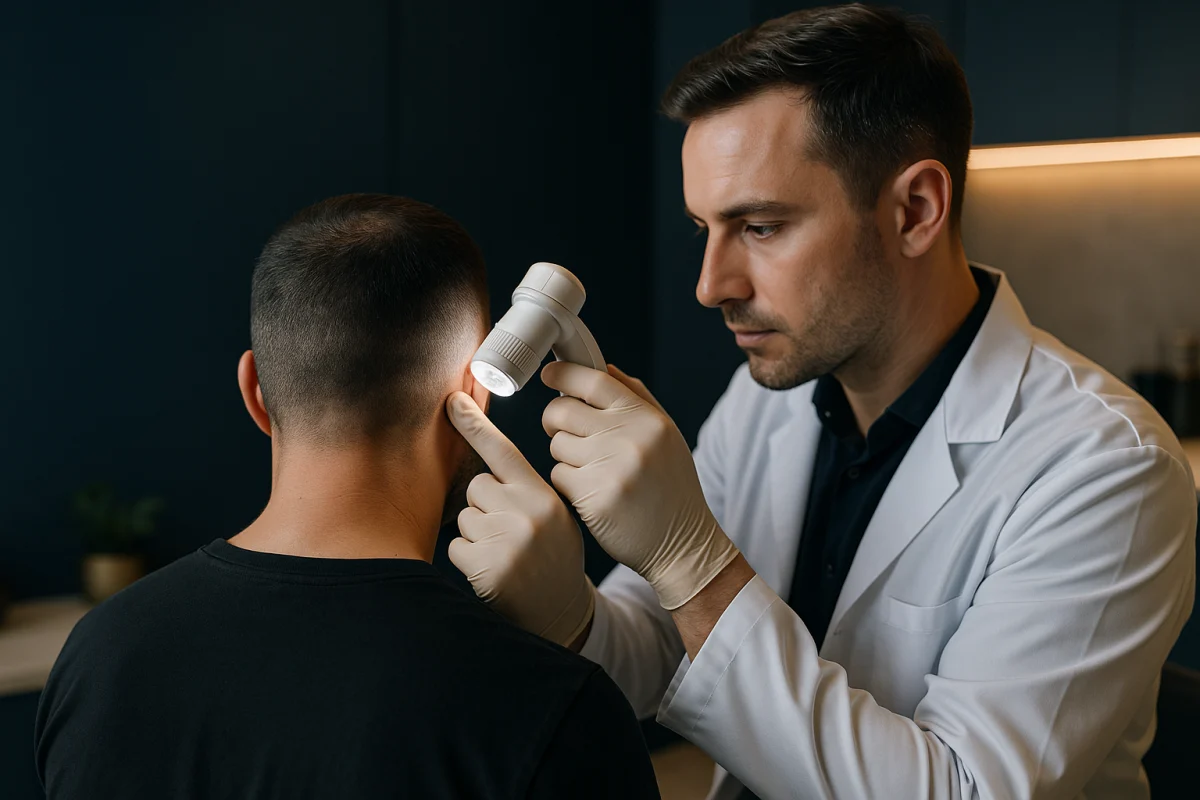
05Preparing the scalp and donor area for transplantation
Hair transplant preparation is broader than taking a supplement. The surgeon assesses the recipient area, the quality and density of the donor area, the calibre of available hairs, the degree of ongoing loss and the design that may remain natural as you age. A healthy-looking donor area does not always mean that enough grafts are available for every desired area. Careful planning is important because donor follicles are a limited resource.
For patients suitable for treatment, techniques such as Sapphire FUE or DHI may be considered based on the clinical plan and the areas being treated. The technique is only one element of the result. Proper graft handling, appropriate placement, scalp health, donor management and aftercare also matter. No vitamin d3 supplement for hair loss can compensate for an unsuitable donor area, an uncontrolled scalp disorder or expectations that exceed the available graft supply.
Practical preparation commonly includes following the clinic’s instructions about smoking, alcohol, scalp products, meals, sleep and medicines. These instructions can vary according to your health profile and planned procedure. Tell the team if you develop a fever, a scalp rash, unusual shedding, a new medical diagnosis or a medication change before travel or surgery. Open communication gives the doctor the best opportunity to decide whether the treatment plan should proceed or be modified.
06What supplements can and cannot do after implantation
After transplantation, the newly implanted grafts need time to settle and enter their normal growth cycle. In most patients, transplanted hairs shed during an early phase before visible new growth begins later. This expected process is sometimes called shock shedding of the transplanted hair shafts, although the follicles remain under the skin. A vitamin supplement does not prevent this normal cycle and should not be judged as ineffective merely because early shedding occurs.
If a deficiency was confirmed before or after surgery, correcting it may be part of your wider health care. Adequate nutrition, hydration and following post-operative instructions support recovery in general. However, supplements do not make grafts grow overnight, increase the number of grafts placed or guarantee a particular density. Hair growth after transplant is gradual, and the final appearance is commonly assessed over many months rather than days or weeks.
Your aftercare plan should focus on evidence-based instructions from the surgical team. These usually include guidance on washing, sleeping position, physical activity, sun exposure and when to contact the clinic. Avoid applying unapproved topical products or starting multiple new supplements immediately after surgery without asking first. If you experience increasing redness, marked swelling, discharge, severe pain or other concerning symptoms, contact your treating clinic or seek medical care promptly.
07When to seek a doctor-reviewed hair analysis
Consider professional assessment if you have sudden hair loss, patchy bald areas, scalp pain, scaling, itching, eyebrow or body-hair loss, or shedding accompanied by unexplained weight change, fatigue or other symptoms. These signs do not confirm a particular diagnosis, but they can suggest that a medical evaluation is important before cosmetic treatment. Hair transplant surgery is not usually the first step when the cause of loss is unclear or when a scalp condition is active.
At Acibadem Hair Transplant Center, international patients can request a free online hair analysis reviewed by doctors. Clear scalp photographs and a short health history help the team make an initial assessment of the hair-loss pattern and donor area. Replies on WhatsApp are typically provided within around two hours. An online review is useful for preliminary planning, but it does not replace in-person medical evaluation or laboratory testing when these are needed.
Acibadem Hair Transplant Center is a dedicated hair restoration clinic in Istanbul licensed by the Turkish Ministry of Health. The clinic offers Sapphire FUE and DHI techniques, with needle-free anaesthesia available for suitable patients. Its all-inclusive packages can include VIP transfer, a 4-star hotel, a care kit and 12 months of follow-up. Your doctor will confirm whether a vitamin D test, a vitamin d3 supplement for hair loss or any other preparation is relevant to your individual treatment plan.
08Frequently Asked Questions
Can vitamin D deficiency cause hair loss?
Low vitamin D may be associated with some types of hair shedding and scalp conditions, but it is not the only possible cause. Genetic pattern hair loss, thyroid conditions, iron deficiency, stress-related shedding and other factors should also be considered by a doctor.
Should I take vitamin D3 before my hair transplant?
Only take vitamin D3 as advised by your doctor, ideally after appropriate testing. If you already use a supplement, tell your hair transplant team the dose and brand-independent ingredient list before surgery.
Will a vitamin D3 supplement make transplanted hair grow faster?
A supplement does not usually speed up the normal growth timeline of transplanted follicles. Correcting a confirmed deficiency may support general health, but it cannot guarantee faster growth, greater density or improved graft survival.
Can I have a hair transplant if my vitamin D level is low?
In many cases, a low level does not automatically prevent a hair transplant. Your doctor will consider how low it is, whether you have symptoms or related health conditions, and whether further investigation or treatment is needed before proceeding.
How do I know whether my hair loss is from low vitamin D?
A blood test can identify vitamin D status, but it cannot by itself prove the reason for your hair loss. A medical history, scalp examination and assessment of your hair-loss pattern are needed to reach a more reliable conclusion.
Bu yazı yalnızca genel bilgilendirme amaçlıdır; profesyonel tıbbi tavsiyenin yerini tutmaz.
 06
06 12
12