Bu yazıda9
- Start With Your Hair Loss Pattern and Long-Term Goal
- Assess the Donor Area Before Comparing Techniques
- Sapphire FUE for Controlled Graft Extraction and Coverage
- DHI for Detailed Placement in Selected Areas
- How to Identify the Most Effective Hair Transplant Method
- Hairline Design Is More Than a Technical Detail
- Safety, Anaesthesia and the Recovery Process
- Plan Follow-Up and Choose a Clinic With Measurable Care
- Frequently Asked Questions
The most effective hair transplant method is usually the one that matches your pattern of hair loss, donor hair quality, hair characteristics and long-term goals. Sapphire FUE and DHI can both be suitable options, but your doctor should confirm the approach after examining your scalp and donor area.
- Sapphire FUE and DHI are both established techniques, but they are planned and performed differently.
- A healthy, sufficiently dense donor area is one of the main factors in deciding whether surgery is appropriate.
- Natural-looking results depend on graft planning, hairline design, angle control and realistic expectations.
- DHI may be considered when detailed placement is important, while Sapphire FUE may suit wider areas in many patients.
- A doctor-led assessment should review current hair loss and the possibility of future thinning before a procedure is chosen.
01Start With Your Hair Loss Pattern and Long-Term Goal
Choosing the most effective hair transplant method begins with understanding what you want to improve and what your hair loss may do over time. Some people wish to rebuild a receding frontal hairline, while others want more coverage through the mid-scalp or crown. These concerns need different graft plans. A technique is not automatically better simply because it is newer or more widely discussed. The right choice is usually the one that uses your available donor hair carefully and supports a natural appearance as you age.
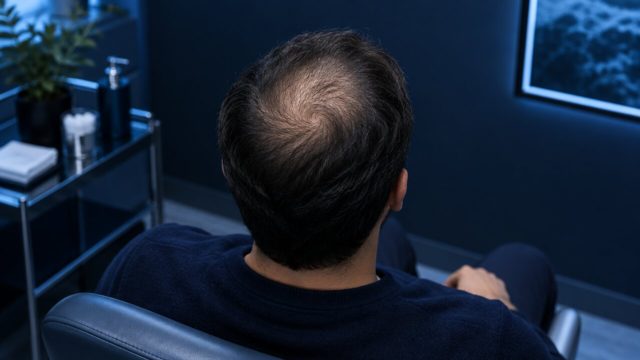
Your doctor will usually assess the pattern, speed and stability of hair loss before recommending a procedure. Hair thinning can continue after a transplant, especially when there is active pattern hair loss. For this reason, the plan should consider not only the area that is thin today, but also areas that may lose density later. A conservative hairline and a sensible graft distribution can help preserve options for the future.
Your personal goal also matters. Some patients prioritise a soft, age-appropriate hairline. Others may prefer improved density in a specific visible area, such as the frontal third. It may not be possible to create high density across every area when donor supply is limited. A clear consultation should explain the likely priorities, the number of sessions that may be considered and what level of coverage is realistic in your case.
02Assess the Donor Area Before Comparing Techniques
The donor area is the region where follicles are taken for transplantation, most often the back and sides of the scalp. Its density, hair thickness, curl pattern and stability are central to every surgical plan. A person with a strong donor area may have more flexibility than someone with fine or limited donor hair. However, even a good donor area should be managed carefully to avoid removing too many follicles from one place.
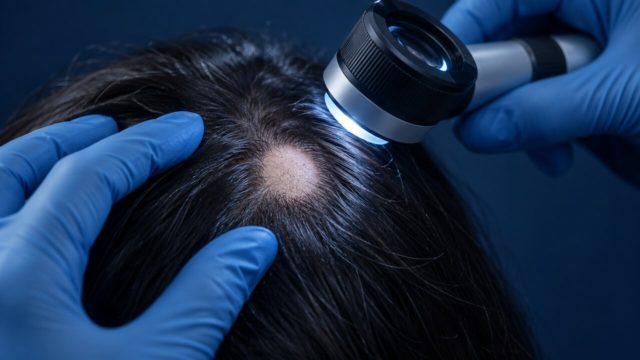
Doctors commonly examine the donor zone with magnification or trichoscopic assessment. This helps them review hair density, follicle grouping, scalp features and signs of miniaturisation. A donor area can look full to the eye but still require a cautious extraction plan. The assessment also considers whether hair in this zone is likely to remain stable over time, as transplanted follicles are expected to keep their donor-area characteristics in most patients.
Previous procedures, scalp conditions, medical history and lifestyle factors can also affect suitability. For example, a prior transplant may reduce the available donor reserve, while scarring can change the way grafts are harvested or placed. During an online assessment, photographs can provide an initial view, but an in-person clinical examination may still be needed before surgery. Your doctor should confirm whether transplantation is medically appropriate.
03Sapphire FUE for Controlled Graft Extraction and Coverage
Sapphire FUE is a follicular unit extraction approach in which individual follicular units are removed from the donor area and then transplanted into prepared recipient sites. The term sapphire commonly refers to the material used for creating recipient-site channels. This method may be considered for patients who need coverage across a larger area, such as the front, mid-scalp or crown, depending on their donor capacity and surgical plan.
In an FUE procedure, graft handling is important at every stage. The team needs to extract follicular units gently, sort them appropriately and place them at angles that follow the natural direction of surrounding hair. Channel planning affects how the hair may lie after growth. The size, direction and distribution of the sites are selected according to the area being restored, the hair characteristics and the intended visual density.
Sapphire FUE does not mean that every patient receives the same design or graft number. A wider thinning area may require a different density strategy from a small frontal recession. In many cases, the surgeon may focus grafts where they will have the greatest visual effect rather than spreading them too thinly over a large area. Recovery guidance and careful aftercare remain important regardless of the extraction method used.
04DHI for Detailed Placement in Selected Areas
DHI, or direct hair implantation, is a technique in which extracted grafts are placed using a specialised implantation instrument. It may be useful when the treatment plan requires close attention to placement direction, especially around the hairline, temples or smaller areas of thinning. The suitability of DHI depends on the individual plan rather than on a general rule that it is better than other approaches.
With DHI, the timing and handling of grafts remain essential. The medical team places follicles according to the planned angle, direction and spacing so that the transplanted hair can blend with existing hair. This level of planning is particularly relevant in visible zones, where a harsh hairline or incorrect direction may look unnatural. The doctor should decide whether DHI offers a practical advantage for the area being treated.
DHI can be considered when a patient has existing native hair between thinning areas and careful placement is needed to work around it. However, it is not a way to create unlimited density or overcome an insufficient donor supply. The number of grafts that can be transplanted safely is still guided by donor assessment, scalp condition and the treatment objective. A realistic discussion should include the possible need for ongoing hair-loss management.
05How to Identify the Most Effective Hair Transplant Method
The most effective hair transplant method is not a single technique for every person. It is a doctor-led decision based on the recipient area, donor reserve, hair shaft thickness, curl, scalp contrast and future hair-loss risk. For example, darker straight hair against a lighter scalp may need a different density plan from curly or thicker hair. These visual factors can change how much coverage is needed to create an acceptable cosmetic improvement.
Your desired result should be translated into a practical surgical plan. A lower hairline may use more grafts and may not remain suitable if hair loss progresses. Similarly, restoring a large crown can use substantial donor hair, sometimes with less visible impact than strengthening the frontal region. Many doctors therefore prioritise the hairline and front of the scalp when appropriate, because these areas are most noticeable in everyday interaction.
Technique selection should also include your preferences about grooming and recovery. FUE-based procedures generally involve short hair in the donor area for extraction, while the recipient area can have temporary crusting and shedding during early healing. Your doctor can explain the expected stages, but healing and growth timelines vary. It is important to choose a plan you can follow carefully, including aftercare visits and photo-based follow-up if advised.
06Hairline Design Is More Than a Technical Detail
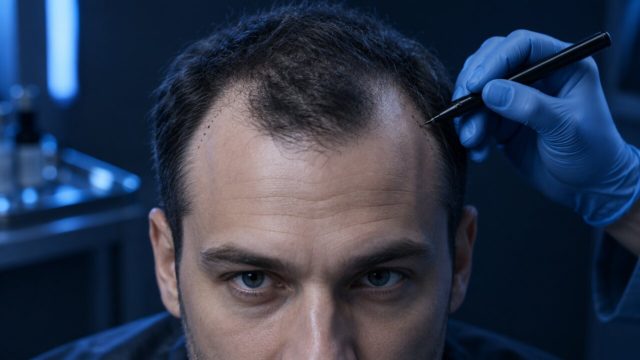
A natural hairline is usually irregular in a controlled way, rather than being perfectly straight or sharply outlined. It should suit the face, age, existing hair pattern and likely future hair loss. The surgeon may use finer single-hair grafts in the first rows and place fuller follicular units behind them when appropriate. This arrangement can create a softer transition from the forehead into the transplanted area.
The direction of implanted hair is equally important. Hair at the temples, frontal corners and crown often grows in different directions. If grafts are placed without respect for these patterns, the final appearance may be less natural even when the grafts grow well. Careful site creation and implantation planning aim to match the existing flow of hair as closely as possible.
Patients sometimes bring photographs of their hair from earlier years. These can help explain their preferences, but the final plan should be based on what is safe and realistic today. Recreating a teenage hairline may not be medically sensible for every adult. A responsible consultation should explain why a slightly higher or more conservative design can protect donor resources and support a balanced result over time.
07Safety, Anaesthesia and the Recovery Process
Hair transplantation is a medical procedure and should be performed in an appropriately licensed clinical setting. Before treatment, the medical team should review relevant health information, medications, allergies and scalp concerns. Some people may need additional evaluation or may be advised to postpone treatment. Your doctor will explain whether you are a suitable candidate and which precautions apply to your situation.
Local anaesthesia is generally used to keep the procedure comfortable. Needle-free anaesthesia may also be available for selected patients as part of the comfort plan. The exact anaesthesia approach should be decided by the clinical team after reviewing your needs. You should always tell the team about any previous reactions to anaesthesia, medicines or medical procedures before treatment begins.
After surgery, the scalp commonly needs time to settle. Mild swelling, redness, tenderness, crusting and temporary shedding can occur during the early recovery period. Transplanted hairs may shed before new growth becomes visible, which is often part of the normal cycle. Written aftercare instructions should cover washing, sleeping position, activity limits, sun exposure and when to contact the clinic with concerns.
08Plan Follow-Up and Choose a Clinic With Measurable Care
A transplant journey does not end on the procedure day. Follow-up helps the team monitor healing, answer questions and review visible changes as the months pass. Growth is gradual, and the final appearance is commonly assessed many months after treatment rather than in the first weeks. Consistent photographs taken in similar lighting can help document progress more clearly than day-to-day mirror checks.
At Acibadem Hair Transplant Center, a dedicated hair restoration clinic in Istanbul licensed by the Turkish Ministry of Health, patients can receive a free online hair analysis reviewed by doctors. Replies on WhatsApp are typically provided within around two hours. The clinic offers Sapphire FUE and DHI, as well as all-inclusive packages that include VIP transfer, a 4-star hotel, a care kit and 12 months of follow-up.
The clinic has welcomed patients from 38 countries over 12 years. Results are measured through trichoscopic graft survival at month 12, with a documented 98% rate under a written guarantee. Individual outcomes can still vary because healing, hair characteristics, scalp condition and aftercare differ between patients. A consultation is the right time to ask how outcomes are measured and what follow-up support is included in your plan.
09Frequently Asked Questions
Is Sapphire FUE or DHI better?
Neither technique is automatically better for everyone. Sapphire FUE and DHI may suit different treatment areas and planning needs, so a doctor should assess your donor area, hair loss pattern and goals before recommending one.
Can I choose a hair transplant method without an examination?
An online review can provide useful initial guidance, especially when clear photos are available. However, the doctor may need an in-person scalp examination before confirming that a method and graft plan are suitable.
Does DHI create a denser result than FUE?
Visible density depends mainly on donor hair, graft number, placement planning, hair characteristics and scalp contrast. DHI may support detailed placement in selected areas, but it cannot create unlimited density when donor supply is limited.
How long does it take to see hair transplant growth?
Early shedding may occur after the procedure, and visible growth is gradual. Final assessment is usually made many months later, with trichoscopic graft survival measured at month 12 at Acibadem Hair Transplant Center.
Will I need another hair transplant in the future?
Some patients may consider another procedure if hair loss continues or if they want further coverage later. This depends on the remaining donor supply, the progression of hair loss and the priorities agreed with your doctor.
Bu yazı yalnızca genel bilgilendirme amaçlıdır; profesyonel tıbbi tavsiyenin yerini tutmaz.
Bu rehber genel bilgilendirme amaçlıdır ve tıbbi muayenenin yerini tutmaz. Tedavi kararları, bir doktorun yüz yüze ya da online değerlendirmesinden sonra verilir.