
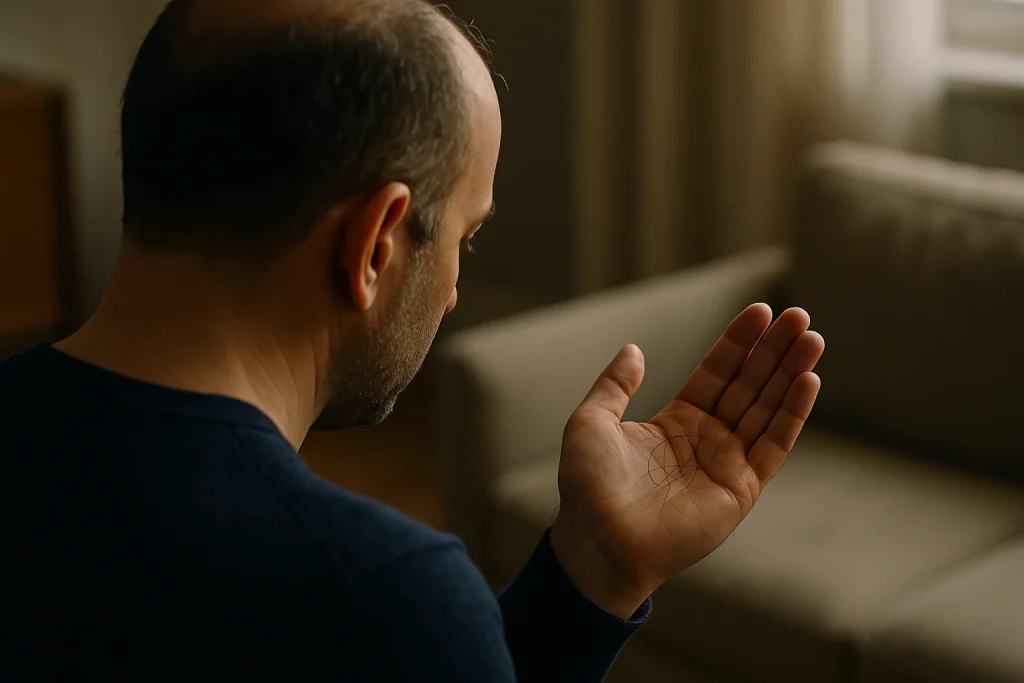
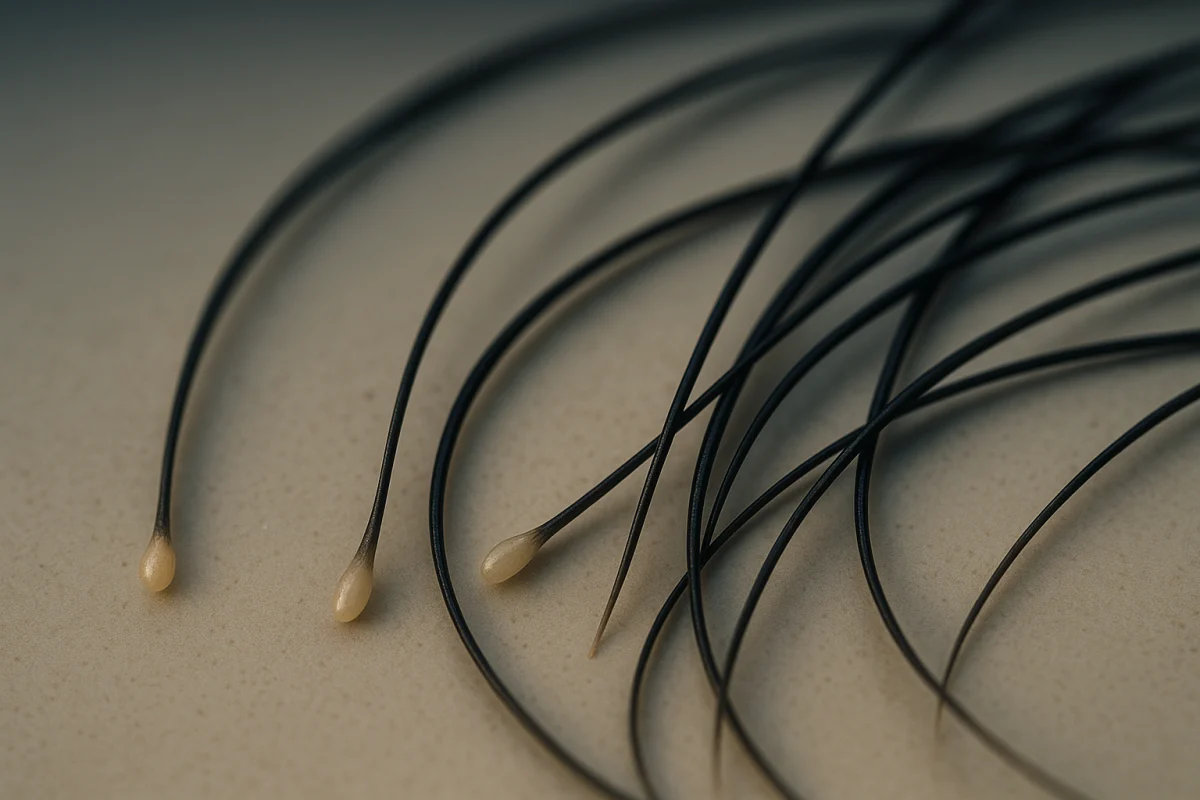
A white bulb attached to a shed hair is usually keratin or root-sheath material, not the complete living follicle. After a hair transplant, this can be a normal part of shedding, especially once grafts have healed, but early loss with bleeding, pain, or skin changes should be reviewed by your clinic.
- A white bulb on a naturally shed hair usually does not mean that the entire hair follicle has been removed.
- During the first days after transplantation, grafts need careful protection because they are still settling into the skin.
- Temporary shedding after a transplant is common and can affect transplanted hairs as well as nearby existing hairs.
- White material on hair shafts can have different causes, including normal root tissue, hair casts, product residue, or a scalp condition.
- Contact your care team if shedding comes with persistent redness, swelling, discharge, severe itching, or pain.
01What a hard white hair follicle usually means
A hard white hair follicle seen after a hair sheds can be worrying, particularly when you are closely watching your scalp after a transplant. In most cases, however, the white part is not the whole follicle. It is commonly a small amount of keratinised root sheath, sometimes called a club root, which can remain attached to a hair that has completed its natural shedding phase. The living follicle is a tiny structure located deeper in the skin and is not usually pulled out with a routine shed hair.
Hair growth follows a repeating cycle. During the active growth phase, called anagen, the hair is connected more firmly within the follicle. Later, it enters a resting and shedding stage, known as telogen and exogen. A hair released at this point may have a pale or white, firm-looking end. This appearance alone does not show whether the follicle beneath the skin is healthy or whether future growth is possible.
After hair transplantation, it is understandable to inspect every hair that falls out. The visible hair shaft is only one part of the graft. Once a graft has established its blood supply and healed, the implanted follicular tissue remains under the scalp even if the initial hair shaft sheds. Your doctor can explain what timing is expected in your individual recovery plan and assess concerns through an in-person or online review when needed.
02Why transplanted hairs can shed with white bulbs
Transplanted hairs often shed during the early recovery period. This is commonly described as temporary shedding or shock shedding. The procedure and the change in blood supply can encourage the visible hair shaft to move into a resting phase, while the transplanted follicle remains in the scalp. A white bulb at the end of one of these shed hairs may therefore be seen during a normal recovery process.
Timing matters. In the first days after surgery, patients should avoid rubbing, scratching, picking scabs, or exposing the recipient area to pressure. Newly placed grafts need time to settle. If a structure comes away very early and there is fresh bleeding, tissue, or notable pain, it is sensible to contact the surgical team promptly. This is different from a simple hair shaft shedding weeks later without bleeding or discomfort.
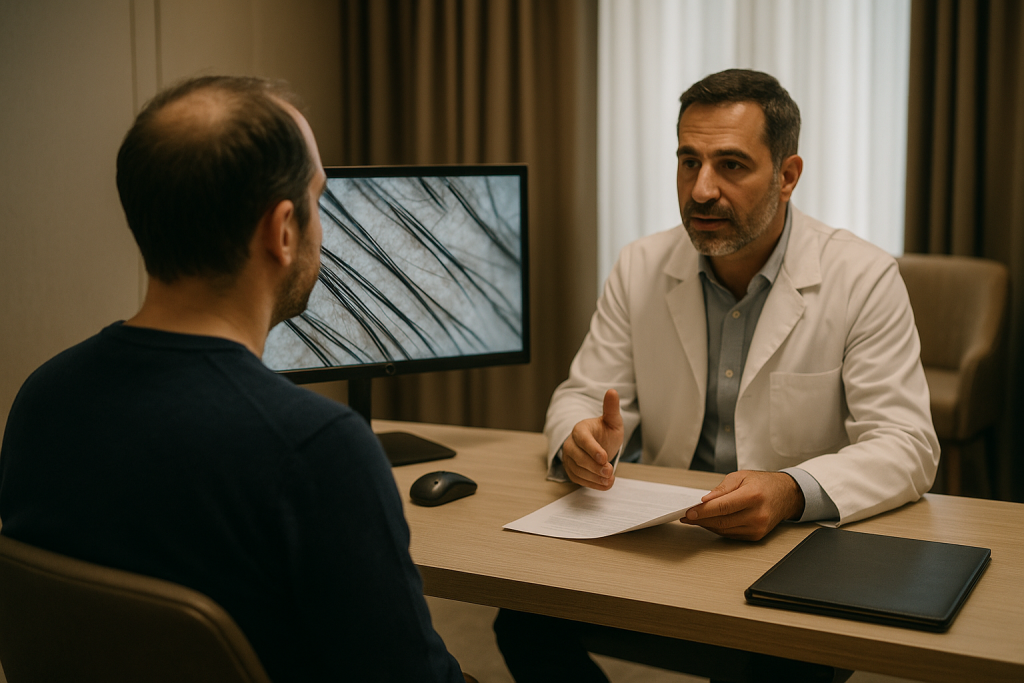
At Acibadem Hair Transplant Center, patients receive aftercare guidance and follow-up for 12 months as part of all-inclusive packages. The clinic’s team can help patients understand the expected shedding stages after Sapphire FUE or DHI treatment. Photographs may be useful for a remote review, but your doctor will confirm whether an appearance is normal or needs closer examination.
03How to tell a shed hair from a dislodged graft
A shed hair is generally a single fibre with a small pale, white, or translucent tip. It may be noticed on a pillow, in the shower, or while washing the scalp. There is usually no fresh blood, open area, or sudden pain. A shed hair can look surprisingly substantial at the root end because keratin and surrounding sheath material may dry and become firm.
A dislodged graft is more likely to be a concern only in the very early healing stage. It may be associated with active bleeding, a small piece of skin-like tissue, or a visible empty spot after trauma to the recipient area. Pulling at scabs before they have softened and been removed according to clinic instructions can increase the risk of disturbing healing skin. For this reason, careful washing and avoiding fingernail contact are important after surgery.
Do not try to test whether a graft is loose by pulling on hairs. This can irritate the scalp and may create unnecessary worry. Instead, follow your post-operative washing schedule and ask your care team if you notice anything unexpected. Clear photographs taken in good light, without touching the area, can help the team give general guidance while arranging review if required.
04The recovery timeline: shedding, resting and regrowth
The first period after transplantation is focused on healing. Small scabs and temporary redness can occur, and the clinic will give instructions on cleansing the scalp safely. Once healing progresses, many transplanted shafts may shed. This phase can feel disappointing because the hairs initially visible after the procedure may no longer be present, but it is typically a temporary stage rather than a sign that treatment has failed.
After shedding, follicles commonly spend time in a resting period before producing new hairs. Early regrowth may be fine, light, or uneven. Different grafts do not always restart at exactly the same time, so changes in density can develop gradually. Existing hair around the transplant area can also react to the procedure or underlying hair loss pattern, which may make the scalp look thinner for a time.
Meaningful assessment takes patience. At Acibadem Hair Transplant Center, results are measured using trichoscopic graft survival at month 12, with a documented 98% rate under a written guarantee. A month-12 assessment is more informative than judging individual hairs during the shedding stage. Your doctor will discuss realistic timing, density expectations, and any factors that may affect your recovery.
05Other white material that can appear on the scalp or hair
Not every white particle on a hair is a root bulb. Dry skin, healing scabs, shampoo residue, styling products, and hair casts can all leave pale material around the shaft. Hair casts are soft or firm tube-like sleeves that surround the hair rather than sitting only at its end. They can sometimes slide along the shaft, unlike a club-shaped root tip attached to a shed hair.
A hard white hair follicle may also be confused with a small plug of scalp debris. This is especially possible if the scalp has been oily, flaky, or difficult to cleanse during the post-operative period. Patients should not scrape material away with nails, tweezers, or sharp tools. Gentle washing exactly as advised by the clinic is the safer approach while the recipient area heals.
Less commonly, white or pale particles may be related to a scalp or hair-shaft condition. Persistent scaling, marked itching, redness, brittle hairs, or white material that repeatedly coats many hairs should be medically assessed. A visual check alone cannot reliably identify the cause. Your doctor may consider the scalp appearance, your symptoms, and your medical history before recommending the appropriate next step.
06Coarse white hairs and changes in texture after transplant
Some patients notice coarse white hairs among their darker hairs or in areas where hair has previously been thin. Hair colour changes when pigment production in the follicle reduces, and white or grey hair can become more noticeable over time. A white hair may also look thicker because it reflects light differently, has a different texture, or stands out against darker surrounding hair.
Hair texture can vary from one follicle to another. This variation is not necessarily caused by transplantation. In addition, early regrowth after a procedure may be finer, curlier, straighter, or temporarily different from the final mature hair. As the growth cycle continues, texture can change. It is generally too early to make conclusions about final hair characteristics during the first regrowth period.
A hard white hair follicle appearance does not explain why a hair itself is coarse or white. The bulb and the shaft are different parts of the hair. Repeatedly plucking coarse hairs is not recommended, particularly near a recently treated area, because it can irritate the skin and lead to inflammation. If a new texture change is widespread or accompanied by scalp symptoms, discuss it with a qualified clinician.
07Pili multigemini, white piedra and look-alike conditions
Pili multigemini is a hair-shaft variation in which several hair fibres emerge from one follicular opening. It may look like a thicker cluster, a small brush, or multiple hairs joined at the base. It is often noticed in beard, body-hair, or scalp areas and is usually harmless. However, trying to pull out these hairs can cause discomfort, inflammation, or ingrown hairs, especially if the area is sensitive after hair restoration.
White piedra is different from a white root bulb. It is a fungal hair-shaft condition that may appear as small white, cream, tan, or light brown nodules attached along the hair. The nodules can feel gritty or firm and may be difficult to slide off. Hair can become fragile or break in some cases. It requires professional diagnosis because residue, nits, casts, and other scalp conditions may look similar at first glance.
If you see repeated nodules along several hairs, do not assume they are normal transplant shedding. Avoid sharing combs, towels, hats, or hair accessories until you have received medical advice if an infectious condition is suspected. Your doctor can identify whether the finding is consistent with white piedra or another issue and advise on suitable treatment without risking irritation to a healing scalp.
08When to contact your transplant clinic
A few shed hairs with white tips are usually not an emergency, especially after the early healing stage. It is still reasonable to contact your clinic when anxiety is high, as reassurance based on your timeline can be helpful. Keep note of when the shedding began, whether it is limited to transplanted hairs or affects other areas, and whether any symptoms occur alongside it.
Seek prompt guidance if you have fresh bleeding after accidental rubbing or impact, increasing swelling, spreading redness, warmth, discharge, fever, severe pain, or a strong unpleasant smell from the scalp. These signs are not explained simply by a white bulb on a hair and should be assessed by a healthcare professional. Do not apply unapproved products or attempt home procedures on a recently transplanted area.
Acibadem Hair Transplant Center is a dedicated hair restoration clinic in Istanbul, licensed by the Turkish Ministry of Health. Patients can request a free online hair analysis reviewed by doctors, with WhatsApp replies typically provided within around two hours. This service can help you understand the next appropriate step, although urgent or severe symptoms should always be addressed through timely medical care.
09Frequently Asked Questions
Can I pull out pili multigemini hairs?
It is usually better not to pull out pili multigemini hairs, particularly from a recently treated scalp. Plucking can irritate the follicular opening, cause inflammation, and sometimes contribute to ingrown hairs. If the hair is bothersome or you are unsure what you are seeing, ask a clinician to assess it rather than removing it yourself.
Why does my hair follicle look white?
What looks like a white follicle is often a club root or keratinised root sheath attached to a naturally shed hair. The living follicle is beneath the skin, so its presence is not usually confirmed by looking at the hair that has fallen out. White material can also be scalp debris, a hair cast, or less commonly a hair or scalp condition.
What does white piedra look like on hair?
White piedra can look like small white, cream, beige, or light brown nodules attached along the hair shaft rather than only at the root. The particles may feel firm or gritty and can be difficult to remove by sliding. Because other conditions can look similar, a healthcare professional should confirm the diagnosis.
What can cause a coarse white hair?
A coarse white hair may occur when a follicle produces less pigment and the hair’s texture differs from surrounding strands. Natural ageing, individual follicle variation, and temporary differences during early regrowth can all play a role. A single coarse white hair is usually not a reliable sign of a transplant problem, but widespread changes with scalp symptoms deserve clinical review.
Does a white bulb mean my transplanted graft has fallen out?
Usually, no. A white bulb on a shed hair often represents the released hair shaft and keratin material, while the transplanted follicle remains under the skin. In the first days after surgery, however, any hair loss associated with bleeding or trauma should be reported to your transplant team.
Bu yazı yalnızca genel bilgilendirme amaçlıdır; profesyonel tıbbi tavsiyenin yerini tutmaz.
 06
06 12
12