En este artículo9
- How a Hair Loss Diagnosis Shapes Transplant Planning
- Reading the Pattern of Thinning on the Scalp
- Medical History: Questions That Can Change the Assessment
- Tests Used in a Hair Loss Diagnosis
- Medical Conditions That May Include Hair Loss
- When Hair Loss Commonly Happens and Why Timing Matters
- Deciding Whether a Transplant Is Appropriate Now
- Preparing for a Doctor-Reviewed Hair Assessment
- Frequently Asked Questions
A hair loss diagnosis should come before planning a hair transplant because the cause, pattern, activity, and stability of hair loss can affect whether surgery is suitable. A doctor typically reviews your medical history, scalp, hair density, donor area, and, when needed, blood tests or further assessments before discussing a treatment plan.
- Hair shedding can have many causes, so a scalp examination is important before considering surgery.
- Pattern hair loss is common, but sudden or patchy loss may need a different medical assessment.
- Blood tests may be requested when symptoms or history suggest a nutritional, hormonal, thyroid, or inflammatory cause.
- A hair transplant usually works best when the hair-loss pattern and donor area can be assessed clearly.
- A doctor-reviewed consultation can help distinguish active shedding from stable, long-term hair thinning.
01How a Hair Loss Diagnosis Shapes Transplant Planning
A careful hair loss diagnosis is the first step before any hair transplant plan. Hair loss is not one condition; it is a visible sign that may result from inherited sensitivity, a temporary shedding phase, scalp inflammation, medication, nutritional issues, or other health factors. The cause helps the doctor understand whether existing hair is likely to continue thinning, whether treatment may be needed first, and whether transplantation is an appropriate option at this stage.
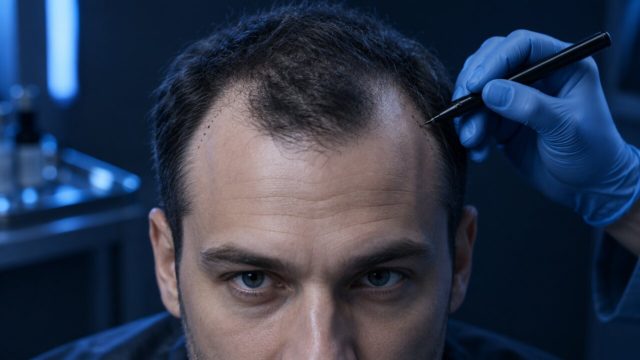
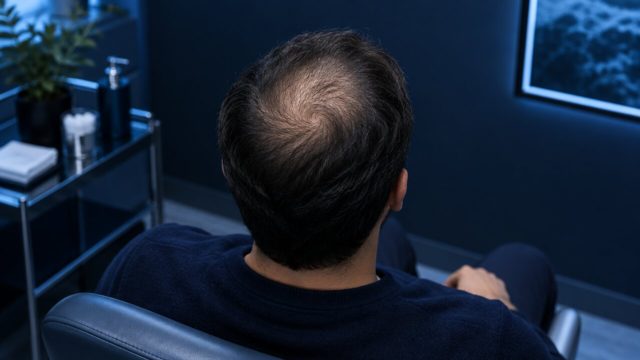
During an assessment, the doctor usually looks beyond the areas that appear thin. They examine the distribution of loss across the scalp, the thickness of individual hairs, the condition of the skin, and the density of the donor area at the back and sides of the head. This wider view matters because transplanted hair is limited, while the native hair around it may still be vulnerable to further loss.
Diagnosis also helps create realistic surgical goals. A transplant can redistribute available donor follicles, but it does not stop every underlying cause of hair thinning. If shedding is temporary or related to a treatable medical concern, addressing that issue may be the priority. If hereditary loss is established and stable enough for planning, the doctor can discuss a conservative design that takes future change into account.
02Reading the Pattern of Thinning on the Scalp
The pattern of loss often gives useful clinical clues. In many men, inherited hair loss begins with recession at the temples, thinning through the frontal area, or reduced density at the crown. In many women, it may appear as widening of the central part or gradual diffuse thinning across the top of the scalp. These patterns can develop slowly over years, which can make early changes difficult to notice.
Not all patterns suggest hereditary loss. A clearly defined smooth patch, broken hairs in one area, redness, scaling, pain, or itching may point to a different process. Diffuse shedding across the whole scalp can also occur after physical stress, illness, rapid weight change, childbirth, or a change in medication. These features do not confirm a diagnosis by themselves, but they help determine what should be investigated.
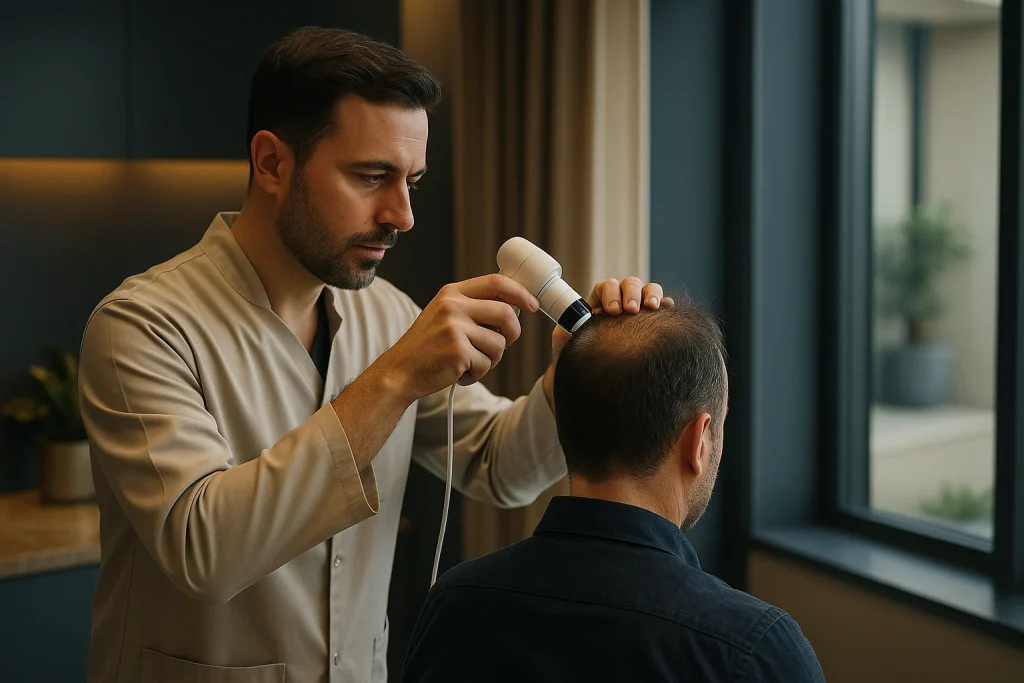
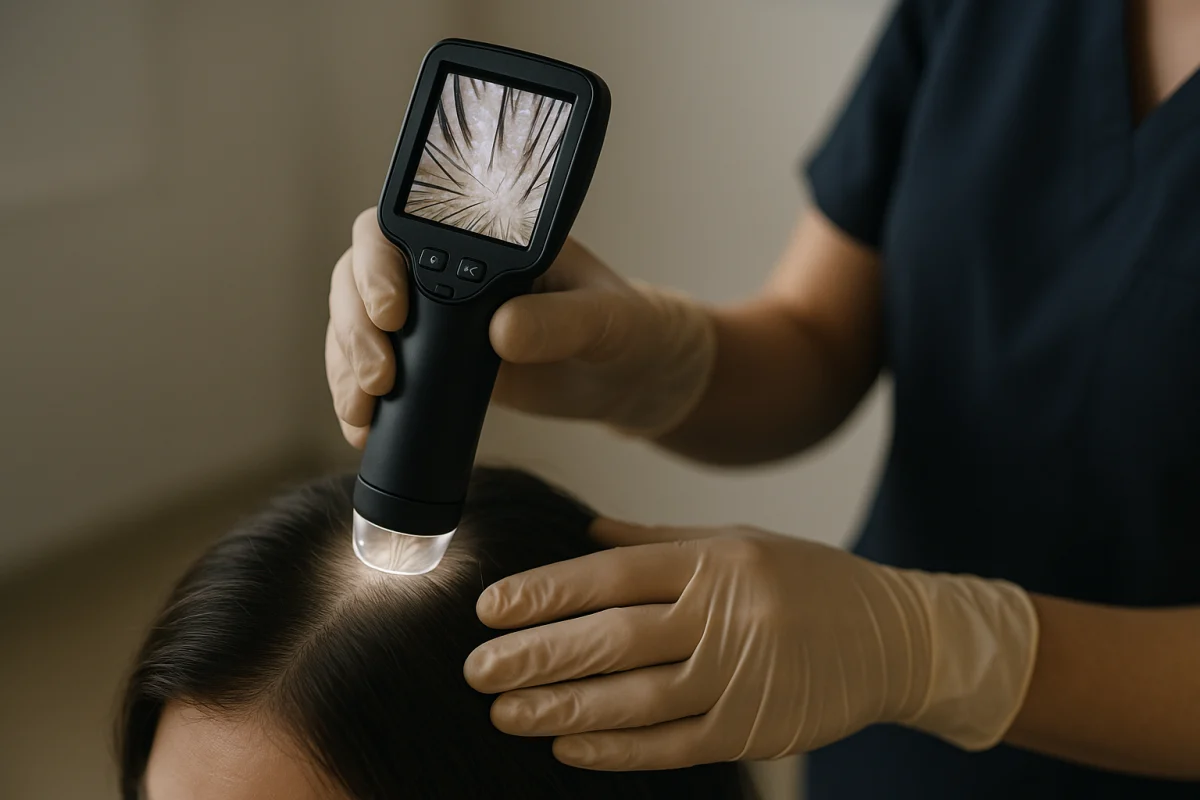
Photographs taken in consistent lighting and from the same angles can be helpful when changes are gradual. Doctors may compare images with a scalp examination and trichoscopy, which magnifies the scalp and hair shafts. A detailed hair loss diagnosis can distinguish between miniaturisation, where hairs become progressively finer, and shedding, where more hairs enter a resting and release phase. The distinction can affect the timing of transplant discussions.
03Medical History: Questions That Can Change the Assessment
Your medical history is an important part of the consultation. The doctor may ask when you first noticed thinning, how quickly it changed, and whether hair is coming out from the root or breaking along the shaft. They may also ask about relatives with similar loss, previous scalp problems, recent infections, major operations, emotional stress, dietary changes, and any new medicines or supplements.
For women, questions may include menstrual changes, pregnancy, recent childbirth, menopause, acne, increased facial hair, or known hormonal conditions. For all patients, fatigue, unexpected weight change, changes in bowel habits, fever, joint symptoms, or skin rashes can be relevant. These symptoms do not necessarily mean there is a serious problem, but they can help a doctor decide whether medical testing or referral is appropriate.
It is useful to be open about previous procedures and treatments. This includes hair colouring, chemical straightening, tight hairstyles, supplements, topical products, and any medication used for hair loss. Bringing a current medicine list and relevant past test results may make the consultation more efficient. Your doctor will confirm which details are important in your individual case and whether another specialist should be involved.
04Tests Used in a Hair Loss Diagnosis
A hair loss diagnosis often begins with a clinical examination rather than a large set of tests. The doctor may inspect the scalp under magnification, assess hair shaft thickness, look for inflammation or scaling, and gently evaluate shedding in selected areas. Trichoscopy can show features such as variation in hair diameter, empty follicles, broken hairs, or changes around the follicle openings, which may support the clinical assessment.
Blood tests are not needed for every person with thinning hair. However, they may be considered if the history or examination suggests a possible iron-related issue, thyroid disorder, nutritional deficiency, hormonal imbalance, inflammation, or another medical contributor. The exact tests depend on the person’s symptoms, sex, age, medical history, and the type of hair loss observed. A doctor should interpret results in the full clinical context rather than relying on one number alone.
In selected cases, further investigation may be needed. This can include a fungal assessment if a scalp infection is suspected, a hair-pull evaluation, or a small scalp biopsy when the diagnosis remains unclear or scarring hair loss is a concern. A biopsy is not routine for typical inherited thinning. Its purpose is to examine the follicles and scalp tissue more closely when earlier findings do not provide a clear answer.
05Medical Conditions That May Include Hair Loss
Hair loss can be associated with several medical conditions, although the presence of shedding does not prove that any one condition is present. Thyroid disorders, iron deficiency, low nutrient intake, autoimmune conditions, hormonal disorders, chronic inflammatory illnesses, and some infections can be linked with changes in hair growth or shedding. Recovery from a significant illness may also lead to a temporary increase in shedding some months later.
Alopecia areata is an autoimmune condition that often causes sudden round or oval patches of hair loss. Scalp psoriasis, seborrhoeic dermatitis, fungal infections, and other inflammatory scalp conditions can affect comfort and hair appearance. Some forms of scarring alopecia can permanently damage follicles if they are not assessed and managed early, which is why pain, burning, pustules, marked redness, or shiny scar-like areas deserve timely medical attention.
Certain medicines, restrictive diets, and treatments for serious illnesses may also affect the hair cycle. Hair changes can be emotionally difficult, whatever the cause. It is sensible to seek a medical assessment if loss is sudden, patchy, painful, accompanied by scalp symptoms, or associated with other changes in your general health. A hair transplant should generally not be planned until the underlying situation is understood.
06When Hair Loss Commonly Happens and Why Timing Matters
People can lose hair at almost any age. Hereditary thinning may begin in the late teens or early adulthood, but it can also become noticeable later. Some people see slow changes over decades, while others notice a more rapid shift during a particular period of life. The age at which hair loss starts does not by itself determine whether a transplant is suitable; the pattern, rate of progression, donor supply, and family history are also important.
Temporary shedding can happen after events that disrupt the normal hair cycle. Examples include a high fever, surgery, significant illness, major psychological stress, childbirth, rapid weight loss, or a nutritional change. In these situations, shedding may become visible weeks or months after the triggering event, which can make the connection less obvious. In many patients, the hair cycle gradually recovers, but the timeframe and outcome should be reviewed by a doctor.
Seasonal changes, grooming habits, and noticing more hair during washing can also cause concern. Seeing shed hairs does not always mean permanent thinning is developing. What matters is whether density is visibly reducing, the scalp is becoming more visible, or the hairline and parting are changing over time. Comparing standardized photographs and arranging an examination can provide more useful information than judging a single day of shedding.

07Deciding Whether a Transplant Is Appropriate Now
A transplant consultation should evaluate both the recipient area and the donor area. The donor region needs enough healthy follicles to support a safe and balanced plan. The doctor also considers hair calibre, curl pattern, colour contrast between hair and scalp, scalp flexibility, and the size of the area needing coverage. These factors influence the appearance of density and the number of grafts that may be appropriate.
A complete hair loss diagnosis is especially important when loss appears active or unpredictable. If native hair continues to thin after surgery, the transplanted area may remain while surrounding hair becomes less dense. This can change the cosmetic balance over time. For this reason, doctors typically plan the hairline carefully and may recommend monitoring, medical management, or waiting before deciding on surgery in some patients.
Patients with a stable, well-understood pattern of loss and a suitable donor area may be considered for techniques such as Sapphire FUE or DHI. The technique is only one part of the decision; correct diagnosis, graft distribution, and long-term planning remain central. At Acibadem Hair Transplant Center in Istanbul, doctors review each case before confirming whether a procedure can be considered and what approach may be suitable.
08Preparing for a Doctor-Reviewed Hair Assessment
Before an appointment, write down when the change began, whether it was sudden or gradual, and any events that happened in the months before shedding started. Bring details of medical conditions, medications, supplements, allergies, previous scalp treatments, and relevant family history. Clear photographs showing the front, temples, top, crown, and donor area can support an initial review, especially for patients arranging a consultation from abroad.
Avoid making major changes to medication or starting unproven treatments just before an assessment unless a qualified clinician has advised you to do so. New products can irritate the scalp or make it harder to understand what is causing symptoms. If you have scalp pain, crusting, discharge, severe itching, or rapidly expanding patches of loss, seek medical evaluation rather than waiting for a cosmetic consultation.
International patients can request a free online hair analysis from Acibadem Hair Transplant Center. Submitted photographs are reviewed by doctors, and WhatsApp replies are typically provided within around two hours. An online review can help with preliminary guidance, but an in-person assessment and appropriate medical evaluation may still be needed before any final transplant plan is confirmed.
09Frequently Asked Questions
Why am I losing so much hair?
Increased shedding can occur for many reasons, including inherited hair thinning, a recent illness, stress, hormonal changes, nutritional issues, scalp conditions, or some medicines. The pattern and speed of loss are important. A doctor can assess whether the change appears temporary, progressive, or linked to a condition that needs further investigation.
Which tests may be used to find the cause of hair loss?
Many cases can be assessed through medical history, scalp examination, and trichoscopy. Depending on the findings, a doctor may request blood tests for issues such as thyroid function, iron status, nutritional factors, or hormones. A fungal test or scalp biopsy is usually reserved for selected cases where the cause is uncertain or an inflammatory or scarring condition is suspected.
Which illnesses can cause hair loss as a symptom?
Hair loss may be associated with thyroid disorders, iron deficiency, autoimmune conditions such as alopecia areata, hormonal disorders, inflammatory scalp conditions, some infections, and chronic illness. It can also occur after a significant physical stressor or during recovery from illness. Hair loss alone cannot diagnose a disease, so a clinical assessment is important.
At what times in life do people usually lose hair?
Hair loss may begin in adolescence, adulthood, after pregnancy, around menopause, or later in life. Temporary shedding can also follow illness, surgery, high fever, major stress, rapid weight change, or changes in diet and medication. The timing offers useful clues, but a doctor will consider it together with the scalp pattern and medical history.
Este artículo tiene fines exclusivamente informativos y no sustituye el consejo médico profesional.
Esta guía es de carácter informativo y no sustituye una consulta médica. Las decisiones de tratamiento se toman tras una valoración médica presencial u online.