En este artículo9
- Resumen
- How hyperthyroid hair loss changes transplant timing
- Why an overactive thyroid can cause diffuse shedding
- Medical assessment before a hair transplant consultation
- Treatment, recovery and realistic expectations for hair regrowth
- Planning surgery after thyroid levels are stable
- Practical steps while you wait for thyroid control
- Choosing a medically responsible hair restoration pathway
- Frequently Asked Questions
Hyperthyroid hair loss is often diffuse shedding caused by an overactive thyroid disrupting the normal hair-growth cycle. In most patients, thyroid levels should be assessed and brought under medical control before hair transplant planning, because active hormone imbalance may affect shedding, healing and the appearance of the result.
- An overactive thyroid can trigger diffuse scalp shedding, often several weeks or months after thyroid hormone changes begin.
- Hair loss related to hyperthyroidism may improve after appropriate thyroid treatment, but regrowth can take time.
- A hair transplant is usually planned only after thyroid disease is stable and your treating doctor confirms that it is well controlled.
- Pre-transplant assessment should consider the cause of hair loss, donor-area quality, medicines and overall medical health.
- A doctor-reviewed hair analysis can help identify whether transplant planning is appropriate after endocrine evaluation.
01Hyperthyroidism and Hair Loss Before Transplant Planning
Hyperthyroid hair loss can be worrying, especially when thinning seems sudden or widespread. Hyperthyroidism means that the thyroid gland produces too much thyroid hormone. These hormones influence many body functions, including energy use, heart rate, skin condition and the hair-growth cycle. When hormone levels are too high, hair follicles may leave their growing phase earlier than usual, leading to increased shedding across the scalp.
This type of shedding is commonly diffuse, meaning it affects a broad area rather than creating one sharply defined bald patch. A person may notice more hair on a pillow, in the shower or while brushing. The hair may also feel finer, drier or more fragile. However, diffuse shedding can have several causes, including stress, nutritional issues, recent illness, medicines and hereditary hair loss. For this reason, a proper medical assessment is important before assuming that thyroid disease is the only explanation.
Before considering a transplant, the first priority is usually to understand the current thyroid condition and manage it with an endocrinology or primary care team. A transplant moves healthy follicles from a donor area to a thinning area, but it does not correct an active hormonal cause of shedding. If the underlying condition remains uncontrolled, existing non-transplanted hair may continue to shed and the visual result may be difficult to predict.
02How hyperthyroid hair loss changes transplant timing
Hyperthyroid hair loss can change the right timing for a hair transplant because the scalp and hair pattern may still be changing. During active thyroid imbalance, shedding may be temporary, progressive or mixed with a separate condition such as androgenetic hair loss. Waiting until the medical picture is clearer helps the doctor assess which hairs may recover naturally and which areas have stable, long-term thinning.
In many cases, a hair restoration doctor will ask for confirmation that thyroid function is stable before recommending surgery. This usually involves recent medical information from the clinician managing the thyroid condition, rather than relying only on symptoms. Your doctor may consider thyroid blood-test results, the cause of hyperthyroidism, treatment changes, current medicines and whether symptoms such as palpitations, tremor, heat intolerance or unexplained weight change are still present.
Stable thyroid control does not mean that every patient must have a full return of previous hair density before discussing surgery. It means that the condition should be sufficiently managed for the doctor to make a more reliable plan. The decision depends on the cause and pattern of hair loss, donor supply, scalp examination and general health. A cautious timeline may reduce the risk of transplanting too early while natural recovery is still possible.
03Why an overactive thyroid can cause diffuse shedding
Each hair follicle moves through repeating stages: growth, transition, rest and shedding. Thyroid hormones help support normal regulation of this cycle. When levels are excessively high, more follicles may shift from growth into resting and shedding phases. This process is often described clinically as telogen effluvium when it produces widespread shedding, although a qualified doctor should confirm the diagnosis.
Hair shedding does not always begin on the same day as thyroid symptoms. The hair cycle is slow, so visible thinning may appear after a delay. Likewise, shedding may continue for a period even after treatment begins, because follicles need time to return to a more balanced cycle. This delay can be frustrating, but it is one reason not to judge treatment success only by week-to-week changes in hair volume.
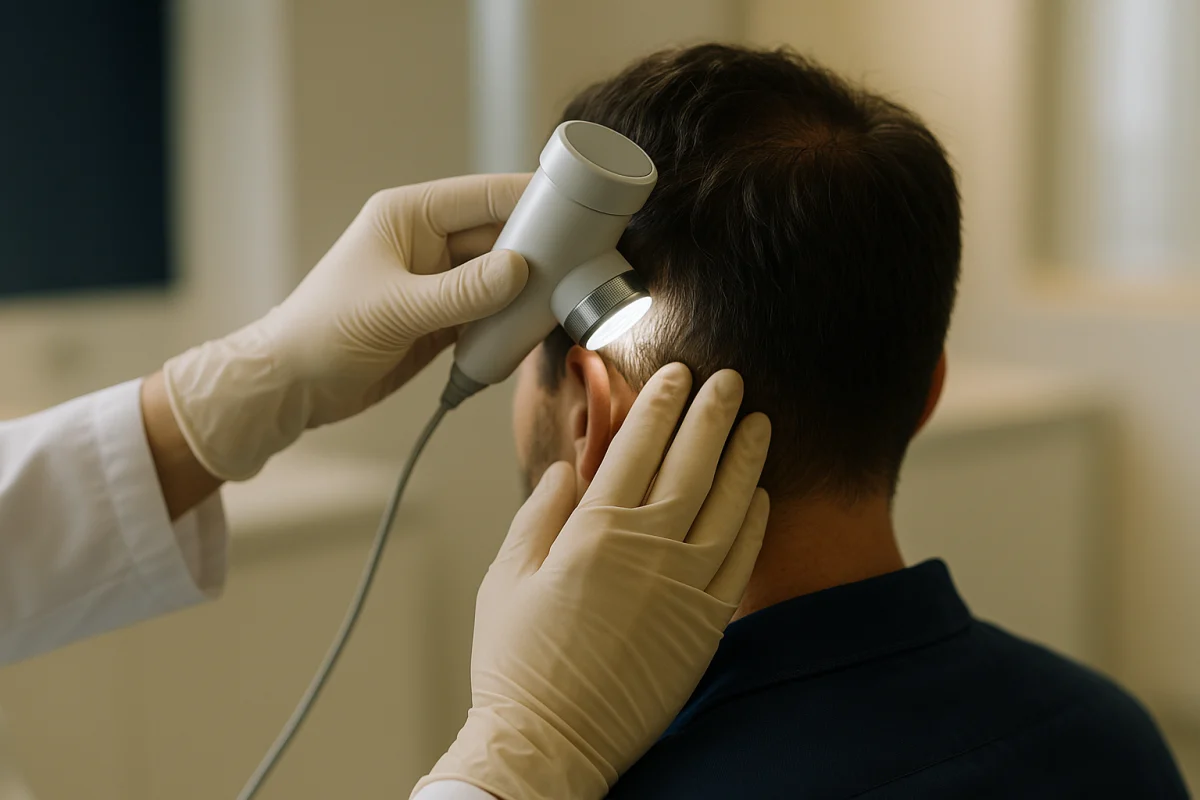
Some people with hyperthyroidism also have underlying hereditary pattern hair loss. In this situation, thyroid-related shedding may reveal a pattern that was previously less visible, such as thinning along the part line, temples or crown. A trichoscopic scalp assessment can help a clinician look at hair-shaft variation, follicle density and distribution. These findings may support more accurate transplant planning once the thyroid condition is stable.
04Medical assessment before a hair transplant consultation
A safe pre-transplant assessment begins with an honest health history. Patients should tell the clinic about diagnosed thyroid disease, previous thyroid surgery, radioactive iodine treatment, medicines, supplements and recent changes in symptoms. It is also important to mention autoimmune conditions, anaemia, major illness, rapid weight changes and any scalp problems. This information helps the medical team understand whether shedding could be linked to more than one factor.
Depending on the case, the treating physician may request or review thyroid-related laboratory tests and other relevant investigations. The exact tests and acceptable ranges are medical decisions for the clinician managing the thyroid condition. A hair transplant clinic should not replace endocrinology care or advise patients to change prescribed treatment. Instead, it should coordinate planning around medical stability and documented clearance where appropriate.
The scalp examination is equally important. Doctors assess the donor area at the back and sides of the scalp, the distribution of thinning, hair calibre and signs of inflammation or scarring. Donor hair must be strong enough to support a conservative design. When diffuse shedding is active, density measurements can be less reliable, so repeating assessment after thyroid control may provide a more realistic basis for planning.
05Treatment, recovery and realistic expectations for hair regrowth
Appropriate treatment for hyperthyroidism is directed by a qualified medical team and depends on the cause of the condition. Management may include medicines that reduce thyroid hormone production, treatment to control symptoms, radioactive iodine or surgery in selected cases. The correct approach is individual, and patients should not start, stop or alter thyroid treatment based on hair loss alone. The goal is to protect overall health first, while allowing the hair cycle time to respond.
When thyroid levels return to a stable range, many patients notice that excessive shedding gradually settles. Visible regrowth, however, may be slow because hair grows in cycles. New hairs can initially look fine and short, and fuller coverage may take months. If shedding remains severe or progresses despite stable thyroid management, a doctor may look for another cause, such as iron deficiency, nutritional concerns, chronic stress, scalp disease or hereditary thinning.
For people who later become suitable candidates, a transplant can address areas where permanent density loss remains after the medical condition is controlled. It cannot guarantee that all native hair will remain unchanged over time. A responsible surgical plan therefore considers future hair-loss progression, preserves donor reserves and avoids overly aggressive density targets. This approach is particularly relevant when a patient has experienced hormone-related diffuse shedding.
06Planning surgery after thyroid levels are stable
Once the endocrine team considers the overactive thyroid well controlled, a hair restoration consultation can focus on whether surgery is appropriate. The doctor will review the stability of shedding, family history, donor density, scalp health and the patient’s goals. A stable period helps distinguish recoverable shedding from established thinning. It also allows more accurate discussion of graft placement, hairline design and the likely need for future non-surgical or surgical support.
During a consultation, patients should ask how their thyroid history will be recorded and how medical clearance will be handled. They should also share all current medicines, including thyroid medication and treatments that may affect bleeding, healing or the immune system. No patient should discontinue prescribed medicines without instructions from the clinician who prescribed them. The surgical team may provide pre-operative guidance, but the thyroid specialist remains responsible for thyroid treatment decisions.
At Acibadem Hair Transplant Center, a dedicated hair restoration clinic in Istanbul licensed by the Turkish Ministry of Health, free online hair analysis is reviewed by doctors before travel planning. This early review can help identify when a person may need endocrine follow-up before a procedure is discussed. Once a patient is medically suitable, the clinic offers Sapphire FUE and DHI techniques, with the method selected according to clinical assessment rather than a one-size-fits-all approach.
07Practical steps while you wait for thyroid control
Waiting for thyroid stability can feel discouraging when hair loss affects confidence. It may help to take consistent photographs in similar lighting once a month rather than checking the scalp repeatedly each day. This can make gradual changes easier to discuss with a doctor. Gentle hair care may also reduce breakage: avoid tight hairstyles, harsh chemical processing and frequent high-heat styling if the hair is fragile.
A balanced diet that meets general nutritional needs supports overall health, but supplements are not a substitute for diagnosing thyroid disease or nutrient deficiency. Some supplements can interfere with thyroid testing or prescribed medicines, so patients should ask their treating clinician before taking them. It is especially important to be cautious with products marketed for rapid hair growth or thyroid support, as their ingredients and claims may not be appropriate for every medical situation.
Managing sleep, stress and daily routines may support wellbeing while treatment is underway, although these steps do not replace medical care. If symptoms of hyperthyroidism become severe, such as chest pain, severe shortness of breath, fainting, confusion or a very fast heartbeat, urgent medical attention is needed. For routine concerns about shedding, arranging follow-up with the thyroid care team is generally the most useful next step.
08Choosing a medically responsible hair restoration pathway
A medically responsible pathway puts diagnosis before procedure selection. Patients should be wary of decisions based only on photographs or promises of immediate transformation, particularly when a hormonal condition is active. The most useful consultation explains what is known, what still needs investigation and why waiting may protect the long-term result. A careful plan should include realistic goals rather than assuming that every thinning area needs immediate grafting.
International patients may benefit from completing thyroid investigations and achieving stable management with their local medical team before arranging travel. They can then provide relevant records for review during an online consultation. Acibadem Hair Transplant Center has welcomed patients from 38 countries over 12 years and offers all-inclusive packages that include VIP transfer, a 4-star hotel, a care kit and 12 months of follow-up. Travel arrangements should follow medical suitability, not determine it.
After an appropriate transplant, follow-up remains important because thyroid disease and hereditary hair loss can both influence the appearance of native hair over time. At our clinic, results are measured by trichoscopic graft survival at month 12, with a documented 98% rate under written guarantee. This measurement relates to graft survival and should not be understood as a guarantee of a particular cosmetic outcome. Your doctor will explain what follow-up and monitoring may be relevant in your situation.
09Frequently Asked Questions
What is Graves' disease and can it affect the hair?
Graves' disease is an autoimmune condition in which the immune system stimulates the thyroid gland to produce too much thyroid hormone. It is a common cause of hyperthyroidism and may be associated with diffuse hair shedding when thyroid hormone levels are not controlled. A doctor or endocrinologist can confirm the diagnosis and recommend appropriate treatment.
How is an overactive thyroid controlled in women?
Control of an overactive thyroid in women depends on its cause, symptoms, age, pregnancy plans and general health. A qualified clinician may use anti-thyroid medicines, symptom-control medicines, radioactive iodine or surgery in selected cases. Women who are pregnant, planning pregnancy or breastfeeding should discuss treatment promptly with their thyroid specialist because management needs careful individual oversight.
How can someone cope with an overactive thyroid while hair shedding is happening?
The most important step is to follow the treatment plan from the clinician managing the thyroid condition and attend recommended blood-test monitoring. Gentle hair care, regular meals, rest and avoiding unverified thyroid or hair supplements may be helpful supportive measures. Emotional support can also be valuable, as visible shedding may affect confidence while medical treatment takes effect.
What is a goiter?
A goiter is an enlargement of the thyroid gland in the neck. It can occur with an overactive thyroid, an underactive thyroid or normal thyroid function, depending on the underlying cause. A visible neck swelling, swallowing difficulty, breathing difficulty or new voice changes should be assessed by a medical professional.
Este artículo tiene fines exclusivamente informativos y no sustituye el consejo médico profesional.
Esta guía es de carácter informativo y no sustituye una consulta médica. Las decisiones de tratamiento se toman tras una valoración médica presencial u online.