In this article9
- When an Early Result Does Not Yet Mean Failure
- Why a Beard Transplant May Look Unsuccessful
- Clinical Assessment Before Considering Repair
- When a beard transplant failed: Repair Planning Priorities
- Donor Area Safety and the Question of Overharvesting
- Repair Options for Density, Direction and Scarring
- Protecting Healing and Avoiding Further Damage
- How Acibadem Hair Transplant Center Supports Assessment
- Frequently Asked Questions
A beard transplant may appear unsuccessful because growth is still developing, grafts did not survive as expected, or the direction, density or design does not suit the face. A doctor should assess the recipient area, donor area and healing timeline before recommending observation, medical treatment, camouflage or a carefully planned repair procedure.
- Final beard transplant growth usually needs time, so an early appearance alone does not confirm a poor result.
- Uneven density, unnatural angles, visible scarring and donor depletion are different problems and need different repair plans.
- A careful assessment should include the healing timeline, skin health, graft direction and available donor reserve.
- Repair may involve adding grafts, correcting angles, reducing conspicuous grafts or treating scars, depending on the concern.
- A second procedure should be planned conservatively to protect the donor area and achieve a natural-looking beard design.
01When an Early Result Does Not Yet Mean Failure
A beard transplant failed is a phrase many patients search after seeing limited early growth, patchiness or shedding. However, the appearance in the first weeks and months can be misleading. Transplanted follicles commonly enter a resting phase after placement, and the visible hairs may shed before new growth begins. Your doctor will confirm whether the timing and pattern of growth are consistent with normal recovery or whether closer assessment is needed.
In most patients, new beard hairs begin to emerge gradually rather than all at once. Early hairs can be fine, lighter in colour or irregular in length. Density may also look uneven while neighbouring follicles are growing at different speeds. A final-looking result is usually judged only after the follicles have had adequate time to establish and mature, often around 12 months after the procedure.
It is also important to separate a cosmetic disappointment from a technical problem. A beard may be growing well but still look too sharp, too wide, too dense in one area or poorly matched to the patient’s natural facial hair. Conversely, a beard may have a good outline but insufficient growth in a central patch. Clear photographs taken before surgery and during follow-up can help the clinical team compare progress objectively.
02Why a Beard Transplant May Look Unsuccessful
There is no single cause of an unsatisfactory outcome. Graft survival can be affected by how follicles were removed, stored, handled and placed, as well as the blood supply and condition of the recipient skin. Technical precision matters because beard skin varies across the jawline, cheeks, moustache and chin. A beard transplant failed outcome can therefore involve low growth, but it can also involve an unnatural pattern rather than complete graft loss.
The direction and angle of placement are especially important on the face. Natural beard hairs often lie very flat against the skin and change direction across small areas. If grafts are placed at an angle that is too upright, or if several hairs point in conflicting directions, the result can look plug-like or difficult to trim. This may be more noticeable in bright light or when the beard is kept short.
Patient-related factors can also influence healing. Active skin inflammation, infection, significant trauma to the recipient area, smoking, unreported health conditions or failure to follow aftercare instructions may affect recovery in some patients. These factors do not automatically mean that grafts will fail, and they should not be used to assign blame. A medical review is the appropriate way to identify modifiable risks before any repair is considered.
03Clinical Assessment Before Considering Repair
A proper assessment begins with the date of the original procedure and the sequence of events afterwards. The clinician may ask when shedding began, when new growth first appeared, whether there was redness, crusting, pain or discharge, and whether the area was exposed to friction or injury. These details can help distinguish a normal growth delay from a skin condition, infection, scarring process or placement concern.
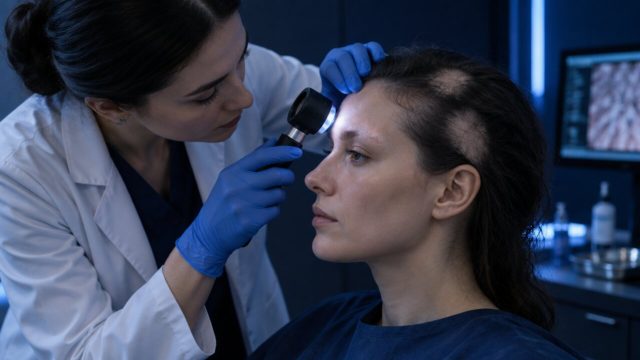
The recipient area should be examined in good lighting and, where appropriate, with magnification. The doctor may assess the number of visible hairs, hair calibre, curl pattern, graft spacing, direction and the condition of the surrounding skin. They will also look for signs of hypertrophic scarring, depressed scars, persistent inflammation or ingrown hairs. A repair plan based only on a close-up photograph may miss important findings.
Donor assessment is equally important. Beard transplantation usually uses follicles from the scalp donor area, although the suitable source depends on the individual plan. The clinician needs to check donor density, the distribution of prior extraction sites, hair characteristics and the remaining reserve. If the donor area has been heavily harvested, adding many more grafts may not be the safest or most natural option.
04When a beard transplant failed: Repair Planning Priorities
When a beard transplant failed in appearance or growth, repair should not automatically mean another full transplant. The first priority is to define the main issue: low density, an irregular shape, poorly directed hairs, scars, donor concerns or a combination of these. Each issue has different limits and possible solutions. A conservative plan generally aims to improve the most visible concern while preserving options for the future.
Timing matters because operating too early can make assessment less reliable and may place additional stress on healing skin. In many cases, clinicians prefer to wait until growth has matured and the skin is stable before deciding whether more grafts are needed. If there are signs of infection, persistent inflammation or problematic scarring, these conditions usually need medical attention before surgical repair is discussed.
The desired beard style should also be reviewed carefully. A dense, sharply outlined beard may require more grafts than a soft stubble effect, but more grafts do not always create a better result. Facial proportions, existing beard distribution, hair texture and grooming habits all influence planning. Your doctor should explain what can realistically be improved and where a lighter density may look more natural.
05Donor Area Safety and the Question of Overharvesting
The donor area is a limited resource. Every extracted follicular unit leaves a tiny wound, so the aim is to distribute extraction carefully and retain a natural donor appearance. Whether a graft number is excessive cannot be judged by a number alone. It depends on donor density, hair calibre, scalp size, the extraction pattern, previous procedures and the number of follicles contained in each graft.
For this reason, 5,000 grafts are not automatically overharvesting, but they can be a very large session for some people. In a beard procedure, the required number may be lower than in extensive scalp restoration, depending on the coverage goal. If 5,000 grafts were removed or proposed, a doctor should assess the current donor appearance and calculate whether enough reserve remains for future needs before any further extraction is planned.
Signs that require assessment include visible thinning or moth-eaten areas in the donor zone, unusually wide spacing, patchy short hair coverage or scars that remain noticeable after the hair is trimmed. These findings do not always mean permanent severe damage, but they should be evaluated honestly. Repairing the beard while ignoring a depleted donor area may create a second cosmetic concern.
06Repair Options for Density, Direction and Scarring
If the main concern is low density and the donor area remains suitable, a limited graft-addition procedure may be considered. The surgeon can focus on thin zones rather than placing grafts across the entire beard again. This targeted approach may help create a more even transition between existing facial hair and transplanted areas. The final graft number should follow the available donor supply and the desired density, not a fixed package or target.
Poor direction can be more complex to correct than low density. Depending on the position and depth of misplaced grafts, options may include removing selected conspicuous follicles, repositioning them where appropriate, or using new grafts to soften an overly sharp design. Some hairs may still need regular trimming or grooming while the repair matures. The goal is usually improvement and better blending, rather than perfection in every close-up view.
Scars may need a separate strategy. The doctor may recommend allowing scars to mature, treating inflammation if present, or considering scar-focused procedures before placing additional follicles. In some cases, grafting into stable scar tissue may be possible, but blood supply can be less predictable than in unaffected skin. A cautious test area or staged approach may be discussed when the scarred area is extensive.
07Protecting Healing and Avoiding Further Damage
After any beard restoration or repair procedure, careful aftercare supports uncomplicated healing. Patients are typically advised to avoid rubbing, scratching, shaving too early or exposing the recipient area to avoidable trauma during the initial healing period. Washing instructions, activity restrictions and the timing of beard trimming should follow the clinic’s written guidance. If there is increasing pain, spreading redness, pus, fever or sudden worsening, prompt medical review is important.
Do not attempt to pull out poorly directed transplanted hairs at home. This can cause inflammation, scarring or infection and may make a future repair more difficult. Similarly, strong cosmetic products, unregulated topical treatments or aggressive exfoliation can irritate healing facial skin. Any medication or topical product should be discussed with a qualified clinician, particularly if there is a history of acne, dermatitis or sensitivity.
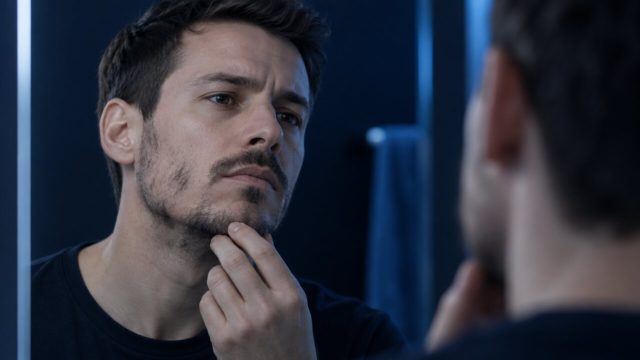
A beard transplant failed concern can be emotionally difficult because the result is visible every day. It can help to document the area with consistent photographs rather than assessing it repeatedly in different mirrors and lighting. A structured follow-up appointment gives the clinician a clearer basis for advice. It also allows the patient to discuss concerns about appearance, confidence and grooming in a practical setting.
08How Acibadem Hair Transplant Center Supports Assessment
Acibadem Hair Transplant Center is a dedicated hair restoration clinic in Istanbul, licensed by the Turkish Ministry of Health. The clinic offers Sapphire FUE and DHI techniques, with the method selected according to the clinical plan rather than a one-size-fits-all approach. Needle-free anaesthesia is also available for eligible patients. A consultation is needed to confirm suitability for an initial procedure or a repair procedure.
International patients can request a free online hair analysis that is reviewed by doctors. Sharing clear photographs of the beard, donor area and any visible scars can help the team provide initial guidance, although an online review cannot replace an in-person examination when complex repair is being considered. WhatsApp replies are typically provided within about two hours, helping patients understand the next steps before travel planning.
The clinic has welcomed patients from 38 countries over 12 years and provides all-inclusive packages that can include VIP transfer, a 4-star hotel, a care kit and 12 months of follow-up. Graft survival is measured trichoscopically at month 12, with a documented 98% rate under a written guarantee. Individual results, including beard repair outcomes, still depend on clinical suitability, donor characteristics, healing and adherence to aftercare.
09Frequently Asked Questions
What success rate can I expect from a beard transplant?
There is no single success rate that applies to every beard transplant. Growth can vary with donor hair quality, skin condition, surgical technique, healing and aftercare. At Acibadem Hair Transplant Center, graft survival is assessed by trichoscopy at month 12 and has a documented 98% rate under a written guarantee; your doctor will explain how this relates to your individual treatment plan.
How often do hair transplants fail?
There is no reliable universal figure because clinics and studies may define failure differently, such as low graft growth, an unnatural design, infection, scarring or patient dissatisfaction. Most concerns require individual assessment rather than a label based on one percentage. Choosing a licensed clinic, following aftercare and allowing adequate time for maturation may reduce avoidable risks.
Does taking 5,000 grafts always mean the donor area was overharvested?
No. A total of 5,000 grafts is not automatically overharvesting because donor safety depends on the person’s density, scalp size, follicular unit composition, extraction pattern and history of previous procedures. However, it is a substantial number for many patients and should be assessed carefully, especially before planning additional extraction. A doctor can examine the donor area and determine the remaining safe reserve.
What happens if the body rejects a face transplant, and is this related to beard grafts?
A face transplant is an organ and tissue transplant from a donor, so immune rejection is a serious risk that requires lifelong specialist medical care and anti-rejection medication. A standard beard transplant normally uses the patient’s own follicles, so it is not the same procedure and does not involve organ-transplant rejection. Problems after beard grafting are more often related to healing, graft survival, skin inflammation, scarring or graft placement.
This article is for general information only and is not a substitute for professional medical advice.
This guide is for general information and does not replace a medical consultation. Treatment decisions are made after an in-person or online assessment by a doctor.