In this article9
- Overview
- How propecia results usually develop over time
- Why a hair-loss diagnosis comes before medication or surgery
- Oral finasteride, topical finasteride and minoxidil in a treatment plan
- Potential side effects and safety discussions
- Can medication rebuild a receding hairline?
- Planning a hair transplant around future hair loss
- Preparing for treatment and follow-up after surgery
- Frequently Asked Questions
Propecia results may help slow male pattern hair loss and maintain existing hair, but visible changes typically take several months. For hair transplant planning, doctors assess your pattern of loss, donor area and response to medical treatment before recommending whether surgery, medication or a combined approach is suitable.
- Finasteride is commonly used to help slow progression of androgenetic hair loss in suitable adult men.
- Visible improvement or stabilisation is usually assessed over months rather than weeks.
- Hair transplant planning should consider future hair loss, not only the hairline seen today.
- Oral and topical finasteride differ in how they are used, absorbed and monitored by a doctor.
- A hair transplant can redistribute donor hair, while medical treatment may help protect non-transplanted native hair.
01Finasteride Results and Hair Transplant Treatment Planning
Many people researching propecia results want to know whether medication can replace a hair transplant, improve transplant outcomes or protect hair after surgery. The direct answer is that finasteride may help slow or stabilise androgenetic hair loss in appropriately selected patients, while a hair transplant moves permanent donor follicles to areas with thinning. These approaches have different roles and are often considered together as part of a long-term plan. Your doctor will confirm whether finasteride is medically appropriate for you and whether a transplant is likely to meet your goals safely.
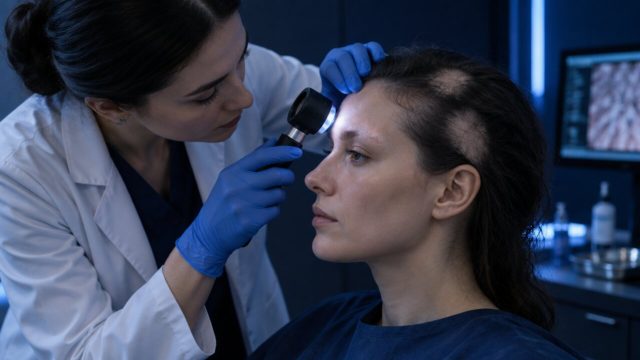
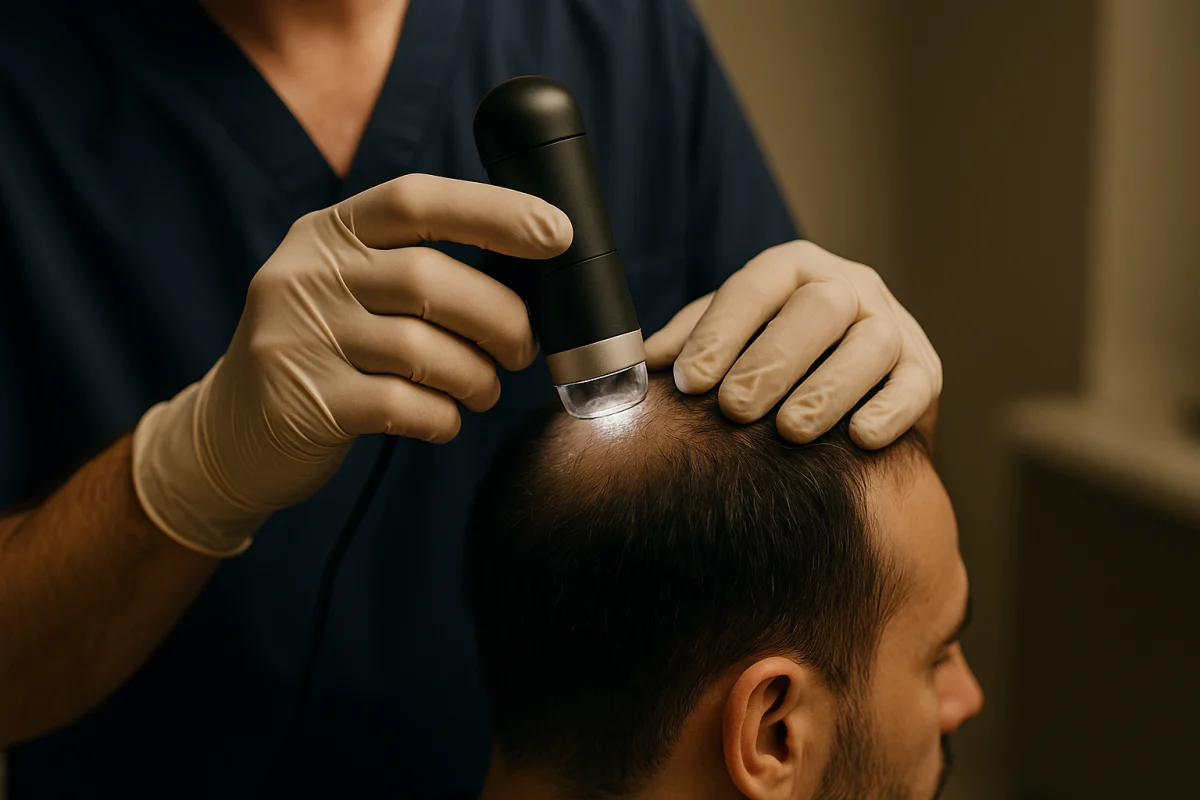
Hair loss treatment planning should begin with a diagnosis. Pattern hair loss is common, but diffuse shedding, scalp inflammation, nutritional issues, medication effects and some medical conditions can also cause reduced density. A doctor may examine the scalp, review your medical history and use trichoscopic assessment to look at follicle diameter, miniaturisation and donor hair quality. This process helps distinguish a temporary shedding concern from progressive androgenetic hair loss and avoids planning surgery before the cause is clear.
For many adult men, the central planning question is not simply how much hair can be placed in one procedure. It is how the hair may look over the coming years if native hair continues to thin. Medication may be discussed to support existing, non-transplanted hair, especially around the frontal area, mid-scalp and crown. A carefully planned transplant aims to create a natural-looking result while preserving sufficient donor resources for the future if further treatment becomes necessary.
02How propecia results usually develop over time
Finasteride works by reducing the conversion of testosterone to dihydrotestosterone, often called DHT. In genetically susceptible scalp follicles, DHT can contribute to progressive miniaturisation. By lowering DHT levels, finasteride may reduce this process. The main benefit in many patients is maintenance: hair loss may slow, and existing hair may appear more stable. Some patients also notice improved thickness or density in miniaturised hairs, but the degree of change varies considerably.
Changes are not usually immediate. In the first weeks or months, the hair cycle may continue as follicles transition through normal phases. Some people report a temporary increase in shedding early in treatment, although this should be discussed with a doctor rather than assumed to be expected in every case. A meaningful review is commonly made after several months, while fuller assessment may take around 12 months or longer. Consistent use as prescribed is important when a doctor recommends treatment.
Photos taken in consistent lighting, angle and hair length can be more useful than day-to-day mirror checks. Hair appearance can change with styling, humidity, scalp visibility and haircut length, which makes short-term judgement unreliable. A clinic may also use trichoscopy to compare hair calibre and density over time. If the condition is stable, that can be a valuable treatment result even when dramatic regrowth is not visible.
03Why a hair-loss diagnosis comes before medication or surgery
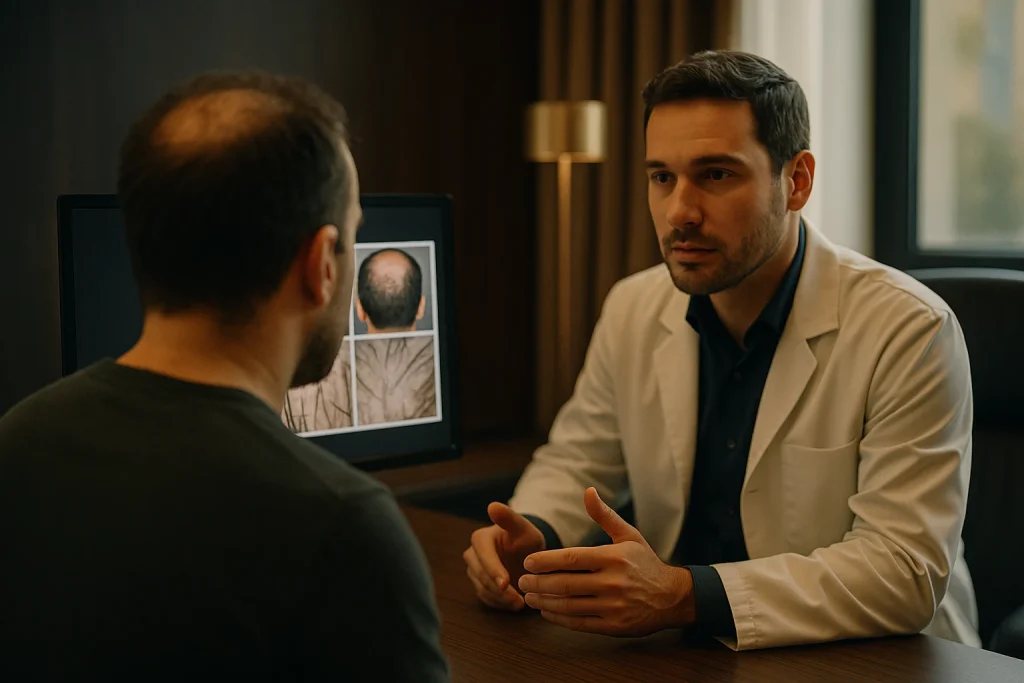
A high-quality treatment plan starts by identifying the type and stage of hair loss. Androgenetic hair loss often follows a recognisable pattern, such as recession at the temples, thinning across the crown or gradual loss of density over the mid-scalp. However, some patients have diffuse thinning throughout the scalp, and others have a mixed pattern. The pattern, speed of change, family history and scalp findings can all influence whether medical management, surgery or observation is the most sensible next step.
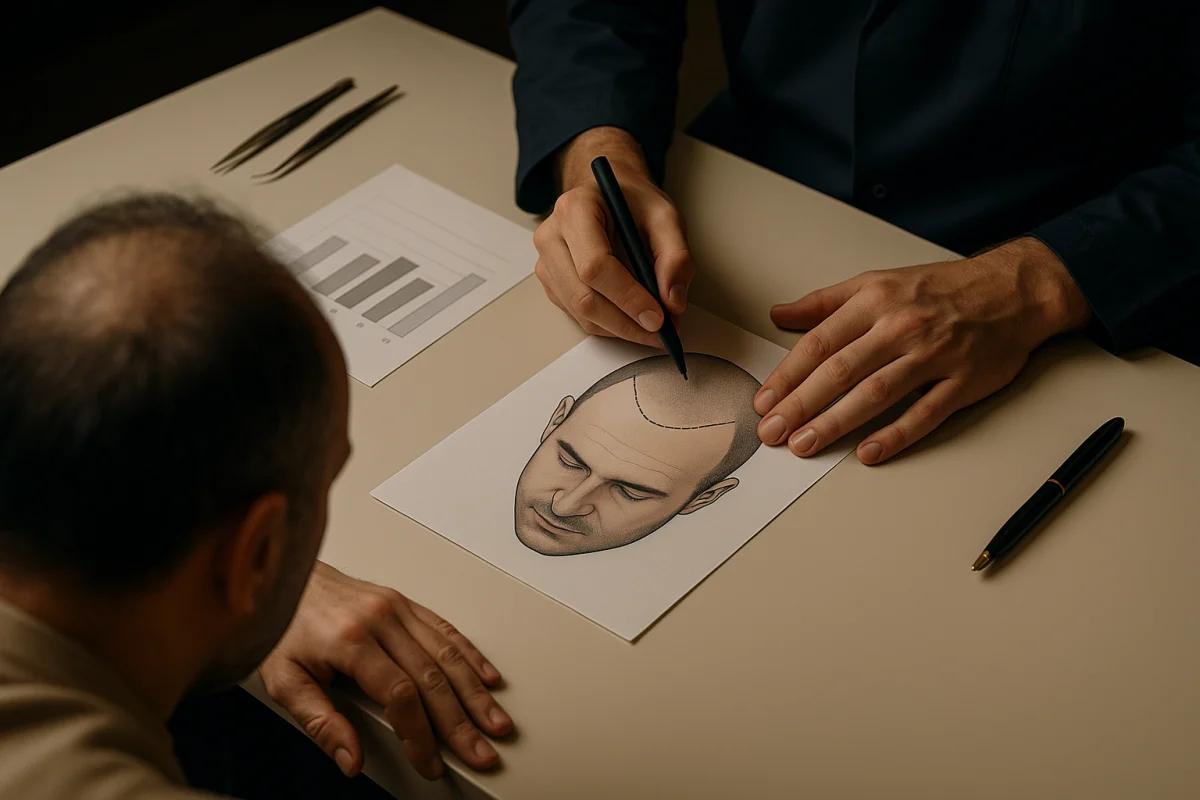
Age and hair-loss stability are also important. A very low or densely packed frontal hairline may look attractive in the short term, but it may not remain balanced if hair loss progresses behind it. For this reason, surgeons generally consider facial proportions, likely future recession, donor supply and the patient’s family pattern. A conservative design can help preserve a natural appearance over time and may reduce the need to use too many grafts in one area.
At Acibadem Hair Transplant Center in Istanbul, a free online hair analysis can be reviewed by doctors before travel planning. Clear photographs of the front, top, sides, crown and donor area can support an initial discussion, although an in-person assessment remains important before treatment decisions. The clinic is licensed by the Turkish Ministry of Health and offers Sapphire FUE and DHI techniques when these approaches are considered suitable for the individual treatment plan.
04Oral finasteride, topical finasteride and minoxidil in a treatment plan
Oral finasteride is taken by mouth and is intended to act systemically, meaning it can lower DHT levels throughout the body. Topical finasteride is applied to the scalp and is designed to deliver treatment locally, although some systemic absorption may still occur. The two forms should not be considered interchangeable without medical guidance. Their formulation, dosing approach, suitability and potential risks can differ, so a doctor should explain the expected benefits and limitations in the context of your health history.
Minoxidil is another commonly discussed treatment for pattern hair loss. It works through a different pathway from finasteride and may support the growth phase of the hair cycle in some patients. Topical minoxidil is applied to the scalp, while oral minoxidil may be prescribed in selected cases under medical supervision. Combining treatments is sometimes considered because they have different mechanisms, but combination therapy is not automatically appropriate or necessary for every person.
When reviewing propecia results alongside minoxidil, it is important to separate maintenance from regrowth. A patient may retain more hair than they would have without treatment, even if the change is subtle. Another person may see a cosmetic improvement in density. Treatment response is individual, and stopping a beneficial medication can allow the underlying hair-loss process to continue. Your doctor can discuss monitoring, duration of treatment and alternatives if a medication is not tolerated.
05Potential side effects and safety discussions
All medicines can have potential side effects, and the decision to use them should follow a proper medical consultation. Reported side effects of oral finasteride can include changes in sexual desire, erectile function, ejaculatory volume, breast tenderness or enlargement, mood changes and, rarely, allergic reactions. These effects do not occur in every patient, and some may resolve after stopping treatment, but any new or troubling symptom should be discussed promptly with the prescribing doctor. People with a history of depression, sexual health concerns, fertility concerns or relevant medical conditions should mention this during assessment.
Topical finasteride may cause local scalp effects such as irritation, redness, itching or dryness, depending on the formulation. Because systemic absorption can still happen, it should not be assumed to have no systemic risk. Oral minoxidil may be associated with effects such as increased body hair growth, fluid retention, dizziness, headache, changes in blood pressure or changes in heart rate. It requires particular caution in people with cardiovascular conditions or those using certain medicines, and only a qualified clinician can decide if it is appropriate.
Topical minoxidil can cause scalp irritation, flaking, itching or unwanted facial hair growth if the product transfers beyond the scalp. Initial shedding can also be noticed by some users as hairs cycle. Medication safety also includes practical steps: use treatments only as directed, avoid sharing prescriptions, keep medicines away from children and discuss other medicines or supplements with your doctor. This article provides general education and cannot replace an individual medical assessment.
06Can medication rebuild a receding hairline?
Finasteride and minoxidil may help some people maintain or improve miniaturised hairs near the frontal scalp, but they do not reliably rebuild a significantly receded hairline. Hairline regrowth is often less predictable than improvement in the crown or mid-scalp because follicles in longstanding bare areas may no longer be active. The earlier treatment begins after miniaturisation starts, the greater the possibility of preserving vulnerable hairs, although results still vary from person to person.
A hair transplant may be considered when a patient has stable or reasonably controlled hair loss, adequate donor density and realistic expectations. During surgery, follicles are harvested from the permanent donor zone, usually at the back and sides of the scalp, and placed into recipient sites. Sapphire FUE and DHI are methods that can be used for harvesting and implantation planning, but neither technique removes the need for careful hairline design, appropriate graft allocation and clinical judgement.
Propecia results can therefore influence timing rather than act as a simple pass-or-fail requirement for surgery. If medication helps stabilise ongoing thinning, the surgeon may be able to design a more predictable plan around the remaining native hair. If hair loss is rapidly progressing, a doctor may advise medical treatment, monitoring or a more conservative surgical approach first. The best plan balances the desire for visible improvement with the need to protect long-term donor reserves.
07Planning a hair transplant around future hair loss
A transplant does not stop genetic hair loss in non-transplanted areas. Transplanted follicles from a suitable donor area are generally more resistant to DHT, but the surrounding native hair can continue to miniaturise. This is why a patient who receives a dense frontal hairline without addressing ongoing mid-scalp or crown loss may later notice a difference in density behind the transplant. Medical treatment may be discussed to support this vulnerable native hair where clinically appropriate.
Graft numbers should be planned according to the size of the area, hair characteristics, donor capacity and the desired density. Curly or wavy hair, for example, can create a different visual effect from straight hair, while fine hair may need a different distribution strategy from coarse hair. The goal is not necessarily to recreate the density of adolescence. It is to create coverage and framing that look proportionate, age-appropriate and sustainable with the available donor hair.
At Acibadem Hair Transplant Center, treatment planning can include all-inclusive arrangements such as VIP transfer, a 4-star hotel, a care kit and 12 months of follow-up. The clinic has treated patients from 38 countries over 12 years. Results are measured through trichoscopic graft survival at month 12, with a documented 98% rate under a written guarantee. Individual cosmetic outcomes still depend on factors such as hair characteristics, healing, adherence to aftercare and the progression of native hair loss.
08Preparing for treatment and follow-up after surgery
Before a possible hair transplant, patients should provide accurate health information and disclose all medication use, allergies, smoking status and previous scalp treatments. The medical team may advise on whether certain medicines or supplements need to be adjusted before a procedure. Do not stop prescribed medication independently. If finasteride, minoxidil or another treatment is part of your plan, your doctor will give specific instructions based on safety, scalp condition and the timing of surgery.
After a transplant, the scalp needs time to heal and the implanted follicles enter a normal growth cycle. Early shedding of transplanted hairs can occur before new growth becomes visible. Cosmetic changes are usually gradual, and a final result is commonly assessed over many months. Follow-up allows the clinic to review healing, discuss ongoing native-hair management and answer practical questions about washing, activity, sun exposure and return to usual routines.
Needle-free anaesthesia is available at Acibadem Hair Transplant Center for suitable patients who are concerned about injections, subject to clinical assessment. International patients can begin with a doctor-reviewed online hair analysis, and WhatsApp replies are typically provided within about two hours. An initial review can help clarify whether your concerns are more likely to benefit from medical treatment, a hair transplant consultation or further investigation before either option is considered.
09Frequently Asked Questions
When might finasteride results become noticeable?
Finasteride changes are usually gradual rather than immediate. Some patients may notice reduced shedding or improved stability after several months, while a fuller assessment is often made at around 12 months. Results vary, and consistent photographs or trichoscopic review can provide a clearer comparison than daily observation.
What side effects can oral finasteride and oral minoxidil cause?
Potential oral finasteride side effects include sexual-function changes, mood changes, breast tenderness or enlargement and allergic reactions. Oral minoxidil may cause increased body hair, dizziness, fluid retention, headache, blood-pressure changes or heart-rate changes. These medicines require medical assessment, particularly for people with relevant health conditions or other medication use.
Can finasteride and minoxidil regrow a receding hairline?
They may help preserve or improve miniaturised hairs near the hairline in some people, especially when treatment begins early. However, they do not reliably restore a hairline that has been significantly recessed for a long period. A doctor can assess whether medical treatment, hair transplantation or a combined long-term plan is more appropriate.
How does topical finasteride differ from oral finasteride?
Oral finasteride is taken by mouth and acts systemically to reduce DHT levels. Topical finasteride is applied to the scalp and may offer a different delivery approach, but it can still be absorbed into the bloodstream and may still have potential side effects. The most suitable option depends on medical history, scalp tolerance and a doctor’s assessment.
This article is for general information only and is not a substitute for professional medical advice.
This guide is for general information and does not replace a medical consultation. Treatment decisions are made after an in-person or online assessment by a doctor.