
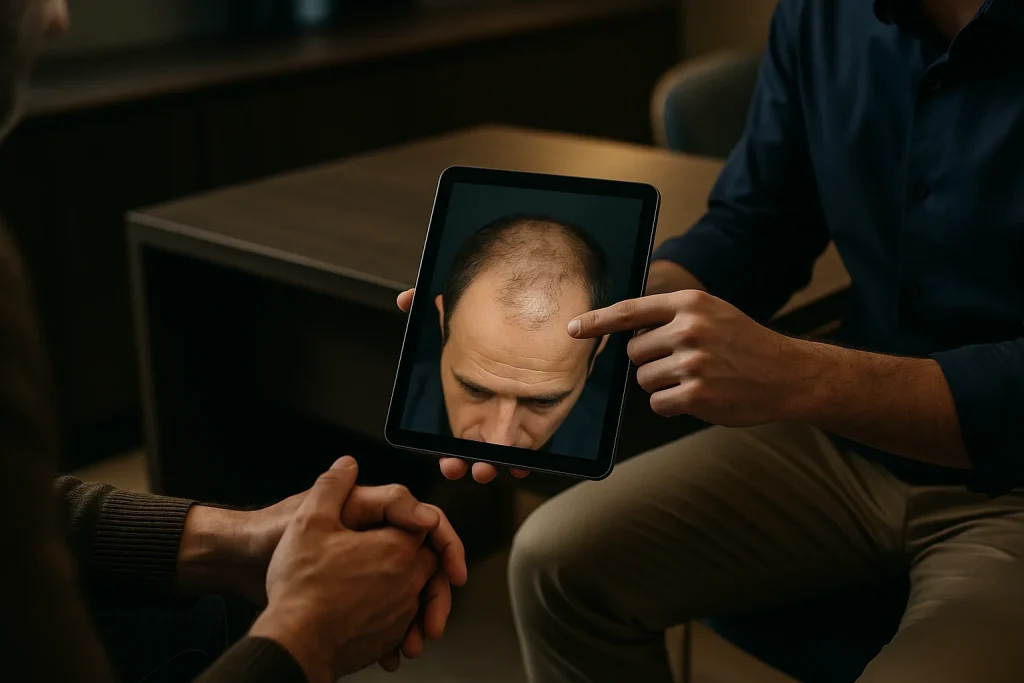
To understand how to get prescribed finasteride, book an assessment with a licensed doctor who can confirm the cause of your hair loss, review your health history and discuss potential risks. If it is clinically suitable, the doctor may issue a prescription and explain how treatment could fit before or after hair restoration.
- Finasteride is a prescription medicine that may be used for male pattern hair loss after a doctor confirms it is appropriate.
- A proper consultation should include an assessment of your hair-loss pattern, medical history, current medicines and treatment goals.
- Finasteride can help protect existing susceptible hair, but it does not replace careful donor planning or a hair transplant when surgery is indicated.
- Possible side effects and safety concerns should be discussed before treatment, with follow-up arranged if needed.
- Do not start, stop or change finasteride treatment around a hair restoration procedure without guidance from your prescribing doctor.
01Getting a Finasteride Prescription Before Hair Restoration
If you are researching how to get prescribed finasteride before a hair transplant, the first step is a medical consultation rather than an online purchase or self-treatment plan. Finasteride is a prescription medicine, so a licensed doctor needs to decide whether it is suitable for you. The doctor will usually assess your pattern of hair thinning, how quickly it has changed, your family history, general health and current medicines. This assessment matters because not every form of hair loss is male pattern hair loss, and different causes need different care.
For many men with androgenetic alopecia, also called male pattern hair loss, finasteride may be considered as part of a wider treatment plan. It is often discussed before hair restoration because it may help slow further thinning in existing non-transplanted hair. This can make long-term planning more predictable in suitable patients. However, a prescription is not automatic. Your doctor will weigh potential benefits against possible side effects, contraindications and your personal priorities before making a recommendation.
At Acibadem Hair Transplant Center in Istanbul, a free online hair analysis can be reviewed by doctors before you travel. This can help identify whether you may need a dermatology or prescribing consultation before surgical planning. An online review does not replace an in-person medical examination or local prescription process. It can, however, help international patients prepare the right questions and understand why stabilising ongoing hair loss may be relevant before restoration.
02How to get prescribed finasteride: the clinical pathway
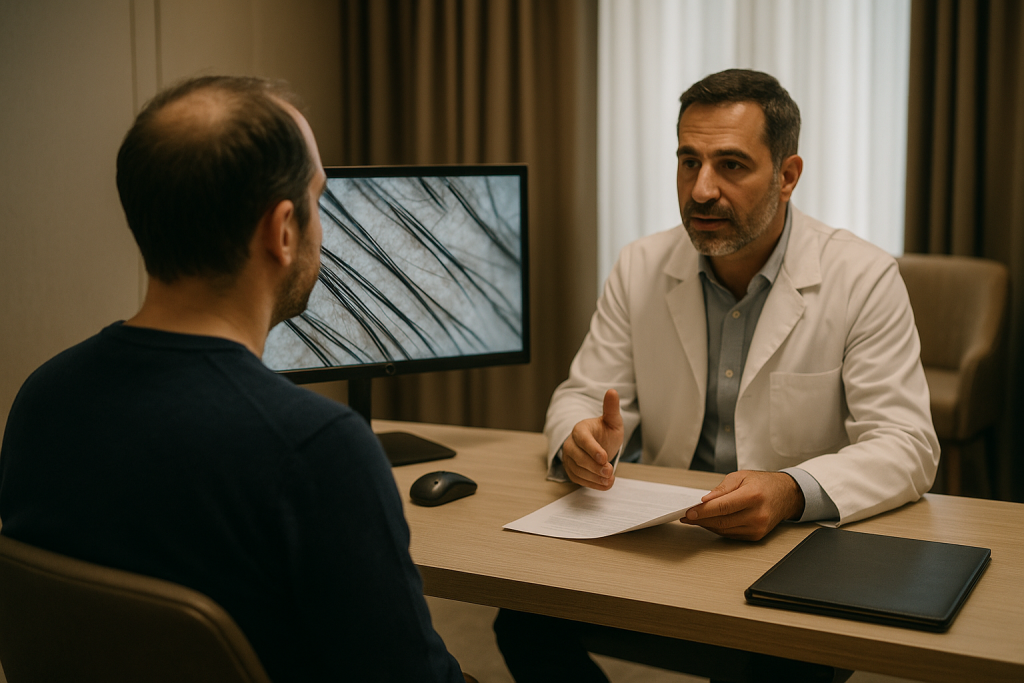
The usual pathway for how to get prescribed finasteride begins with an appointment with a doctor who is permitted to prescribe medicines in your country. Depending on local healthcare systems, this may be a primary-care doctor, dermatologist, urologist or another appropriately qualified clinician. Be ready to explain when the shedding or thinning started, whether it affects relatives, which areas are involved and whether you have had recent illness, major stress, weight change or scalp symptoms. Clear information supports a safer diagnosis.
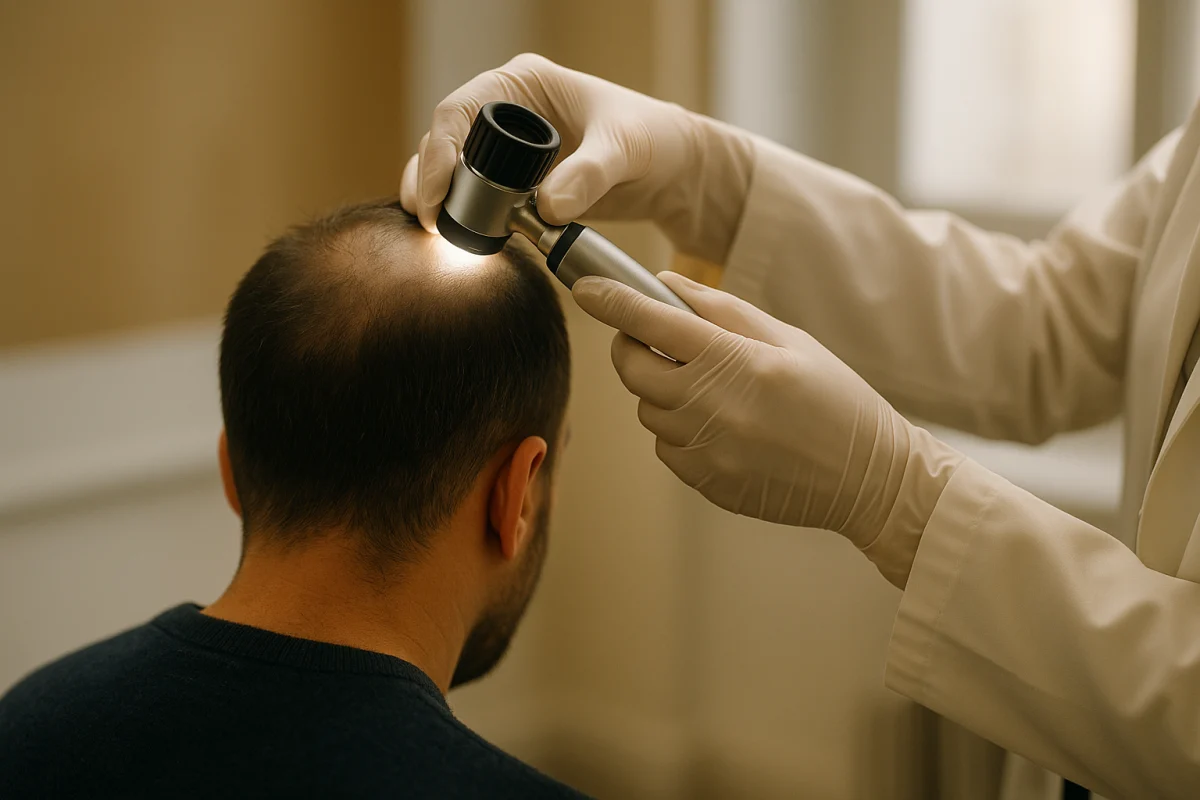
Your clinician will generally look for the typical pattern of androgenetic alopecia, such as recession at the temples, thinning at the crown or gradual diffuse thinning on the top of the scalp. They may examine the scalp, review photographs over time or recommend further evaluation when the picture is unclear. Sudden shedding, patchy hair loss, redness, scaling, pain or scarring can suggest another condition. In those situations, treating the underlying issue is usually more important than starting finasteride immediately.
The consultation should also cover your medical history. Tell the doctor about liver conditions, urinary symptoms, prostate assessments, fertility concerns, depression or other mental-health history, breast changes and any medicines or supplements you use. These details do not always rule out treatment, but they can change the conversation or indicate that monitoring is needed. Your doctor may also discuss whether a baseline examination, relevant blood testing or prostate screening is appropriate for your age and clinical situation.
03Why hair-loss diagnosis matters before treatment
A hair transplant redistributes permanent donor follicles from one area of the scalp to thinning areas. It does not stop genetic thinning in hair that remains outside the transplanted zone. This is why doctors may discuss medical treatment before surgery, especially when hair loss is active or the patient is young. Preserving existing hair can help reduce the contrast between transplanted grafts and surrounding native hair as the years pass. The aim is a natural-looking plan that considers future hair loss, not only today’s hairline.
Finasteride works by reducing the conversion of testosterone to dihydrotestosterone, often called DHT. In genetically susceptible scalp follicles, DHT can contribute to gradual miniaturisation. The medicine may reduce this process in some men with male pattern hair loss. Response varies between individuals, and it usually takes time to judge whether a treatment is helping. A doctor can explain realistic expectations, including that a medicine may stabilise loss for some patients but cannot recreate every lost follicle or guarantee a particular cosmetic result.
Before recommending surgery, the hair restoration team should assess donor density, scalp characteristics, the pattern of loss and likely future progression. Trichoscopic assessment can provide useful detail about follicle density and miniaturisation. At Acibadem Hair Transplant Center, surgical options include Sapphire FUE and DHI, selected according to the patient’s clinical needs and treatment plan. A medicine discussion is separate from choosing a surgical technique, but both parts should support the same long-term restoration strategy.
04Finasteride doses and the difference between hair loss and prostate care
Finasteride may be prescribed at different strengths for different medical conditions. A lower-dose formulation is commonly used for male pattern hair loss, while a 5 mg formulation is generally associated with treatment of benign prostatic hyperplasia, also called an enlarged prostate. These uses are medically distinct. You should not assume that a tablet intended for one condition is suitable for another, and you should never adjust a dose by splitting, sharing or combining medicines unless your own prescriber has specifically advised this.
In men with benign prostatic hyperplasia, 5 mg finasteride can reduce prostate volume over time and may improve urinary symptoms for suitable patients. It does not act as an immediate treatment for urinary difficulty, and not every urinary symptom is caused by prostate enlargement. A doctor may need to rule out other concerns before treatment. If you are considering finasteride for hair loss and have urinary symptoms, mention them clearly during your consultation so your doctor can assess the most appropriate pathway.
Finasteride can affect prostate-specific antigen, or PSA, readings used in prostate assessment. This does not mean PSA testing cannot be performed, but the clinician interpreting the result needs to know that you use or have used the medicine. Share this information with your primary-care doctor, urologist and any other healthcare professional involved in your care. Good documentation is especially useful for international patients receiving hair restoration abroad while ongoing medical care continues at home.
05Safety, side effects and who may need extra caution
Like all prescription medicines, finasteride can cause side effects. Reported concerns can include changes in sexual desire, erectile function, ejaculation or semen volume. Some patients may experience breast tenderness or enlargement, and mood changes have also been reported. These effects do not occur in every patient, and their severity and duration can vary. The important point is to have an informed discussion before starting treatment and to contact your prescribing doctor promptly if you notice symptoms that concern you.
Finasteride is not suitable for everyone. It is generally prescribed for adult men in the context of male pattern hair loss or, at a different dose, prostate enlargement. It is not a routine treatment for women who are or may become pregnant because exposure can pose risks to a developing male fetus. Tablets should be kept securely away from children. Anyone who is pregnant or could become pregnant should avoid handling crushed or broken tablets; a healthcare professional can provide product-specific safety guidance.
Mental wellbeing deserves careful attention during any medical treatment. Tell your doctor if you have experienced depression, anxiety, suicidal thoughts or notable mood changes, whether or not they seem related to hair loss. If low mood, distressing changes in thinking or suicidal thoughts occur after starting a medicine, seek urgent medical support through local health services and contact the prescriber. Hair restoration can be emotionally important, but safety and wellbeing must remain the first priority.
06Timing finasteride around a hair transplant
There is no universal rule that every patient must take finasteride before a hair transplant. Some patients may be appropriate candidates for surgery without it, while others may benefit from discussing medical treatment first. The best timing depends on the diagnosis, age, stability of hair loss, donor availability, current treatments and future goals. Your prescribing doctor and hair restoration team should know about each other’s recommendations, particularly if surgery is being planned soon.
When doctors recommend finasteride before restoration, the purpose is often to observe whether native hair loss becomes more stable and to improve long-term planning. This observation period can also help the patient decide whether the medicine is acceptable to them. It is not a promise that surgery will no longer be needed, nor does it guarantee that future hair loss will stop. A responsible plan should preserve donor hair and avoid designing a hairline that may be difficult to maintain later.
Do not stop finasteride shortly before surgery, restart it after surgery or change your dose based only on general internet advice. The medical team may provide perioperative instructions based on your health and prescribed treatments, while your own doctor remains responsible for medication decisions. After an eligible procedure at our dedicated Istanbul clinic, patients receive a care kit and 12 months of follow-up within all-inclusive packages. Follow-up is a useful time to discuss healing, shedding and any changes to your broader hair-loss plan.
07Questions to ask during your prescription consultation
Preparing questions can make a consultation more useful. Ask your doctor what type of hair loss you have and how certain the diagnosis is. Ask whether there are signs of active miniaturisation, whether treatment is likely to be useful at your stage and what outcome is realistic over the next several months. You can also ask how the doctor will review response, what side effects require contact and what alternatives may be appropriate if finasteride does not suit you.
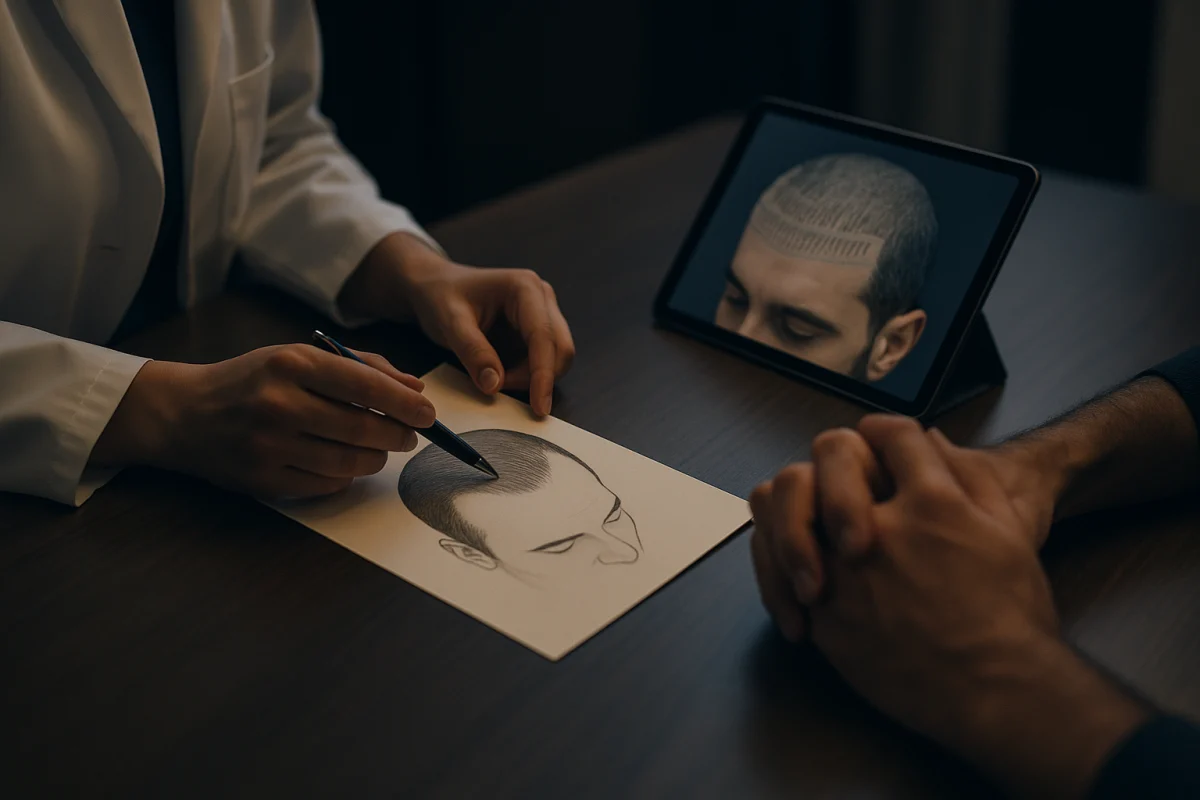
If you are also considering transplantation, ask how your current hair pattern affects graft planning. A good discussion should cover donor supply, the area that can be safely restored, likely progression and the importance of protecting native hair where possible. Ask whether you should wait before surgery and whether photographs or trichoscopic evaluation would be helpful. These questions help move the consultation away from a short-term cosmetic decision toward a more sustainable plan.
Patients asking how to get prescribed finasteride should also be open about practical concerns, including travel, future access to the prescriber and the cost of ongoing prescriptions in their home country. A clinic abroad cannot replace your regular local medical care. Acibadem Hair Transplant Center welcomes patients from 38 countries and can support organised treatment travel with VIP transfer and 4-star hotel accommodation in eligible packages, but medication prescribing and monitoring should always follow applicable medical and legal requirements.
08Choosing informed care before hair restoration
Hair loss can affect confidence, and it is understandable to want a quick answer. Still, the safest route is a step-by-step evaluation. First confirm the diagnosis. Then discuss whether medical treatment, surgery, observation or a combination approach is appropriate. Finally, make sure you understand the commitment involved. Hair restoration is usually a long-term process, particularly when genetic hair loss may continue. Decisions made with a realistic view of the future are often more satisfying than decisions based only on immediate appearance.
When surgery is appropriate, patients should receive a personalised graft plan and clear aftercare instructions. At Acibadem Hair Transplant Center, results are assessed through trichoscopic graft survival at month 12, with a documented 98% rate under a written guarantee. This measure relates to graft survival and should not be interpreted as a guarantee of an identical cosmetic outcome for every person. Hair characteristics, existing hair, scalp condition and the progression of hair loss can all influence the visible result.
You can begin with a free online hair analysis reviewed by doctors and receive a WhatsApp response in approximately two hours. Use this first conversation to share clear scalp photographs, your hair-loss history and any current medicines. If finasteride may be relevant, arrange a proper prescription consultation with a qualified clinician. An informed decision about medication before hair restoration can support a safer, more coordinated plan for the years ahead.
09Frequently Asked Questions
Can I ask my doctor for a finasteride prescription?
Yes. You can ask a licensed doctor whether finasteride may be appropriate for your hair loss or another approved indication. The doctor will assess your symptoms, medical history, current medicines and possible risks before deciding whether to prescribe it.
Is finasteride suitable for every person with hair loss?
No. Finasteride is not suitable for every type of hair loss or every patient. It is commonly considered for adult men with confirmed androgenetic alopecia, but your doctor will confirm whether the diagnosis, your health history and your treatment goals make it appropriate.
Can a 5 mg finasteride tablet reduce an enlarged prostate?
A 5 mg finasteride dose is generally used in suitable men with benign prostatic hyperplasia and can reduce prostate volume over time. It should only be used under medical supervision, because urinary symptoms need proper assessment and the medicine can affect PSA test interpretation.
Is finasteride considered safe for men?
Finasteride is an established prescription medicine and is considered suitable for many men when prescribed after an appropriate assessment. However, it can cause side effects and may not be right for everyone, so a doctor should discuss risks, benefits, monitoring and when to seek advice.
This article is for general information only and is not a substitute for professional medical advice.
 06
06 12
12