In this article8
- Why age 21 calls for a careful hair-loss plan
- Hair transplant at 21: the stability checks doctors consider
- Confirming the cause of thinning before choosing surgery
- Donor supply and a hairline designed for the future
- When waiting may be the safer option
- What surgery and recovery can realistically involve
- Choosing a clinic with long-term follow-up in mind
- Frequently Asked Questions
A hair transplant at 21 may be possible for selected patients, but age alone does not show whether surgery is appropriate. Doctors typically assess the cause, pattern and recent speed of hair loss, as well as donor capacity and long-term planning, before recommending a procedure or waiting.
- A stable pattern of hair loss is usually more important than reaching a specific birthday.
- A medical assessment can help distinguish genetic hair loss from temporary shedding or scalp conditions.
- Your future hair-loss pattern and donor supply should guide graft planning at a young age.
- Waiting, monitoring and medical management may be appropriate when hair loss is still changing.
- A conservative hairline and long-term follow-up can help protect future treatment options.
01Why age 21 calls for a careful hair-loss plan
At 21, many people are beginning university, work or independent adult life, and visible thinning can feel especially difficult. A hair transplant at 21 can be considered in some situations, but it should not be treated as a quick answer to every receding hairline or thinning area. The central question is whether the hair loss pattern is sufficiently understood and stable for surgical planning. A doctor will usually look beyond your current appearance and consider how your hair may change over the coming years.
Male and female pattern hair loss can begin in the late teens or early twenties, although its timing and speed vary widely. In younger adults, the visible hairline may change quickly for a period and then slow down, or it may continue to recede. Surgery redistributes follicles from the donor area to thinning areas; it does not stop the biological process that can affect existing, non-transplanted hair. This is why a responsible assessment focuses on the whole scalp rather than only the current gap at the temples.
There is no universally correct age for surgery. Some 21-year-olds have a well-established, slowly changing pattern and adequate donor reserves, while others have recent or diffuse thinning that needs observation first. Family history can offer useful context, but it cannot predict an individual future with certainty. Your doctor should explain the likely benefits, limitations and alternatives before any decision is made.
Emotional readiness matters as well. Hair restoration is a medical and aesthetic decision with a long-term effect on appearance, follow-up needs and future donor availability. It is reasonable to want a fuller hairline, but realistic expectations are important. The goal is typically a natural-looking result that fits both your current features and a sensible long-term plan, rather than an unusually low hairline designed only for the present moment.
02Hair transplant at 21: the stability checks doctors consider
Stability does not necessarily mean that hair loss has stopped completely. More often, it means the doctor can identify a consistent pattern, assess whether changes have slowed, and create a plan that accounts for possible future thinning. To do this, the consultation may include a review of photographs from different dates, a scalp examination and questions about when the change first became noticeable. Images taken in similar lighting and angles can be more useful than memory alone.
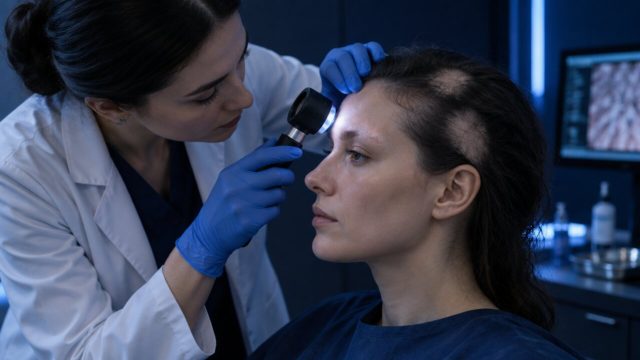
The hairline is assessed for changes at the temples, central front and corners, while the crown and mid-scalp are also examined. A patient may be focused on one area, yet early thinning elsewhere can affect graft allocation. Trichoscopic examination can help the doctor look closely at hair density, shaft diameter variation and the condition of the scalp. These details support clinical judgement, but they do not turn hair-loss prediction into an exact science.
Recent shedding deserves particular attention. Sudden diffuse shedding after illness, major stress, rapid weight change, nutritional issues, a new medication or another health event may have a different cause from progressive pattern hair loss. In such cases, surgery may not address the underlying issue. A doctor may advise further medical evaluation, monitoring or treatment of the contributing cause before discussing transplantation.
The quality and density of the donor zone at the back and sides of the scalp are equally important. Donor hair needs to be assessed not only for what can be harvested now, but also for what should remain for a natural appearance and potential future needs. A conservative approach can be especially valuable at 21, when the final extent of future hair loss may not yet be clear.
03Confirming the cause of thinning before choosing surgery
Not all hair loss at a young age is genetic pattern hair loss. Tight hairstyles, scalp inflammation, fungal infection, autoimmune hair loss, traction, nutritional deficiencies and hormonal factors can contribute to thinning or shedding. Some causes are temporary or may improve when treated. For this reason, a professional assessment should start with diagnosis rather than assuming that every sparse area needs grafts.
The consultation commonly includes questions about your medical history, family history, medications, recent health changes and hair-care habits. The doctor may ask when the shedding began, whether it is gradual or sudden, and whether there is itching, scaling, pain or redness. These symptoms do not diagnose a condition by themselves, but they can signal that the scalp needs medical attention before cosmetic surgery is considered.
For patients with a pattern consistent with androgen-related hair loss, a doctor may discuss medical management options that are clinically appropriate for their sex, health profile and future plans. These options need individual medical review because suitability, risks and expected effects differ. Self-prescribing medication or relying on social media advice is not a substitute for an examination and an informed discussion with a qualified clinician.
Monitoring can also be a useful part of diagnosis. A series of standardised photographs and trichoscopic checks over time may show whether density is changing, whether miniaturisation is progressing and whether a proposed design remains appropriate. Waiting can be frustrating, but it may prevent grafts from being placed into an area before the wider pattern is clear. In many cases, preserving future choices is a meaningful benefit of careful timing.
04Donor supply and a hairline designed for the future
A hair transplant at 21 should be planned as part of a longer journey, not as a one-time cosmetic purchase. The donor area is limited, and each graft used in the frontal hairline is no longer available for another area later. If thinning progresses toward the crown or mid-scalp, those areas may also require coverage. A doctor therefore needs to balance present concerns with likely future priorities.
Hairline design is one of the most important decisions in younger patients. A very low, straight or densely packed hairline can look attractive in the short term but may not remain balanced if hair loss advances behind it. In most patients, a slightly mature, age-appropriate design with irregular natural detail can offer a more durable visual result. The appropriate position, density and shape depend on facial proportions, hair characteristics, donor quality and the clinical assessment.
Hair calibre, curl, colour contrast and scalp visibility influence the cosmetic effect that a given number of grafts can create. For example, thicker or curlier hair may provide more visual coverage than very fine, straight hair, while a large area of thinning may require careful density priorities. No ethical clinic should promise a particular density without evaluating these factors. Photographs can demonstrate possibilities, but they cannot guarantee an identical result for another patient.
Sapphire FUE and DHI are two techniques that may be discussed during planning. In Sapphire FUE, follicles are typically extracted individually and placed into recipient channels prepared for the design. DHI uses an implantation approach that can be suitable in selected cases. The best technique depends on the scalp, hair characteristics, planned area and surgeon’s clinical judgement, rather than on a technique name alone.
05When waiting may be the safer option
A doctor may recommend postponing surgery when the pattern is changing rapidly, the diagnosis is uncertain, the donor area appears limited or expectations are not realistic. This is not a rejection of hair restoration. It can be a way to protect the patient from using valuable grafts before a reliable long-term plan can be made. Continued review can show whether the situation becomes more suitable later.
During a waiting period, the focus may be on identifying and managing the cause of hair loss, improving scalp health where needed and recording changes objectively. Your doctor may recommend follow-up photographs or trichoscopic assessment at appropriate intervals. If medical treatment is considered, the potential benefits, limitations, side effects and monitoring requirements should be discussed directly with the prescribing clinician.
Non-surgical approaches do not replace every need for surgery, and surgery does not replace every need for medical care. Some patients may benefit from a combined strategy, while others may choose observation. The right route is individual and should take account of health, diagnosis, the degree of distress, likely progression and donor resources. Taking time to decide can support a more informed and less pressured choice.
06What surgery and recovery can realistically involve
If surgery is considered appropriate, the treatment plan should explain the proposed number and distribution of grafts, the hairline design, donor management and the expected recovery process. Hair transplantation is normally performed as an outpatient procedure. Local anaesthesia is used, and needle-free anaesthesia may be available for patients who are suitable for it. Your clinical team will confirm what is appropriate after reviewing your health information.
In the first days after the procedure, patients are usually given instructions for protecting the grafts, washing the scalp and sleeping comfortably. Temporary crusting, redness and swelling can occur. Transplanted hairs often shed during the early recovery phase before new growth begins, which can be surprising if it has not been explained in advance. Visible growth and maturation are gradual, and the timeline differs between individuals.
It is important to understand that transplanted follicles and existing hair behave differently. Properly placed transplanted follicles are generally selected from a donor zone that is more resistant to pattern hair loss, but results can still be influenced by healing, surgical technique and individual biology. Existing hair around the grafts may continue to thin if the underlying condition progresses. This is why ongoing medical review and a future plan can remain relevant after surgery.
07Choosing a clinic with long-term follow-up in mind
Young patients should feel able to ask detailed questions before committing to surgery. Useful questions include what diagnosis has been made, how stability was assessed, how donor capacity was measured, why a particular hairline was proposed and what future thinning could mean. You should also ask who will perform each stage of the procedure, what follow-up is included and what happens if you have concerns during recovery. Clear answers support informed consent.
Acibadem Hair Transplant Center is a dedicated hair restoration clinic in Istanbul licensed by the Turkish Ministry of Health. The clinic offers Sapphire FUE and DHI techniques, along with free online hair analysis reviewed by doctors. Patients can send photographs for an initial review, and WhatsApp replies are typically provided within around two hours. An online review can help start the conversation, but it does not replace the final clinical assessment required before treatment.
For international patients, practical support can make follow-up planning easier. The clinic provides all-inclusive packages that include VIP transfer, a 4-star hotel, a care kit and 12 months of follow-up. Results are measured by trichoscopic graft survival at month 12, with a documented 98% rate under a written guarantee. Individual healing, cosmetic density and future hair-loss progression still vary, so your doctor will explain what those measures mean for your own treatment plan.
A good decision at 21 is one that remains sensible as you get older. Whether the recommendation is treatment now, medical management, monitoring or waiting, it should be based on transparent clinical reasoning. The aim is not simply to fill today’s thinning area, but to use a safe, thoughtful strategy that respects your donor supply and keeps realistic options available for the future.
08Frequently Asked Questions
Can someone have a hair transplant at 21?
Yes, a 21-year-old may be a candidate in selected cases, but suitability depends on much more than age. Doctors typically assess the diagnosis, recent progression, donor area, family history and expectations before recommending surgery. If the pattern is still changing quickly, waiting or treating the underlying cause may be more appropriate.
Is Gen Z experiencing hair loss earlier than previous generations?
Some Gen Z adults notice hair thinning in their late teens or early twenties, but early hair loss has also occurred in earlier generations. Greater awareness, frequent photographs and social media may make changes more noticeable sooner. A clinical evaluation is important because genetic pattern hair loss is only one possible cause of thinning or shedding.
What can happen 20 years after a hair transplant?
Transplanted donor follicles may continue to grow long term, but the surrounding non-transplanted hair can still thin over time if pattern hair loss progresses. This may change the balance of the overall result and can make medical management, a later procedure or a revised styling approach relevant. Conservative donor use and a future-aware hairline design are particularly important for younger patients.
Can I have a hair transplant at age 22?
A hair transplant at 22 can be possible if a doctor confirms that the cause and pattern of hair loss have been properly assessed and surgery is clinically appropriate. Some patients at this age have stable enough hair loss for planning, while others benefit from monitoring or non-surgical management first. A consultation should include donor analysis and a discussion of future hair-loss risk.
This article is for general information only and is not a substitute for professional medical advice.
This guide is for general information and does not replace a medical consultation. Treatment decisions are made after an in-person or online assessment by a doctor.