
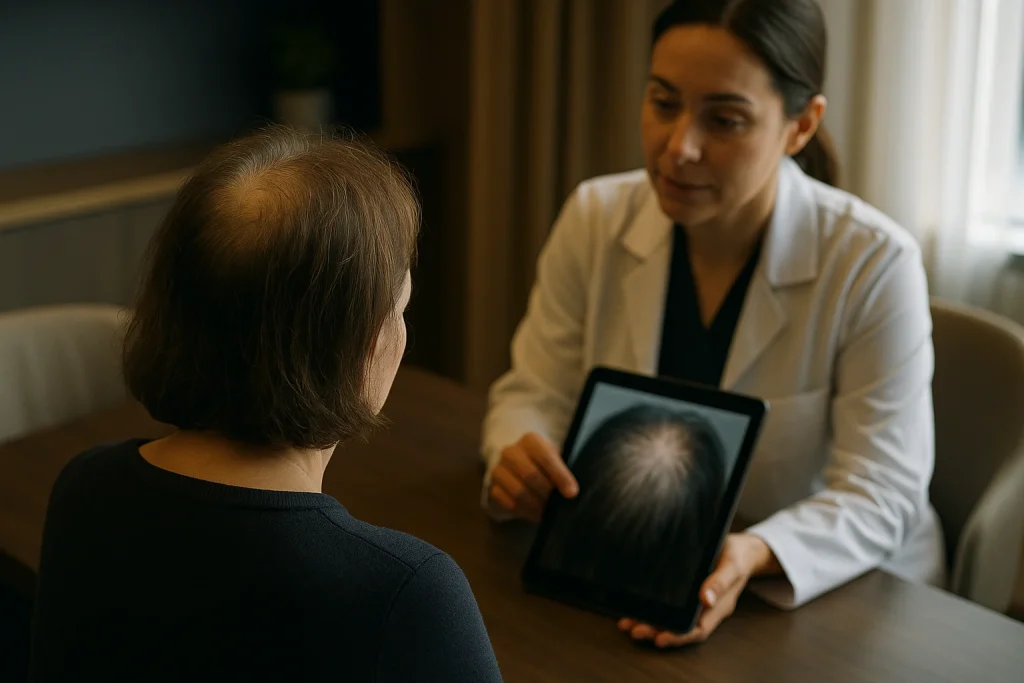
Hashimoto’s disease can contribute to diffuse hair shedding when thyroid hormone levels are not well controlled, but a hair transplant is usually not the first step. In most patients, doctors first assess thyroid treatment, nutrition, the pattern of hair loss, and whether shedding has become stable before discussing transplant timing.
- Hashimoto’s-related hair loss is often diffuse and may improve after thyroid hormone levels are appropriately managed.
- Ongoing or rapidly changing shedding can make it difficult to plan a predictable hair transplant.
- A medical assessment should look beyond thyroid function because iron deficiency, stress, medication changes, and genetic hair loss may also contribute.
- A transplant may be considered when the scalp condition, thyroid management, and hair-loss pattern appear stable over time.
- Long-term follow-up remains important because a transplant does not stop future thinning in untreated or genetically sensitive hair.
01Hashimoto’s Disease, Hair Loss, and Transplant Timing
Hashimoto's and hair loss are commonly linked because this autoimmune thyroid condition can affect the normal hair growth cycle. When thyroid hormone production becomes too low, more hairs may shift into the resting and shedding phase. This often causes diffuse thinning across the scalp rather than a sharply defined bald area. The important first point is that hair shedding is a symptom to investigate, not an automatic reason to book a transplant. Your doctor should first confirm whether thyroid function, treatment response, or another cause is contributing to the loss.
Hashimoto’s disease happens when the immune system attacks the thyroid gland. Over time, this may lead to hypothyroidism, although the speed and severity vary between individuals. Hair follicles are sensitive to changes in thyroid hormones, general health, nutritional status, and physical stress. For this reason, some people notice increased shedding before their thyroid condition is diagnosed, while others notice it after a treatment adjustment, illness, pregnancy, or another change affecting the body.
Hair transplantation moves healthy follicles from a donor area, usually the back and sides of the scalp, into areas with reduced density. It does not correct an underlying thyroid imbalance or stop diffuse shedding from continuing. A careful timing decision therefore matters. In most patients with suspected thyroid-related shedding, the medical priority is to establish a clear diagnosis, follow the thyroid treatment plan, and observe whether the hair-loss pattern becomes stable before a surgical procedure is considered.
02How Hashimoto’s Changes the Hair Growth Cycle
Every hair follicle moves through growing, transitional, resting, and shedding phases. Thyroid hormones help support normal activity within many tissues, including the skin and hair follicles. When hormone levels are low or fluctuate, a higher number of hairs may enter the resting phase together. Several weeks or months later, these hairs can shed. This type of loss is often called telogen effluvium, and it may make the scalp look generally less dense rather than creating isolated gaps.
Hair changes linked to hypothyroidism may include dry or coarse hair, slower growth, more breakage, and diffuse thinning. Some people also notice reduced hair in the eyebrows or other body areas. However, these signs are not specific to Hashimoto’s disease. Similar changes can occur with iron deficiency, restrictive eating, hormonal changes, inflammatory scalp conditions, significant stress, and some medicines. A clinician may therefore recommend a broader assessment instead of assuming that the thyroid is the only explanation.
Improvement after thyroid treatment is possible, but it is usually gradual. Hair has a slow biological cycle, so visible recovery can take months after thyroid hormone levels are appropriately managed. Shedding can also temporarily continue while the cycle resets. It is understandable to feel worried during this period, especially when density has changed quickly. Still, early surgery during an active shedding phase may not address the true pattern of loss and can make an aesthetic plan less predictable.
03Hashimoto's and Hair Loss: Recognising the Pattern
Hashimoto's and hair loss often present as overall thinning, increased hair in the shower or brush, or a wider-looking part line. The shedding may be noticeable across the top, sides, and back of the scalp. By contrast, androgenetic hair loss, also called pattern hair loss, more commonly affects specific zones. In women, this may involve gradual thinning over the crown and central part. In men, it may involve recession at the temples or thinning at the crown. Both conditions can occur at the same time.
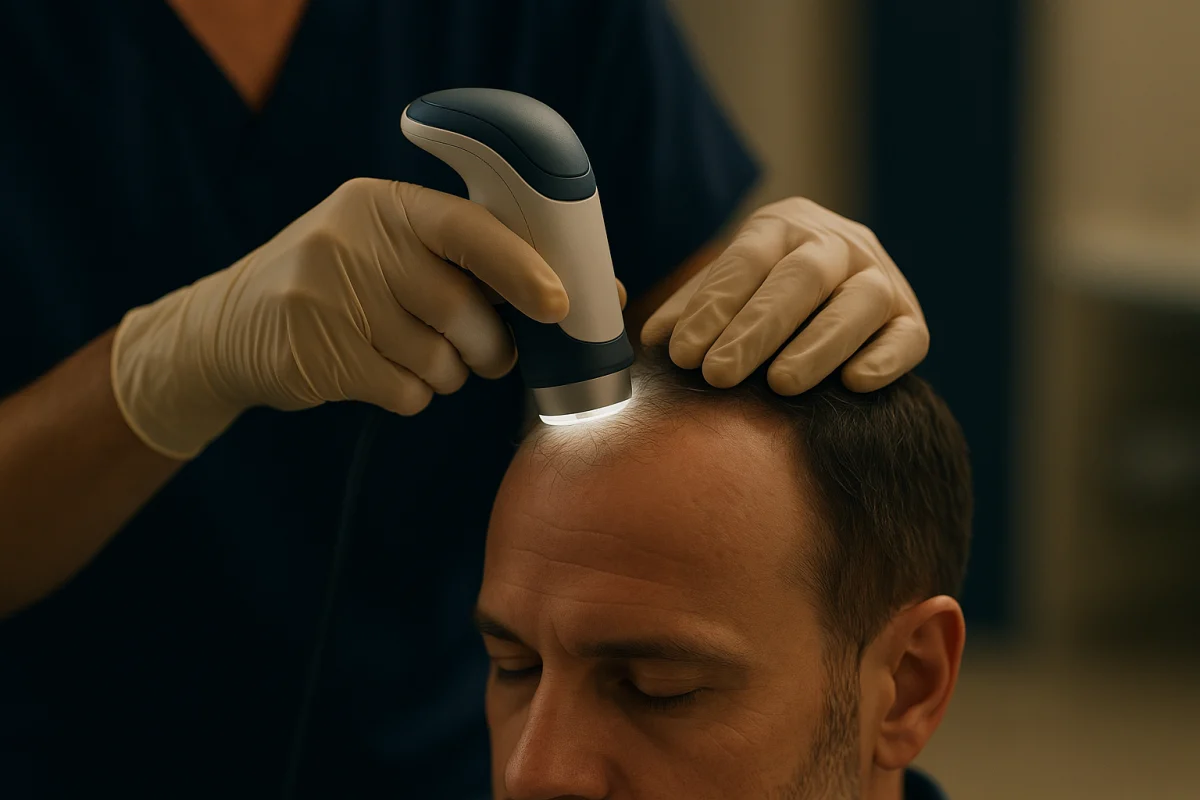
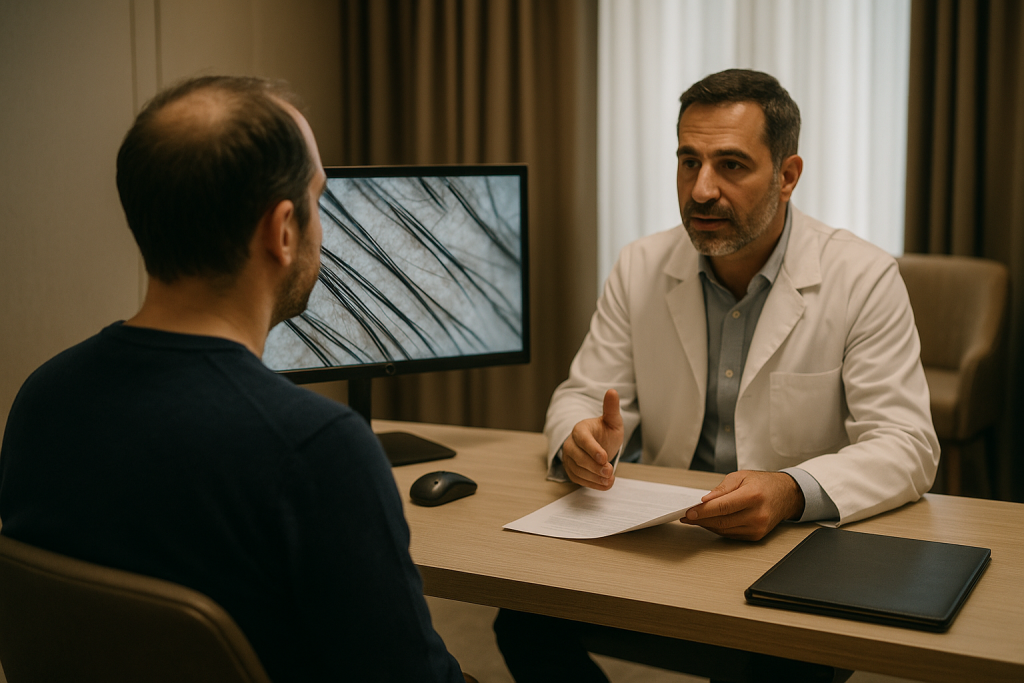
A scalp and hair assessment can help distinguish diffuse shedding from pattern-related miniaturisation. Doctors may review your medical history, examine the scalp, assess the donor area, and sometimes use trichoscopy to look closely at hair shaft thickness and follicle patterns. This matters because a stable pattern of genetic thinning may be managed differently from active diffuse shedding. The assessment may also identify scalp inflammation, scaling, scarring, or patchy loss that needs medical attention before any cosmetic procedure is discussed.
It is also helpful to consider the timeline. A person may have had mild genetic thinning for years and then experience more visible shedding after hypothyroidism develops. Once the thyroid issue is treated, the temporary shedding component may improve, while the underlying pattern hair loss remains. This is one reason transplant suitability cannot be decided from photographs alone. A doctor needs to understand what has changed, how quickly it changed, and whether the donor hair appears robust enough for long-term planning.
04Why Thyroid Stability Comes Before Transplant Planning
A hair transplant is generally planned more cautiously when hair loss is active, unexplained, or rapidly progressing. If thyroid hormone levels are not yet stable, the visible degree of thinning may not represent the person’s longer-term baseline. Some native hairs may recover after treatment, while other hairs may continue to shed for unrelated reasons. Waiting for a clearer pattern can help avoid placing grafts in areas that later regain density or designing a hairline that does not suit future hair-loss changes.
Thyroid stability does not necessarily mean that every laboratory result must be identical at every test. Rather, your treating doctor will consider whether your condition is being appropriately monitored, whether symptoms are improving or controlled, and whether medication has been stable for a suitable period. The right timeframe differs between patients. A transplant clinic should not replace endocrine care. Instead, it should work from medical information and clearance where needed, while keeping the surgical plan focused on scalp health and realistic density goals.
Before surgery, a reputable clinic may ask about diagnosed thyroid disease, current medicines, recent dose changes, symptoms of fatigue or palpitations, and prior episodes of shedding. You may be asked to share relevant test results or obtain guidance from your treating physician. This is a safety-focused process, not a judgement about your condition. In many cases, once the thyroid condition is well managed and the hair pattern is stable, a transplant consultation can move forward with a more reliable understanding of the available donor supply and recipient area.
05When a Hair Transplant May Be Considered
A transplant may be considered when the cause of hair loss has been carefully assessed, thyroid management is established, and the pattern of thinning appears stable over time. It may be more relevant for someone with confirmed pattern hair loss or a stable area of permanent loss alongside Hashimoto’s disease. It is less likely to be the first solution for recent diffuse shedding alone. The final decision should be based on an in-person or appropriately detailed medical evaluation, not on a single period of increased hair fall.
Donor area quality is central to planning. In diffuse hair loss, thinning can occasionally affect areas that would normally be considered safe donor zones. If too many follicles are removed from a weakened donor area, the back of the scalp may look thinner and the cosmetic result may be limited. Doctors evaluate hair density, hair calibre, scalp visibility, and the distribution of thinning to decide whether extraction is appropriate and how conservative the plan should be.
At Acibadem Hair Transplant Center, a dedicated hair restoration clinic in Istanbul licensed by the Turkish Ministry of Health, doctors can review a free online hair analysis before you travel. This can help identify questions that need further medical clarification, although it does not replace a full clinical assessment. Sapphire FUE and DHI are available techniques, and the appropriate approach depends on the individual scalp, donor area, and treatment plan rather than on a diagnosis label alone.
06Preparing Safely for a Consultation and Procedure
Bring a clear health history to your consultation. This should include your Hashimoto’s diagnosis, current thyroid medication, recent changes in treatment, other medical conditions, allergies, supplements, and previous hair-loss treatments. Mention any scalp itching, pain, redness, flaking, or patchy hair loss. These details help the medical team understand whether there may be a condition requiring evaluation before surgery. Do not stop or change prescribed thyroid medication for a hair transplant without instructions from the doctor who manages your thyroid care.
A good consultation should also cover expectations. Transplanted follicles can improve coverage in selected areas, but they cannot recreate unlimited density or guarantee that surrounding native hair will not thin later. The number of grafts that can be used safely depends on the donor area and the long-term plan. This is particularly important for patients with diffuse thinning, because protecting the donor area may be as important as improving the recipient area. Conservative planning can support a more natural-looking result over time.
Patients should also ask what follow-up is included and how results will be monitored. Acibadem Hair Transplant Center offers all-inclusive packages with VIP transfer, a 4-star hotel, a care kit, and 12 months of follow-up. The clinic measures results through trichoscopic graft survival at month 12 and documents a 98% rate under a written guarantee. Individual healing, native hair changes, and cosmetic appearance can still vary, so your doctor will explain what this measurement means for your specific treatment plan.

07Supporting Hair Health While Hashimoto’s Is Managed
The most appropriate way to support hair health is to work with the clinician managing your thyroid condition and attend recommended follow-up tests. If thyroid replacement treatment is prescribed, taking it exactly as directed is important. Your doctor may also consider whether iron stores, vitamin levels, protein intake, or other health factors could be affecting shedding. It is not advisable to self-prescribe high-dose supplements, especially iodine or thyroid-related products, because excessive intake may be harmful for some people with autoimmune thyroid disease.
A balanced eating pattern is usually more useful than a highly restrictive diet. Meals that provide adequate protein, vegetables, fruit, whole grains or other suitable carbohydrate sources, and healthy fats can support general nutrition. People with Hashimoto’s disease sometimes have other conditions, food intolerances, or nutrient deficiencies that need individual assessment. There is no single diet that has been proven to cure Hashimoto’s disease. A doctor or registered dietitian can provide safer guidance when weight changes, digestive symptoms, anaemia, or dietary restrictions are present.
Gentle hair care may reduce breakage while shedding is active. Avoid tight hairstyles, aggressive brushing, frequent bleaching, and high-heat styling where possible. These measures do not treat the autoimmune condition, but they can reduce avoidable damage to fragile hair shafts. Emotional stress around hair loss is also real. Discussing concerns early with your medical team can help you set a practical plan, whether that involves observation, medical treatment, camouflage options, or a later transplant assessment after the condition is stable.
08A Long-Term Plan for Native and Transplanted Hair
Hashimoto's and hair loss require a long-term view because thyroid disease management and scalp changes can develop over time. Even after a successful transplant, the non-transplanted hairs around the grafts may continue to thin if pattern hair loss is present. For this reason, doctors often design hair restoration with future changes in mind. A lower, denser hairline may not always be the safest choice if donor reserves are limited or if there is a risk of ongoing native hair loss.
Follow-up allows the team to assess healing, shedding after surgery, early growth, and later density. Transplanted hair commonly goes through a temporary shedding phase after the procedure before new growth becomes visible. This normal post-procedure process is different from uncontrolled thyroid-related shedding, although both can feel concerning. Clear follow-up instructions help patients understand what to monitor and when to contact the clinic. Any new, sudden, painful, patchy, or inflammatory hair loss should be reviewed medically rather than managed as a routine cosmetic concern.
International patients can request a free online hair analysis from Acibadem Hair Transplant Center, with doctor-reviewed replies on WhatsApp typically within around two hours. The clinic has treated patients from 38 countries over 12 years. For people with Hashimoto’s disease, the most useful first conversation is an honest review of the diagnosis, current stability, hair-loss history, and expectations. This helps determine whether it is better to monitor, seek further medical evaluation, or discuss a carefully timed restoration plan.
09Frequently Asked Questions
What can help reduce hair loss caused by Hashimoto’s disease?
The first step is usually appropriate management of the thyroid condition with your treating doctor. They may review thyroid hormone levels, medicines, symptoms, and possible contributors such as iron deficiency, nutrition, stress, or other forms of hair loss. Hair shedding may improve gradually after thyroid function is appropriately managed, but the timeline varies and a transplant does not treat active diffuse shedding.
What symptoms can Hashimoto’s disease cause in women?
Women with Hashimoto’s disease may develop symptoms of hypothyroidism such as tiredness, feeling cold, weight changes, dry skin, constipation, low mood, menstrual changes, and diffuse hair thinning. Some people have few symptoms, especially early in the condition. These symptoms can overlap with many other health issues, so diagnosis should be confirmed with medical assessment and blood tests.
How frequently can a Hashimoto’s flare occur?
There is no fixed schedule for Hashimoto’s flares. Symptoms and thyroid blood test results may change over time, particularly around medication adjustments, illness, pregnancy or postpartum changes, and other health events. Your doctor can advise how often monitoring is needed based on your diagnosis, treatment, symptoms, and laboratory results.
Which diet is best for Hashimoto’s disease?
There is no one diet that is best for every person with Hashimoto’s disease or proven to cure it. In general, a balanced diet with sufficient protein, fibre-rich foods, fruit, vegetables, and healthy fats can support overall health, while individual deficiencies or food-related conditions should be assessed professionally. Avoid starting restrictive diets or high-dose iodine supplements without guidance from your doctor or a registered dietitian.
This article is for general information only and is not a substitute for professional medical advice.
 06
06 12
12