
Hair transplantation is typically delayed when the scalp is actively inflamed, painful, infected, shedding rapidly, or showing signs of scarring. The underlying condition should be diagnosed and controlled first, because surgery on an unhealthy scalp may affect healing and graft survival.
- Active redness, pain, pustules, crusting, scaling, or unexplained shedding should be assessed before a hair transplant is planned.
- Inflammation can temporarily increase shedding, but some inflammatory scalp conditions may permanently damage follicles if not treated early.
- Folliculitis may cause temporary hair loss, while severe, recurrent, or scarring forms can lead to permanent follicle loss.
- A doctor may use scalp examination, trichoscopy, and sometimes laboratory tests or a biopsy to identify the cause of inflammation.
- Transplantation is generally considered only after the scalp condition is stable and your doctor confirms that surgery is appropriate.
01Understanding Inflamed Scalp Hair Loss Before Surgery
Inflamed scalp hair loss describes hair shedding or thinning that occurs alongside signs of irritation in the scalp skin. These signs may include redness, tenderness, burning, itching, scaling, pimples, crusts, or areas that feel sore when touched. It is important to separate this situation from ordinary pattern hair loss, which usually develops gradually and often does not cause scalp pain or visible inflammation. A hair transplant may be helpful for selected patients with stable hair loss, but active inflammation needs careful medical assessment first.
Hair follicles sit within the skin and depend on a healthy scalp environment. When the skin is irritated or affected by infection, allergy, autoimmune activity, or another inflammatory process, the normal hair growth cycle can be disrupted. More hairs may enter a resting and shedding phase, and the scalp may be less able to heal after a procedure. This is why a transplant team will usually look at scalp health as well as hair density, donor supply, family history, and the pattern of hair loss.
Delaying surgery does not necessarily mean that transplantation will never be possible. In many patients, the cause can be identified and controlled with appropriate medical care, scalp-care changes, or both. The aim is to protect existing follicles, reduce symptoms, and establish a stable baseline before considering surgical restoration. Your doctor will confirm whether the hair loss is temporary, permanent, or still changing over time.
02Scalp Symptoms That Should Be Checked Before a Transplant
A healthy scalp can have mild dryness or occasional itchiness, but persistent or worsening symptoms should not be ignored. Visible redness, warmth, swelling, significant flaking, thick scale, open areas, bleeding, yellow crusts, or painful bumps can all suggest that the scalp requires assessment. Sudden patchy shedding, hairs breaking close to the skin, or a noticeably wider area of thinning may also need investigation before any procedure is scheduled.
Pain is particularly important to mention during a consultation. A painful scalp may be caused by inflammation around hair follicles, skin irritation, tension from tight hairstyles, a skin condition, infection, or less commonly a nerve-related cause. Pain alone cannot identify the problem, but it gives the doctor useful information and may change the timing of surgery. It is best not to cover symptoms with cosmetic products or harsh treatments before your assessment if these make the scalp difficult to examine.
Some symptoms need more prompt medical attention than others. Seek timely evaluation if you have spreading redness, fever, pus, swollen lymph nodes, rapidly enlarging bald patches, severe pain, or sores that do not heal. These features can indicate infection or a condition that may damage follicles. A transplant should not be performed while a potentially active infection or significant inflammatory process remains unexplained.
03Why a Painful Scalp and Hair Loss Can Happen Together
Several different conditions can cause a painful scalp and hair loss at the same time. Common possibilities include inflammatory dandruff-related conditions, contact dermatitis from hair dyes or cosmetic products, bacterial or fungal infections, and inflammation of the hair follicles. Autoimmune scalp disorders and certain forms of scarring alopecia can also produce tenderness, burning, itching, or discomfort before visible thinning becomes more obvious.
Recent changes can provide useful clues. Symptoms may begin after using a new shampoo, styling product, dye, bleaching treatment, topical hair product, head covering, or medication. Tight braids, extensions, wigs, and frequent traction can place repeated stress on follicles and create inflammation in vulnerable areas. However, it is not safe to assume that a product or hairstyle is the only cause, especially when hair loss is patchy, progressive, or associated with pustules and scalp pain.
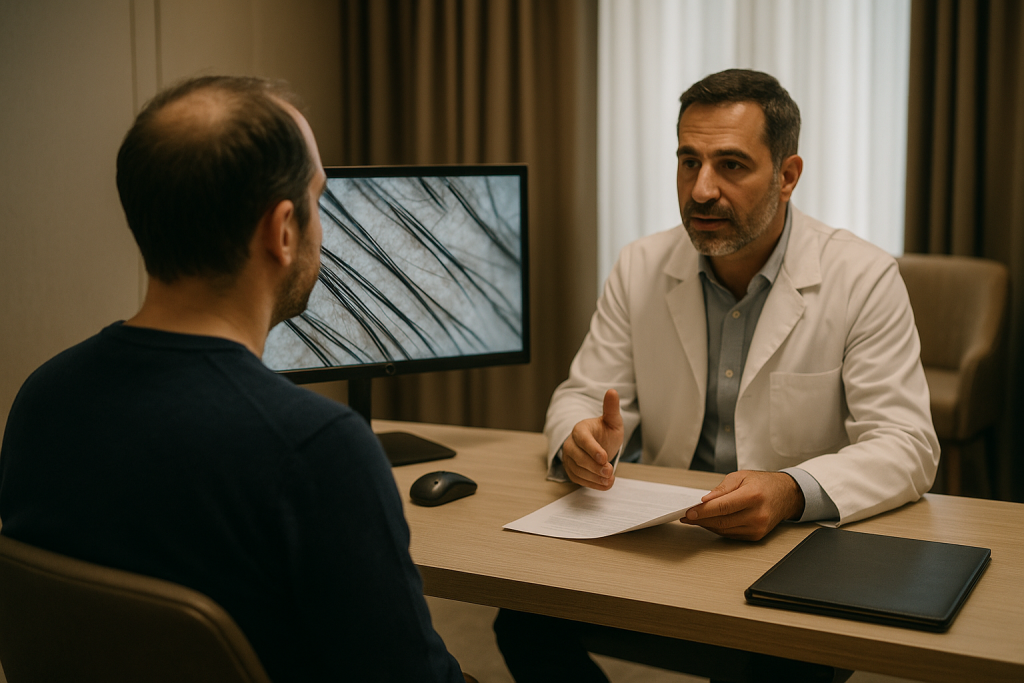
A clinical examination is needed because similar symptoms can have different causes and treatments. A doctor may ask about the timing of shedding, personal or family history, recent illness, medications, skin problems elsewhere on the body, and hair-care habits. Close scalp examination with trichoscopy can show follicle openings, scale, broken hairs, redness, and hair shaft changes that may not be visible in an ordinary photograph.
04Can Long-Term Inflammation Permanently Affect Hair Follicles?
Chronic inflammation can cause hair loss by repeatedly disturbing the follicle and shortening the growth phase of the hair cycle. In non-scarring conditions, follicles usually remain present, and hair may improve once the trigger is treated and the scalp returns to a healthier state. Recovery can take time because hair grows slowly, and reduced shedding does not always mean that visible density returns immediately.
The greater concern is scarring alopecia, also called cicatricial alopecia. In these conditions, inflammation can permanently destroy hair follicles and replace them with scar tissue. The scalp may look smooth or shiny, with fewer or no visible follicle openings in affected areas. Some people notice itching, burning, tenderness, or small bumps, while others have few symptoms. Early specialist assessment is important because the main goal is to stop further follicle damage.
Inflamed scalp hair loss should therefore not be treated as a purely cosmetic concern when symptoms persist. Hair transplantation cannot replace the need to diagnose a potentially active scarring condition. If a condition is confirmed, the treating doctor may focus first on reducing inflammation and monitoring stability over time. Transplant suitability, if any, is considered later and depends on the specific diagnosis, disease activity, donor hair, and scalp condition.
05Folliculitis, Pustules, and Their Effect on Hair Growth
Folliculitis is inflammation around one or more hair follicles. It can appear as small red bumps, tender spots, white-headed pimples, crusts, or pustules. It may occur after sweating, friction, shaving, occlusive headwear, ingrown hairs, or changes in the scalp microbiome. Bacterial, fungal, and non-infectious causes are possible, so the appearance alone does not always identify the correct treatment.
Mild folliculitis often causes temporary shedding or hair breakage rather than permanent baldness. Once the inflammation settles, follicles may continue producing hair normally. However, repeated, severe, deep, or untreated folliculitis may increase the risk of scarring in some cases. Recurrent painful bumps, draining lesions, thick crusting, or patches that do not regrow should be reviewed by a dermatologist or other qualified doctor before considering transplantation.
A hair transplant should generally be postponed if folliculitis is active in the recipient or donor area. Implanting grafts into inflamed skin may complicate healing and can make it difficult to judge the correct graft placement and density. The doctor may recommend a period of treatment and observation before reassessing the scalp. The necessary waiting time differs between patients and should be based on clinical stability rather than a fixed calendar date.
06How Doctors Assess Inflamed Scalp Hair Loss
The assessment of inflamed scalp hair loss usually begins with a detailed history and examination. Doctors look at where hair loss is occurring, whether the skin is red or scaled, whether follicle openings are preserved, and whether there are signs of infection or scarring. They may compare the donor area with the thinning area and examine hair shafts for breakage, miniaturisation, or changes in growth pattern. This helps distinguish inflammatory hair loss from androgenetic hair loss and other common causes of thinning.
Trichoscopy is a non-invasive close examination of the scalp and hair follicles. It can help identify patterns of scaling, inflammation, broken hairs, yellow dots, empty follicles, or features that suggest scarring. Depending on the findings, a doctor may also recommend tests such as fungal studies, bacterial culture, blood tests, or a small scalp biopsy. Not every patient needs every test; the choice depends on the symptoms and the suspected condition.
Clear photographs taken under consistent lighting can also help monitor changes over time. For potential transplant patients, a stable condition means more than a single day without discomfort. Doctors may want to see that symptoms, shedding, and visible inflammatory signs have remained controlled for a suitable period. This cautious approach supports safer treatment planning and helps avoid operating while the disease process is still active.
07Treatment and Scalp Stabilisation Before Hair Restoration
Treatment depends entirely on the cause of the inflammation. A doctor may advise changes to hair-care routines, removal of an irritating product, treatment for infection, anti-inflammatory treatment, or management of an underlying skin disorder. It is important not to self-prescribe strong topical products, antibiotics, or oils based only on online descriptions, because some products may worsen irritation, mask symptoms, or delay an accurate diagnosis.
Gentle scalp care can be useful while you are waiting for medical advice. This commonly includes avoiding scratching, picking crusts, aggressive brushing, very hot water, and chemical treatments that cause burning or stinging. Tight hairstyles and repeated friction should also be reduced where possible. These measures are supportive rather than curative, and they do not replace examination when there is pain, pustules, spreading hair loss, or suspected scarring.
Once symptoms have settled, your doctor may continue follow-up to make sure the improvement is maintained. In some conditions, ongoing treatment is needed even after the scalp looks clearer. A transplant plan should be based on the long-term behaviour of the condition, not only on a short-term improvement. This is especially important when the patient has a history of flare-ups, recurrent folliculitis, or patchy hair loss.
08When Hair Transplantation May Be Considered Again
Hair transplantation may be considered when the scalp is clinically quiet, the cause of hair loss has been evaluated, and the doctor believes that surgery is appropriate. In practical terms, this often means no active infection, no painful or draining lesions, no marked redness or scaling, and no evidence of ongoing rapid inflammatory hair loss. The existing hair loss pattern should also be sufficiently stable for a responsible long-term design.
The transplant technique is selected according to the individual assessment. Sapphire FUE and DHI are available at Acibadem Hair Transplant Center in Istanbul, but neither technique should be used to bypass the need for a healthy scalp. The priority is always medical suitability, followed by careful planning of the donor area, recipient area, hairline, and expected coverage. Needle-free anaesthesia may be available for suitable patients, subject to medical assessment.
Acibadem Hair Transplant Center is licensed by the Turkish Ministry of Health and offers a free online hair analysis reviewed by doctors. Sharing clear scalp photographs and an honest description of symptoms can help the team decide whether you may need dermatological evaluation before travelling. Patients should understand that an online review is a first step, while the final decision about treatment and timing depends on a clinical assessment and your doctor’s findings.
09Frequently Asked Questions
What symptoms can show that the scalp is inflamed?
Scalp inflammation may cause redness, itching, burning, tenderness, pain, scaling, flakes, crusts, pimples, pustules, or swelling. You may also notice increased shedding, broken hairs, or patchy thinning. Persistent, painful, spreading, or infected-looking symptoms should be assessed by a qualified doctor.
What may be causing scalp pain together with hair loss?
Scalp pain and hair loss can occur with folliculitis, contact dermatitis, inflammatory skin conditions, infection, traction from tight hairstyles, or certain autoimmune and scarring disorders. These conditions can look similar, so an examination is needed to identify the likely cause. Your doctor may use trichoscopy and, when appropriate, further tests.
Can ongoing inflammation lead to hair loss?
Yes. Ongoing inflammation can interrupt the normal hair growth cycle and cause increased shedding. In some non-scarring conditions, hair may improve after the inflammation is controlled, while scarring conditions can permanently damage follicles. Early assessment is important when there is persistent discomfort, patchy loss, or visible scalp changes.
Can folliculitis lead to hair loss?
Folliculitis can cause temporary shedding or breakage because the follicles are inflamed. Mild cases often improve without permanent hair loss once the cause is managed, but recurrent, deep, or scarring folliculitis can damage follicles in some patients. Active folliculitis should be treated and stabilised before hair transplantation is considered.
This article is for general information only and is not a substitute for professional medical advice.
 06
06 12
12