In this article9
- Men's Hair Transplant Cost in Turkey: Why Graft Needs Matter
- How graft numbers are estimated for male pattern hair loss
- Why the donor area sets an important treatment limit
- How mens hair transplant cost turkey is quoted
- What 3,000 and 5,000 graft plans can mean
- Comparing Turkey and the USA beyond the headline price
- Looking ahead: native hair loss and the 10-year picture
- Questions to ask before choosing a graft-based package
- Frequently Asked Questions
The cost of a men’s hair transplant in Turkey is mainly shaped by the number of grafts needed, the technique selected, and the level of clinical care included. A graft estimate should be based on a doctor-reviewed assessment of your hair loss, donor area, hair characteristics, and long-term goals rather than a fixed number alone.
- Graft needs vary because each man’s hair-loss pattern, donor density, hair calibre, and desired coverage are different.
- A graft is a naturally occurring hair unit that may contain one to several hairs, so graft count is not the same as hair count.
- A lower quote may not reflect important items such as medical assessment, aftercare, accommodation, transfers, or follow-up.
- Large sessions require careful donor-area planning to avoid taking more grafts than can be safely harvested.
- A long-term hair restoration plan should consider possible future thinning in untreated native hair.
01Men's Hair Transplant Cost in Turkey: Why Graft Needs Matter
The mens hair transplant cost turkey patients see advertised can vary widely because there is no single graft number that suits every man. Some patients need focused work at the temples or hairline, while others need coverage across the frontal area, mid-scalp, and crown. A meaningful estimate starts with the extent of hair loss, the strength of the donor area, hair thickness, curl, colour contrast, scalp characteristics, and the amount of visual density that is realistically possible.
Grafts are one of the most important parts of treatment planning because they represent the follicular units moved from the donor area, usually at the back and sides of the scalp. Each graft may contain one, two, three, or occasionally more hairs. This means that two patients receiving the same number of grafts may not achieve the same visual result. Hair calibre and the number of hairs per graft can affect how much coverage the transplanted area appears to have.
For this reason, responsible clinics do not simply sell a predetermined graft quantity without reviewing the patient’s situation. An estimate that is too low may leave key areas under-covered. An unnecessarily high estimate may place avoidable pressure on the donor area. Your doctor should confirm whether the suggested graft range is appropriate for the available donor supply and for a natural-looking plan that can remain sensible if hair loss progresses.
02How graft numbers are estimated for male pattern hair loss
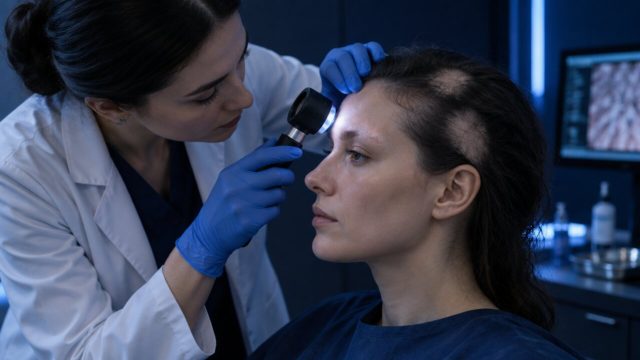
Male pattern hair loss often develops in a recognisable sequence, beginning with temple recession, a changing hairline, or thinning at the crown. However, the speed and pattern of progression are individual. During an assessment, the clinical team typically looks at the areas that currently need coverage as well as areas that may become thinner in the future. This helps create a distribution plan rather than concentrating every available graft in one small area.
The hairline is usually assessed with particular care. A very low or dense-looking hairline may use a substantial number of grafts and may not match future hair loss. In most patients, a mature, age-appropriate hairline is more suitable than a design based only on a youthful appearance. The team may use finer single-hair grafts at the front, then place multi-hair grafts behind them to build a gradual transition and better visual density.
Crown work can also change the graft requirement considerably. The crown is a broad area with a spiral growth pattern, and it can require many grafts to create even moderate coverage. If donor resources are limited, a doctor may recommend prioritising the frontal zone because it frames the face and is more visible in daily life. The right priority depends on the patient’s pattern, expectations, existing hair, and long-term plan.
03Why the donor area sets an important treatment limit
The donor area is not an unlimited source of hair. It contains follicles that need to be retained at a safe density after harvesting so the back and sides of the scalp continue to look balanced. A careful donor assessment examines density, hair shaft thickness, scalp flexibility, hair characteristics, and the likely stability of the donor zone. These factors can differ significantly between men, even when their hair loss appears similar from the front.
With FUE-based methods, grafts are individually extracted from the donor area. Sapphire FUE uses sapphire blades for channel opening, while DHI uses a specialised implantation approach to place grafts. Both techniques can be considered depending on the treatment plan, scalp condition, and the clinical team’s recommendation. Technique selection is only one element of the procedure; appropriate harvesting, graft handling, and placement design remain central to the result.
Harvesting too aggressively can make the donor area appear thinner, especially with short haircuts. For this reason, the highest possible graft number is not always the best goal. A doctor may advise a lower number than a patient first expects if this better protects the donor area and leaves options for the future. This cautious approach is especially relevant for younger patients or those with ongoing hair loss.
04How mens hair transplant cost turkey is quoted
When comparing mens hair transplant cost turkey quotations, it is useful to ask what the quote actually covers rather than focusing only on a headline figure. Some treatment plans are based on a graft range, while others are organised as all-inclusive packages. The total can be influenced by the technique recommended, the complexity of the hair-loss pattern, clinical support, accommodation, transfers, medicines or care items, and the follow-up period offered by the clinic.
A clear quotation should explain whether the proposed graft count is an estimate or a confirmed clinical plan, and whether there are important limits or exclusions. It should also make clear which services are included before, during, and after the procedure. Patients travelling internationally may value practical support such as airport and clinic transfers, a suitable hotel, clear instructions, and access to a team that can answer aftercare questions once they return home.
At Acibadem Hair Transplant Center, patients can request a free online hair analysis that is reviewed by doctors. The clinic is a dedicated hair restoration clinic in Istanbul and is licensed by the Turkish Ministry of Health. Its all-inclusive packages include VIP transfer, a 4-star hotel, a care kit, and 12 months of follow-up. WhatsApp replies are typically provided within around two hours, helping international patients understand the next steps before making travel arrangements.
05What 3,000 and 5,000 graft plans can mean
A plan of around 3,000 grafts may be considered for a range of situations, but it is not a standard solution. For one patient, this number may focus on rebuilding a receded hairline and improving frontal density. For another, it may need to be distributed across a wider front and mid-scalp area, resulting in a lighter density in each zone. The number alone cannot show how full the final appearance may look.
A plan of around 5,000 grafts is generally a major procedure and requires particularly careful evaluation. It may be discussed for extensive hair loss when donor density and scalp characteristics support it, but it is not appropriate for every patient. The team needs to consider whether the donor can safely provide that amount, how grafts should be spread across the scalp, and whether preserving some donor capacity for future needs is advisable.
It is also important to distinguish between a graft estimate and a guarantee of density. Graft survival, hair calibre, placement angle, healing, and continued loss of native hair can all influence the visible result. At Acibadem Hair Transplant Center, results are measured by trichoscopic graft survival at month 12, with a documented 98% rate under written guarantee. Your clinical team can explain the terms of any written guarantee and what measurement process is used.
06Comparing Turkey and the USA beyond the headline price
Turkey and the USA both have hair restoration providers, and neither country is automatically the right choice for every patient. The quality and safety of care depend on the individual clinic, the qualifications and involvement of the medical team, licensing, hygiene standards, communication, and the suitability of the treatment plan. Patients should compare like with like rather than assuming that location alone determines quality.
Turkey is a common destination for international hair transplant patients because clinics may offer coordinated travel arrangements and structured packages alongside treatment. However, travel also requires planning. Patients should consider flight timing, time away from work, the need to protect the scalp during travel, and how follow-up will be managed after returning home. Remote follow-up can be practical, but it should be clearly explained before treatment.
For men comparing mens hair transplant cost turkey with treatment in the USA, the most useful question is whether each proposal gives a transparent and medically appropriate plan. Ask how the graft estimate was reached, who performs each stage of the procedure, what aftercare is included, and how concerns will be handled after surgery. A lower initial price is not necessarily better if essential clinical oversight or long-term support is unclear.
07Looking ahead: native hair loss and the 10-year picture
A hair transplant redistributes follicles; it does not stop the underlying process that may cause native hair to thin. Transplanted follicles from a stable donor area are typically more resistant to male pattern hair loss, but the non-transplanted hair around them may continue to change over time. Ten years after a procedure, some patients remain pleased with their coverage, while others notice further thinning in areas that were not transplanted.
The long-term appearance depends on the original pattern of hair loss, the quality and stability of the donor area, the design of the hairline, graft placement, and whether hair loss progresses. A conservative plan can help the transplant continue to look more natural as a patient ages. In some cases, a future session may be considered if there is adequate donor supply and a clinical reason for additional coverage, but this cannot be assumed in advance.
Follow-up is valuable because it allows patients to raise concerns about healing, shedding, growth, and changing native hair. Typical early shedding of transplanted hairs can occur after surgery, followed by gradual new growth over subsequent months. Final maturation is often assessed around month 12, although individual timelines vary. Any medical treatment options for ongoing hair loss should be discussed directly with a qualified doctor, who can assess suitability and possible risks.
08Questions to ask before choosing a graft-based package
Before booking, ask for a clear explanation of the recommended graft range and the areas it is intended to treat. You may also ask whether the estimate has been reviewed by a doctor, how the donor area has been assessed, and what happens if the available graft count differs from the initial online estimate on the treatment day. Straightforward answers can help you compare plans more confidently.
It is sensible to ask about the surgical pathway from arrival through follow-up. This includes pre-procedure assessment, anaesthesia options, the roles of the clinical team, post-procedure washing instructions, expected healing, and emergency contact arrangements. Needle-free anaesthesia is available at Acibadem Hair Transplant Center for eligible patients, although the doctor will confirm whether it is suitable in an individual case.
Finally, choose a clinic that treats graft planning as part of a wider medical and aesthetic decision. Acibadem Hair Transplant Center has welcomed patients from 38 countries over 12 years and offers Sapphire FUE and DHI techniques. An online assessment can provide an initial direction, but an in-person medical evaluation remains important for confirming candidacy, donor suitability, and the final treatment plan.
09Frequently Asked Questions
What is the cost of 3,000 hair grafts in Turkey?
There is no single medically reliable cost for 3,000 grafts in Turkey because clinics may include different levels of clinical care, technique, accommodation, transfers, aftercare, and follow-up. The graft number may also change after an in-person assessment of the donor area. Ask for a written breakdown of what is included and confirmation that the plan has been medically reviewed.
Is a hair transplant in Turkey better than one in the USA?
Neither destination is automatically better for every patient. The right choice depends on the clinic’s licensing, medical standards, team involvement, donor-area planning, communication, and aftercare arrangements. Turkey can offer organised travel packages, while local treatment in the USA may be more convenient for in-person follow-up; patients should compare individual providers carefully.
How much does a 5,000-graft hair transplant cost in Turkey?
A 5,000-graft procedure should not be assessed by price alone because it is a large graft requirement and may not be suitable for every donor area. Costs vary according to the clinic, technique, inclusions, and complexity of the plan. A doctor should first confirm whether this graft range can be harvested safely and distributed appropriately.
What can happen 10 years after a hair transplant?
Transplanted hair may continue to grow long term when follicles are taken from a stable donor area, but native hair can still thin with time. This can change the overall appearance and may make additional planning necessary in some patients. A natural, age-appropriate design and responsible donor management are important for the long-term result.
This article is for general information only and is not a substitute for professional medical advice.
This guide is for general information and does not replace a medical consultation. Treatment decisions are made after an in-person or online assessment by a doctor.