
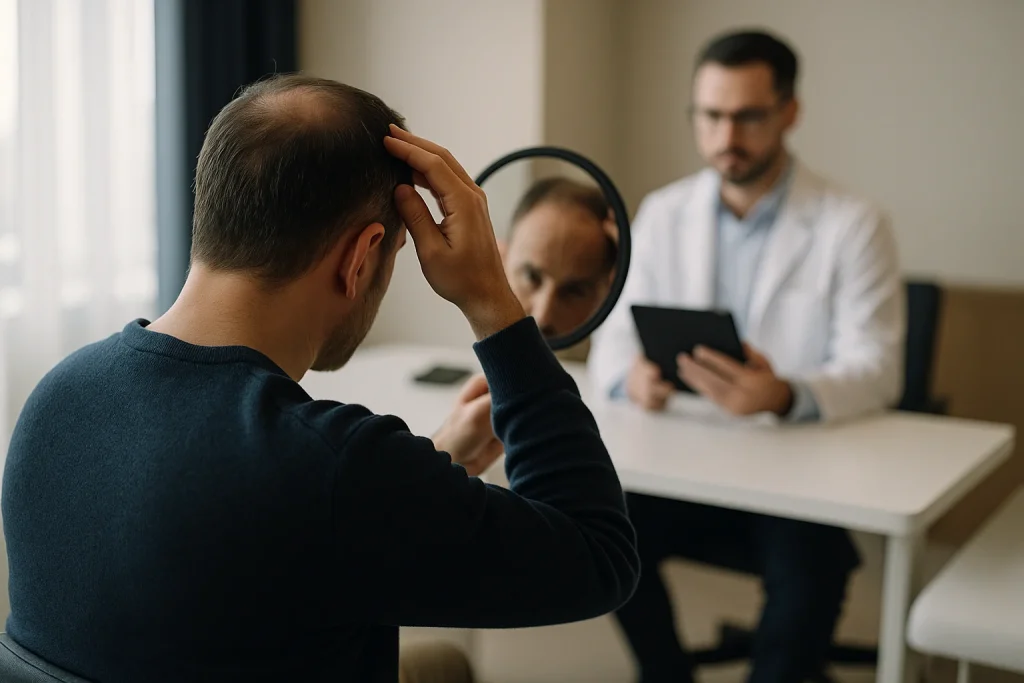
Natural habits may support general scalp and hair health, but there is no proven natural method that reliably lowers DHT enough to stop genetic hair loss in every person. If you are considering a transplant, a doctor should assess the cause and pattern of thinning, your donor area, and whether medical treatment or lifestyle changes may help protect your existing hair.
- DHT is an important factor in androgenetic hair loss, but it is not the only possible cause of thinning.
- A balanced diet, stress management and treatment of correctable deficiencies can support hair health, but they are not substitutes for a clinical diagnosis.
- Natural supplements promoted as DHT blockers have limited and variable evidence, and they can still cause side effects or interact with medicines.
- Hair transplantation redistributes resistant donor follicles and does not automatically stop future thinning in non-transplanted hair.
- A pre-transplant assessment should include scalp examination, medical history and a realistic long-term hair preservation plan.
01DHT, genetic hair loss and realistic expectations
If you are researching how to block dht naturally, it is important to begin with a realistic point: lifestyle measures may improve the conditions for healthy hair growth, but they do not reliably switch off inherited hair loss. Dihydrotestosterone, usually called DHT, is a hormone made from testosterone. In people with a genetic sensitivity in their scalp follicles, DHT can gradually shorten the hair growth cycle. Over time, affected hairs may become finer, shorter and less visible, especially around the temples, frontal hairline and crown.
This process is called follicle miniaturisation. It is most commonly linked with androgenetic alopecia, also known as male or female pattern hair loss. The level of DHT in the blood does not always explain how much hair loss a person has. Local activity in the scalp and inherited follicle sensitivity are also important. This is why two people with apparently similar hormone levels may have very different hair patterns.
For transplant candidates, the main question is not simply whether DHT exists. It is whether hair loss is active, stable or likely to continue in areas surrounding a planned transplant. A good assessment considers the pattern of loss, family history, age, donor density, scalp condition and medical history. Your doctor will confirm whether a transplant is appropriate now or whether it may be safer to first investigate the hair loss and create a preservation plan.
02How to block dht naturally: what evidence can and cannot show
When people ask how to block dht naturally, they often expect one food, tea or supplement to have the same effect as a medical treatment. Current evidence does not support that expectation. Some plant compounds have been studied for possible effects on enzymes involved in hormone metabolism, but research quality, dose, preparation and results vary. A laboratory finding or a small study cannot confirm that a product will prevent follicle miniaturisation in real-life transplant candidates.
Foods often discussed in this context include nuts, seeds, legumes, vegetables, fruit, oily fish and other nutrient-dense choices. These foods can contribute protein, zinc, iron, essential fatty acids and antioxidants, depending on the overall diet. Their value is usually in supporting general nutrition rather than acting as a dependable DHT blocker. Extreme dietary restrictions, detox plans and very high-dose single nutrients can create nutritional imbalances and are not a reliable hair loss strategy.
Some people consider herbal extracts marketed for prostate health or hair support. Natural does not automatically mean safe. Supplements can affect digestion, mood, blood pressure, blood clotting, sexual health or laboratory tests, and they may interact with prescribed medicines. Product quality can also differ between manufacturers. Speak with a doctor or qualified pharmacist before starting any supplement, particularly if you have a medical condition, use regular medication or are preparing for a surgical procedure.
03Signs that may suggest androgen-related hair thinning
Hair thinning alone cannot tell you that DHT is high. In fact, there is no simple symptom checklist that accurately measures DHT activity at the scalp. A gradually receding hairline, thinning at the crown, a widening part or reduced density in a typical pattern may suggest androgenetic hair loss. However, these signs can overlap with other conditions, including telogen effluvium, traction-related loss, inflammatory scalp disorders, nutritional deficiencies and some endocrine conditions.
Pattern and timing matter. Genetic hair loss often develops gradually over months or years, with finer hairs appearing in affected zones. Sudden shedding after illness, major stress, rapid weight loss, childbirth, medication changes or surgery may have another explanation. Itching, pain, marked redness, scaling, scarring or patchy bald areas also need medical evaluation rather than self-treatment with DHT-focused products.
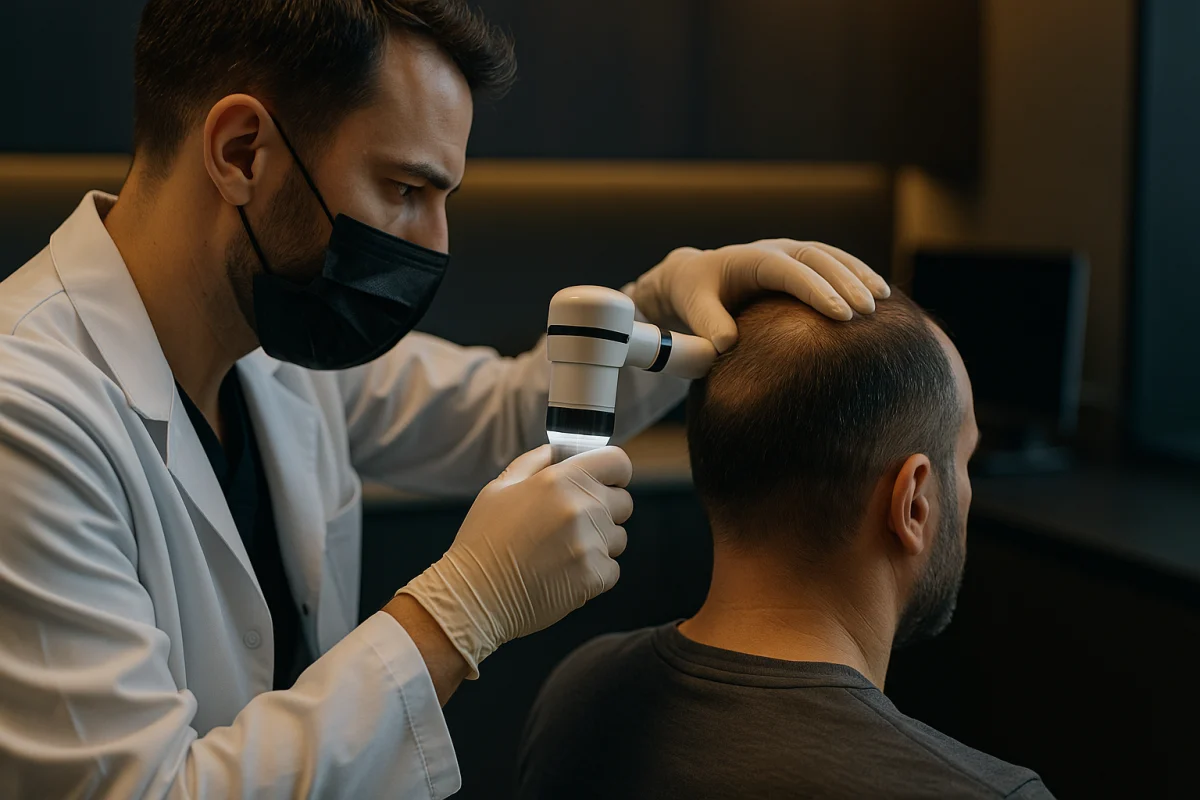
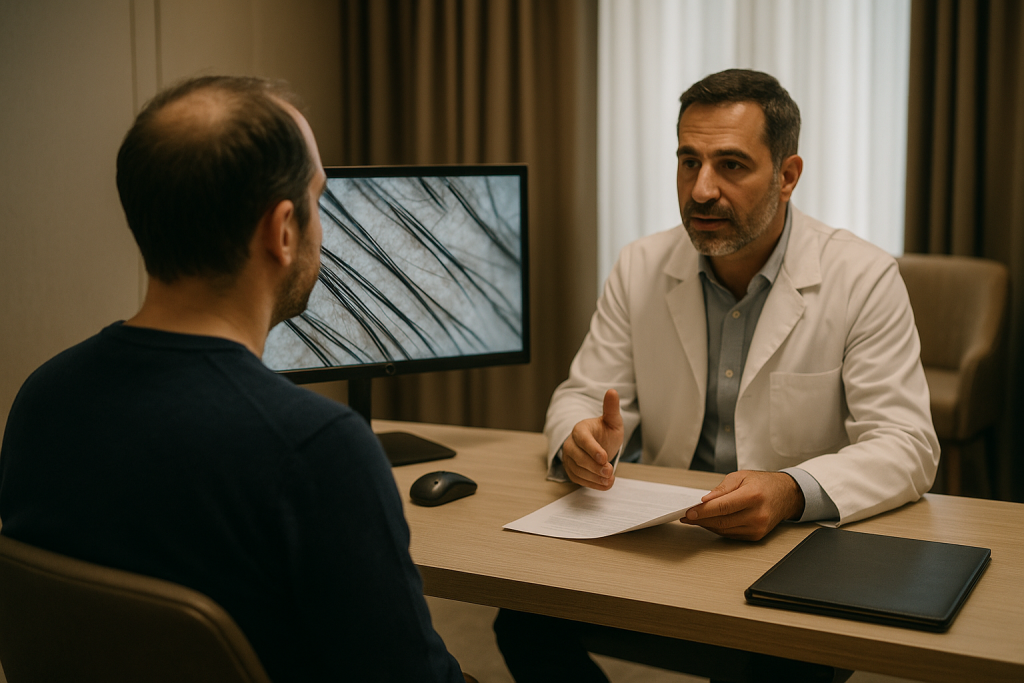
A doctor may use a clinical history, scalp examination and trichoscopy to look at hair shaft thickness, follicle distribution and signs of miniaturisation. Blood tests may be considered when the history or examination suggests another cause, but they are not required for every patient. Testing hormones without clinical context may be misleading, because scalp sensitivity and genetic factors cannot be judged from one blood result alone.

04Natural habits that can support a healthier hair environment
The most useful natural approach is usually to improve the factors that can worsen shedding or reduce hair quality. Aim for regular meals with enough protein and a varied intake of vegetables, fruit, whole grains and healthy fats. Hair fibre is made largely of protein, so prolonged low-protein eating patterns may contribute to shedding in some people. If you follow a restricted diet, a clinician can advise whether nutritional assessment is needed.
Sleep, stress management and recovery from illness also matter for overall wellbeing. Stress does not always cause permanent pattern hair loss, but physical or emotional strain can trigger temporary shedding in susceptible people. Gentle exercise, consistent sleep routines and practical stress-reduction habits may support recovery. These steps are beneficial for general health, yet they should not be presented as a cure for genetically sensitive follicles.
Scalp care should be simple and comfortable. Wash often enough to manage oil, flakes and product build-up, using products that suit your scalp. Avoid repeated tight hairstyles, aggressive brushing, very hot styling tools and chemical treatments that damage the hair shaft. Massage may feel relaxing, but evidence that it meaningfully blocks DHT or regrows hair is limited. If dandruff, irritation or scalp inflammation persists, seek medical advice.
05Supplements, deficiencies and safety before hair surgery
Correcting a confirmed deficiency can be important, but taking high doses “just in case” is not recommended. Low iron stores, vitamin D, vitamin B12, zinc or other nutritional issues may be relevant in selected patients, especially when there is diffuse shedding or dietary risk. Your doctor can decide whether testing is appropriate and interpret results in context. More is not necessarily better: excessive amounts of some vitamins and minerals may cause harm and can sometimes contribute to hair shedding.
Biotin is widely promoted for hair, but most people do not have a biotin deficiency. High-dose biotin can interfere with certain blood test results, including tests used in urgent medical care. Herbal products and concentrated oils should also be disclosed during a transplant consultation. Depending on the product, your surgical team may ask you to stop it before the procedure because of possible effects on bleeding, anaesthesia, blood pressure or healing.
People searching how to block dht naturally should be especially cautious about combining several supplements at once. It becomes difficult to know what is helping, what is causing side effects and whether doses overlap. Keep a complete list of supplements, vitamins, teas and medicines, including occasional products. Bringing that list to your consultation supports safer planning and allows the medical team to give procedure-specific instructions.
06Can lower DHT levels bring back lost hair?
Reducing DHT activity may help slow further miniaturisation in some people with androgenetic hair loss, particularly when follicles are still producing visible but thinning hairs. The response is individual and depends on the diagnosis, duration of hair loss, degree of miniaturisation and consistency of treatment. A natural measure that supports wellness may not produce enough hormone-related effect to change the course of genetic hair loss.
Follicles that are severely miniaturised or no longer active are less likely to produce meaningful cosmetic regrowth without a procedure. This is one reason a transplant may be considered for suitable candidates with established areas of loss. A transplant does not create new follicles. It moves carefully selected follicles from the donor zone, usually at the back and sides of the scalp, to areas where density has reduced.
Even after a successful procedure, native hair around transplanted grafts can continue to thin if the underlying pattern hair loss remains active. Long-term planning is therefore essential. Your doctor may discuss evidence-based medical options, monitoring, lifestyle support or a combination of approaches. The right plan should be based on your health profile and future hair loss risk, not on a promise that any one step will regrow all lost hair.
07What DHT management means for Sapphire FUE and DHI candidates
For a person considering Sapphire FUE or DHI, DHT management is mainly about protecting the overall appearance over time. Both techniques can be used to place transplanted grafts with careful attention to angle, direction and distribution. They do not change the genetic sensitivity of existing non-transplanted hair. If thinning continues behind or around a new hairline, the contrast may affect how natural the result looks in the future.
A responsible consultation should assess whether the donor area can support your goals without overharvesting. It should also consider whether your hair loss pattern is predictable enough for a durable design. Very low, dense hairlines may not be suitable for every patient, especially when future loss is possible. Conserving donor grafts and planning for age-appropriate density can be more valuable than trying to create an immediate but difficult-to-maintain result.
At Acibadem Hair Transplant Center, a dedicated hair restoration clinic in Istanbul licensed by the Turkish Ministry of Health, doctors review a free online hair analysis before recommending next steps. Patients can share clear photographs and relevant history for an initial review, with WhatsApp replies typically provided within about two hours. This first review does not replace an in-person medical assessment, but it can help identify suitable questions about donor capacity, thinning progression and treatment planning.
08Building a practical plan before and after transplantation
Start by documenting your hair loss with clear photographs taken in similar lighting every few months. This can be more useful than checking the mirror every day, where normal changes in styling, wetness and light can look like sudden loss. Note shedding, scalp symptoms, recent illness, dietary changes and new medicines. This information can help a doctor distinguish a long-standing pattern from a temporary shedding episode.
Before surgery, follow only the instructions given by your medical team about medicines, supplements, smoking, alcohol and scalp care. Do not stop prescribed medication or begin a hormonal treatment without speaking to the clinician who manages your care. Needle-free anaesthesia may be available for eligible patients at Acibadem Hair Transplant Center, but suitability and procedural details must be confirmed by the treating team after assessment.
After transplantation, protect the grafts and attend follow-up as advised. Healing and visible growth take time, and early shedding of transplanted hairs can occur as part of the normal growth cycle. Acibadem Hair Transplant Center provides all-inclusive packages that include VIP transfer, a 4-star hotel, a care kit and 12 months of follow-up. Graft survival is measured by trichoscopy at month 12, with a documented 98% rate under written guarantee; individual cosmetic outcomes can still vary according to clinical factors and ongoing native hair loss.
09Frequently Asked Questions
Which natural option is the most powerful DHT blocker?
There is no natural product that can be described as the strongest proven DHT blocker for hair loss. Plant-based supplements may have limited evidence for hormone-related effects, but their results, quality and safety vary. A doctor can help you understand whether a supplement is appropriate and whether a medical evaluation is needed first.
How can I know whether DHT is causing my hair loss?
You cannot confirm high scalp DHT from symptoms alone. Gradual recession, crown thinning or a widening part can fit androgenetic hair loss, but other causes are possible. A doctor can assess the pattern, scalp and medical history, and may use trichoscopy or selected tests when appropriate.
Will reducing DHT make my hair grow back?
In some patients with early androgenetic hair loss, reducing DHT activity may help slow thinning and support thicker growth from miniaturised follicles. It does not reliably restore follicles that have been inactive for a long time. The likely response depends on the diagnosis and stage of hair loss.
What are sensible natural ways to lower DHT?
A balanced diet, enough protein, good sleep, stress management and correction of confirmed nutritional deficiencies can support general hair health. These measures are not proven to lower DHT enough to stop genetic hair loss in every person. Avoid high-dose supplements or herbal combinations without discussing them with a doctor or pharmacist.
This article is for general information only and is not a substitute for professional medical advice.
 06
06 12
12