
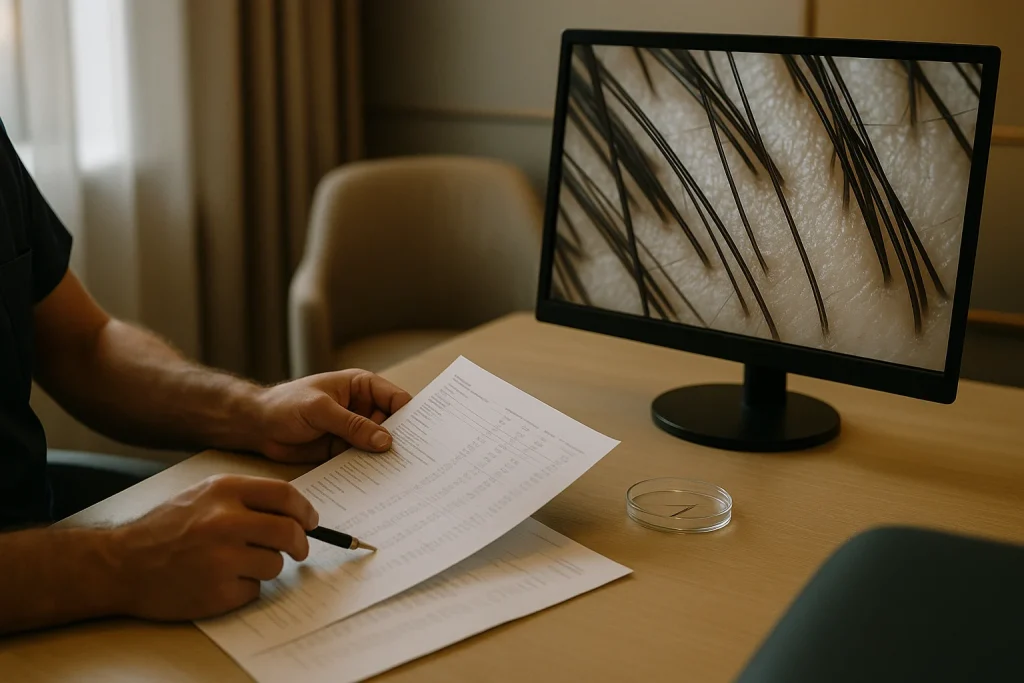
Does iron deficiency causes hair fall? Low iron stores may contribute to diffuse hair shedding in some people, especially when iron deficiency is significant, but it is not the only possible cause. A blood test and medical review can help confirm the cause, correct a deficiency safely, and assess whether it is the right time to plan a hair transplant.
- Iron deficiency can be associated with diffuse shedding, but a medical assessment is needed to identify the true cause.
- Ferritin, haemoglobin and other blood tests may help a doctor assess iron status and possible anaemia.
- Hair recovery after iron correction is usually gradual because hair growth follows a slow biological cycle.
- Iron supplements should only be selected and dosed with medical guidance, as unnecessary iron can be harmful.
- A stable scalp, a clear diagnosis and corrected nutritional issues are important parts of hair transplant readiness.
01Iron Deficiency Hair Loss and Transplant Readiness
Does iron deficiency causes hair fall? The short answer is that iron deficiency may be linked with increased shedding in some patients, particularly diffuse shedding from many areas of the scalp. However, the wording of this common online question is simpler than the medical reality. Hair loss can result from inherited pattern hair loss, stress, illness, thyroid disorders, hormonal changes, medication, scalp disease, restrictive diets and several nutritional concerns. A doctor should therefore investigate the cause rather than assume that low iron is the only explanation.
Iron is needed for several normal body functions, including oxygen transport. When iron stores are low, the body may prioritise essential functions over less urgent processes such as hair production. This may disturb the normal hair cycle and encourage more hairs to enter the resting and shedding phase. Not every person with a low ferritin result develops noticeable hair loss, and not every person who sheds hair has low iron. The full clinical picture matters.
For people considering hair restoration, identifying active shedding is especially important. A transplant can redistribute healthy follicles, but it does not correct an untreated medical reason for ongoing shedding in the existing hair. In most cases, a clinic should first understand whether loss is stable pattern thinning, temporary shedding, or a combination of both. At Acibadem Hair Transplant Center, a free online hair analysis is reviewed by doctors to help patients begin this discussion before travelling to Istanbul.
02Does Iron Deficiency Causes Hair Fall? Understanding the Link
The question does iron deficiency causes hair fall is often asked after finding more hairs in the shower, on a brush or on a pillow. In medicine, the pattern of hair loss provides useful clues. Iron-related shedding is more often described as diffuse thinning, meaning hair appears less dense across a wider part of the scalp rather than receding in one clearly defined pattern. Some people notice that a ponytail feels thinner or that their scalp is more visible under bright light.
A common type of temporary diffuse shedding is telogen effluvium. It can occur several weeks or months after a trigger such as a fever, surgery, major emotional stress, childbirth, rapid weight loss or a nutritional deficiency. Low iron may be one possible trigger among several. During telogen effluvium, follicles are usually still present and are not necessarily permanently damaged. Nevertheless, the cause needs professional assessment because diffuse shedding may also overlap with inherited androgenetic hair loss.
In contrast, androgenetic hair loss usually follows a recognisable distribution. Men may see recession at the temples, thinning at the crown, or both. Women may notice a widening central part while the frontal hairline is often maintained. Iron deficiency can sometimes make existing pattern thinning look more noticeable by adding temporary shedding. This is why a good evaluation considers family history, the speed of change, the scalp examination and laboratory findings together.
03Recognising Symptoms and Testing Iron Stores
Hair shedding alone cannot diagnose iron deficiency. Early symptoms can be mild and may not be specific. Some people report tiredness, reduced exercise tolerance, headaches, dizziness, paler skin, shortness of breath with activity, cold hands and feet, or difficulty concentrating. Brittle nails, sore tongue or cravings for non-food substances may also occur in some cases. Others have few obvious symptoms until the deficiency is more advanced, so a normal daily routine does not rule it out.
A doctor may request a full blood count and iron studies when the history suggests possible deficiency. Haemoglobin can help identify anaemia, while ferritin is commonly used as an indicator of stored iron. Depending on the situation, other values such as transferrin saturation, serum iron and markers of inflammation may be relevant. Ferritin can be affected by inflammation or infection, which is one reason laboratory values should be interpreted by a qualified clinician rather than read in isolation.
Testing may also include factors that can affect the hair cycle or resemble iron-related symptoms. These may include thyroid assessment, vitamin B12, folate, vitamin D or zinc when clinically appropriate. The correct tests depend on a person’s medical history, diet, menstrual history, medications and symptoms. A healthcare professional may also investigate why iron is low, such as low dietary intake, heavy menstrual bleeding, reduced absorption or blood loss from the digestive system.
04Will Hair Grow Back After Iron Deficiency Is Corrected?
Hair loss linked mainly to an iron deficiency can improve after the deficiency and its underlying cause are appropriately treated. This is usually a gradual process rather than an immediate change. Hair follicles move through long growth cycles, so shedding may take time to settle and visible new growth may take several months. Recovery also depends on whether another condition, such as androgenetic hair loss or a scalp disorder, is present at the same time.
It is important not to judge recovery only by daily shed hairs. Short, fine regrowing hairs around the part line or hairline can be an encouraging sign, but they are not always easy to distinguish from breakage. Repeat blood tests may be used by the treating doctor to check whether iron levels are responding. A clinician may advise continuing treatment for a period after symptoms improve in order to replenish iron stores, but the timing and dose must be individualised.
If shedding continues despite corrected iron levels, the initial diagnosis may need review. Persistent loss does not necessarily mean treatment has failed; there may be a second trigger, a continuing source of iron loss, or an inherited pattern of miniaturisation. Photographs taken under similar lighting and trichoscopic scalp assessment can help monitor density and hair shaft changes over time. This more measured approach is useful before making decisions about surgical hair restoration.
05Food, Supplements and Safe Iron Correction
A balanced diet can support normal iron intake. Iron-containing foods may include meat, fish, eggs, legumes, leafy green vegetables, fortified grains, nuts and seeds, although the amount absorbed varies between foods and individuals. Vitamin C-rich foods can support absorption of plant-based iron when eaten in the same meal. Tea, coffee and some calcium-containing foods may reduce iron absorption when taken very close to an iron-rich meal or supplement, although dietary advice should be tailored by a healthcare professional.
There is no single best iron supplement for hair growth. Different forms, doses and schedules may be used depending on the level of deficiency, tolerance, medical history and the cause of low iron. Some oral products can cause nausea, constipation, abdominal discomfort or darker stools. More iron is not automatically better: excess iron can be harmful, and supplements can interact with some medicines. A doctor or pharmacist should recommend a suitable option and explain how it should be taken.
When people ask does iron deficiency causes hair fall, they sometimes begin a supplement before testing because they hope for a quick solution. This is not recommended as a general approach. Taking iron without confirmation can mask an important cause of blood loss, create side effects, or delay investigation of another reason for hair loss. Medical assessment is particularly important for men, postmenopausal women, people with digestive symptoms, and anyone with severe fatigue, fainting, chest discomfort or rapidly worsening symptoms.
06When Low Iron Changes Hair Transplant Timing
Hair transplantation is generally best considered when the reason for hair loss has been assessed and the pattern is reasonably stable. If a patient has active diffuse shedding associated with untreated iron deficiency, many clinicians would first focus on medical evaluation and correction. This can help clarify how much hair may recover naturally and can make future planning more accurate. It may also reduce the risk of designing a procedure around a temporary reduction in density.
Transplant readiness involves more than iron results. Doctors usually consider the donor area, the quality and distribution of existing hair, the progression of thinning, scalp health, general health and realistic expectations. A stable donor supply is important because transplanted follicles are a limited resource. In patients with inherited hair loss, a transplant may restore selected areas, but native hair can still continue to thin over time and may need ongoing medical management discussed with a doctor.
Low iron does not automatically mean that a hair transplant is impossible. The appropriate timing depends on the severity of deficiency, whether anaemia is present, the cause of the deficiency, current symptoms and the overall hair-loss diagnosis. Your doctor will confirm whether treatment should be delayed, whether further testing is needed, and when a procedure can be considered safely. A careful decision can protect both health priorities and the long-term aesthetic plan.
07Preparing for a Doctor-Led Hair Restoration Assessment
A useful consultation starts with a clear timeline. Patients can note when shedding started, whether there was a trigger in the previous few months, where thinning is most visible, and whether close relatives have similar hair patterns. Information about recent illness, dietary changes, weight loss, operations, pregnancy, menstrual bleeding, medications and previous blood test results may also help the doctor. Clear photographs taken before the consultation can show whether the change has been gradual or sudden.
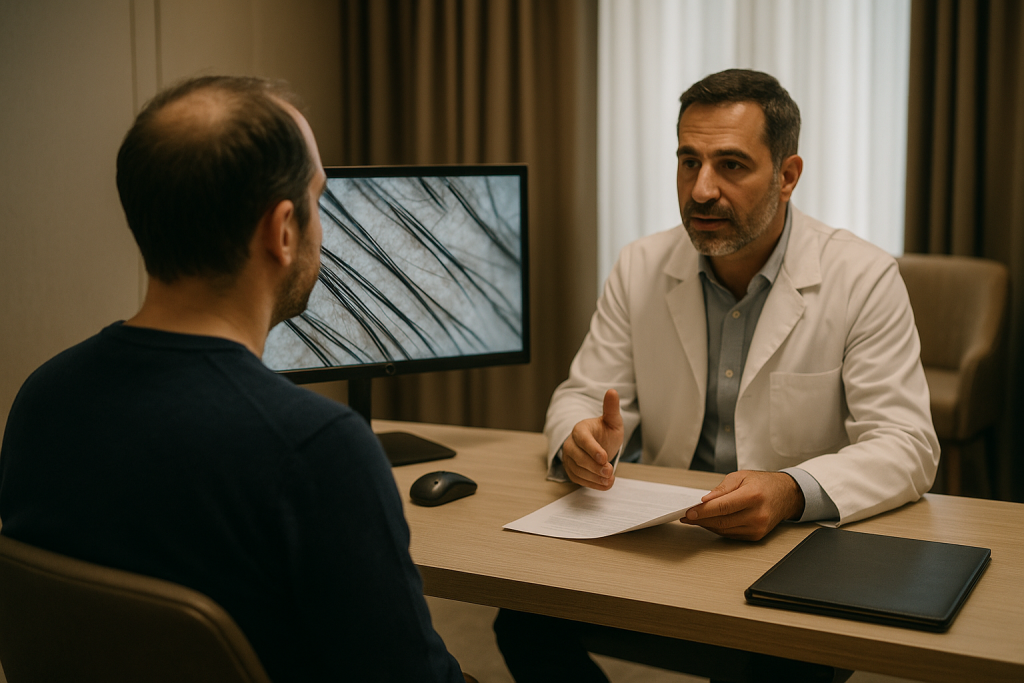
At a dedicated hair restoration clinic, the team should distinguish between a cosmetic goal and an unresolved medical issue. Trichoscopic assessment may help identify variation in hair shaft thickness, follicle density and signs of scalp inflammation. At Acibadem Hair Transplant Center in Istanbul, transplant results are measured by trichoscopic graft survival at month 12, with a documented 98% rate under written guarantee. This measurement relates to graft survival, not a promise that every patient’s overall density or future native hair loss will be the same.
Patients who are suitable for surgery may discuss techniques such as Sapphire FUE or DHI, as well as practical support including needle-free anaesthesia where appropriate. The centre is licensed by the Turkish Ministry of Health and offers all-inclusive packages with VIP transfer, a 4-star hotel, a care kit and 12 months of follow-up. These services can support the treatment journey, but they do not replace the need for a proper medical review of iron deficiency or any other cause of shedding.
08Practical Next Steps for Ongoing Shedding
If hair shedding is new, heavy or distressing, the most helpful next step is a medical review rather than self-diagnosis. Ask a doctor whether your symptoms and history suggest iron studies or other tests. Seek urgent medical attention for severe shortness of breath, fainting, chest pain, black stools, significant unexplained bleeding, or symptoms that feel severe or rapidly progressive. These symptoms require broader medical assessment and should not be managed as a hair concern alone.
While waiting for assessment, avoid aggressive hair practices that can add breakage to true shedding. Tight hairstyles, frequent chemical processing, excessive heat and harsh brushing can make fragile hair look thinner. Gentle cleansing, regular meals with adequate protein and avoiding crash diets are sensible general measures. They cannot correct a confirmed iron deficiency on their own, but they can support scalp and hair care while the underlying issue is investigated.
For international patients, a doctor-reviewed online hair analysis can be a practical starting point for discussing transplant suitability and visible thinning. Acibadem Hair Transplant Center has treated patients from 38 countries over 12 years, and WhatsApp replies are typically provided within around two hours. Any online assessment remains preliminary; blood test interpretation, diagnosis and the final decision about transplant timing should be confirmed by the treating doctor after appropriate evaluation.
09Frequently Asked Questions
Can hair lost because of iron deficiency grow back?
In many patients, hair shedding related mainly to iron deficiency may improve after the deficiency and its cause are treated. Regrowth is usually slow because the hair cycle takes months to respond. Recovery may be incomplete or less noticeable if inherited pattern hair loss or another condition is also present.
What can be the earliest signs of iron deficiency?
Early signs may include fatigue, reduced energy, headaches, dizziness, difficulty concentrating, pale skin or feeling short of breath during activity. Some people have few symptoms, and these signs can also occur with other conditions. Blood tests reviewed by a doctor are needed to confirm iron deficiency.
Which vitamin or nutrient could be low when hair is falling out?
Iron is one possible nutrient concern, but hair loss can also be associated with inadequate protein intake or low levels of nutrients such as vitamin B12, folate, vitamin D or zinc in some patients. Hair shedding also has many non-nutritional causes, including thyroid disease, stress and inherited hair loss. A clinician can decide which tests are relevant based on your history.
Which iron supplement is most suitable for supporting hair growth?
There is no universally best iron supplement for hair growth. The appropriate type and dose depend on blood test results, the severity and cause of deficiency, tolerance and other medicines. A doctor or pharmacist should recommend treatment because unnecessary iron can cause side effects and may be harmful.
Tento článok slúži len na všeobecné informačné účely a nenahrádza odbornú lekársku radu.
 06
06 12
12