V tomto článku9
- Prehľad
- Identify the Pattern Before Choosing a Treatment
- When Medical Management May Be the First Step
- Hair Transplant Planning for Receding Hairlines and Temples
- Approaching Crown Loss, Mid-Scalp Thinning, and Diffuse Density Loss
- What a Donor Area Assessment Can Tell You
- Timing, Recovery, and Realistic Expectations After Surgery
- How to Start With a Doctor-Reviewed Restoration Plan
- Frequently Asked Questions
Scalp hair restoration works best when the treatment is matched to the cause, pattern, stability, and stage of hair loss. Medical treatment may help preserve or improve existing miniaturising hair, while a transplant can redistribute permanent donor hair to selected areas when you are a suitable candidate.
- The pattern and cause of thinning should be assessed before any scalp restoration treatment is chosen.
- Early diffuse thinning, a receding hairline, crown loss, and patchy hair loss may require very different approaches.
- A hair transplant redistributes donor follicles; it does not create new follicles or stop future hair loss.
- Donor-hair quality, hair-loss stability, scalp health, and realistic goals are central to safe planning.
- A doctor-reviewed assessment can help identify whether medical care, transplantation, or a combined plan is most appropriate.
01Scalp Hair Restoration: Matching Treatment to Hair Loss Pattern
Scalp hair restoration is not one single treatment. It is a clinical process that starts by understanding why hair is becoming thinner, where the loss is located, how quickly it has progressed, and whether the follicles in the affected area are still active. A natural-looking plan should match the treatment to the pattern rather than applying the same solution to every patient. This is especially important because hair loss may continue after an initial consultation, even when a transplant is being considered.
In many adults, thinning follows a recognisable pattern. Some people first notice a higher or uneven frontal hairline. Others see widening at the temples, reduced density through the mid-scalp, or a circular thinning area at the crown. Women may more often report a widening part line or diffuse reduction in volume across the top of the scalp. These visual patterns give useful clues, but a pattern alone does not confirm the medical cause.
A proper assessment also considers your age, family history, general health, medication history, recent illness, nutritional factors, hormonal changes, styling habits, and symptoms such as itching, scaling, redness, or sudden shedding. Your doctor may recommend further medical evaluation when the history suggests a non-pattern cause of hair loss. The most suitable plan is therefore individual, and it should protect both your current hair and your long-term donor supply.
02Identify the Pattern Before Choosing a Treatment
Androgenetic hair loss, often called male- or female-pattern hair loss, is one of the most common reasons for progressive thinning. In genetically susceptible follicles, the growth phase becomes shorter over time and individual hairs become finer. This process is called miniaturisation. It can affect the hairline, temples, crown, mid-scalp, or the central part line, depending on the person.
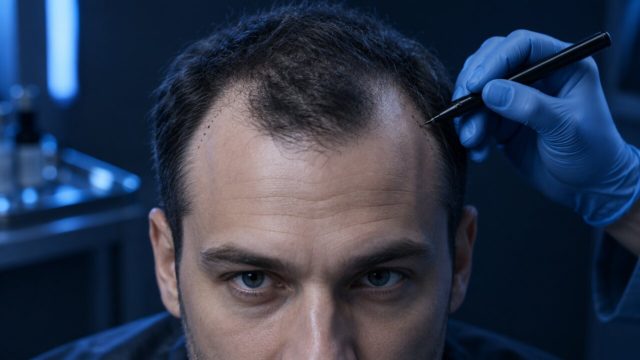
A receding hairline and temple loss may be very visible even when overall density remains good. In this situation, careful hairline design is important because a low or overly dense hairline may not remain appropriate if surrounding native hair thins later. Doctors generally consider facial proportions, likely future loss, donor capacity, hair calibre, and the patient’s age before deciding how much frontal restoration is sensible.
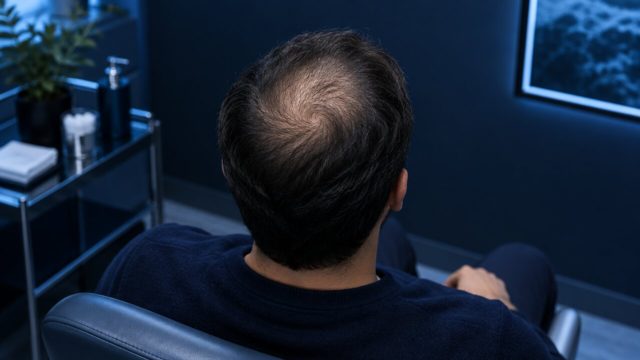
Crown thinning is different from hairline loss because the natural whorl direction and the large surface area can require many grafts to create a useful visual change. Diffuse thinning also needs special attention. When weak native hairs are present throughout the recipient area, an operation may need to be planned conservatively to reduce the risk of temporary shock loss and to preserve options for the future.
03When Medical Management May Be the First Step
Medical management may be considered when follicles are still present but producing progressively finer hair. In suitable patients, doctor-guided treatment can help slow further miniaturisation and may improve the appearance of existing hair over time. Results vary between individuals, and any medicine has possible risks, limitations, and eligibility criteria that should be discussed directly with a qualified doctor.
This approach can be particularly relevant for early thinning, diffuse loss, rapid recent progression, or patients who do not yet have stable enough hair loss for surgery. It may also support a transplant plan by helping preserve non-transplanted native hair around the treated area. Medical care is not an instant solution, and visible changes usually need time, regular use where prescribed, and follow-up assessment.
Not every form of shedding should be treated as genetic hair loss. Sudden widespread shedding after illness, major stress, childbirth, weight change, or a medical event may have another explanation. Patchy bald areas, scalp discomfort, scaling, scarring, or eyebrow and body-hair loss can also require medical investigation. In these circumstances, treating the underlying condition takes priority over cosmetic restoration.
04Hair Transplant Planning for Receding Hairlines and Temples
For selected candidates with stable frontal recession, a hair transplant can restore the frame of the face by moving follicles from the permanent donor area to the hairline and temples. The objective is usually not to recreate the density of adolescence. Instead, the surgical team aims for an age-appropriate, irregular, soft hairline that blends with existing hair and leaves donor reserves for possible future needs.
Scalp hair restoration through transplantation depends heavily on graft placement. Single-hair follicular units are commonly used at the leading edge to avoid a harsh, plug-like appearance, while naturally occurring multi-hair units may be placed behind them to build density. Angle, direction, and spacing must follow the natural growth pattern. Even a technically successful graft can look unnatural if these design details are not respected.
Sapphire FUE and DHI are two techniques available at Acibadem Hair Transplant Center in Istanbul. The appropriate method depends on factors such as the recipient area, hair characteristics, scalp condition, graft requirements, and the surgeon’s treatment plan. Needle-free anaesthesia is also available for eligible patients. Your doctor will explain which steps may be suitable for your situation and what the expected recovery process involves.
05Approaching Crown Loss, Mid-Scalp Thinning, and Diffuse Density Loss
Crown restoration often requires a different strategy from frontal work. The crown is a broad, curved area with a spiral growth pattern, and it may continue to enlarge as genetic hair loss progresses. For this reason, doctors usually balance the desire for crown coverage with the need to reserve grafts for the front and mid-scalp, where hair loss can have a stronger effect on facial framing.
The mid-scalp connects the frontal hairline to the crown, so density loss in this region can make both areas appear thinner. In some patients, a staged approach is considered. For example, the first priority may be improving the frontal zone, while medical management and monitoring continue for the crown. In others, grafts may be distributed across several zones for a more balanced appearance rather than creating maximum density in only one small area.
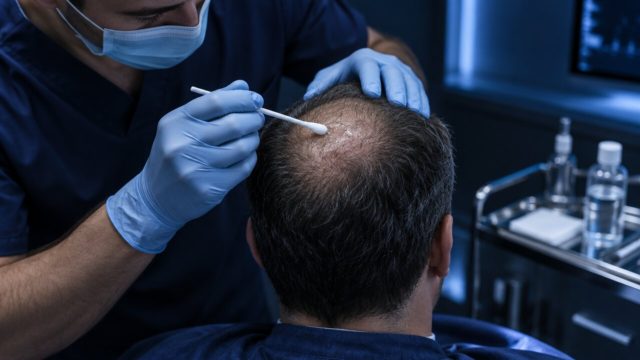
Diffuse thinning can be more complex because it may involve both the donor and recipient regions. A donor area that appears full from a distance may still contain miniaturised hairs on close examination. Trichoscopic assessment can help evaluate hair calibre variation, density, and donor stability. If the donor region is not reliable, a transplant may not be appropriate, or the surgical design may need to be more conservative.
06What a Donor Area Assessment Can Tell You
A hair transplant redistributes follicles from one part of the scalp to another; it does not generate an unlimited new supply of hair. The back and sides of the scalp are commonly assessed because follicles there are often more resistant to pattern hair loss. However, donor quality differs considerably between patients, and not every person has enough stable donor hair to achieve every requested goal.
During planning, clinicians look at donor density, hair thickness, curl or wave, contrast between hair and scalp colour, scalp flexibility, and the possibility of future progression. Coarser or curlier hair may provide more visual coverage per graft than very fine straight hair, but every characteristic has to be evaluated in context. The safe number of extractable grafts is determined clinically, not simply by the size of the area a patient wants covered.
Overharvesting can make the donor region look thin, which is why responsible planning should be long term. At Acibadem Hair Transplant Center, results are measured by trichoscopic graft survival at month 12, with a documented 98% rate under a written guarantee. This measurement relates to graft survival and should not be interpreted as a guarantee of a particular cosmetic appearance, density, or future stability of native hair.
07Timing, Recovery, and Realistic Expectations After Surgery
Timing matters because transplanted hair and native hair follow different paths. A transplant may move genetically resistant follicles into a thinning zone, but it does not necessarily prevent continued loss of nearby non-transplanted hair. For patients with active pattern loss, doctors may discuss medical management, a conservative design, or waiting until the pattern is clearer before proceeding with surgery.
After a transplant, temporary redness, crusting, and shedding of the transplanted shafts can occur as part of normal healing. New growth is gradual, not immediate. The exact timeline varies, but visible maturation commonly continues over many months, and final assessment is often made around month 12. Your clinical team should provide clear aftercare instructions and tell you when to contact them about symptoms that seem unusual or concerning.
Realistic expectations are a core part of safe scalp hair restoration. The available donor supply may not allow full coverage of every thin area at youthful density, especially in advanced loss. A good outcome is generally based on an appropriate hairline, strategic coverage, natural direction, and a plan that can still make sense if hair loss progresses. Before-and-after images, when reviewed, should be understood as individual examples rather than promises of identical results.
08How to Start With a Doctor-Reviewed Restoration Plan
The best first step is an assessment that identifies your hair-loss pattern and checks whether the scalp is suitable for medical care, surgery, or both. Clear photographs can help an initial review, although they cannot replace an in-person clinical examination when one is needed. Be prepared to share when the thinning began, whether it is progressing, any family history, medicines, prior procedures, and scalp symptoms.
Acibadem Hair Transplant Center is a dedicated hair restoration clinic in Istanbul, licensed by the Turkish Ministry of Health. The clinic has treated patients from 38 countries over 12 years and offers a free online hair analysis reviewed by doctors, with WhatsApp replies typically within around two hours. This initial review can help you understand the next appropriate questions to ask before making travel or treatment decisions.
For international patients, all-inclusive packages can include VIP transfer, a 4-star hotel, a care kit, and 12 months of follow-up. The details of any package, medical suitability, technique, treatment schedule, and written guarantee should always be confirmed directly with the clinic. A careful plan should place health, donor preservation, and natural long-term results before a quick or overly aggressive change.
09Frequently Asked Questions
Can scalp hair be regrown?
In some cases, existing miniaturised follicles may respond to doctor-guided medical treatment, particularly when hair loss is identified early. However, results depend on the cause of loss, follicle activity, consistency of treatment, and individual factors. Areas where follicles are no longer active may not regrow hair on their own, and a transplant may be considered for suitable candidates.
How much does 3,000 hair grafts cost?
The cost of 3,000 grafts varies widely because it depends on the country, clinic standards, technique, medical complexity, donor characteristics, included services, and follow-up care. A graft number alone does not show whether that number is medically appropriate for your pattern. Request an individual written quotation after a doctor-reviewed assessment rather than relying on a general online price.
What did Elon Musk use to regrow his hair?
There is no confirmed public medical record explaining which treatment or treatments Elon Musk may have used. Public photographs can suggest that a person’s appearance has changed, but they cannot confirm whether this was due to transplantation, medication, styling, lighting, or another factor. It is better to base your own decision on a clinical assessment rather than celebrity speculation.
What did Matthew McConaughey do to regrow hair?
Matthew McConaughey has publicly discussed his own views about hair regrowth, but there is no independently verified medical information that can confirm a specific treatment outcome or make it suitable for others. Hair loss has different causes, and a method described by a celebrity may not be medically appropriate or effective for another person. A doctor can help identify the cause of your thinning and discuss evidence-based options.
Tento článok slúži len na všeobecné informačné účely a nenahrádza odbornú lekársku radu.
Tento sprievodca slúži na všeobecné informovanie a nenahrádza lekársku konzultáciu. O liečbe sa rozhoduje po osobnom alebo online posúdení lekárom.