
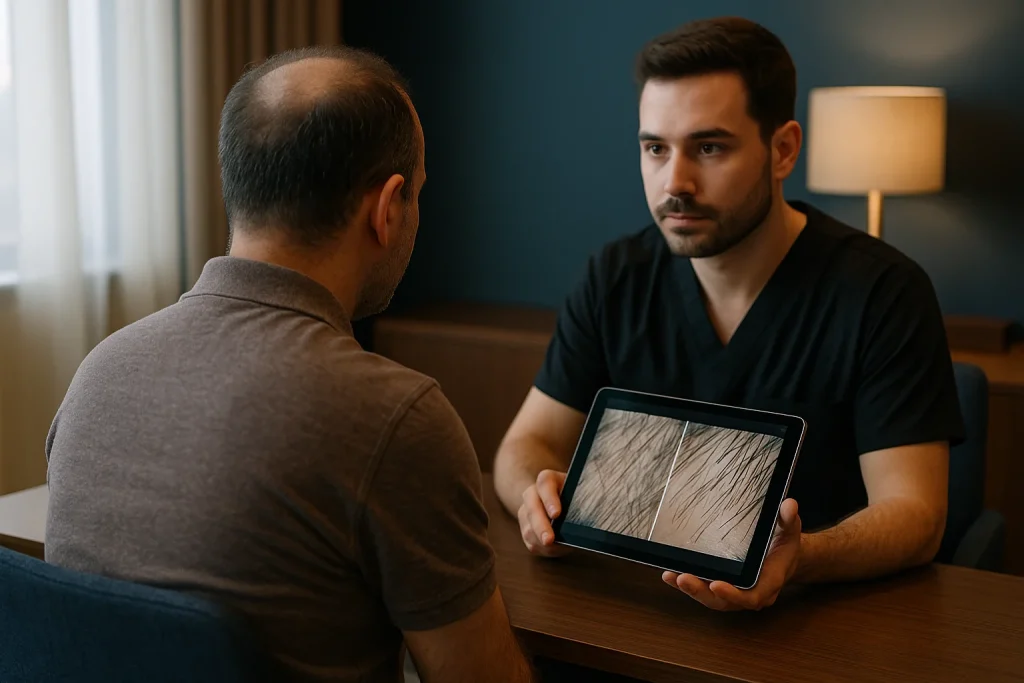
Hair fall from stress is often temporary, but it is important to identify the cause before making hair transplant plans. A doctor can assess whether shedding is likely to settle, whether pattern hair loss is also present, and when transplant planning may be appropriate.
- Stress-related shedding often appears several weeks or months after a stressful event, illness, or major life change.
- Temporary shedding does not always mean permanent follicle damage, but an assessment can help rule out other causes.
- A hair transplant does not usually stop active stress-related shedding in non-transplanted hair.
- Stable hair loss patterns, a healthy donor area, and realistic goals are important before transplant planning.
- Professional evaluation is especially important if shedding is sudden, severe, patchy, or accompanied by scalp symptoms.
01Stress-Related Hair Shedding Before Hair Transplant Planning
Hair fall from stress can be worrying, particularly when you are already considering a hair transplant. In many people, stressful events can trigger a temporary increase in shedding rather than permanent loss of every affected follicle. However, stress-related shedding can overlap with genetic pattern hair loss, nutritional concerns, hormonal changes, scalp conditions, or medical illness. For this reason, it is sensible to understand why the shedding started before deciding on the timing of a transplant procedure.
Hair grows in repeating phases. Most scalp hairs are normally in the active growth phase, while a smaller number are resting or shedding. A major physical or emotional strain may shift more follicles into a resting phase at the same time. When those hairs are released later, the shedding may look dramatic in the shower, on a pillow, or while brushing. This process is commonly called telogen effluvium, although only a qualified clinician can confirm whether this is the cause in an individual case.
A hair transplant is designed to redistribute healthy follicles from the donor area, usually at the back and sides of the scalp, into selected thinning areas. It does not remove the underlying reason for active shedding. If hair loss is still changing quickly, planning the hairline or estimating the number of grafts may be less predictable. Taking time to evaluate the pattern can support a more careful and sustainable treatment plan.
At Acibadem Hair Transplant Center, international patients can begin with a free online hair analysis reviewed by doctors. Clear scalp photographs and a medical history can help the team understand whether a consultation for transplant planning is appropriate at that stage. This first review does not replace an in-person medical examination, but it can help identify relevant questions before travel.
02How stress can change the normal hair growth cycle
Stress does not affect every person’s hair in the same way. Physical stress may include fever, surgery, a serious infection, rapid weight change, sleep disruption, childbirth, or a demanding recovery period. Emotional stress can also contribute to shedding in some people, especially when it is prolonged or combined with poor sleep, reduced appetite, or changes in daily routines. The body’s response can influence the timing of the hair cycle, but the exact effect varies from person to person.
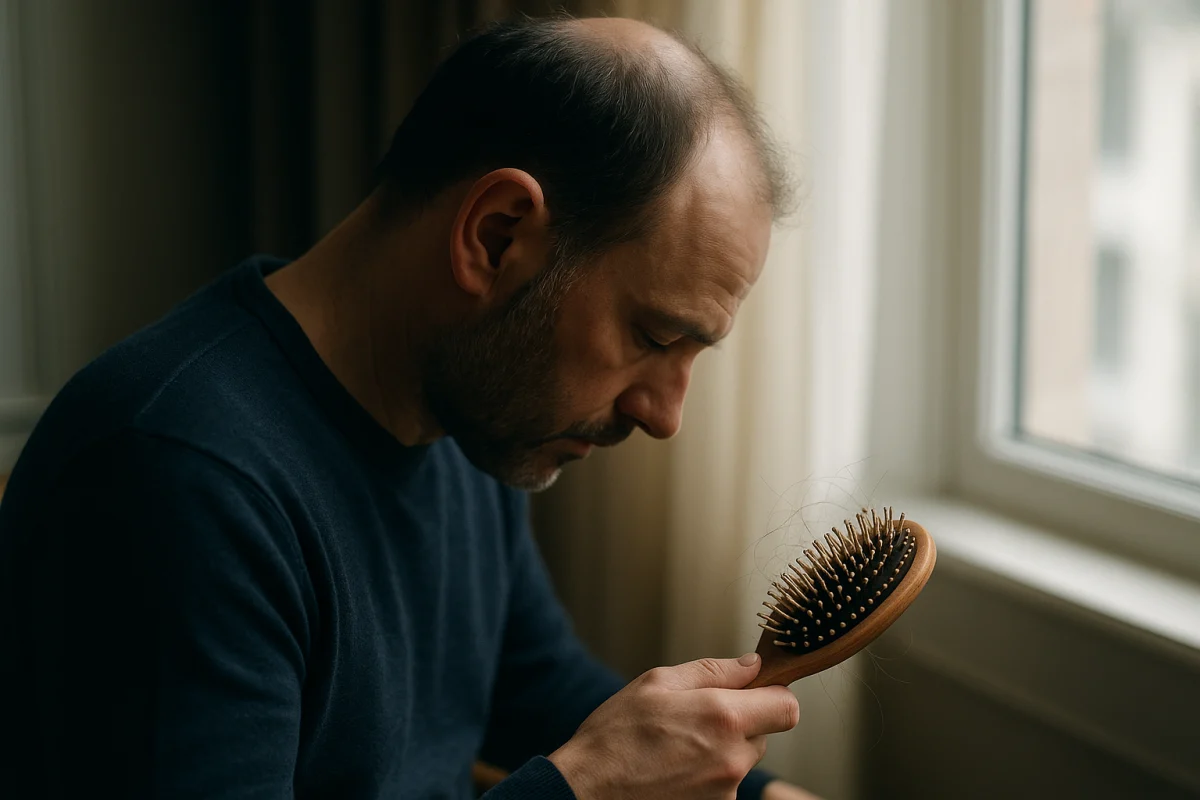
With telogen effluvium, increased shedding often becomes noticeable around two to three months after the triggering event. This delay can make the cause difficult to recognise. Someone may feel better after an illness or intense period at work, then become concerned when more hair begins to fall. The shedding is often diffuse, meaning it is seen across much of the scalp rather than only in a clearly defined bald patch.
Chronic stress may have a different impact because it can continue to disturb sleep, eating habits, scalp care, and general wellbeing over a longer period. It may also make an existing tendency towards androgenetic hair loss more noticeable. Genetic pattern hair loss typically follows a recognisable distribution, such as thinning at the temples, crown, or central parting, whereas stress shedding more often causes a broader reduction in density. These patterns can occur together.
It is also important not to assume that every episode of shedding is caused by stress. Iron deficiency, thyroid disorders, hormonal changes, inflammatory scalp conditions, restrictive diets, certain medicines, and other health concerns may contribute. A doctor may recommend a clinical assessment or appropriate blood tests based on your symptoms and medical history. Identifying a possible trigger supports safer hair restoration planning.
03Recognising signs that need medical assessment
It is reasonable to seek medical advice when shedding is sudden, very heavy, persistent, or difficult to explain. You may notice a wider parting, lower overall volume, more hairs on your hands after washing, or shedding from areas beyond the scalp. These signs do not automatically indicate a serious condition, but they deserve appropriate assessment before cosmetic treatment decisions are made.
Patchy hair loss should be assessed promptly because it may not follow the usual pattern of stress-related diffuse shedding. Round or irregular bald areas, scalp pain, redness, scaling, itching, pustules, or scarring need medical attention. These features can suggest a scalp disorder or another type of hair loss that requires a different approach. A transplant should not be planned simply to cover a condition that has not yet been diagnosed or stabilised.
People who have recently had a major illness, a hospital admission, significant weight loss, childbirth, or a marked dietary change may also benefit from discussing the timing of their hair loss with a doctor. The aim is not to create unnecessary concern. It is to make sure that possible reversible contributors are considered and that general health is supported before an elective procedure.
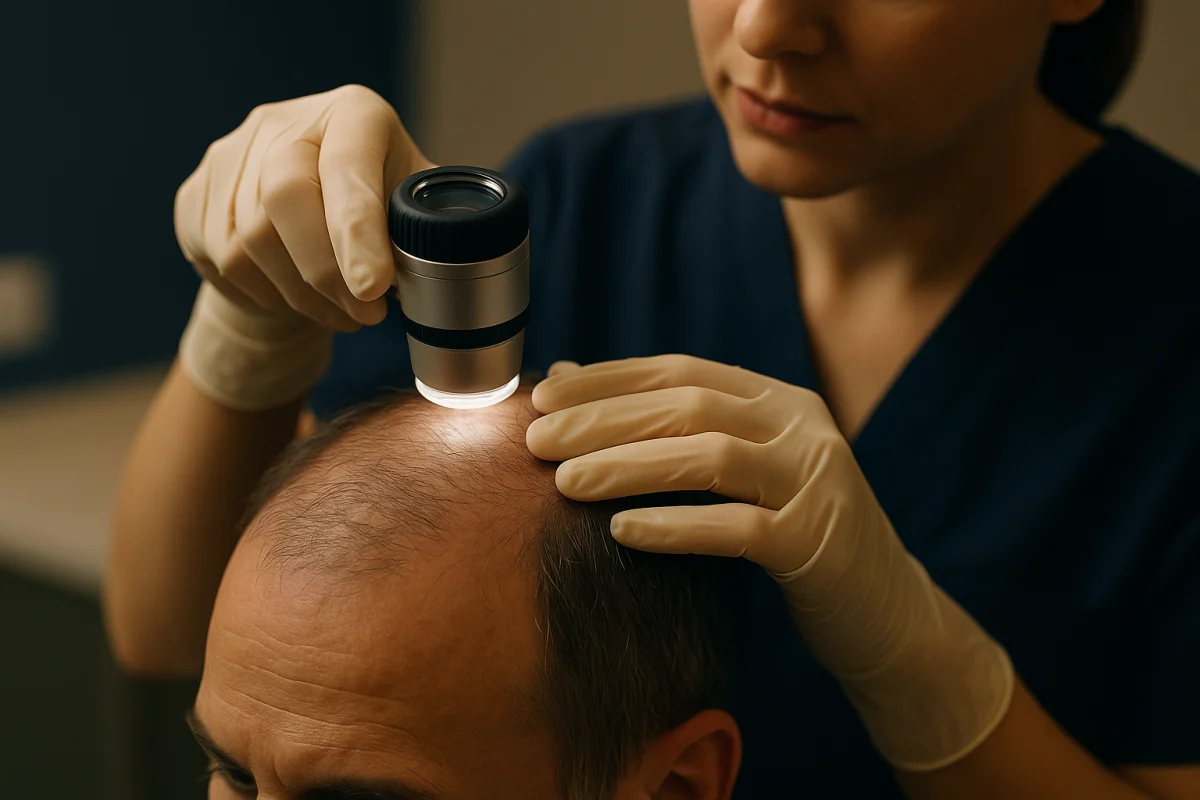
During a hair restoration consultation, the clinician may look at the distribution of thinning, the condition of the scalp, family history, donor density, and signs of miniaturisation. Trichoscopy, which uses magnification to examine the scalp and hair shafts, can provide useful information about the type of hair loss. Your doctor will confirm which examinations are relevant for you and whether a transplant consultation should proceed now or be reconsidered later.
04hair fall from stress and genetic pattern hair loss
Hair fall from stress may draw attention to genetic pattern hair loss that was already developing gradually. A person may have mild temple recession or crown thinning for years without focusing on it. When diffuse shedding occurs after a stressful period, the contrast can make the underlying pattern appear more obvious. This does not mean that stress has created hereditary hair loss, but it can reveal reduced density that was previously easier to style around.
Genetic pattern hair loss involves gradual follicle miniaturisation in areas that are genetically sensitive. Over time, hairs can become finer, shorter, and less visible. In contrast, stress-related shedding often releases full-length hairs from across the scalp. A clinician will consider both the visual pattern and the history of when the change began. Photographs taken over time can be helpful because they may show whether thinning was present before the recent shedding episode.
The distinction matters for transplant planning. If the main issue is temporary diffuse shedding, it may be better to monitor recovery before calculating the final area that needs coverage. If pattern hair loss is confirmed and stable enough for planning, a transplant may be considered as part of a broader, long-term strategy. The donor supply must be protected because it is limited and needs to be used carefully.
A responsible plan also considers future change. Transplanted hair is generally selected from areas that are more resistant to pattern loss, but native hair around it can continue to thin in susceptible patients. A conservative hairline and realistic density goals can help the result remain more natural if future loss occurs. No clinic can guarantee that native hair loss will stop after surgery.
05When to pause hair transplant planning
Active shedding does not always mean that a hair transplant is impossible, but it may mean that waiting is the more cautious option. When hair density is changing rapidly, the boundaries of the thinning area can be unclear. This can make graft estimates less reliable and may increase the chance that a plan designed today will not match the scalp’s needs later. A period of observation may provide more useful information.
Many clinicians prefer to see that the cause of diffuse shedding has been addressed or that the pattern has become more stable before elective surgery. The appropriate waiting period depends on the suspected cause, the rate of shedding, your medical history, and the condition of the donor area. There is no single timetable that suits everyone. Your doctor will confirm whether the current situation is suitable for planning.
Stress can also affect practical readiness for a procedure. Hair restoration requires preparation, aftercare, and patience while the early healing and growth phases take place. If you are in the middle of an acute personal, medical, or work-related crisis, postponing an elective procedure may help you focus on recovery and follow-up. This is a practical consideration rather than a judgement about your ability to have treatment.
For patients who are ready to explore their options, Acibadem Hair Transplant Center is a dedicated hair restoration clinic in Istanbul licensed by the Turkish Ministry of Health. The clinic offers Sapphire FUE and DHI techniques, with suitability determined through medical assessment rather than personal preference alone. Needle-free anaesthesia is also available for eligible patients as part of the comfort discussion.
06Supporting scalp and general health while shedding settles
There is no instant method that can stop all shedding caused by stress. The most helpful approach is usually to address the potential trigger and support general health. Regular meals with adequate protein and varied nutrients, hydration, sufficient sleep, and manageable physical activity can support overall wellbeing. If there is concern about a deficiency or medical condition, it is better to discuss it with a doctor rather than starting high-dose supplements without guidance.
Gentle hair care may reduce unnecessary breakage while the scalp is shedding. Avoiding very tight hairstyles, repeated heat exposure, harsh chemical processing, and forceful brushing may be sensible. Breakage is not the same as hair shedding from the root, but both can make hair look thinner. A mild routine that feels comfortable for your scalp is usually easier to maintain during a stressful period.
Managing stress is not simply a cosmetic step; it can be part of general health care. Some people benefit from creating a more regular sleep routine, speaking with trusted people, taking breaks from demanding schedules, or seeking support from a qualified mental health professional. The right approach depends on the cause and severity of stress. Urgent mental health concerns should be discussed with an appropriate healthcare service.
If a doctor identifies pattern hair loss alongside temporary shedding, they may discuss medical or non-surgical options that are suitable for your situation. These options have potential benefits, limitations, and possible side effects, so they should be considered individually. Online claims about universal cures for hair fall from stress should be viewed carefully, especially if they promise rapid regrowth or recommend unverified treatments.
07What a careful pre-transplant assessment should include
A good pre-transplant assessment begins with your history. The clinician may ask when shedding began, whether it followed illness or a major life event, whether it is still active, and whether there is a family history of thinning. They may also ask about medicines, recent changes in weight or diet, hormonal events, scalp symptoms, and previous hair treatments. Honest answers help create a safer and more realistic plan.
The scalp examination should assess both the recipient area and the donor area. The donor area is not an unlimited source of hair, so its density, hair calibre, and long-term stability are important. The recipient area needs to be evaluated for active inflammation, scarring, diffuse thinning, and the likely future pattern of loss. A plan based only on a close-up front photograph is not enough for a final surgical decision.
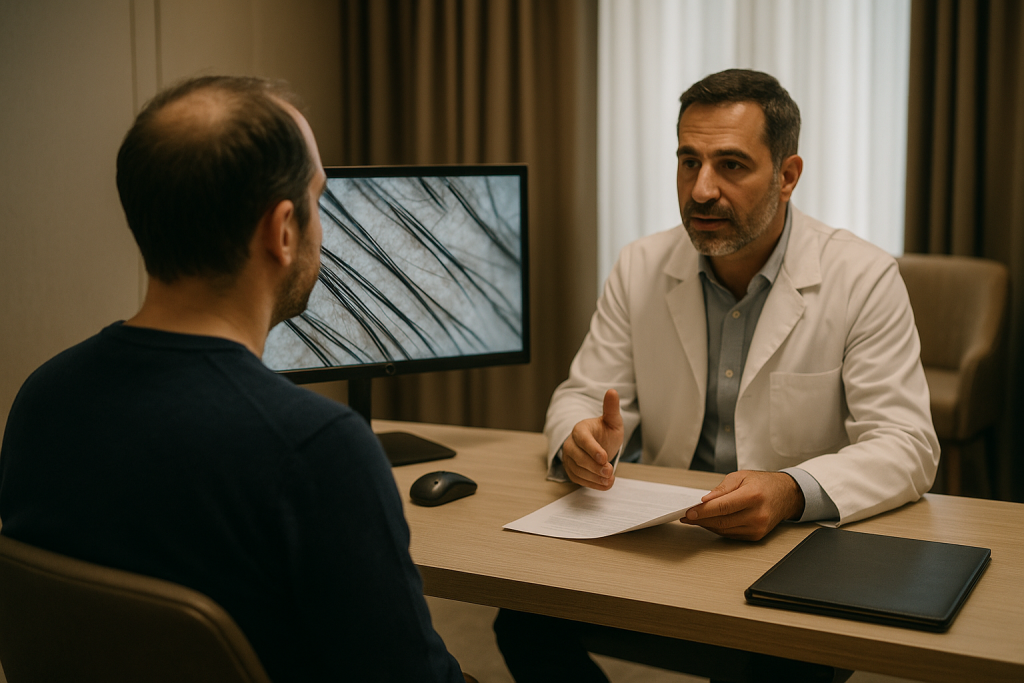
Trichoscopic assessment can help document hair characteristics and monitor progress over time. At Acibadem Hair Transplant Center, results are measured by trichoscopic graft survival at month 12, with a documented 98% rate under written guarantee. This measurement relates to graft survival in the clinic’s documented protocol and should not be understood as a promise that every patient will achieve the same cosmetic density, growth pattern, or long-term native hair stability.
Patients travelling from abroad should also discuss practical matters, including the length of stay, aftercare responsibilities, and follow-up communication. The clinic has welcomed patients from 38 countries over 12 years and provides all-inclusive packages that can include VIP transfer, a 4-star hotel, a care kit, and 12 months of follow-up. The exact package and medical plan should always be confirmed directly with the clinic.
08Setting realistic expectations after stress-related shedding
Even when stress-related shedding improves, hair recovery is gradual because follicles need time to return to their normal growth cycle. New hairs may initially appear fine and short before contributing noticeable volume. The visible timeline differs between patients and depends on the trigger, whether the trigger has resolved, baseline hair density, and whether another form of hair loss is present. A clinician can help set realistic expectations without promising a fixed result.
If a transplant is eventually recommended, it is important to understand that it addresses selected thinning areas by moving follicles rather than increasing the total number of hairs on the scalp. The goal is typically to create natural-looking coverage and framing with the available donor supply. Achievable density depends on many factors, including hair characteristics, scalp contrast, the size of the area, and the number of grafts considered medically appropriate.
After a transplant, temporary shedding of some existing native hairs can occur in the treated region. This is one reason why assessing pre-existing diffuse shedding and pattern loss is valuable before surgery. Your surgical team will explain expected healing, washing guidance, activity restrictions, and the usual growth stages. Following the aftercare plan carefully supports the recovery process, although individual outcomes can vary.
A free online hair analysis can be a useful first step if you are unsure whether current shedding makes transplant planning premature. At Acibadem Hair Transplant Center, doctor-reviewed enquiries generally receive a WhatsApp reply within around two hours. Sharing clear information about stress, illness, recent shedding, and your hair history can help the team guide you towards an appropriate next step.
09Frequently Asked Questions
Does stress-related hair loss usually grow back?
In many cases, temporary stress-related shedding improves after the triggering factor settles and the hair cycle gradually returns to normal. Visible recovery can take time, and some people may also have genetic pattern hair loss or another contributor affecting density. A doctor can assess the likely cause and whether further investigation is needed.
Can anxiety lead to increased hair shedding?
Anxiety may contribute to hair shedding indirectly or directly, particularly when it is persistent and affects sleep, appetite, daily routines, or overall wellbeing. It can also occur alongside other physical stressors that influence the hair cycle. Because shedding has several possible causes, it is best not to assume anxiety is the only explanation without medical assessment.
What can long-term stress do to the hair and scalp?
Chronic stress may contribute to ongoing diffuse shedding in some people and may make existing hair thinning more noticeable. It can also affect self-care habits, nutrition, sleep, and scalp comfort, which may influence how hair looks and feels. Persistent shedding or scalp symptoms should be discussed with a qualified healthcare professional.
What are sensible ways to reduce hair loss?
The most appropriate approach depends on the cause of hair loss. Supporting sleep, nutrition, stress management, and gentle hair care may be helpful, while a doctor can investigate medical, hormonal, nutritional, or scalp-related factors when appropriate. Avoid relying on products that promise guaranteed regrowth, and seek assessment if loss is sudden, patchy, severe, or persistent.
Should I have a hair transplant while my hair is shedding?
Not always. If shedding is active or the cause is unclear, a doctor may recommend evaluation and a period of observation before finalising a transplant plan. Stable hair loss patterns and a healthy donor area usually allow for more accurate graft planning and more realistic expectations.
This article is for general information only and is not a substitute for professional medical advice.
 06
06 12
12