In this article9
- Understanding a Receding Hairline and Why It Happens
- The Main Surgical Approaches for Hairline Restoration
- Receding Hairline Surgery: When a Hair Transplant May Be Considered
- Who May Not Be Ready for Surgery Yet
- How Doctors Plan a Natural-Looking Hairline
- Procedure Day, Healing, and the Growth Timeline
- Medical Treatment and Non-Surgical Support for a Receding Hairline
- Costs, Travel Planning, and Choosing a Safe Clinic
- Frequently Asked Questions
Receding hairline surgery may be an option for people with stable hair loss, adequate donor hair, good general health, and realistic expectations. The most suitable approach depends on the cause of hairline change, scalp characteristics, future hair-loss risk, and whether a natural-looking long-term design is possible.
- Hair transplantation and surgical hairline lowering are different procedures that may suit different concerns.
- A stable pattern of hair loss and a healthy donor area are important factors when considering surgery.
- A conservative, age-appropriate hairline design can help protect a natural appearance if hair loss progresses.
- Medical treatment may be recommended before or alongside surgery when ongoing hair loss is present.
- A doctor-led assessment is needed to confirm whether surgery is appropriate and to plan graft requirements safely.
01Understanding a Receding Hairline and Why It Happens
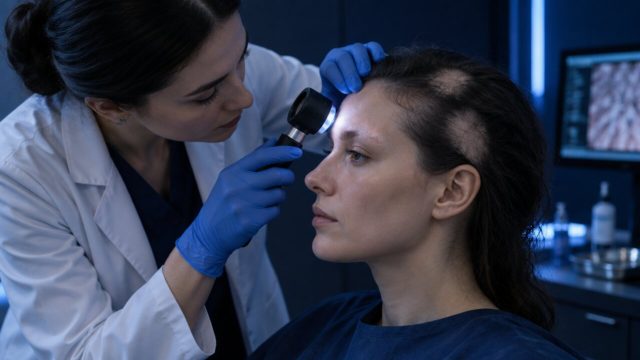
A receding hairline can develop gradually at the temples, across the frontal hairline, or in a pattern that makes the forehead appear wider. Receding hairline surgery is not automatically the first or best answer for every person, because hairline change may have several causes. A clinical assessment helps identify whether the change is linked to pattern hair loss, traction, inflammation, previous scarring, hormonal influences, or a naturally high hairline. Understanding the cause is important before discussing any procedure.
In many men, a mature hairline develops from the late teenage years into adulthood. This often creates mild recession at both temples and a higher frontal line than during childhood. A mature hairline can be a normal feature and does not always mean that significant hair loss will continue. However, progressive recession, thinning behind the hairline, or a strong family history of pattern hair loss may suggest that future changes should be considered when planning treatment.
Women may also notice frontal thinning, temple recession, a widening part line, or hairline changes caused by repeated tension from hairstyles. Tight braids, ponytails, extensions, and certain headwear habits can contribute to traction-related loss in some people. Inflammatory scalp conditions and scarring disorders can also affect the hairline. These concerns require careful medical review, because surgery is generally considered only when the underlying condition is stable and the scalp is healthy.
The emotional impact of a changing hairline can be significant. Some people feel less confident in photographs, avoid certain hairstyles, or worry that they look older than they feel. These feelings are valid, but a safe treatment plan should focus on long-term suitability rather than a quick cosmetic change. Your doctor will usually assess the scalp, hair density, donor area, medical history, and likely future pattern before recommending surgical or non-surgical options.
02The Main Surgical Approaches for Hairline Restoration
Hair transplantation is the most commonly discussed surgical option for a receding hairline caused by stable pattern hair loss. During this procedure, naturally growing follicular units are moved from a donor area, usually at the back or sides of the scalp, to areas of thinning or recession. The transplanted follicles are placed individually to create a softer and more natural transition at the frontal hairline. The technique does not create new hair; it redistributes available donor hair.
Sapphire FUE is one method used to remove and place grafts with fine instruments. It may be considered for patients who need detailed placement along the temples or frontal zone, where graft angle, direction, and distribution are especially important. DHI is another technique that may be used in selected cases, allowing grafts to be implanted with controlled placement. The most appropriate technique depends on the individual scalp, donor supply, hair characteristics, and treatment goals rather than on a single technique being suitable for everyone.
For people with a naturally high forehead and a stable, dense frontal hairline, surgical hairline lowering may be another option. This procedure, sometimes called forehead reduction or scalp advancement, involves moving the hair-bearing scalp forward to reduce forehead height. It is not designed to treat active pattern hair loss, and it may not be appropriate for people whose hairline is continuing to recede. Scalp flexibility, hair density, scar-healing tendency, and long-term stability are key assessment points.
In selected situations, a combined approach may be discussed. For example, scalp advancement may address forehead height while carefully placed grafts can soften the transition, refine temple points, or help conceal a scar after healing. This is a more complex decision and requires realistic planning. A surgeon should explain the possible benefits, limitations, healing process, and the possibility that future hair loss could change the appearance of the result.
03Receding Hairline Surgery: When a Hair Transplant May Be Considered
Receding hairline surgery with transplantation may be considered when hair loss is reasonably stable, the donor area has sufficient density, and the person understands that native hair can continue to thin over time. Doctors often look for a pattern that is clear enough to plan safely, especially in younger patients. A very low hairline may look attractive in the short term but can become less natural if recession continues behind it later.
Good donor hair is one of the most important requirements. The donor area must contain enough healthy follicles to support the proposed design while still maintaining an acceptable appearance after extraction. Hair texture, curl, colour contrast between hair and scalp, and shaft thickness can all influence visual coverage. A person with limited donor reserves may need a more conservative hairline or may be advised to focus on another area of concern first.
The condition of the scalp also matters. Active inflammation, untreated infection, uncontrolled skin disease, or certain forms of scarring hair loss can affect safety and graft survival. If a scalp condition is suspected, it should be assessed and managed before surgery is considered. A doctor may also review medications, medical conditions, smoking status, previous procedures, and factors that could affect wound healing or anaesthesia planning.
Expectations should be realistic and specific. A transplant can improve the shape and density of a receding hairline, but it cannot usually recreate the very dense, low juvenile hairline seen in adolescence. A well-planned result normally uses fine single-hair grafts at the leading edge and a gradual increase in density behind them. The goal is usually a balanced hairline that suits the face today and remains appropriate if hair loss changes in the future.
04Who May Not Be Ready for Surgery Yet
People in their late teens or early twenties may have early hairline changes that are still developing. Age alone does not decide eligibility, but a rapidly changing pattern can make permanent surgery difficult to plan. If the hairline is likely to continue moving back, placing grafts too low or too densely at the front may create an isolated appearance later. In these cases, doctors may recommend monitoring the pattern and discussing medical management before making a surgical decision.
Ongoing diffuse thinning can also require caution. When hair is becoming thinner across a wide area, it may be difficult to predict where future loss will occur or how much donor hair will be needed. Some patients may still qualify for a transplant, but the design may need to be conservative and staged. Others may benefit from addressing the cause of thinning first and reassessing once the condition is more stable.
A limited donor area may reduce the number of grafts that can be safely harvested. This can happen because of naturally low density, prior hair transplant procedures, scalp scarring, or extensive hair loss. A responsible assessment should not promise coverage that the donor supply cannot support. Instead, it should explain the likely trade-offs between hairline position, density, crown coverage, and preservation of donor hair for the future.
Surgery may also be postponed when expectations are not aligned with what can be achieved. This does not mean that a person’s concern is unimportant. It means that more discussion, non-surgical support, or a revised treatment goal may be needed. A careful consultation should leave patients with a clear understanding of what the procedure may improve, what it cannot change, and what maintenance may be required over time.
05How Doctors Plan a Natural-Looking Hairline
Hairline planning is both a medical and aesthetic process. The doctor will usually consider facial proportions, forehead shape, age, ethnicity, natural hair direction, existing temple recession, and the likely future pattern of loss. Rather than drawing one straight line across the forehead, the design generally includes small irregularities and gradual transitions that resemble natural hair growth. This helps avoid an artificial or overly sharp appearance.
The position of the hairline is especially important. A lower line may seem desirable at first, but it can use a large number of grafts and may not remain suitable if hair loss continues. For this reason, doctors commonly recommend an age-appropriate and conservative design. The temples may also need careful planning because they frame the face and can be difficult to restore convincingly without sufficient donor hair and precise graft direction.
Graft selection affects the final result. Fine, single-hair follicular units are often used at the foremost edge to create softness. Groups containing more hairs may be placed behind this area to build density. The angle at which each graft is implanted also matters, as frontal hair typically grows forward and then blends into the surrounding pattern. A successful-looking hairline depends on these small details as much as the number of grafts used.
At Acibadem Hair Transplant Center, patients can request a free online hair analysis that is reviewed by doctors. Photographs and medical information shared during this process can help identify whether an in-person assessment may be appropriate, although a final treatment plan requires direct clinical evaluation. The team typically replies on WhatsApp within around two hours, helping international patients begin the information-gathering process before travelling to Istanbul.
06Procedure Day, Healing, and the Growth Timeline
A hair transplant for the frontal hairline is usually performed as an outpatient procedure. The treatment day commonly includes donor-area preparation, extraction of follicular units, preparation of the recipient area, and detailed graft placement. Needle-free anaesthesia may be available for eligible patients, although the anaesthesia approach and its suitability should always be confirmed during the medical assessment. The exact duration varies according to the number of grafts, chosen method, and complexity of the design.
In the first days after transplantation, small crusts, redness, swelling, or temporary sensitivity can occur. Patients are typically given aftercare instructions about washing, sleeping position, physical activity, sun exposure, and avoiding friction on the grafted area. Following these instructions closely is important because newly placed grafts need time to settle. Your medical team will explain when normal routines, exercise, and hair styling can usually be resumed.
It is common for transplanted hairs to shed during the early healing phase. This does not necessarily mean that the grafts have failed, because the follicles may remain beneath the skin and begin a new growth cycle later. Visible new growth often develops gradually over several months, and the hairline can continue to mature in texture and density for up to 12 months or longer. Individual timelines vary with healing, hair characteristics, and biological factors.
At Acibadem Hair Transplant Center, results are measured through trichoscopic graft-survival assessment at month 12. The clinic documents a 98% graft-survival rate under its written guarantee. This measurement relates to documented graft survival rather than a promise of an identical cosmetic result for every patient, as final appearance can still be influenced by continuing native hair loss, hair calibre, scalp features, and the original treatment plan.
07Medical Treatment and Non-Surgical Support for a Receding Hairline
Not every receding hairline needs surgery, and treatment may be recommended before a procedure is planned. Depending on the diagnosis, a doctor may discuss evidence-based medical options intended to slow pattern hair loss or support existing hair. These options are not suitable for everyone and can have risks, side effects, or contraindications. A qualified clinician should review medical history and explain whether a particular treatment is appropriate.
Lifestyle habits cannot usually reverse genetic hair loss on their own, but they can support overall scalp and hair health. Adequate nutrition, management of iron deficiency or other identified medical issues, gentle hair practices, and reducing repeated traction may be helpful in relevant cases. It is important not to assume that supplements, oils, or cosmetic products can regrow a significantly receded hairline. Claims should be discussed with a medical professional, especially if they delay proper diagnosis.
For traction-related hairline change, reducing tension on the follicles can be particularly important. Switching hairstyles, limiting prolonged pulling, and avoiding repeated chemical or heat damage may help protect remaining hair. If hair loss is early and non-scarring, the doctor may discuss medical support. If there is established scarring or long-standing loss, the options and timing of surgery need more careful evaluation.
Some people use hair fibres, styling changes, scalp micropigmentation, or hair systems to improve the appearance of a receding hairline without surgery. These approaches may offer a temporary or non-surgical solution, but they do not restore living follicles in the same way as transplantation. They can be useful while monitoring hair loss, considering medical treatment, or deciding whether a permanent procedure is suitable.
08Costs, Travel Planning, and Choosing a Safe Clinic
The cost of receding hairline surgery can vary widely because each plan is based on individual needs. Important factors include the type of procedure, number of grafts, donor-area complexity, hairline design, anaesthesia arrangements, required tests, medication, and follow-up care. A trustworthy provider should explain what is included in a written plan rather than presenting a price without first assessing the scalp and donor area. The least expensive option is not always the safest or most appropriate one.
International patients should also consider practical elements beyond the procedure itself. These may include travel dates, accommodation, local transport, time away from work, post-procedure washing, and the ability to follow aftercare instructions after returning home. Acibadem Hair Transplant Center is a dedicated hair restoration clinic in Istanbul, licensed by the Turkish Ministry of Health, and has welcomed patients from 38 countries over 12 years. Its all-inclusive packages may include VIP transfer, a 4-star hotel, a care kit, and 12 months of follow-up.
When comparing treatment plans, ask who will assess your candidacy, how the donor area will be protected, what technique is recommended and why, and how future hair loss has been considered. You may also wish to ask about the clinic’s aftercare process, emergency contact arrangements, written terms, and how results are assessed. Clear answers can help patients make an informed decision rather than relying only on before-and-after images.
A receding hairline can often be improved, but the right route is highly individual. A thoughtful consultation should balance cosmetic goals with medical suitability and long-term donor preservation. For people who may qualify, a carefully planned procedure can offer a lasting change in hairline shape. For others, medical treatment, observation, or non-surgical support may be the safer first step.
09Frequently Asked Questions
Can a receding hairline grow back?
Whether a receding hairline can improve depends on its cause. Medical treatment may help slow further loss and may improve existing hair in some patients with pattern hair loss, while reducing traction may help in early traction-related loss. A hair transplant can redistribute donor follicles to restore areas that no longer have active growth, but it does not make the original follicles regrow.
What does it cost to correct a receding hairline?
There is no single price because costs depend on the procedure, graft requirement, donor-area condition, hairline design, aftercare, and travel arrangements where relevant. A proper quote should follow a medical assessment rather than be based only on a general package offer. Ask for a clear explanation of what is included and any potential additional costs.
Is a receding hairline normal at 20?
A mild change into a mature hairline can be normal around age 20, particularly in men. However, noticeable progression, temple thinning, reduced density behind the hairline, or sudden shedding may deserve medical assessment. Because hair loss can still be evolving at this age, doctors are often cautious about permanent surgical hairline designs.
What are the stages of a receding hairline?
In men, recession is often described using the Norwood scale, which ranges from minimal temple recession to more extensive frontal, mid-scalp, and crown loss. Early stages may involve a mature hairline or deeper temple points, while later stages can include a connecting area of thinning across the top of the scalp. Women may show a different pattern, often with diffuse thinning or widening of the part line, so a doctor will use the classification that best fits the individual pattern.
This article is for general information only and is not a substitute for professional medical advice.
This guide is for general information and does not replace a medical consultation. Treatment decisions are made after an in-person or online assessment by a doctor.