Bu yazıda9
- Why a hair transplant at 22 needs careful long-term planning
- Is a hair transplant at 22 right for you?
- Confirming the cause and stability of hair loss
- Donor area limits and a realistic graft strategy
- Hairline design for your twenties and later decades
- What surgery can and cannot change
- Medical eligibility, safety, and reasons to delay treatment
- Building a plan beyond the procedure day
- Frequently Asked Questions
A hair transplant at 22 may be appropriate for some patients, but age alone does not determine suitability. A doctor should first confirm the cause and pattern of hair loss, assess whether it is stable, and evaluate donor hair availability for a long-term plan.
- A transplant can be considered at 22 when hair loss has been carefully diagnosed and the treatment plan protects future donor supply.
- An unstable or rapidly changing hairline can make early surgery less suitable, even if a patient is otherwise healthy.
- The donor area is limited, so conservative hairline design is important for patients in their twenties.
- A hair transplant redistributes resistant follicles but does not usually stop further loss in untreated native hair.
- A doctor-led online hair analysis can help clarify whether surgery, monitoring, or medical management should be considered first.
01Why a hair transplant at 22 needs careful long-term planning
Choosing a hair transplant at 22 can feel urgent when a changing hairline affects confidence, social life, or professional plans. However, the most important question is not simply whether a person is old enough for surgery. It is whether the cause of hair loss is clear, the pattern is predictable enough to plan, and the available donor hair can support both current and future needs. These points matter especially in the early twenties, when hair loss may still be evolving.
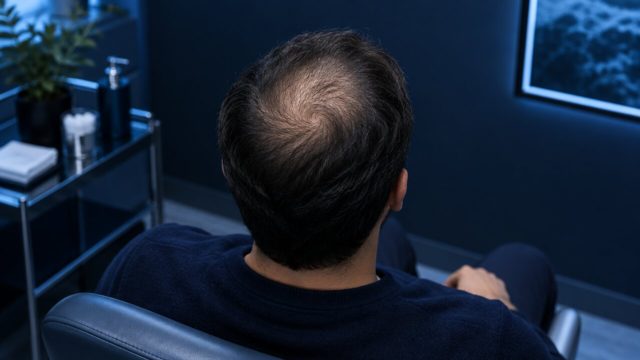
Male and female pattern hair loss can begin in young adulthood, but it does not progress in the same way for every person. Some people have a stable, mature hairline, while others notice continued thinning at the temples, crown, or diffuse areas of the scalp. A transplant placed into an area that later continues to thin may create an uneven appearance unless future treatment is planned. This is why a conservative approach is often considered for younger patients.
A proper assessment should also distinguish pattern hair loss from other causes of shedding. Stress, nutritional concerns, hormonal changes, scalp inflammation, medication effects, and some medical conditions can contribute to hair loss. In these situations, transplantation may not be the first or most appropriate step. Your doctor will review your history, hair pattern, scalp condition, and donor area before discussing whether surgery is suitable.
02Is a hair transplant at 22 right for you?
A hair transplant at 22 may be suitable when a doctor identifies a stable pattern of hair loss, finds adequate donor density, and believes a carefully designed plan can remain natural over time. There is no single birthday at which surgery becomes automatically appropriate or inappropriate. Instead, the decision depends on the individual pattern, family history, rate of change, general health, and realistic understanding of what transplantation can achieve.
For many younger adults, a doctor may recommend a period of observation before surgery. Comparing clinical photographs over time can help show whether the hairline or crown is continuing to change. This does not mean that concerns are dismissed. It helps prevent a treatment decision based only on a short-term appearance, when a more complete picture of hair loss may lead to a safer and more sustainable plan.
Suitability also depends on expectations. A transplant can improve density or restore selected areas, but it cannot usually recreate the very low, dense hairline of adolescence if this would use too much donor hair. Patients who understand the value of a mature, age-appropriate design are generally better placed to make a long-term decision. During consultation, the doctor should explain the likely benefits, limitations, and possibility of future needs.
03Confirming the cause and stability of hair loss
Before considering surgery, the clinical team needs to understand why the hair is thinning. Pattern hair loss often follows recognisable distributions, such as recession at the temples, reduced density through the frontal area, or gradual crown thinning. Yet visual appearance alone is not always enough for diagnosis. A medical history and scalp examination can help identify signs that another cause may be involved and whether additional assessment is needed.
The rate of hair loss is particularly relevant in someone aged 22. A patient who has had a similar hairline and density for a longer period may present a different planning situation from someone whose appearance has changed substantially over recent months. Family history can offer useful context, but it cannot predict an individual outcome with certainty. Doctors consider several findings together rather than relying on a single factor.
Some patients may be advised to address active hair loss before a transplant is discussed. Depending on the diagnosis and medical history, a doctor may talk about clinically appropriate non-surgical management, scalp care, or follow-up monitoring. These options should only be considered after individual medical review. The aim is to protect existing hair where possible, because transplanted hair and native hair need to look balanced together in the years ahead.
04Donor area limits and a realistic graft strategy
Every hair transplant relies on a donor area, usually the hair at the back and sides of the scalp. These follicles are selected because they may be more resistant to the processes that cause pattern hair loss. However, the donor supply is not unlimited. Removing too many grafts or planning too aggressively at a young age can reduce options if further thinning develops later.
Donor assessment includes density, hair calibre, scalp characteristics, and the distribution of stronger follicles. It also includes a visual evaluation of how the donor area may look after extraction. Techniques such as Sapphire FUE and DHI can be used in appropriate cases, but the technique itself does not replace careful donor management. The number and placement of grafts should be decided according to the individual plan, not according to a fixed target.
For a younger patient, preserving grafts for the future is often as important as improving the current appearance. A modest restoration of the frontal area may sometimes be more sustainable than attempting broad coverage in one procedure. During a consultation, ask how the proposed plan protects donor resources, what areas are being prioritised, and how future progression could affect the result. A responsible plan should address these questions openly.
05Hairline design for your twenties and later decades
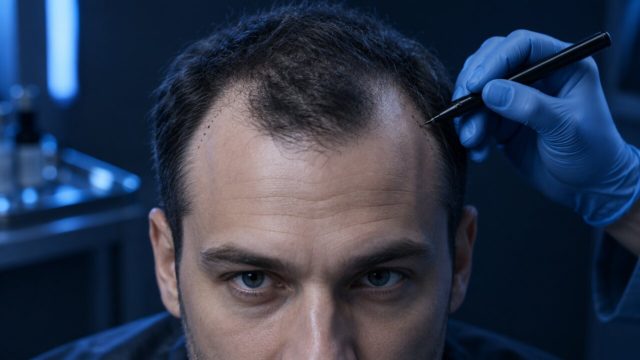
Hairline design is one of the most visible parts of hair restoration, and it requires particular caution in the early twenties. A naturally appearing hairline is not simply low or straight. It usually has irregularity, soft transitions, and proportions that fit the face and anticipated future pattern of hair loss. The goal is generally to create an age-appropriate result that does not look abruptly transplanted.
A very low hairline can require a high number of grafts and may leave limited donor resources for later areas, such as the mid-scalp or crown. If native hair recedes behind an aggressively restored front, the contrast can become more noticeable over time. For this reason, doctors commonly discuss a mature hairline position that is designed to remain believable as a patient gets older.
The quality of the hair also affects design decisions. Fine, thick, straight, curly, light, and dark hair can create different visual effects at the same graft density. The doctor may use these characteristics when deciding where to place finer single-hair grafts and where greater density may be useful. Good planning is therefore not only about filling an empty area; it is about building a natural transition that respects the patient’s long-term hair resources.
06What surgery can and cannot change
A hair transplant moves follicles from one part of the scalp to another. It does not create new donor hair, and it does not usually stop the natural progression of untreated pattern hair loss. This is a key point for anyone considering a hair transplant at 22. The transplanted hairs may continue to grow in their new location, while nearby native hairs can still become thinner if the underlying condition progresses.
After the procedure, temporary shedding of transplanted hair is common before visible growth begins. Results develop gradually, and the final appearance is usually assessed over many months rather than days or weeks. Healing times and growth patterns vary between patients. Your clinic should provide clear aftercare instructions, explain what changes are expected, and tell you when to contact the medical team about any concern.
It is also important to understand that density is an aesthetic balance, not an unlimited guarantee of coverage. The available graft supply, scalp contrast, hair characteristics, and size of the thinning area all influence the visual result. Some patients may need or choose further treatment in the future, while others may not. A consultation should avoid promising a specific cosmetic outcome before the doctor has completed an individual evaluation.
07Medical eligibility, safety, and reasons to delay treatment
Being young does not automatically make surgery unsafe, but all candidates need an appropriate medical assessment. The team will usually ask about medical conditions, current medicines, allergies, bleeding concerns, smoking, previous scalp procedures, and history of abnormal scarring. This information helps the doctor decide whether surgery can be performed safely, whether it should be postponed, or whether another treatment route should be considered.
A person may be unsuitable for transplantation if there is not enough stable donor hair, if the diagnosis is uncertain, or if active scalp disease is present. Certain health conditions may require stabilisation or specialist clearance first. Unrealistic expectations can also be a reason to pause the process, because good consent requires a clear understanding of limitations, possible risks, recovery, and the potential need for long-term management.
At Acibadem Hair Transplant Center, a dedicated hair restoration clinic in Istanbul licensed by the Turkish Ministry of Health, free online hair analysis is reviewed by doctors. This can be a useful first step for international patients, but it does not replace an individual clinical assessment. The team can review photographs and history, explain whether an in-person examination is needed, and usually replies on WhatsApp within around two hours.
08Building a plan beyond the procedure day
For younger patients, the best hair restoration plan extends beyond the procedure itself. It should include a diagnosis, a donor strategy, a conservative aesthetic design, recovery guidance, and a plan for monitoring existing hair. Asking about all of these elements can help you compare options on clinical reasoning rather than focusing only on the number of grafts or the speed of travel.
If surgery is recommended, ask how the chosen technique fits your scalp and goals. Sapphire FUE and DHI are available at Acibadem Hair Transplant Center, and needle-free anaesthesia may also be available for suitable patients. The doctor will confirm which approach is appropriate, as no technique is automatically best for every hair type, degree of loss, or donor area. Careful planning remains more important than a technique name.
International patients may also value organised support during recovery. The clinic offers all-inclusive packages that include VIP transfer, a 4-star hotel, a care kit, and 12 months of follow-up. Results are measured by trichoscopic graft survival at month 12, with a documented 98% rate under a written guarantee. These arrangements can support continuity of care, but your individual result and suitability will always depend on your clinical assessment and adherence to aftercare advice.
09Frequently Asked Questions
Can someone aged 22 have a hair transplant?
Yes, a 22-year-old may be able to have a hair transplant if the doctor confirms that the diagnosis, donor area, hair loss pattern, and expectations are appropriate. In many cases, the key issue is whether hair loss is stable enough to plan responsibly, rather than age alone. Some patients may be advised to monitor or manage hair loss before surgery.
What may happen 20 years after a hair transplant?
Transplanted follicles may continue growing over the long term, but surrounding native hair can still thin if pattern hair loss progresses. This can change the balance of the result and may lead some patients to consider medical management or a further procedure, depending on donor availability and clinical suitability. A conservative initial design helps preserve options for the future.
Is 23 considered too early for a hair transplant?
Age 23 is not automatically too early, but it can be early for patients with rapidly changing or uncertain hair loss. A doctor should assess progression, family history, donor density, and the likely long-term pattern before recommending surgery. A stable pattern and realistic goals are more important than age by itself.
What factors can make a person unsuitable for a hair transplant?
Possible reasons include an unclear diagnosis, active scalp disease, insufficient or unstable donor hair, uncontrolled medical conditions, and expectations that cannot be met safely. Certain medications or health concerns may also require review or postponement. The final decision should follow a doctor-led assessment and informed consent discussion.
Bu yazı yalnızca genel bilgilendirme amaçlıdır; profesyonel tıbbi tavsiyenin yerini tutmaz.
Bu rehber genel bilgilendirme amaçlıdır ve tıbbi muayenenin yerini tutmaz. Tedavi kararları, bir doktorun yüz yüze ya da online değerlendirmesinden sonra verilir.