Bu yazıda9
- The Medical Term for Hair Transplant and What It Means
- Donor Area, Recipient Area and Follicular Units
- FUE, Sapphire FUE and DHI: Names of Modern Methods
- Consultation Terms: Candidacy, Diagnosis and Hairline Design
- Density, Angulation and Other Terms That Shape Natural Results
- Anaesthesia, Healing and the Normal Growth Timeline
- Safety Terms: Risks, Complications and Limitations
- Long-Term Results, Maintenance and Follow-Up Language
- Frequently Asked Questions
The medical term for hair transplant is hair transplantation, also called hair restoration surgery or follicular unit transplantation. It involves moving healthy hair follicles, usually from the back or sides of the scalp, to areas affected by thinning or hair loss. The main modern methods are FUE and DHI, and your doctor will confirm which approach may be suitable after assessment.
- Hair transplantation moves naturally growing follicular units from a donor area to a recipient area.
- FUE, Sapphire FUE and DHI are technique names that describe how grafts are removed or implanted.
- A graft is not always one hair, because a follicular unit may contain one to several hairs.
- The final appearance develops gradually, commonly over many months, rather than immediately after surgery.
- Safety, density and long-term planning depend on donor supply, scalp health, hair loss pattern and clinical technique.
01The Medical Term for Hair Transplant and What It Means
The medical term for hair transplant is hair transplantation. You may also hear hair restoration surgery, follicular unit transplantation, follicular unit extraction, or hair grafting. These names describe a surgical treatment in which a clinician relocates living hair follicles from an area with stable growth to an area with visible thinning or baldness. In most patients, the donor area is the back and sides of the scalp because this hair is often more resistant to the hormonal process linked with pattern hair loss.
A hair transplant does not create new follicles. Instead, it redistributes existing follicles in a planned way. This is an important point when reading about coverage, density or a full head of hair. The available donor supply is limited, and a responsible treatment plan aims to use it carefully. Your doctor considers the size of the recipient area, the thickness and colour of your hair, the contrast between skin and hair, and the likely future pattern of hair loss before recommending a design.
Hair transplantation is most often discussed for androgenetic alopecia, which is the clinical name for male or female pattern hair loss. However, it may also be considered in selected cases of hairline recession, traction-related hair loss, stable scars, or eyebrow thinning. The cause of hair loss must be understood first. Some inflammatory, autoimmune, medical or temporary forms of hair loss may need medical treatment or a period of stability before surgery can be considered.
Patients sometimes use the phrase hair plugs when searching online. This is an older term often associated with larger grafts and a less refined appearance. Modern procedures generally use naturally occurring follicular units and carefully planned placement angles. The goal is usually to make the transplanted hair blend with surrounding hair, while protecting the donor area and maintaining options if hair loss progresses later.
02Donor Area, Recipient Area and Follicular Units
The donor area is the region where follicles are collected. It is commonly located in the occipital scalp, at the back of the head, and may extend into the areas above the ears. Donor dominance is a term used to explain why these follicles often keep characteristics similar to their original location after they are transplanted. This does not mean every donor follicle is identical or that every person has the same donor capacity.
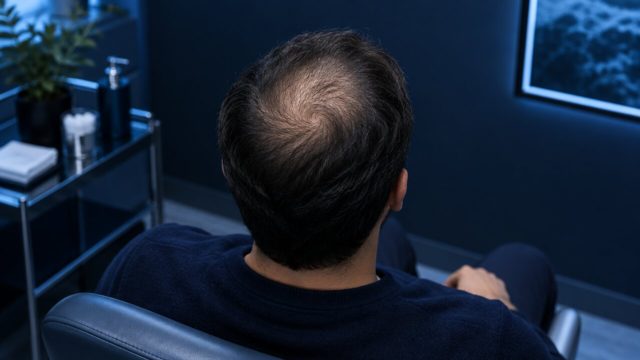
The recipient area is the part of the scalp where grafts are placed. It may include the frontal hairline, temples, mid-scalp or crown. Each location has different visual needs. For example, the frontal zone usually requires careful hairline design and fine single-hair grafts, while the crown often requires attention to the natural swirl pattern. A treatment plan should balance what looks appropriate now with the possibility of future thinning beyond the transplanted region.
A follicular unit is a small natural grouping of hairs that grows from the scalp together. One follicular unit may contain one, two, three or sometimes more hair shafts. A graft is the piece of tissue containing one or more follicles that is removed and implanted during surgery. For this reason, graft count and hair count are not the same thing. When comparing plans, it is useful to ask whether a number refers to grafts, individual hairs, or the estimated coverage area.
Graft survival describes how many transplanted follicular units remain viable and grow after the procedure. It can be influenced by extraction technique, handling, hydration, implantation conditions, healing and individual biology. At Acibadem Hair Transplant Center, results are assessed through trichoscopic graft survival at month 12, with a documented 98% rate under a written guarantee. Your clinical team can explain how outcome assessment is performed and what documentation applies to your treatment plan.
03FUE, Sapphire FUE and DHI: Names of Modern Methods
FUE stands for Follicular Unit Extraction. In this method, individual follicular units are taken from the donor area using a small surgical instrument. The grafts are then prepared and placed into tiny recipient sites. FUE is widely used because it does not involve removing a long strip of scalp tissue. However, it is still surgery and requires careful donor management, sterile practice and a team trained in graft handling.
Sapphire FUE refers to an FUE-based approach in which sapphire blades may be used to create recipient channels before implantation. These channels help guide the angle, direction and distribution of the grafts. The blade material alone does not determine the final result. Natural-looking growth depends on multiple factors, including hairline planning, incision size, graft selection, placement technique, scalp characteristics and the experience of the clinical team.
DHI stands for Direct Hair Implantation. This phrase is often used for a method in which extracted grafts are loaded into an implantation instrument and placed directly into the recipient area. Depending on the clinical plan, this can allow the team to control the depth, angle and direction of placement during implantation. DHI is not automatically better for every patient; it may be selected according to the target area, hair characteristics, number of grafts and the surgeon’s assessment.
When people ask for the medical term for hair transplant, they may expect one single method name. In practice, hair transplantation is the broad medical description, while FUE, Sapphire FUE and DHI describe procedural approaches. A consultation should focus less on marketing labels and more on whether the recommended technique supports safe extraction, realistic coverage and a suitable long-term strategy for your pattern of hair loss.
04Consultation Terms: Candidacy, Diagnosis and Hairline Design
Candidacy means whether hair transplantation is medically and practically appropriate for a person. A good candidate typically has sufficient donor hair, a stable or understandable hair loss pattern, realistic expectations and no untreated scalp condition that may interfere with healing. Age alone does not decide suitability. The clinician also reviews family history, medication use, general health, hair loss speed and whether ongoing hair loss may affect the result over time.
Diagnosis is the process of identifying the likely cause of hair loss. Pattern hair loss is common, but diffuse shedding, nutritional issues, thyroid disorders, scalp inflammation, scarring alopecia and other conditions can also contribute to thinning. A transplant may not address the underlying cause of active shedding. Your doctor may recommend further medical evaluation or a waiting period if the diagnosis is unclear or the hair loss pattern is unstable.
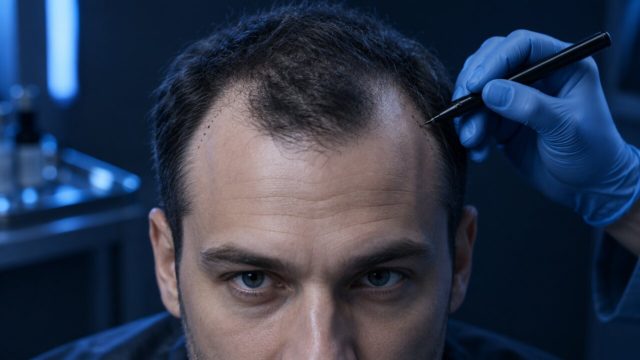
Hairline design is the planned outline of the front of the hair. It is one of the most important aesthetic parts of a procedure because it frames the face and remains visible as a person ages. A conservative, irregular and age-appropriate hairline often looks more natural than a very low or perfectly straight line. Temple points, frontal angles and facial proportions may all be discussed during planning.
At Acibadem Hair Transplant Center in Istanbul, patients can request a free online hair analysis that is reviewed by doctors. Replies on WhatsApp are typically provided within around two hours. An online review can offer preliminary guidance, but an in-person clinical assessment and examination remain important before surgery, because donor quality and scalp findings need direct evaluation.
05Density, Angulation and Other Terms That Shape Natural Results
Density refers to how closely grafts are placed in the recipient area. It is often measured as grafts or hairs per square centimetre, but a higher number is not always safer or better. Very dense placement can increase demands on blood supply and may not be suitable in every scalp. The visible impression of fullness also depends on hair shaft thickness, curl, colour contrast and styling, not only on the number of grafts implanted.
Angulation is the angle at which hair exits the scalp, while direction describes the way it points. Both matter greatly in a natural result. Hair at the front of the scalp usually lies flatter and moves forward, whereas crown hair follows a circular or spiral pattern. Implanting grafts without respecting these patterns can make hair look less natural even when the grafts grow successfully.
Single-hair grafts are commonly reserved for the leading edge of the hairline because they can create a softer transition. Multi-hair grafts may be placed behind this zone to build visual density. This is sometimes called graft distribution or graft allocation. It is a design decision based on the available follicular units and the priorities agreed during consultation.
Coverage means how much scalp area can be treated, while density means how full that treated area may appear. These terms are frequently confused. A person with extensive baldness may need to choose between lower density across a wider area and more density in the frontal region. Your doctor will explain the trade-offs and may recommend a staged plan rather than attempting to treat every area at maximum density in one procedure.
06Anaesthesia, Healing and the Normal Growth Timeline
Local anaesthesia is used to numb the donor and recipient areas during most hair transplant procedures. Patients are generally awake, but they should not feel sharp surgical pain once the area is fully numb. They may still notice pressure, movement or mild discomfort. Needle-free anaesthesia is available at Acibadem Hair Transplant Center for eligible patients, and the team will explain the available options and any relevant medical considerations.
After the procedure, small crusts, redness, swelling or tenderness can occur. These effects are usually temporary, but healing speed varies. Post-procedure instructions commonly cover washing, sleeping position, activity limits, sun exposure and avoiding friction or picking. Following the clinic’s instructions closely helps protect the newly implanted grafts during the early healing phase. Contact the clinical team promptly if you have increasing pain, spreading redness, fever, pus, unexpected bleeding or other concerning symptoms.
Shock loss is a term used for temporary shedding of transplanted hairs and sometimes nearby existing hairs after surgery. It can be worrying, but early shedding does not necessarily mean the follicles have failed. The transplanted follicles typically enter a resting phase before new growth begins. Early visible growth is often uneven, and the new hairs may initially look fine or curl differently before maturing.
The hair growth timeline requires patience. In many patients, new growth becomes more noticeable several months after treatment, with continued improvement through the first year. The exact pace and degree of change vary between individuals. Rather than judging the outcome in the first weeks, clinics commonly schedule follow-up reviews to monitor healing, discuss concerns and assess progress at appropriate stages.
07Safety Terms: Risks, Complications and Limitations
Hair transplantation is generally considered a minor surgical procedure when performed in an appropriate medical setting, but it is not risk-free. Possible complications include swelling, bleeding, infection, prolonged redness, numbness, folliculitis, visible scarring, poor graft growth and an unnatural-looking result. The chance of a complication may be affected by surgical technique, hygiene, pre-existing health conditions, smoking, scalp disease and how closely aftercare instructions are followed.
Overharvesting means removing too many grafts, or removing them unevenly, from the donor area. This can make the donor region look thin or patchy and may limit future treatment options. Transection is another clinical term that describes accidental damage to follicles during extraction. Both risks highlight why donor assessment, careful extraction patterns and experienced medical supervision are essential parts of planning.
Necrosis is an uncommon but serious term referring to tissue damage caused by insufficient blood supply. Although rare, the risk may be increased by factors such as excessively dense recipient-site work, smoking, certain health conditions or prior scalp procedures. A reputable clinic should discuss relevant risks openly, take a detailed medical history and advise when a procedure should be delayed, modified or avoided.
The medical term for hair transplant does not imply a permanent cure for all hair loss. Transplanted follicles can continue to grow for a long time, but native hair around them may still thin because the underlying hair loss process can continue. Long-term planning may include medical management where clinically appropriate, conservative graft use and realistic expectations about possible future procedures.
08Long-Term Results, Maintenance and Follow-Up Language
Permanent hair is a common phrase, but it should be understood carefully. Donor follicles used in a transplant are often selected because they are more resistant to pattern hair loss. In many male patients, they continue growing for decades. However, no clinician can predict exactly how every graft will behave over a lifetime, and the hair that was not transplanted may continue to become finer or recede.
Maturation refers to the period in which newly growing transplanted hair becomes thicker, longer and more consistent in texture. The appearance at month 12 is often used as an important point for outcome review, though some areas and some individuals may continue to mature after that. Follow-up also allows the team to check the donor area, review hair care and discuss whether ongoing loss in untreated areas needs attention.
Revision is the term for a further procedure intended to improve a previous result. It may be considered for concerns such as low density, an unnatural hairline, a visible scar or continued hair loss around the transplanted zone. A revision should be planned particularly carefully because donor supply may already have been used. In some situations, non-surgical management or no further surgery may be the safer recommendation.
Acibadem Hair Transplant Center is a dedicated hair restoration clinic in Istanbul, licensed by the Turkish Ministry of Health. Its all-inclusive packages include VIP transfer, a 4-star hotel, a care kit and 12 months of follow-up. Patients travel from many locations for care, but the same clinical principles apply to everyone: appropriate diagnosis, careful planning, clear consent and ongoing support are more important than promising a specific cosmetic outcome.
09Frequently Asked Questions
Is a hairline transplant painful?
A hairline transplant is usually performed under local anaesthesia, so sharp pain during the main procedure is typically limited after the scalp is numb. The anaesthesia stage and the first few days of healing may involve discomfort, pressure or tenderness. Your clinic will provide aftercare instructions and explain suitable pain management options based on your medical history.
What can be expected 10 years after a hair transplant?
In many patients, transplanted donor hair can still be growing 10 years later because these follicles are often more resistant to pattern hair loss. However, native hair may continue to thin over time, which can change the overall appearance around the transplanted area. Long-term results depend on donor quality, the original plan, ongoing hair loss and individual factors.
How risky is hair transplant surgery?
Hair transplant surgery is commonly performed as a minor surgical procedure, but it carries risks such as infection, bleeding, swelling, scarring, temporary numbness, poor growth and an unnatural appearance. Serious complications are uncommon but can occur. Choosing a licensed medical setting, sharing your full medical history and following aftercare advice can help reduce avoidable risks.
How long do male hair transplants usually last?
Male hair transplants are designed to be long-lasting, and transplanted donor follicles may continue growing for decades in many patients. They are not a guarantee that all future thinning will stop, because non-transplanted hair can still be affected by male pattern hair loss. A conservative design and long-term treatment plan can help maintain a balanced appearance as hair loss changes.
Bu yazı yalnızca genel bilgilendirme amaçlıdır; profesyonel tıbbi tavsiyenin yerini tutmaz.
Bu rehber genel bilgilendirme amaçlıdır ve tıbbi muayenenin yerini tutmaz. Tedavi kararları, bir doktorun yüz yüze ya da online değerlendirmesinden sonra verilir.