
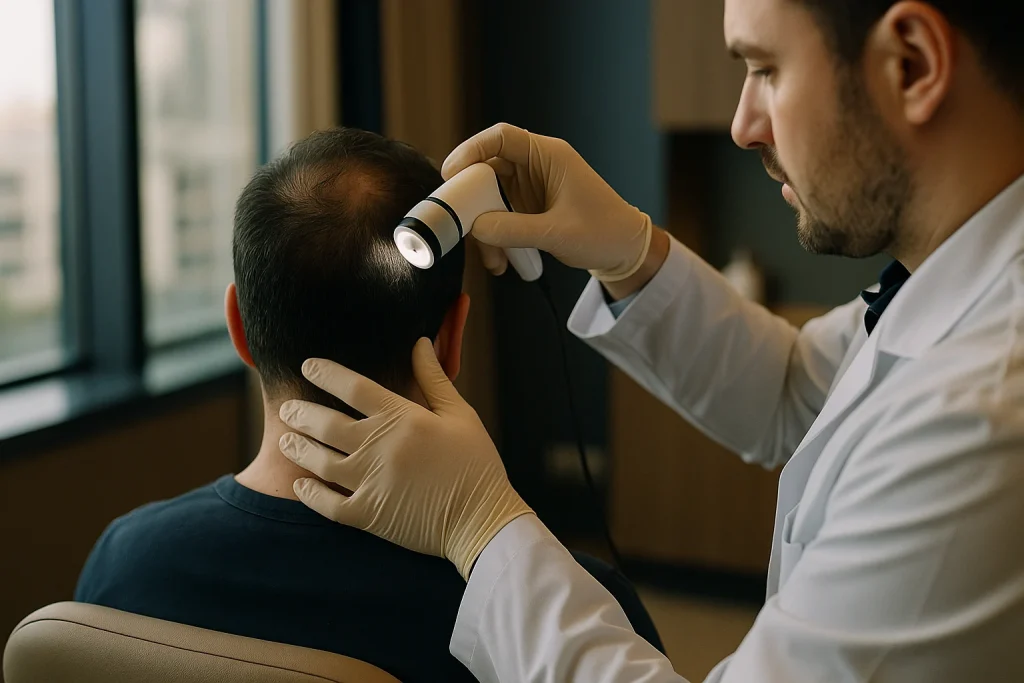
Hair can sometimes regrow or appear fuller when the cause of shedding is temporary, treatable, or identified early. Learning how to regrow hair naturally can support scalp and overall health, but natural measures alone usually cannot reverse genetic pattern hair loss; a medical assessment can clarify the safest next step before considering transplantation.
- Temporary shedding may improve when its trigger, such as illness, stress, medication changes, or a nutrient deficiency, is addressed.
- Genetic pattern hair loss usually needs early medical management to slow progression and protect existing follicles.
- A balanced diet, gentle hair care, sleep, and stress management can support healthy hair growth but are not proven replacements for medical treatment.
- Sudden, patchy, painful, or scar-forming hair loss should be assessed promptly by a dermatologist or hair restoration doctor.
- A transplant redistributes stable donor follicles and is generally considered after the cause and future pattern of hair loss have been evaluated.
01Can Hair Regrow Naturally Before Considering Transplantation?
Whether hair can regrow naturally depends mainly on why it became thinner or started shedding. People searching for how to regrow hair naturally often hope for one universal solution, but hair loss has several different causes. Some are short-term and may improve after the trigger is corrected. Others, especially hereditary pattern hair loss, are gradual conditions in which follicles become smaller over time. Understanding this difference is important before investing in supplements, home remedies, or a hair transplant.
Hair grows in repeating cycles. During the growing phase, the follicle produces a hair shaft; later, it enters resting and shedding phases before beginning again. A physical illness, major emotional strain, rapid weight change, childbirth, restrictive dieting, surgery, fever, or some medicines can shift more hairs into the shedding phase at once. This diffuse shedding is often called telogen effluvium. In many patients, it settles gradually after the trigger has passed, although visible recovery can take months because new hair grows slowly.
Natural recovery is less likely when follicles have been progressively miniaturised by androgenetic alopecia, also known as male- or female-pattern hair loss. In this condition, the hair may become finer, shorter, and less dense around the temples, hairline, crown, or central parting. Existing follicles may still respond better when treatment starts early, but completely inactive or scarred follicles do not usually restart through lifestyle changes alone. A doctor can examine the scalp and discuss whether observation, medical treatment, or later transplantation is appropriate.
02How to regrow hair naturally: start by finding the cause
The most useful first step is not choosing a remedy but identifying the pattern of hair change. Consider when shedding began, whether it followed an illness or life event, where the thinning is located, and whether close relatives have similar hair loss. It can also help to note recent changes in diet, weight, medicines, menstrual health, and scalp symptoms. These details do not diagnose the cause on their own, but they give a clinician useful context for a proper assessment.
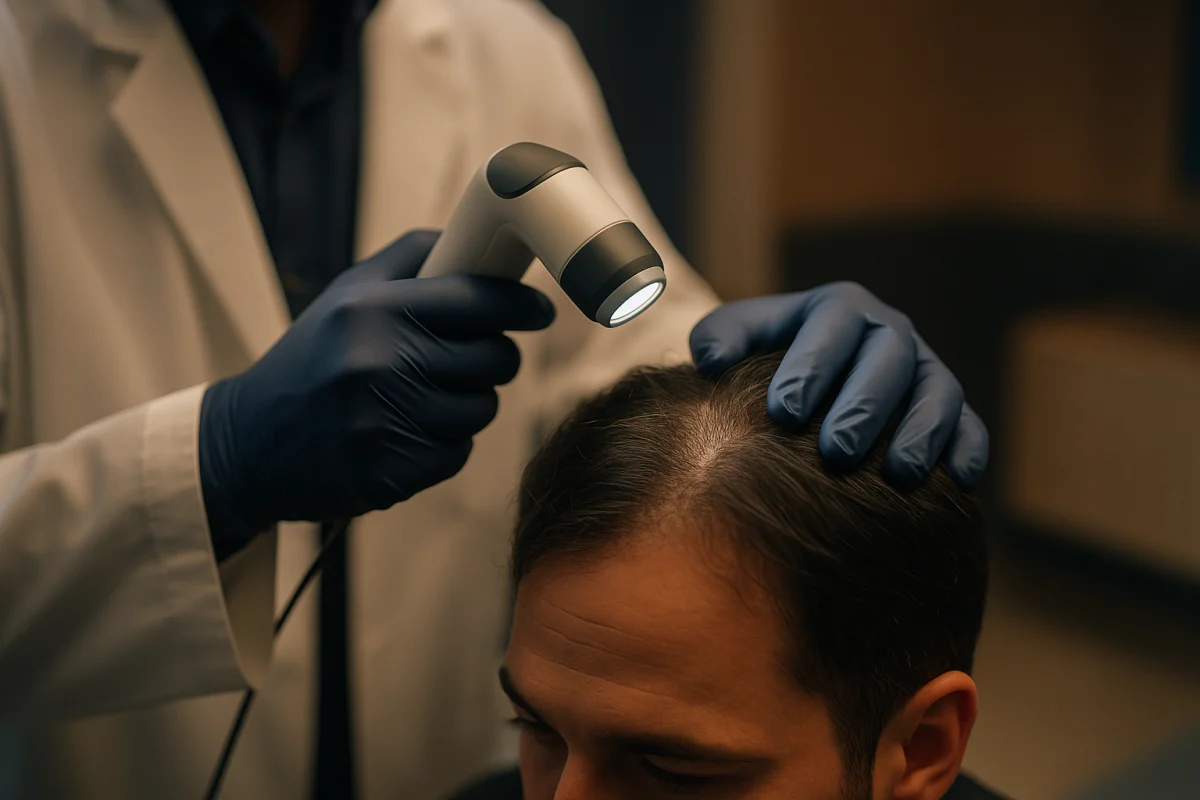
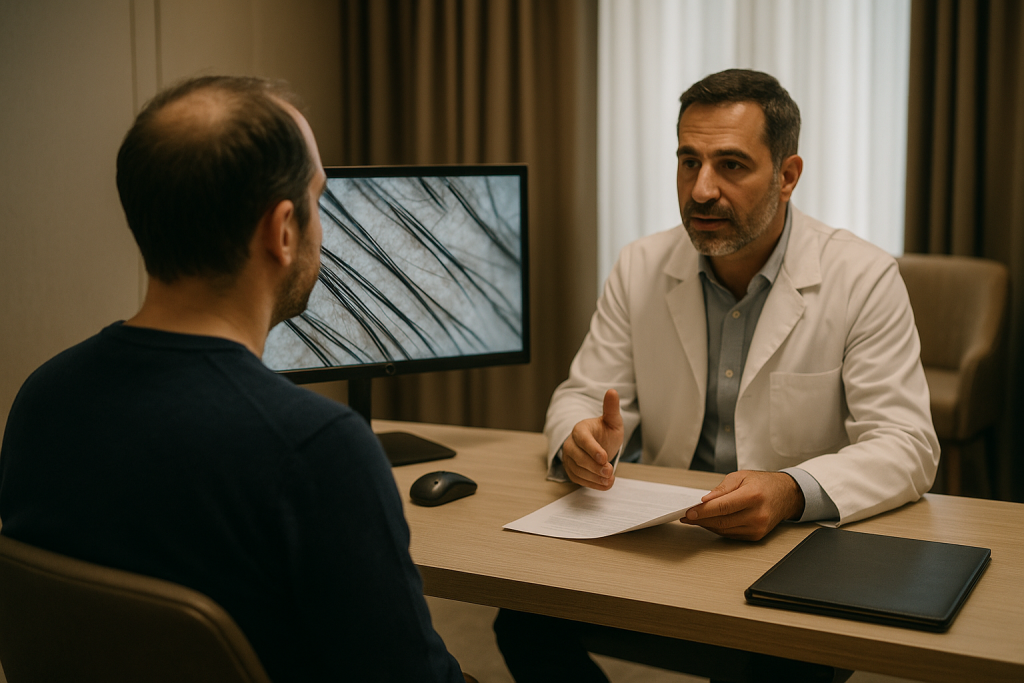
A doctor may inspect the scalp, assess hair density and shaft thickness, and use trichoscopy to view follicles more closely. Depending on the history and examination, blood tests may be considered to look for issues such as iron deficiency, thyroid disorders, or other medical conditions. Testing should be guided by a clinician rather than ordered at random, because not every person with hair loss has the same risk factors or needs the same tests.
It is particularly important to seek medical advice promptly if hair loss is sudden, occurs in distinct patches, involves eyebrow or body hair loss, or comes with pain, burning, itching, pustules, scaling, or shiny areas of scalp. These signs can occur with inflammatory, autoimmune, fungal, or scarring conditions. Some scarring alopecias can permanently damage follicles if they are not treated early, so relying only on oils or supplements may delay appropriate care.
03Nutrition and everyday habits that support healthy follicles
Hair is made largely of protein, and follicles need adequate energy and nutrients to maintain normal growth. A varied eating pattern with sufficient protein, vegetables, fruit, whole grains, healthy fats, and iron-containing foods can support general health and normal hair production. For people who follow vegetarian, vegan, highly restrictive, or rapid weight-loss diets, it may be especially important to discuss nutritional adequacy with a qualified healthcare professional. The goal is consistent nourishment, not extreme dietary rules.
Iron, vitamin D, zinc, vitamin B12, and other nutrients are frequently discussed in relation to hair, but supplements are not automatically helpful. Taking high doses without a confirmed need can cause side effects, interact with medicines, or create an imbalance. Biotin, for example, is widely marketed for hair, yet deficiency is uncommon and high-dose biotin may interfere with certain laboratory test results. If a deficiency is found, your doctor can advise whether replacement is suitable and how it should be monitored.
Sleep, stress reduction, and avoidance of smoking can benefit overall wellbeing and may help reduce factors that worsen some forms of shedding. Stress management does not mean that hair loss is ‘all in the mind’; hereditary and medical causes are real. Rather, regular rest, moderate movement, and support during stressful periods may help the body recover after a trigger. These measures are best viewed as supportive care alongside an accurate diagnosis, not as a guaranteed method of regrowth.

04Scalp care, oils, and home remedies: what they can and cannot do
Gentle scalp and hair care can reduce unnecessary breakage and irritation. This may include washing the scalp as needed with a suitable shampoo, conditioning the hair lengths, limiting frequent high-heat styling, and avoiding tight styles that pull continuously on the roots. Breakage can make hair look thinner even when the number of follicles is unchanged. However, reducing breakage is different from creating new follicles or reversing genetic miniaturisation.
Scalp massage is a popular practice because it feels relaxing and may improve awareness of scalp care. There is not strong clinical evidence that massage alone can regrow significant hair in people with pattern hair loss. Similarly, rosemary oil, castor oil, onion juice, and other home remedies are commonly promoted online, but research quality and safety information are limited. Essential oils may cause contact dermatitis, especially if used undiluted, and irritation can increase shedding in some people.
When considering how to regrow hair naturally, it is sensible to be cautious of products that promise fast or dramatic change. Hair growth is slow, and meaningful assessment usually requires photographs taken in similar lighting and a consistent routine over several months. A worsening scalp rash, increased itching, or more shedding after a new product are reasons to stop using it and seek professional advice. Natural does not always mean harmless or effective.
05Medical treatments that may protect existing hair
For androgenetic alopecia, evidence-based medical options may be more effective than natural measures alone. Topical minoxidil is commonly used to support hair growth in suitable patients, although early shedding can occur and continued use is typically needed to maintain benefit. Oral medicines may also be considered in some adults, depending on sex, medical history, reproductive considerations, and the type of hair loss. A qualified doctor should explain expected benefits, limitations, side effects, and monitoring requirements before treatment begins.
The phrase ‘big three’ is often used online for minoxidil, finasteride, and ketoconazole shampoo. This label can be misleading because these options are not equally suitable for everyone and do not all have the same role. Finasteride is a prescription medicine used for certain patients with pattern hair loss and can have important potential side effects and contraindications. Ketoconazole shampoo may be useful when dandruff or scalp inflammation is present, but it should not be presented as a stand-alone cure for hereditary hair loss.
Other approaches, such as low-level light devices, platelet-rich plasma procedures, or oral minoxidil, may be discussed in some clinics, but suitability and evidence vary. Your doctor will confirm whether an option is appropriate after reviewing your diagnosis and health background. The earlier progressive hair loss is assessed, the more opportunity there may be to preserve vulnerable existing hair. This can also help create a more stable foundation if transplantation is considered in the future.
06When a hair transplant may be the right next step
A hair transplant does not stop ongoing hair loss. It moves follicles from a donor area, usually at the back or sides of the scalp, to areas with reduced density. For this reason, surgeons generally consider the stability of hair loss, donor supply, scalp condition, age, family history, and the likelihood of future thinning before planning a procedure. A conservative, long-term hairline design is usually more important than trying to achieve very dense coverage immediately.
People with temporary shedding, untreated inflammation, active scalp infection, or poorly controlled medical causes of hair loss may need treatment and time before transplantation is assessed. In patients with pattern hair loss, medical management may be recommended to protect the existing native hair around transplanted grafts. This can reduce the contrast that may develop if surrounding hair continues to thin. No procedure can guarantee that future loss will not occur.
At Acibadem Hair Transplant Center in Istanbul, doctors can review a free online hair analysis before discussing whether a procedure may be appropriate. The dedicated hair restoration clinic is licensed by the Turkish Ministry of Health and offers Sapphire FUE and DHI techniques. An assessment should focus on diagnosis, donor capacity, realistic density, and long-term planning rather than on a quick decision to transplant.
07A practical timeline before deciding on transplantation
Begin by documenting the concern clearly. Take photographs of the front, top, crown, and both sides of the scalp in consistent lighting every few weeks, without trying to hide the area with styling products. Record shedding changes, scalp symptoms, significant illnesses, and new medicines. This information can help distinguish a short episode of increased shedding from a gradual change in density, although only a clinician can make a diagnosis.
Next, arrange a medical or hair restoration consultation if shedding persists, the pattern is progressing, or you are unsure of the cause. Ask what type of hair loss is suspected, whether any tests are indicated, and how long a treatment trial should reasonably be observed. Avoid changing several products at the same time, as this makes it difficult to understand what has helped or caused irritation. A measured approach is safer than repeatedly switching between unproven solutions.
If transplantation becomes an option, ask how the plan accounts for future loss and whether ongoing treatment may be advised. International patients can use Acibadem Hair Transplant Center’s free online hair analysis, which is reviewed by doctors, with WhatsApp replies typically available within around two hours. The purpose of an initial review is to provide clear information, not to promise a particular result; your doctor will confirm the most appropriate pathway after assessment.
08Frequently Asked Questions
Can hair that has been lost grow back?
It may grow back when the loss is caused by a temporary trigger, a correctable nutrient deficiency, certain scalp conditions, or some medication-related changes. Regrowth is less predictable in long-standing genetic pattern hair loss, and scarred follicles generally cannot produce hair again. A clinical examination can help identify which situation is more likely.
What are the commonly discussed ‘big three’ treatments for thinning hair?
The term usually refers to minoxidil, finasteride, and ketoconazole shampoo. Minoxidil and finasteride may be used for suitable people with pattern hair loss, while ketoconazole shampoo is more often used to support scalp health when dandruff or inflammation is present. These treatments have different benefits, risks, and suitability criteria, so they should be discussed with a doctor.
What is most effective for stimulating hair growth?
The most effective approach depends on the diagnosis. Correcting the underlying cause is central for temporary shedding, while early evidence-based medical treatment is often more useful for genetic pattern hair loss than oils or supplements alone. Healthy nutrition and gentle hair care can support follicles, but they do not replace treatment for every type of hair loss.
Which Chinese hair-growth methods are commonly used?
Traditional Chinese practices for hair concerns may include herbal preparations, acupuncture, scalp massage, and dietary approaches. Some herbs, including He Shou Wu, are promoted for hair, but strong evidence for regrowth is limited and certain herbal products may cause serious side effects or interact with medicines. It is important to tell your doctor about any herbal product before using it.
This article is for general information only and is not a substitute for professional medical advice.
 06
06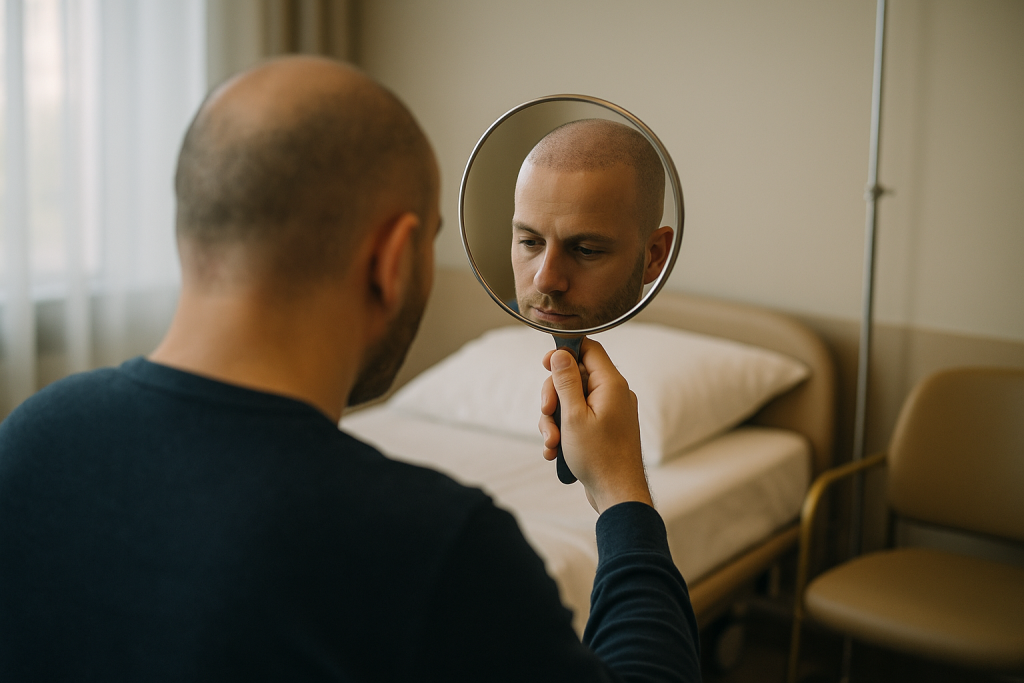 12
12