
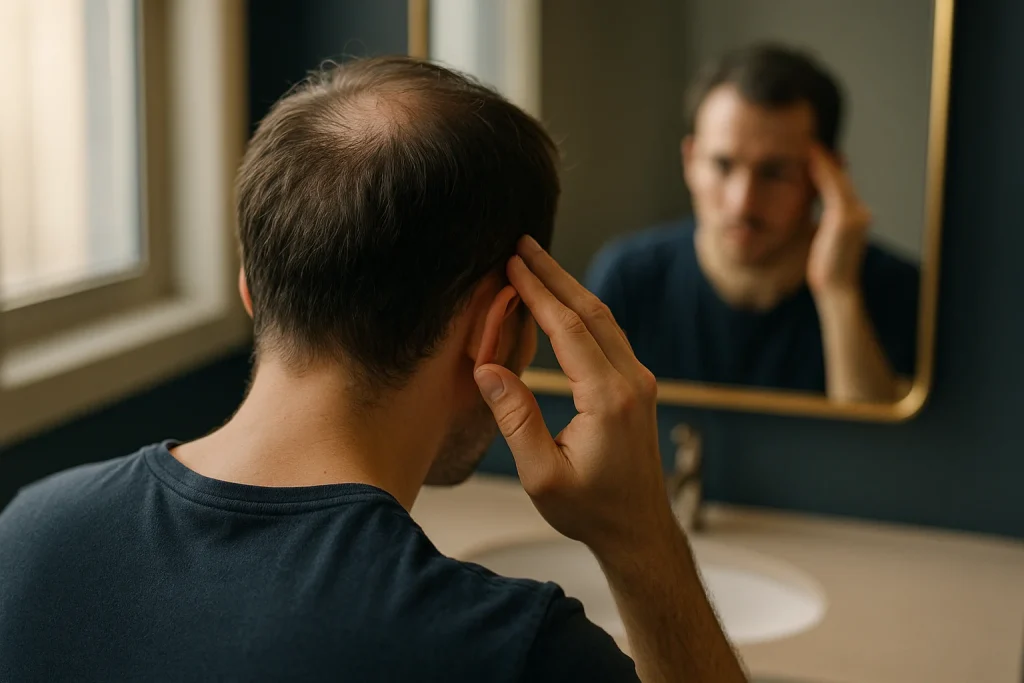
To recognize a receding hairline early, compare clear photos of your hairline over several months and look for gradual movement at the temples, a deeper M-shaped pattern, or finer hairs along the front. A naturally mature hairline can be normal, but ongoing change, thinning behind the hairline, or increased shedding should be assessed by a qualified doctor.
- A receding hairline usually develops gradually, with temple recession often appearing before obvious thinning elsewhere.
- Consistent photographs taken in the same light can help you notice real changes rather than day-to-day styling differences.
- A mature hairline may settle after late adolescence, while progressive recession tends to continue over time.
- Hair shedding can have many causes, including genetics, stress, illness, nutrition, medication, and scalp conditions.
- Early medical assessment can help identify the likely cause and discuss appropriate options before hair loss becomes more advanced.
01How to Recognize a Receding Hairline Early
If you are wondering how to tell if your hairline is receding, the most useful clue is gradual change over time rather than one look in the mirror. Recession often starts at the temples, where the hairline may slowly move backwards and create a wider or more defined M shape. You may also notice that the hairs at the front look finer, shorter, or less dense than the stronger hairs behind them. These changes can be subtle at first, especially when your hair is wet, styled differently, or cut shorter.
Early hairline recession is commonly linked with androgenetic alopecia, also called pattern hair loss. This condition is influenced by genetics and hormone sensitivity, and it can affect people at different ages and at different speeds. In many men, the first visible pattern is temple recession. In women, frontal changes may occur too, although diffuse thinning across the part line or scalp is more common. A doctor will consider your hair pattern, family history, scalp health, and medical background before identifying the likely cause.
It is important not to diagnose yourself from a single photograph or a social media comparison. Hairlines are naturally uneven, and facial proportions can make minor differences appear larger than they are. Lighting, hair products, curl pattern, and the direction of combing can also change how exposed the scalp looks. The key question is whether your hairline has become noticeably higher or less dense compared with your own earlier photos, particularly across six to twelve months.
02How to Tell If Your Hairline Is Receding: The Main Signs
The first common sign is a gradual pullback at one or both temples. Rather than moving evenly across the whole forehead, the corners may recede first while the central forelock remains lower. This can create an M, V, or widow's-peak appearance, depending on your original hairline. One temple can change earlier than the other, so mild asymmetry does not always mean there is a serious problem. However, progression over time is more meaningful than natural asymmetry alone.
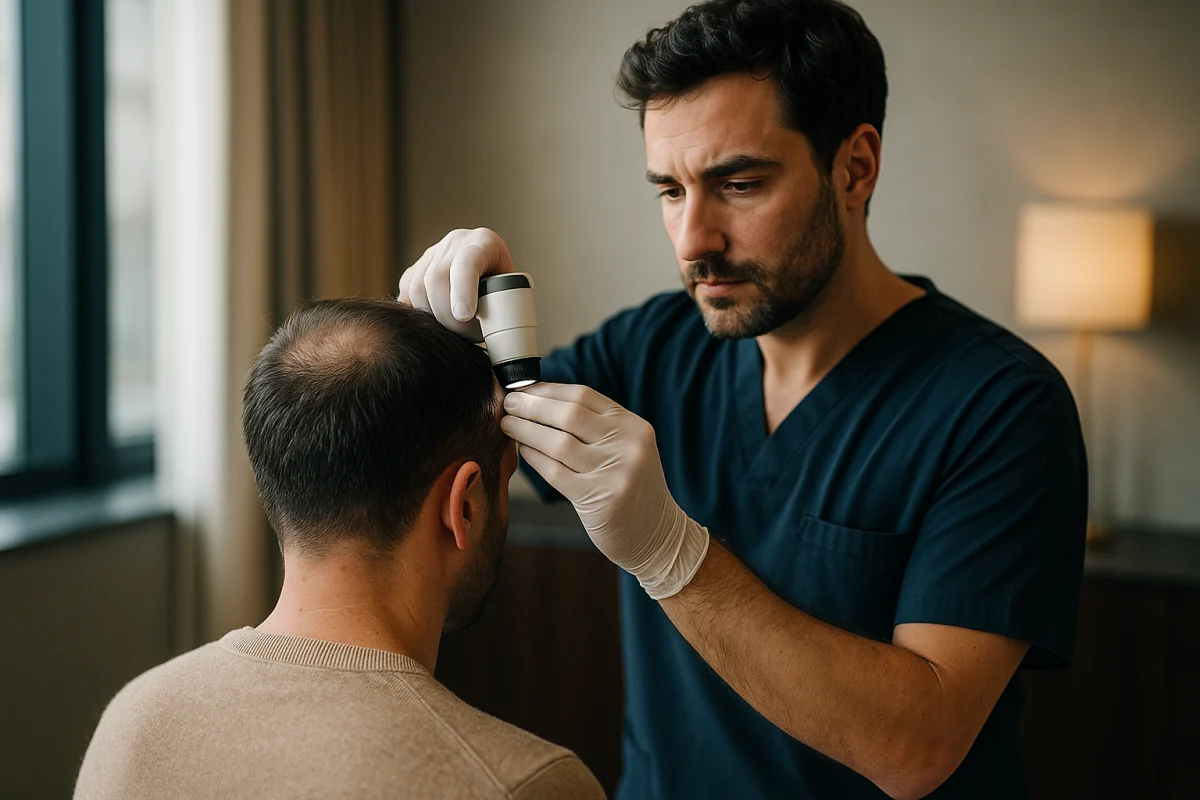
Another sign is miniaturisation. This means that affected follicles begin producing hairs that are finer, softer, shorter, and sometimes lighter in colour. At the front of the scalp, these finer hairs may make the hairline look less solid even before it moves back significantly. You may notice more scalp showing in bright overhead light, after washing, or when your hair is brushed away from the face. Trichoscopic examination can help doctors identify miniaturisation more accurately than a visual home check.
A change in styling can also become noticeable. You may find that a fringe no longer falls as it used to, that hairstyles exposing the temples feel less comfortable, or that you need more effort to create front volume. These observations are useful, but they are not proof by themselves. Hair texture changes with length, humidity, heat styling, and chemical treatments. Combine styling changes with photo comparisons and an assessment of overall density for a more reliable picture.
03A Simple and Reliable Way to Check Your Hairline at Home
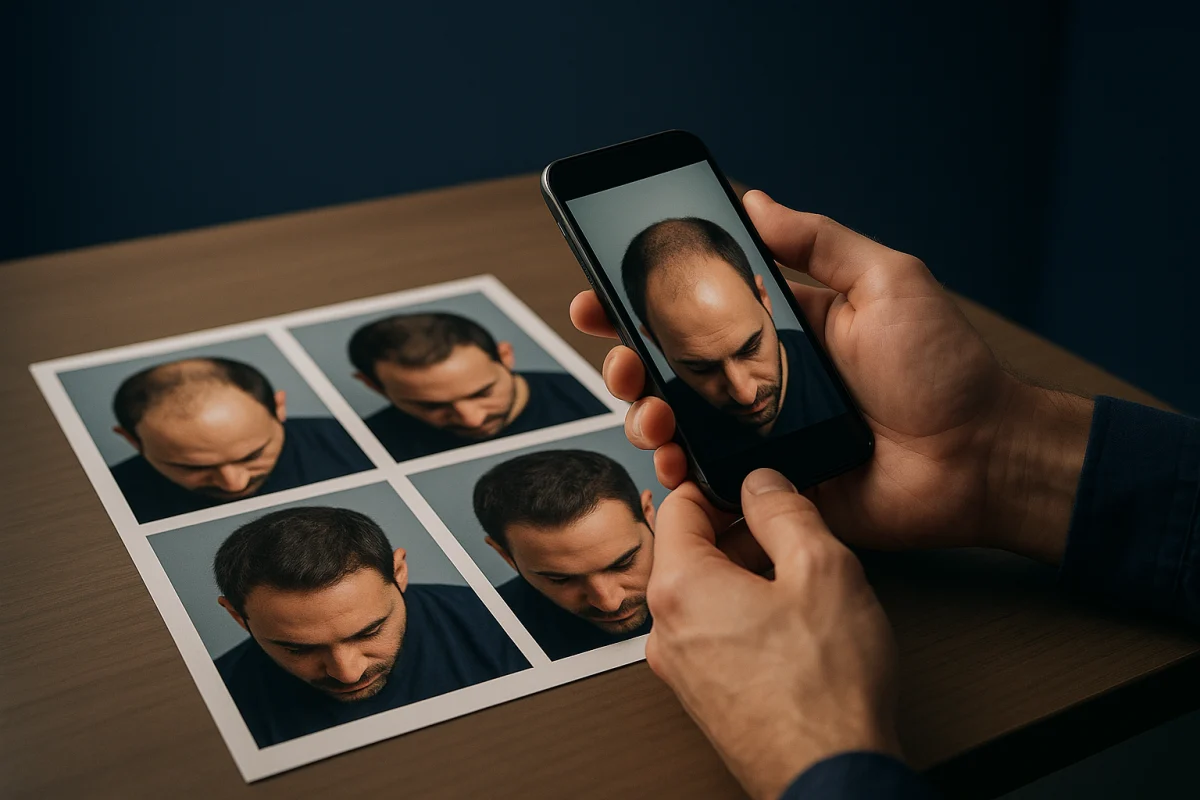
Take a set of baseline photographs before trying to judge change. Stand in the same location each time, use similar lighting, keep your hair clean and dry, and avoid heavy fibres, sprays, or concealers. Photograph the front hairline, each temple, the top of the scalp, and the crown. Hold the camera at a similar distance and angle. Repeating this process every two or three months is usually more helpful than checking your hairline every day, which can increase anxiety without providing useful information.
When reviewing your images, focus on the relationship between your temples, forehead, and the density immediately behind the hairline. Look for a steadily widening gap at the corners, a rising front edge, or increased visibility of scalp where there was previously thicker coverage. Do not rely on pulling the hair tightly backwards, as this can exaggerate the shape of the hairline. Instead, record both a natural hairstyle and a gently brushed-back view for consistency.
You can also observe shedding, but count it carefully in context. Seeing hairs in the shower or on a pillow is normal because every hair has a growth and shedding cycle. Sudden heavy shedding, obvious clumps, patchy loss, scalp pain, redness, scaling, or itching deserves medical attention. These features may suggest a cause other than typical pattern hair loss. A doctor can assess the scalp and, when appropriate, recommend further evaluation rather than assuming every shed hair is permanent loss.
04Mature Hairline or Early Balding? Understanding the Difference
A mature hairline is a normal shift that may happen after puberty, often from the late teens through the twenties. It usually sits slightly higher than a childhood hairline and may have modest temple recession. In many people, it then becomes stable. The line may look more adult and less rounded, but the hair immediately behind it remains healthy and dense. A mature hairline is not automatically a sign that someone will develop advanced hair loss.
Early pattern hair loss is more likely when the change continues progressively, when the temples keep moving backwards, or when density decreases behind the frontal edge. Fine miniaturised hairs, a growing difference between older and current photographs, and a family history of similar hair loss may support this possibility. Still, family history is not a certainty. Hair loss patterns can vary widely between relatives, and people without an obvious family history can also experience androgenetic alopecia.
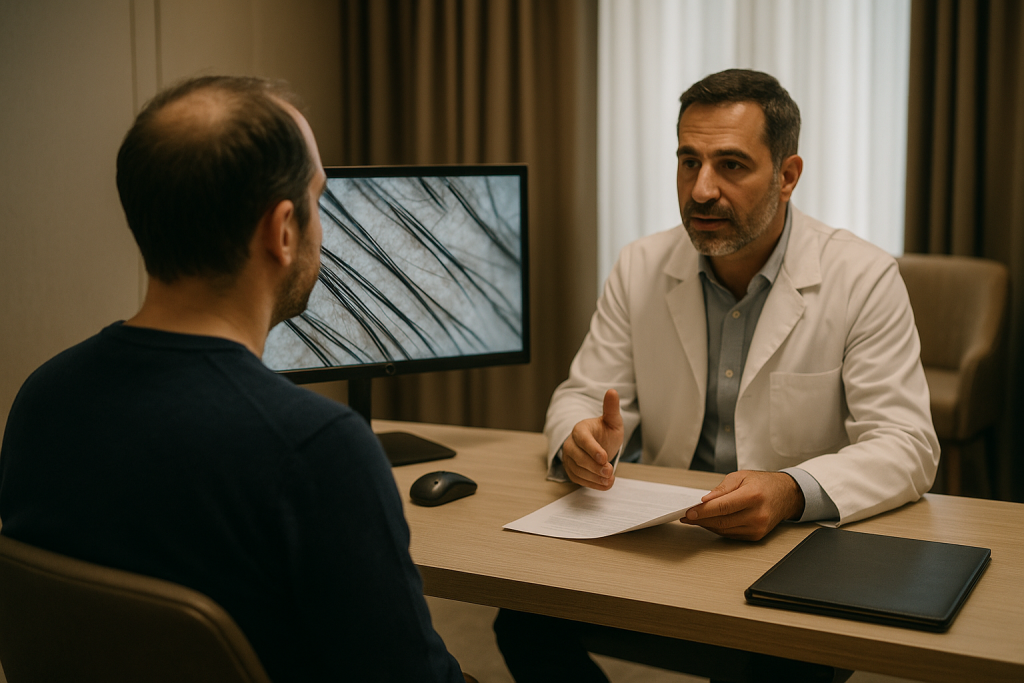
If you are unsure how to tell if your hairline is receding rather than simply maturing, give the comparison enough time. A stable appearance over many months is generally more reassuring than a clear pattern of ongoing change. Doctors may use magnified scalp imaging to examine follicle density and hair shaft variation. This type of assessment can distinguish a cosmetic concern from signs that may need treatment planning, although the final interpretation always depends on the individual clinical picture.
05Why Younger Adults May Notice Hair Loss Earlier
Many younger adults feel that hair loss is appearing earlier or progressing faster than before. However, there is no single explanation, and it is not accurate to assume that an entire generation is balding faster. Greater awareness may be one reason. High-resolution cameras, frequent video calls, social media images, and hairstyle trends can make small changes at the hairline more visible. Younger people may also begin monitoring their appearance earlier than previous generations did.
Genetics remains an important factor in common pattern hair loss. If a person has follicles that are sensitive to androgens, changes can begin in the late teens or twenties, although the timing varies. Lifestyle factors may affect the appearance of hair or trigger temporary shedding in some people. Poor sleep, restrictive dieting, rapid weight change, emotional stress, illness, and nutritional deficiencies can all be relevant. These factors do not necessarily cause genetic hair loss, but they may make an underlying tendency more noticeable.
Heavy bleaching, frequent heat styling, tight hairstyles, and aggressive brushing can also damage the hair shaft or place traction on the hairline. This can cause breakage and, in some cases, traction-related loss. The appearance may resemble recession, so a careful assessment matters. If hair loss is sudden, patchy, associated with scalp symptoms, or follows a significant health event, it should not be dismissed as ordinary age-related balding. Your doctor will confirm the most likely explanation.
06Can a Receding Hairline Grow Back? What to Know Early
Whether hair can regrow at a receding hairline depends on the cause, how long follicles have been affected, and whether the follicles are still capable of producing meaningful growth. In early pattern hair loss, some miniaturised follicles may respond to doctor-guided medical treatment. Results vary between patients, and treatment commonly aims to slow further loss, improve hair calibre, or maintain existing density. It is not possible to promise that a previous juvenile hairline will return.
Temporary shedding caused by illness, nutritional problems, stress, or certain medications may improve after the underlying issue is addressed, but recovery can take time. Hair breakage from damaging styling habits may also improve when those habits change. By contrast, long-standing areas where follicles are no longer active are less likely to recover with non-surgical approaches alone. A proper diagnosis is important because the best next step differs between temporary shedding, traction-related loss, scalp disease, and genetic pattern hair loss.
For selected patients with stable donor hair and an appropriate diagnosis, hair transplantation may be considered to restore a receded frontal area. At Acibadem Hair Transplant Center in Istanbul, doctors assess candidates for Sapphire FUE and DHI techniques through a medical review. Hair transplantation is a surgical procedure, and suitability, design, graft planning, and expected density should be discussed carefully. A conservative, age-appropriate hairline plan is often important because future native hair loss can continue.
07When to Seek a Professional Hair and Scalp Assessment
Consider arranging a professional assessment if your hairline is clearly changing, if you are concerned about increasing scalp visibility, or if you cannot tell whether the issue is recession, shedding, or breakage. Early assessment does not mean that you need a procedure. It can provide a clearer baseline and help identify factors that may be contributing to hair change. The earlier the cause is understood, the easier it may be to discuss realistic ways to monitor or manage it.
Seek medical attention more promptly if hair loss is rapid, patchy, painful, itchy, inflamed, or accompanied by scaling. Changes in eyebrows, eyelashes, body hair, energy levels, weight, or menstrual patterns can also be relevant information for your doctor. Bring a timeline of when you first noticed the issue, details of recent illnesses or medications, and older photographs where possible. This helps create a more complete picture than a single consultation-day appearance.
Acibadem Hair Transplant Center is a dedicated hair restoration clinic in Istanbul, licensed by the Turkish Ministry of Health. International patients can request a free online hair analysis reviewed by doctors, with WhatsApp replies typically available within around two hours. This review can help you understand whether an in-person assessment may be appropriate, but it does not replace a full medical examination when symptoms suggest a scalp or health condition. The goal is an informed, realistic plan based on your individual findings.
08Frequently Asked Questions
How can I check whether my hairline is receding?
Take clear photographs of your front hairline and temples in the same lighting every two or three months. Look for gradual temple movement, reduced density behind the hairline, or increasingly fine hairs at the front. A doctor-reviewed scalp assessment is the most reliable way to confirm whether the pattern represents recession.
Why do so many Gen Z adults seem to be losing hair early?
It is not certain that Gen Z is balding faster as a whole. Increased awareness, phone cameras, social media, styling habits, stress, dieting, illness, and genetic pattern hair loss may all make early changes more noticeable. Sudden or unusual hair loss should be medically assessed rather than attributed to age alone.
Is it possible to regrow hair on a receding hairline?
Regrowth depends on the cause and the condition of the follicles. Some early miniaturised hairs may improve with doctor-guided treatment, while temporary shedding can improve when its underlying cause is managed. Long-standing follicle loss is less likely to regrow without surgical restoration, and results vary between individuals.
Am I balding, or do I simply have a naturally mature hairline?
A mature hairline often shifts slightly after puberty and then remains stable, with good density behind it. Progressive temple recession, finer front hairs, and ongoing thinning over several months are more suggestive of pattern hair loss. Comparing consistent photos and having a clinical assessment can clarify the difference.
This article is for general information only and is not a substitute for professional medical advice.
 06
06 12
12