
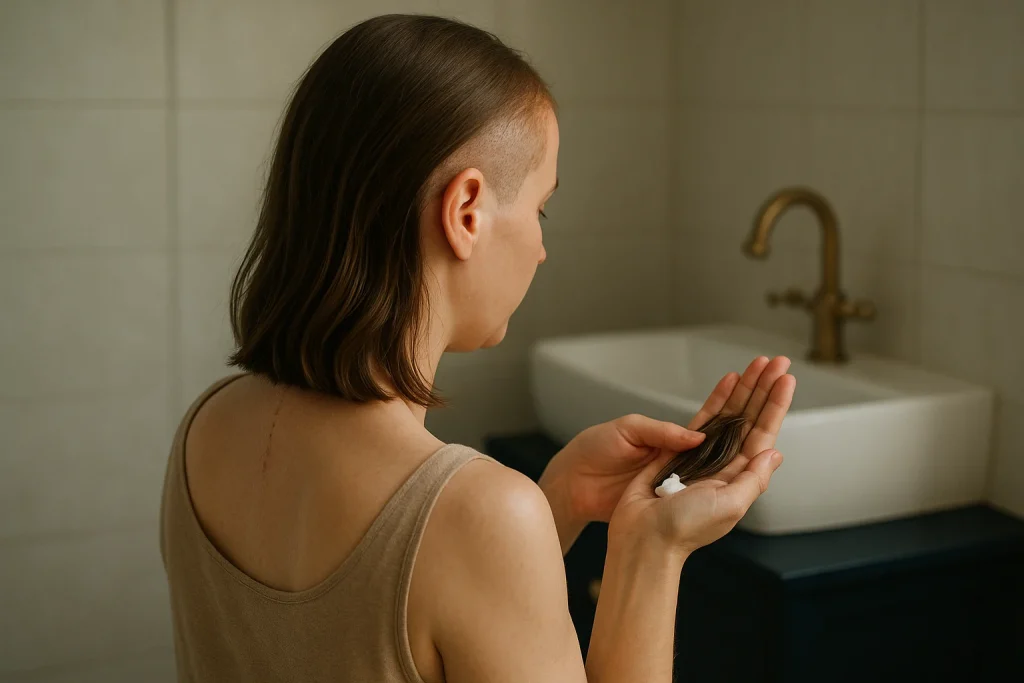
After a hair transplant, choose a gentle, rinse-out conditioner only when your surgeon confirms that the recipient area can be touched and washed normally. The best conditioners for hair loss are usually those that suit your scalp, reduce breakage in existing hair, and do not leave heavy residue around healing grafts.
- Do not apply conditioner to newly implanted grafts until your surgical team confirms it is safe.
- A mild rinse-out conditioner can improve softness and reduce breakage in existing hair, but it cannot create new follicles.
- Choose products based on scalp comfort, hair texture, and simple ingredients rather than bold regrowth claims.
- Use conditioner mainly on the mid-lengths and ends once normal washing is approved, then rinse thoroughly.
- Ongoing thinning may need medical assessment because conditioner is supportive hair care, not a hair-loss treatment.
01Choosing Conditioner After a Hair Transplant
Choosing a conditioner after a hair transplant is mainly about protecting the healing scalp while caring for the hair that was already present. When people search for the best conditioners for hair loss, they may expect a product that can make transplanted hair grow faster. In reality, conditioner has a more limited but still useful role. It can make hair feel smoother, lessen tangling and reduce breakage, especially in fragile native hair. It does not determine whether implanted grafts survive, and it cannot replace the careful washing instructions given after your procedure.
During the first part of recovery, the recipient area contains delicate grafts and tiny healing sites. Even a gentle product may be unsuitable if it requires rubbing, prolonged contact, or vigorous rinsing. Your surgical team will explain when you can progress from the post-procedure wash routine to your usual shampoo and conditioner. This timing differs between patients according to scalp healing, crusting, redness, sensitivity, and the technique used. Follow the instructions provided to you rather than a generic product label or advice from social media.
Once the scalp has healed enough for normal washing, a well-chosen conditioner can support comfort and manageability. The aim is not to coat the scalp heavily or stimulate it aggressively. Instead, look for a formula that works with your hair type, rinses cleanly, and does not cause itching or irritation. If you have persistent tenderness, flaking, burning, pimples, or unusual shedding, stop introducing new cosmetic products and ask your doctor or clinic team for guidance.
02When Conditioner Is Usually Safe During Recovery
The safest answer is that conditioner should be introduced only after your surgeon or clinic gives approval. In the early days, aftercare commonly focuses on a specific gentle cleansing method designed to keep the transplanted area clean without dislodging grafts. Conditioner is not usually the priority at this stage. A product that is harmless on a fully healed scalp may still be difficult to apply and rinse without touching or rubbing freshly transplanted follicles.
As healing progresses, scabs naturally loosen and the scalp gradually becomes less sensitive. Your doctor may then allow a gentle conditioner as part of regular washing, often with the instruction to avoid forceful fingernail contact. It is generally sensible to distribute the product through the hair lengths rather than massaging it directly into the recipient area, unless your team has specifically said otherwise. Use lukewarm rather than hot water and rinse with a gentle flow.
If you also had donor-area harvesting, that area may feel dry, tight, or itchy while it heals. It can be tempting to use a rich conditioning mask immediately, but more product is not always better. Heavy residue can make cleansing harder and may irritate sensitive skin. A brief, careful routine approved by your clinic is typically more appropriate. Your care plan should always take priority over general hair-care guidance.
03Best Conditioners for Hair Loss: What to Look For
The best conditioners for hair loss are not necessarily marketed as “anti-hair-loss” products. A practical choice is often a mild rinse-out conditioner that improves the feel of the hair without causing scalp discomfort. Look for a formula described as gentle, suitable for frequent use, or suitable for sensitive scalps if that matches your needs. Hair strands that are dry or chemically treated may benefit from conditioning agents that help reduce friction during brushing and styling.
For many people, it is helpful to avoid strongly perfumed products, intense cooling sensations, abrasive exfoliating particles, or formulas that leave a waxy film if the scalp is still sensitive. These ingredients are not automatically harmful for everyone, but they can make it harder to identify the cause of irritation after surgery. Introduce one new product at a time. This gives you a clearer picture of how your scalp responds and avoids overwhelming the recovery routine with multiple changes.
Hair texture also matters. Fine hair may feel weighed down by very rich conditioners, while curly, coarse, or long hair may need more slip to avoid tangling. Choose according to the condition of the lengths, not only the appearance of the scalp. A conditioner that makes hair easier to detangle can reduce mechanical breakage from combing. However, less breakage should not be confused with treatment of follicle-based hair loss.
04How to Apply Conditioner Without Stressing Grafts
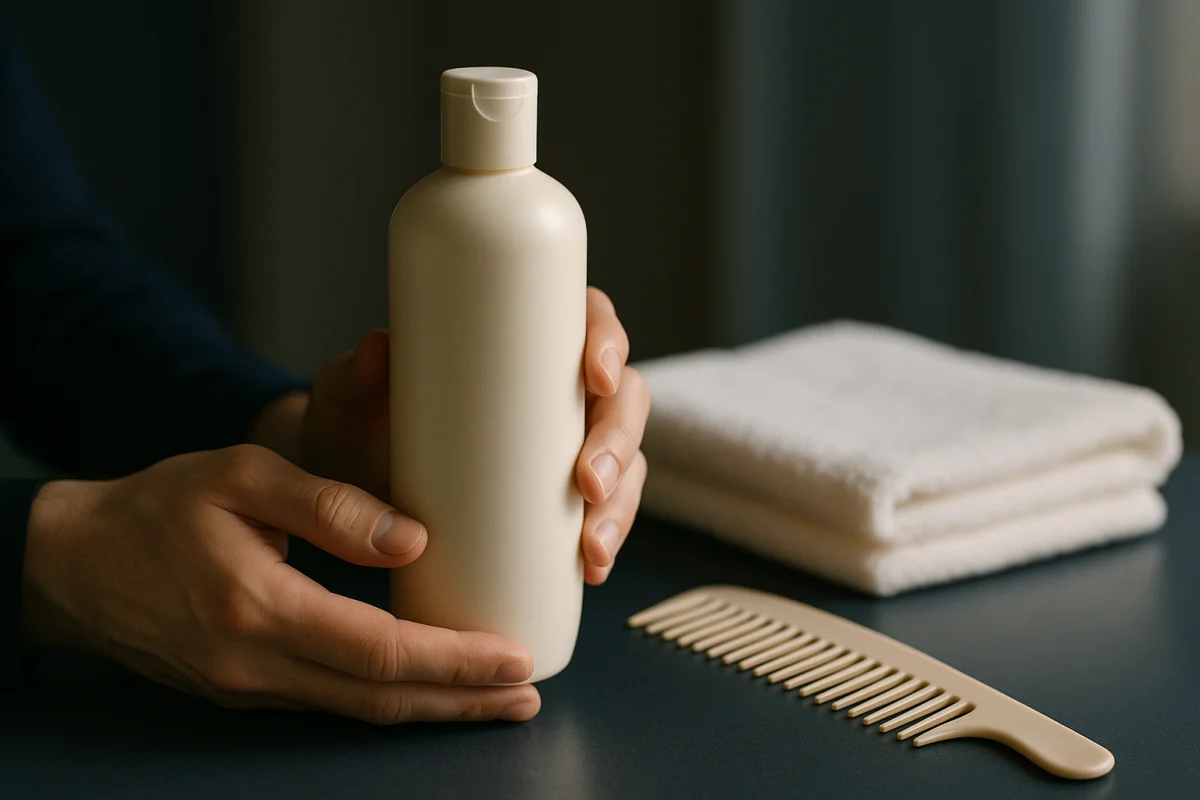
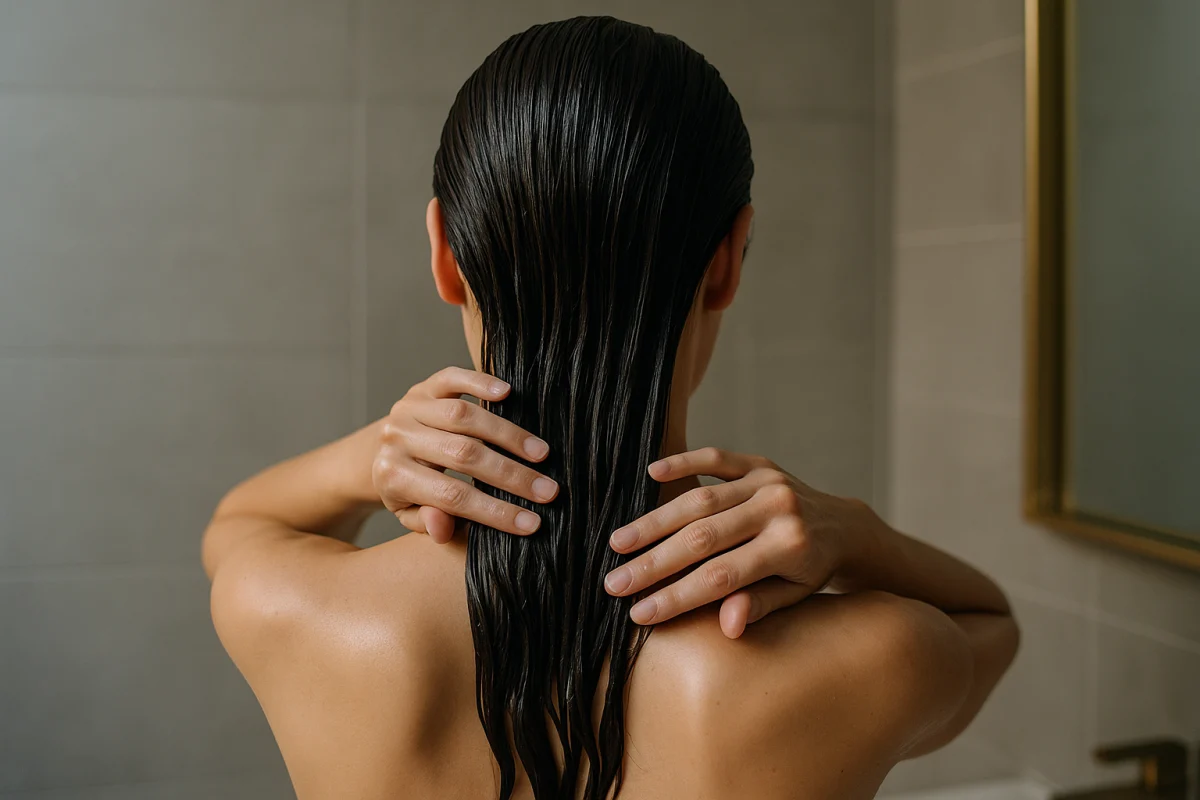
After you have been cleared to use conditioner, start with a small amount. Smooth it lightly over the mid-lengths and ends of the hair, where dryness and tangling are most common. There is usually no need to place a large amount directly onto the scalp. This approach is particularly useful for patients whose native hair is fine or whose transplanted region is still becoming accustomed to normal washing.
Allow the conditioner to sit only for the time indicated on the packaging, unless your surgical team advises differently. Rinse gently and thoroughly with lukewarm water. Do not scratch the scalp with your nails, scrub with a towel, or use a high-pressure shower stream directly on areas that are still sensitive. Pat the hair dry carefully. In most patients, a calm, consistent routine is more helpful than frequent switching between products.
Wide-tooth combing and gentle drying can also protect the cosmetic result. Begin detangling from the ends and work upward, rather than pulling from the roots. Avoid tight hairstyles and excessive heat if they create discomfort or traction. Conditioner may make these steps easier because it improves slip between hair fibres. It does not secure grafts or speed their biological growth cycle, but it can help existing hair look tidier during recovery.
05Understanding What Conditioner Can and Cannot Do
Conditioner works on the visible hair shaft. It can coat and smooth the outer layer of the strand, improve softness, reduce static, and make damaged hair appear healthier. These benefits may be especially welcome during the temporary shedding phase that can occur after a hair transplant. Seeing shedding can be worrying, but it is often part of the normal recovery process. Your doctor can explain what is expected in your individual timeline.
Conditioner does not regenerate a destroyed hair follicle, reverse all causes of thinning, or directly increase graft survival. Transplanted graft growth depends on surgical handling, healing, blood supply, and your body’s recovery processes, not on a cosmetic conditioner. This distinction is important because product marketing may use words such as strengthening, thickening, or growth-supporting. These descriptions often refer to the temporary appearance and feel of the hair shaft rather than confirmed follicle regrowth.
Some conditioners contain ingredients that create a fuller look by coating the hair or increasing volume at the roots. This can be useful for confidence while new hair is maturing. However, if you notice itching, redness, scaling, or a heavy build-up, choose a simpler formula or discuss your symptoms with a professional. Scalp conditions such as dermatitis may need medical evaluation and should not be managed only by changing conditioner.
06Caring for Native Hair as New Transplants Grow
A transplant redistributes donor hairs to areas of thinning; it does not automatically stop further loss in non-transplanted hair. This is why ongoing care for native hair is important. The best conditioners for hair loss can make remaining hair more manageable and reduce breakage, but they do not address every underlying cause of progressive thinning. Genetic pattern hair loss, hormonal factors, nutritional issues, inflammation, and some medical conditions need different forms of assessment.
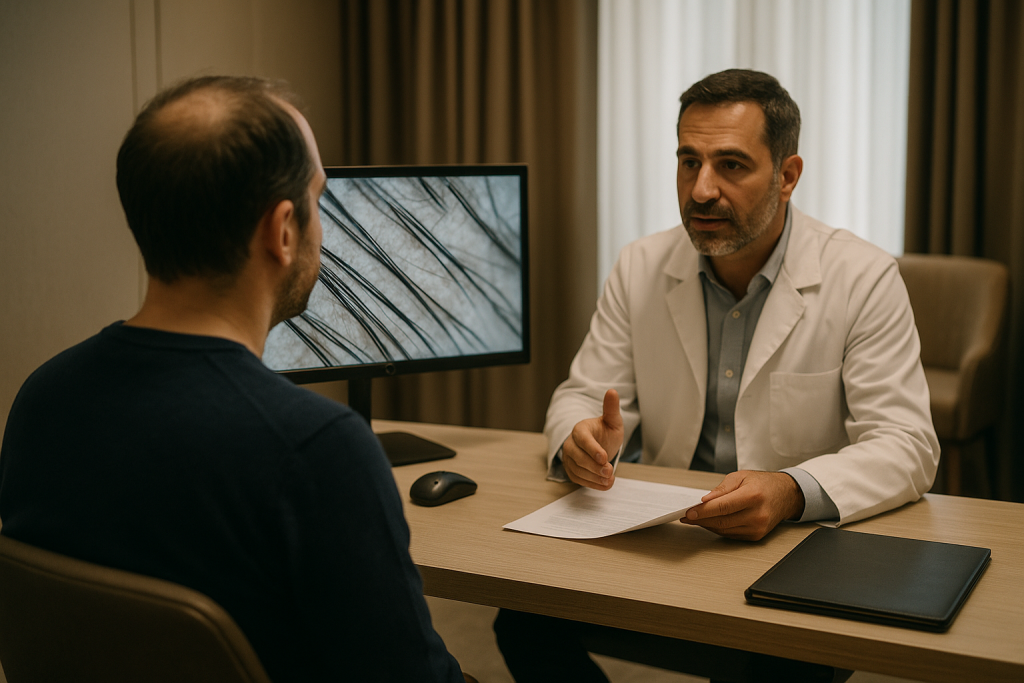
Your doctor may discuss a longer-term plan after the procedure, based on your medical history, scalp examination, and pattern of hair loss. This may include observation, medical options when appropriate, or simple changes to reduce hair damage. Do not begin a new scalp serum, supplement, medicated wash, or active treatment during recovery without checking with your clinic. Even products sold without prescription can irritate healing skin or interfere with a carefully planned aftercare routine.
Take progress photographs in similar lighting and from similar angles rather than judging change from day to day. Early transplanted hairs may shed before regrowth begins, and new growth commonly appears gradually. A conditioner can improve cosmetic appearance during this period, but patience is needed. At Acibadem Hair Transplant Center, follow-up is included for 12 months, allowing patients to ask recovery questions and share concerns as their result develops.
07Build a Simple Long-Term Hair-Washing Routine
Once you have completed the initial healing phase, a simple routine is usually easier to maintain than a complicated collection of products. Use a shampoo appropriate for your scalp and wash often enough to keep the scalp comfortable and free from excess oil or product build-up. Follow with a small amount of conditioner on the lengths when needed. The ideal frequency depends on hair texture, activity level, oil production, and any scalp condition, so there is no single schedule for everyone.
Be cautious with very hot tools, bleaching, harsh chemical services, and repeated tight pulling of the hair. These practices may weaken the visible hair shaft or cause traction, even though they do not remove a healthy transplanted follicle overnight. If you are considering colouring, perming, or other salon treatments after surgery, ask when this is appropriate for your stage of healing. Your doctor will confirm a timeframe based on the condition of your scalp.
If you are planning a procedure or are uncertain which routine is suitable, a professional hair and scalp assessment can provide a more reliable starting point than online product lists. Acibadem Hair Transplant Center is a dedicated hair restoration clinic in Istanbul, licensed by the Turkish Ministry of Health. Patients can request a free online hair analysis reviewed by doctors, with WhatsApp replies typically available within around two hours. This can help clarify aftercare questions without relying on unrealistic conditioner claims.
08Frequently Asked Questions
What type of conditioner is most suitable for thinning hair?
A gentle, lightweight rinse-out conditioner is often suitable for thinning hair because it can reduce tangling and breakage without weighing the hair down. Look for a formula that feels comfortable on your scalp and rinse it thoroughly. The right choice depends on your hair texture and scalp sensitivity, so there is no single best option for every person.
Which conditioner is best for hair fall and supporting hair growth?
No conditioner has been shown to reliably stop follicle-related hair loss or make transplanted follicles grow faster. A gentle conditioner can help reduce breakage and make hair look smoother, which may improve the appearance of fullness. If hair fall is ongoing or sudden, medical assessment is more appropriate than relying on a conditioner alone.
Can conditioner help with hair loss?
Conditioner can help with hair shaft dryness, friction, and breakage, but it does not treat the underlying causes of most hair loss. It may make hair look healthier and easier to manage while you follow a medically appropriate plan. After a transplant, use it only when your surgical team confirms that your scalp is ready.
What product works best to regrow lost hair?
There is no single cosmetic product that regrows all lost hair. The most appropriate approach depends on why hair loss occurred, how long it has been present, the condition of the follicles, and your medical history. A doctor can assess whether medical treatment, a hair transplant, observation, or another approach may be suitable.
This article is for general information only and is not a substitute for professional medical advice.
 06
 12