
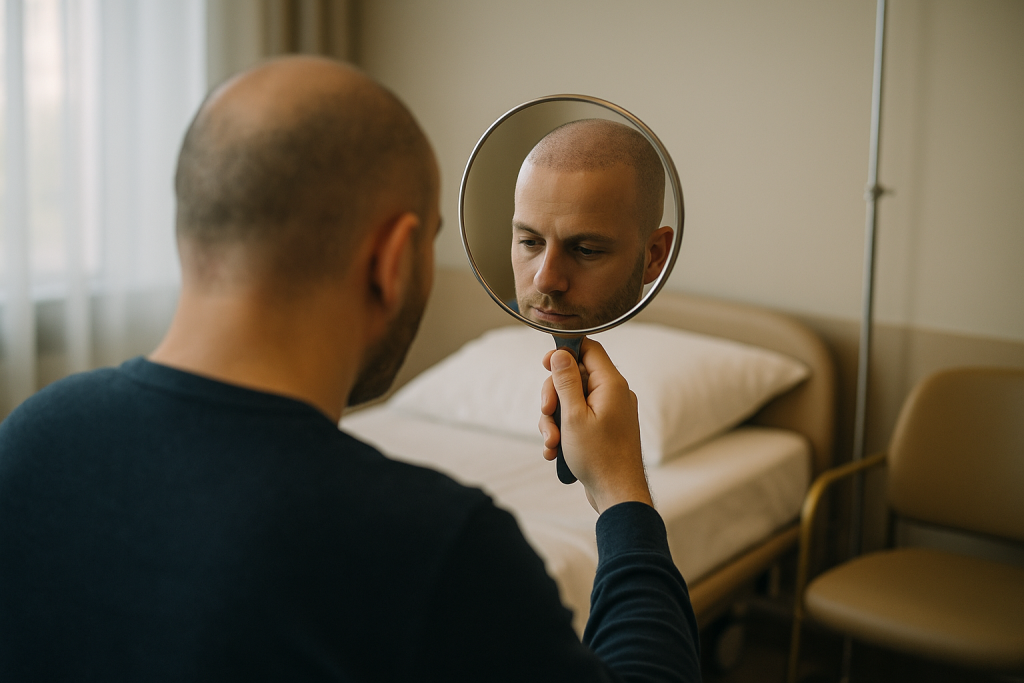
Hair transplant hair shedding can occur during the first few weeks after surgery and is commonly part of the normal recovery process. The transplanted follicles usually remain beneath the skin while the visible hair shafts fall out, and new growth typically begins gradually over the following months.
- Shedding of the transplanted hair shafts often starts around two to eight weeks after a hair transplant.
- Temporary shedding does not usually mean that the transplanted follicles have failed.
- New hairs commonly begin to emerge gradually from around month three or four, although timing varies.
- Following washing, medication, activity, and sun-protection instructions can help support uncomplicated healing.
- Rapid worsening pain, spreading redness, pus, fever, or heavy bleeding should be discussed with your clinic promptly.
01Hair Transplant Recovery: When Shedding Can Occur
Hair transplant hair recovery involves several visible stages, and shedding is one of the changes that can concern patients most. In most patients, it is normal for some or all of the newly transplanted hair shafts to fall out after the early healing period. This is often called shock shedding or temporary shedding. It can look alarming because the treated area may seem less full again, but the loss of the visible shaft does not automatically mean that the follicle underneath has been lost.
During a transplant, follicular units are carefully removed from the donor area and placed into tiny recipient sites. The procedure places the follicles under short-term physical stress, even when surgery and aftercare proceed as planned. As healing begins, the old hair shaft may detach while the follicle enters a resting phase. The follicle then needs time to establish its blood supply, rest, and begin a new cycle of hair production.
The recovery timeline is individual. Your age, natural hair characteristics, the size of the treated area, the technique used, smoking status, scalp health, medication use, and how closely aftercare instructions are followed can all affect what you see. A doctor should assess your scalp and explain the expected stages for your case. Photos taken in similar lighting at set intervals can also provide a more useful record than checking the mirror every day.
02Hair Transplant Hair: Why the Visible Strands May Fall
The visible hair strand and the living follicle are not the same thing. A hair shaft is the fibre that can be seen above the skin, while the follicle is the small living structure beneath the scalp that produces hair. After transplantation, the shaft may shed because the follicle temporarily shifts into a resting stage. In many cases, the follicle remains in place and later produces a new strand.
This process is related to the normal hair-growth cycle. Hair naturally moves through growth, transition, and resting stages. Transplant surgery can encourage some follicles to leave their active growth stage earlier than usual. As a result, shedding may appear suddenly rather than as a slow, even loss. The timing and amount of shedding can vary from one person to another, including between different areas of the same scalp.
Existing, non-transplanted hair can also thin temporarily after surgery. This is sometimes referred to as shock loss. It may be more noticeable when the surrounding hairs are already fine or affected by progressive pattern hair loss. A clinical team will consider the condition of your existing hair during planning, because a transplant improves selected areas but does not stop future thinning in untreated follicles.
03The First 14 Days: Scabs, Swelling, and Graft Protection
The first two weeks are mainly about protecting the grafts and allowing the scalp surface to heal. Small scabs around the implanted hairs are expected after many procedures. Mild redness, sensitivity, itching, and swelling can also occur, particularly during the first few days. Your clinic should provide precise instructions for sleeping position, washing, touching the scalp, and taking any prescribed medication.
It is important not to scratch, pick, rub, or pull at scabs. The grafts are most vulnerable in the early days, and forceful contact may disturb them. Patients are typically asked to use a gentle washing method and to avoid direct high-pressure water on the recipient area until their clinical team confirms it is safe. Hats, helmets, exercise, swimming, and sun exposure may also need to be limited for a defined period.
By the end of the second week, many patients notice that scabs have softened and cleared with careful washing. The scalp may still look pink, dry, or uneven, especially in fair skin or in larger treatment areas. This surface healing should not be confused with the longer process of follicle recovery. Even if the scalp looks calmer, the transplanted follicles are still moving through their early adjustment phase.
04Weeks Two to Eight: The Usual Shedding Window
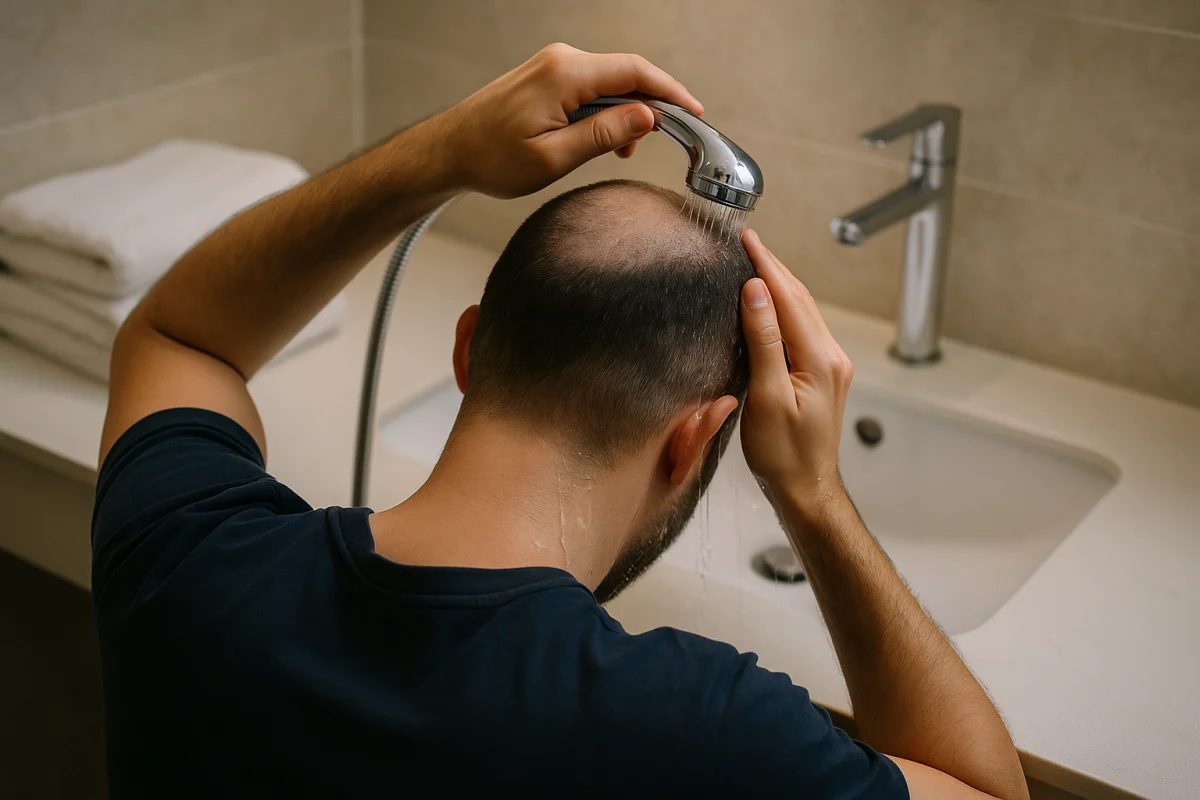
For many patients, the main shedding period begins between the second and eighth week. You may notice short hairs on your pillow, in the shower, or when gently washing the scalp. Some patients lose only a small amount of visible hair, while others notice more complete shedding across the transplanted area. Neither pattern alone can confirm the final result.
Hair transplant hair can appear sparse during this phase, and this can feel discouraging after the initial excitement of surgery. It is helpful to remember that early appearance is not a reliable measure of graft survival or long-term density. The scalp may look similar to how it did before surgery for a period of time. In some cases, it can look temporarily thinner because both transplanted hairs and nearby existing hairs are in a resting stage.
Do not try to speed up growth by using unapproved topical products, strong scalp treatments, supplements, or massage techniques without medical guidance. A recently treated scalp can be sensitive, and some products may cause irritation or interfere with your aftercare plan. If shedding is accompanied by increasing pain, extensive crusting, a bad smell, discharge, or a spreading rash, contact your clinic rather than waiting for the next routine check-in.
05Months Three to Six: When New Growth Often Becomes Noticeable
After the shedding stage, there is usually a quiet period when little seems to be happening. New hairs commonly start to become visible from around month three or four, although this varies. Early hairs may be fine, pale, curled, or uneven in direction. This does not necessarily predict the final texture, because transplanted hair often matures over several growth cycles.
Between months four and six, many patients begin to see a clearer change in coverage. Growth is rarely perfectly even. One part of the hairline, crown, or mid-scalp may appear to respond earlier than another. The crown can be especially slow to show visual density because its natural hair direction and larger surface area make coverage more difficult to assess. Comparing monthly photographs is usually more informative than comparing day-to-day changes.
A healthy lifestyle can support general wound healing and hair health, but it cannot guarantee a particular growth rate. Eat a balanced diet, follow advice about smoking and alcohol, and attend recommended follow-up appointments. If you have a known medical condition, nutritional deficiency, inflammatory scalp condition, or are taking regular medication, your doctor can advise whether these factors need further review during recovery.
06Month 12 and Beyond: Assessing Maturity Rather Than Early Density
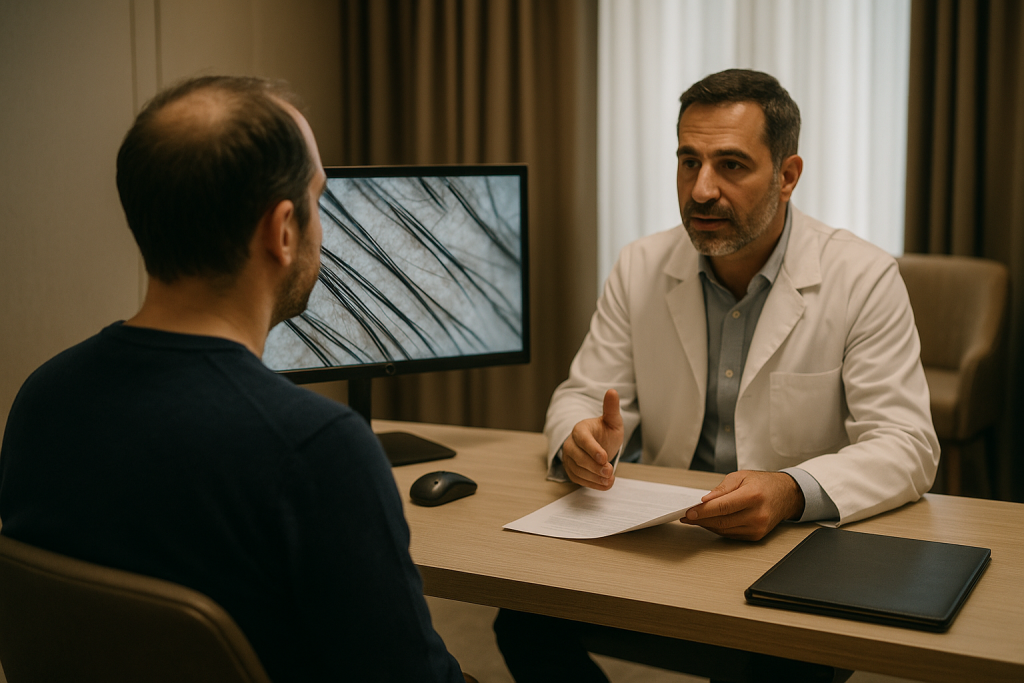
Hair transplant results are commonly assessed at around 12 months because the transplanted hairs have had time to grow, thicken, and settle. Some areas, particularly the crown, may continue to mature beyond that point. A doctor will assess the result in context, including donor capacity, the original degree of hair loss, hair calibre, curl, contrast between hair and scalp, and the number of grafts safely available for transplantation.
At Acibadem Hair Transplant Center in Istanbul, results are measured through trichoscopic graft-survival assessment at month 12. The clinic documents a 98% graft-survival rate under its written guarantee. This measure relates to graft survival rather than a promise of a specific cosmetic density or a guarantee that future natural hair loss will not occur. Your doctor will explain what can reasonably be assessed during follow-up.
A successful transplant does not permanently change the behaviour of non-transplanted hair. If you have androgenetic hair loss, the surrounding native hair may continue to miniaturise over time. For this reason, long-term planning is important, especially for younger patients or people with active hair loss. A conservative hairline design and thoughtful use of the donor area can help preserve options if further treatment is considered later.
07Recovery Concerns That Need a Prompt Clinical Review
Some discomfort, itching, redness, and shedding can be expected during recovery, but certain symptoms should not be ignored. Contact your clinic promptly if you have fever, worsening or severe pain, swelling that is increasing rather than settling, persistent bleeding, yellow or green discharge, a strong unpleasant smell, or redness that spreads beyond the treated area. These symptoms may need a clinical assessment.
You should also seek advice if you accidentally knock, scratch, or pull the recipient area during the early recovery period. Do not assume that every minor contact has damaged grafts, as this cannot be judged reliably from a photograph alone. However, your clinical team can advise you based on when the incident occurred, the symptoms present, and the appearance of the scalp.
Clear communication can make the recovery period less stressful. Acibadem Hair Transplant Center provides 12 months of follow-up as part of its all-inclusive packages, which also include VIP transfer, a 4-star hotel, and a care kit. International patients can request a free online hair analysis reviewed by doctors, with WhatsApp replies typically provided within about two hours. This can help patients understand the process before travelling, while individual suitability and aftercare needs must always be confirmed by a doctor.
08Practical Aftercare at Home: Washing, Sleep, and Daily Routines
Your clinic’s written instructions should always take priority, because the safest washing schedule and products can differ between treatment plans. In general, the recipient area should be handled as little as possible during the first days. When washing is permitted, patients are often advised to apply any recommended lotion or foam gently, allow it to soften dried blood or scabs, and rinse with low-pressure lukewarm water. Avoid rubbing with fingertips, using fingernails, or aiming a strong shower stream directly at the grafts until your clinical team says this is safe.
Sleeping carefully can reduce accidental friction and may help limit swelling in the first few nights. Your team may recommend sleeping on your back with your head raised, using clean pillows and avoiding contact between the recipient area and bedding. Try not to turn suddenly during sleep or rest the treated area against a headboard. If you normally sleep on your side or front, prepare your sleeping area before surgery so that following the recommended position is easier.
For the first stage of recovery, choose loose, front-opening clothing where possible. Pulling a tight T-shirt, jumper, or collar over the head can catch the recipient area. Avoid hair dryers on a hot setting, styling products, hair fibres, camouflage sprays, and chemical treatments unless your clinic has confirmed that they can be used. Once ordinary washing and styling are reintroduced, continue to treat the scalp gently if it remains dry, itchy, or sensitive.
Daily habits also matter. Keep hands clean before touching near the scalp, change pillowcases regularly, and avoid sharing hats or hair tools while the skin is healing. If itching occurs, do not scratch. Contact your clinic for advice on safe ways to manage it. Taking clear photos before washing, after washing, and at agreed follow-up points can help your clinical team review changes accurately if you have a concern.

09Who May Need More Careful Recovery Planning?
Hair transplant recovery is not identical for every patient. People with active inflammatory scalp conditions, frequent scalp infections, poorly controlled long-term health conditions, bleeding concerns, or a history of problematic scarring may need further assessment before a procedure is considered. These factors do not automatically rule out treatment, but a doctor should review them carefully and may recommend addressing the underlying issue first.
Medication and lifestyle factors should also be discussed openly during the online review and medical consultation. Prescription medicines, over-the-counter pain relief, supplements, smoking, alcohol use, and previous scalp procedures can affect surgical planning or aftercare advice. Do not stop prescribed medication independently for a hair transplant. Your doctor and the clinician who manages your regular treatment can advise on whether any change is appropriate.
Patients with ongoing or rapidly progressing hair loss may need especially realistic long-term planning. A transplant can redistribute available donor follicles, but it cannot create an unlimited donor supply or prevent further thinning in untreated areas. This is particularly relevant for younger adults, patients with diffuse thinning, and those seeking a very low or dense hairline. A doctor will consider the stability of the donor area, the pattern of loss, scalp quality, and future treatment options before confirming suitability.
Recovery may also feel different for people with naturally curly, coarse, fine, light, or grey hair. These features can influence how quickly coverage becomes visible, even when follicles are growing. For example, fine hair may take longer to create an impression of density, while curly hair can provide more visual coverage once it has matured. This is one reason why early comparisons with another patient’s timeline are not reliable.
10Travel Home After a Hair Transplant: Preparing for the Journey
International patients should plan their return journey around the clinic’s recommended post-procedure review and their individual recovery status. Before leaving Istanbul, make sure you understand your washing schedule, medication instructions, emergency contact method, and the date of your first remote follow-up. Keep the care kit and written aftercare guidance in your hand luggage so that they remain accessible during travel.
On the journey home, protect the scalp from unnecessary contact. Choose comfortable, loose clothing and take care when passing through vehicle doors, luggage compartments, or crowded areas. If a hat is recommended by your clinical team, use only the type and timing they have approved; a tight or unsuitable covering may rub against the recipient area. Ask for help with heavy bags rather than lifting them overhead or risking a knock to the scalp.
Cabin air and long journeys can make the skin feel dry or uncomfortable, but avoid applying unapproved products to the recipient area. Drink water regularly, take gentle walks when appropriate during longer travel, and follow any individual instructions about swelling management. Air travel itself may be suitable for many patients after the clinic confirms it, but your doctor should confirm the timing based on your procedure and health status.
Once home, do not delay contacting the clinic because you are in another country. Send follow-up photographs in the requested lighting and angles, and report concerning symptoms promptly. Acibadem Hair Transplant Center includes 12 months of follow-up in its all-inclusive packages. Patients can also use the clinic’s WhatsApp communication channel, where replies are typically provided within about two hours, although urgent or severe symptoms may require local in-person medical assessment.
11Frequently Asked Questions
How long does a hair transplant usually last?
Transplanted follicles are generally taken from areas that are more resistant to pattern hair loss, so the transplanted hair can last for many years and often long term. However, results vary, and the non-transplanted hair around it can continue to thin over time. A doctor can discuss long-term planning based on your hair-loss pattern and donor area.
What is the cost of 3,000 hair grafts?
The cost of 3,000 grafts varies significantly according to the treatment plan, technique, clinical services, travel arrangements, and whether the number of grafts is medically appropriate for the person. A graft count alone is not enough to provide a responsible quote. At Acibadem Hair Transplant Center, a free online hair analysis is reviewed by doctors before a personalised plan can be discussed.
What can happen 10 years after a hair transplant?
Ten years after a transplant, the transplanted hair may still be growing, but the appearance can change if the surrounding natural hair continues to thin. Some patients may be satisfied with their coverage, while others may consider medical management or an additional procedure if donor capacity and scalp health allow. Long-term outcomes depend on the original hair-loss pattern, donor supply, ageing, and ongoing hair loss.
What are the possible downsides of a hair transplant?
A hair transplant is a surgical procedure, so possible downsides include temporary swelling, redness, scabbing, discomfort, shedding, infection risk, scarring, and an uneven or unnatural-looking result if planning or technique is unsuitable. Not everyone has enough stable donor hair to achieve their desired coverage, and existing hair loss can continue after surgery. A proper medical assessment helps identify limitations, risks, and realistic expectations before treatment.
This article is for general information only and is not a substitute for professional medical advice.
 06
06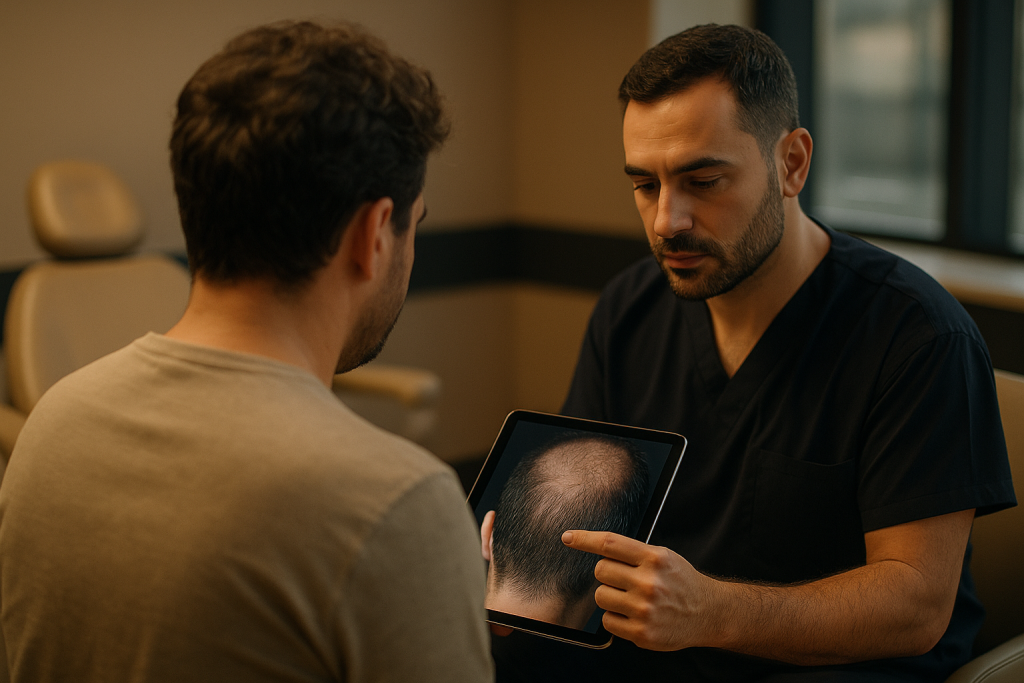 13
13