
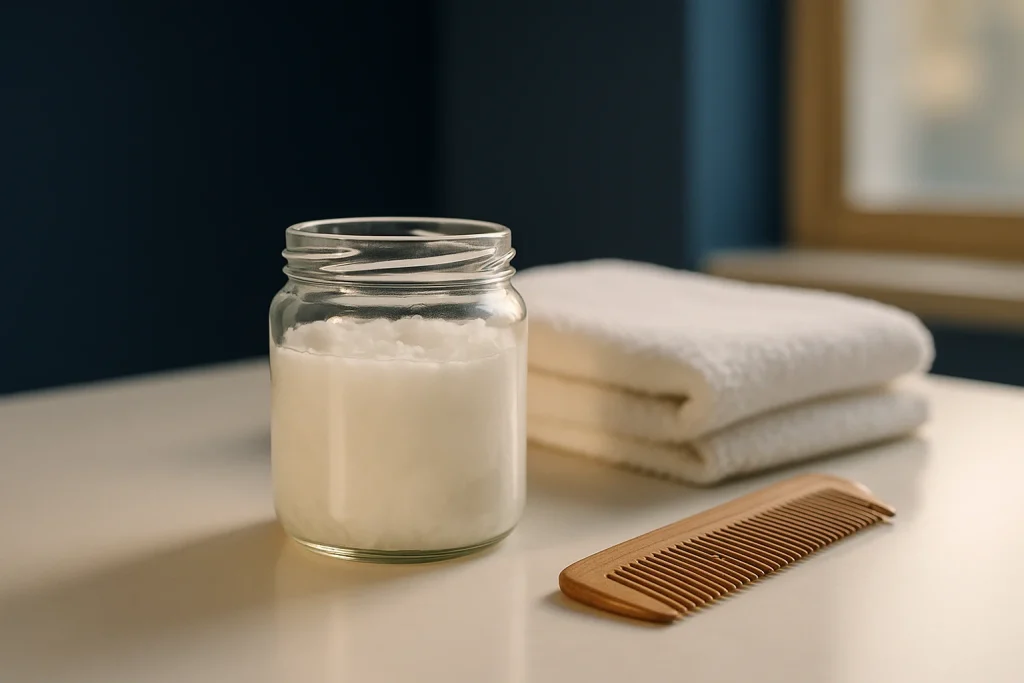
Coconut oil for alopecia is usually not a treatment for the underlying cause of hair loss, and it is unlikely to regrow bald areas. Before a hair transplant, it is best to tell your medical team about any oils or scalp products you use and follow their instructions about when to stop them, as an oily or irritated scalp may affect preparation.
- Coconut oil can reduce dryness and hair-shaft friction, but it does not typically restart growth in inactive follicles.
- The safety of coconut oil depends on your scalp condition, as some people develop irritation, folliculitis, or product buildup.
- Do not apply coconut oil immediately before a hair transplant unless your doctor has specifically approved it.
- Alopecia areata, pattern hair loss, scarring alopecia, and shedding have different causes and need different medical assessments.
- A pre-transplant consultation should focus on diagnosing your hair loss, protecting existing hair, and planning realistic graft use.
01What coconut oil for alopecia can and cannot do
Coconut oil for alopecia is often searched by people who want a simple, natural way to improve thinning hair or bald patches. It can make dry hair feel softer and may reduce breakage along the hair shaft. However, breakage is different from hair loss caused by changes in the follicle. In most patients, coconut oil cannot address the hormonal, autoimmune, inflammatory, genetic, nutritional, or scarring processes that may be causing alopecia. A medical assessment is important before relying on any home treatment, especially when hair loss is progressive or patchy.
Hair is made of keratin, and the visible strand above the scalp is not living tissue. Oils can coat this strand, improve shine, and reduce friction during washing or styling. This may make hair look fuller for a short time because there is less frizz and breakage. It does not mean new follicles have formed or that dormant follicles have become active. If you notice a smoother appearance after using coconut oil, this is usually a cosmetic benefit rather than evidence of hair regrowth.
The word alopecia simply means hair loss, but it includes several very different conditions. Pattern hair loss often develops gradually at the hairline, temples, crown, or part line. Alopecia areata may cause sudden round patches. Telogen effluvium can cause more widespread shedding after stress, illness, surgery, or other triggers. Scarring forms of alopecia can permanently damage follicles and need timely specialist care. Knowing the type of hair loss is more useful than choosing an oil based on general online advice.
02How coconut oil affects the scalp and hair shaft
Coconut oil contains fatty acids that can act as an emollient, meaning they help soften dry skin and hair. For some people, a small amount applied to hair lengths before washing may limit the feeling of dryness caused by frequent shampooing, heat styling, or chemical processing. This can be useful for fragile hair that snaps easily. It is not, however, a substitute for diagnosing increased shedding, visible scalp changes, or a widening area of thinning.
The scalp reacts differently from the hair lengths. Coconut oil may feel comfortable on a dry scalp, but it can also leave a heavy film, especially on fine hair or in people who produce more scalp oil naturally. Buildup can make it harder to clean the scalp thoroughly and may cause itching or flakes in some users. People with dandruff, seborrhoeic dermatitis, acne-prone skin, or recurrent folliculitis may find that rich oils make their symptoms worse. Your doctor can help distinguish a simple dry scalp from an inflammatory scalp condition.
Allergic contact reactions to coconut oil are uncommon but possible. Fragrances, essential oils, or other ingredients in blended products may also be responsible for redness, burning, itching, or small bumps. A patch test can reduce risk when trying a new cosmetic product, but it does not replace medical advice for an already irritated scalp. Stop using a product and seek medical guidance if you develop swelling, painful spots, a rash, pus-filled bumps, or worsening hair shedding.
03Coconut Oil for Alopecia: Is It Safe Before a Transplant?
Coconut oil for alopecia may be safe as an occasional cosmetic product for some people, but it should not be assumed to be suitable immediately before a hair transplant. Transplant planning depends on having a clean, calm scalp and a clear view of the donor and recipient areas. Heavy oils, leave-in masks, sprays, fibres, and similar products can create residue or hide redness and scaling. Your clinic will provide specific washing and product instructions before your procedure, and those instructions should take priority over a home routine.
Do not use coconut oil to try to soothe active itching, flaking, pimples, or sensitivity just before surgery without informing your medical team. These signs can indicate irritation or an underlying scalp problem that may need evaluation. A clinician may advise a different approach, postpone a treatment step, or recommend that you stop a product. This is not because every oil is dangerous; it is because scalp health and hygiene are important parts of safe surgical preparation.
On the day of a transplant, patients are commonly asked to arrive with clean hair and without unapproved scalp products. The exact instructions vary according to the treatment plan, anaesthesia approach, medicines, and your scalp condition. At Acibadem Hair Transplant Center, the doctor and care team can explain the preparation schedule during consultation. Do not guess the timing based on social media routines or a friend’s experience, because your instructions may be different.

04Why oils do not regrow bald spots
A bald spot can develop for many reasons, and the cause affects whether regrowth is possible. In pattern hair loss, follicles gradually become smaller in genetically sensitive areas. In alopecia areata, the immune system affects the follicles. In scarring alopecia, inflammation may destroy follicles and replace them with scar tissue. Coconut oil does not have established clinical evidence showing that it reverses these processes or reliably regrows bald patches.
Massage while applying an oil may briefly improve comfort and can help distribute a product over the scalp, but massage itself should not be presented as a cure for hair loss. Vigorous rubbing can also irritate a sensitive scalp or pull on fragile hairs. If hair loss is sudden, limited to one or more patches, associated with eyebrow or beard loss, or accompanied by pain and scale, it is sensible to arrange a medical assessment rather than repeatedly applying oil.
Hair transplant surgery also has a specific role. It redistributes healthy follicles from a donor area to selected thinning areas; it does not cure the process causing ongoing native-hair thinning. A transplant may not be appropriate for every type of alopecia, particularly when there is active autoimmune or scarring disease. Your doctor will assess diagnosis, donor availability, scalp stability, expectations, and long-term hair-loss management before recommending a procedure.
05Alopecia areata and essential oil claims
Alopecia areata is an autoimmune condition that can cause smooth, round or oval areas of hair loss. The hair may regrow on its own in some cases, while other cases can be recurrent or more extensive. Because the course is unpredictable, a product used shortly before natural regrowth may appear to be the reason for improvement. This can make personal testimonials compelling, but they do not prove that an oil treated the condition.
Some online articles discuss rosemary, castor, peppermint, lavender, or other essential oils for alopecia areata. These claims should be viewed carefully. Essential oils are concentrated substances and can cause burns, allergic reactions, or dermatitis when used incorrectly. There is not enough strong evidence to consider any oil a reliable primary treatment for alopecia areata. A dermatologist can discuss evidence-based options and whether treatment is needed for your individual situation.
If you have alopecia areata and are considering a transplant, timing matters. Surgery is generally considered only after appropriate assessment of disease activity and stability. Transplanting into an area with active inflammation may not provide the expected result. It is important to report previous episodes of patchy hair loss, nail changes, skin conditions, and family history during your consultation so the doctor can make a safer plan.
06When an oily scalp can complicate transplant preparation
Before a hair transplant, the team needs to examine the donor region and the area planned for implantation. Product residue may make it more difficult to assess hair direction, scalp redness, scaling, or follicular openings. It can also interfere with the feeling of a freshly washed scalp. For these reasons, a clinic may ask patients to avoid certain leave-in products for a defined period before the procedure. Follow the instructions given to you rather than applying more oil to cover dryness or improve appearance.
After surgery, newly implanted grafts need gentle care. The scalp can have temporary redness, crusting, tightness, or sensitivity as it heals. It is important not to apply coconut oil, essential oils, or other non-approved products to grafted areas during the early healing period. Even a familiar cosmetic product may be unsuitable on healing skin. Your care team will tell you when and how to wash, touch, moisturise, or return to your usual hair-care routine.
At Acibadem Hair Transplant Center in Istanbul, patients can receive a treatment plan using Sapphire FUE or DHI techniques where clinically suitable. Needle-free anaesthesia is also available. The clinic provides a care kit and 12 months of follow-up within its all-inclusive packages, which also include VIP transfer and a 4-star hotel. These services do not replace the need to follow individual medical instructions, particularly about products used before and after surgery.
07Better steps to take before choosing a transplant
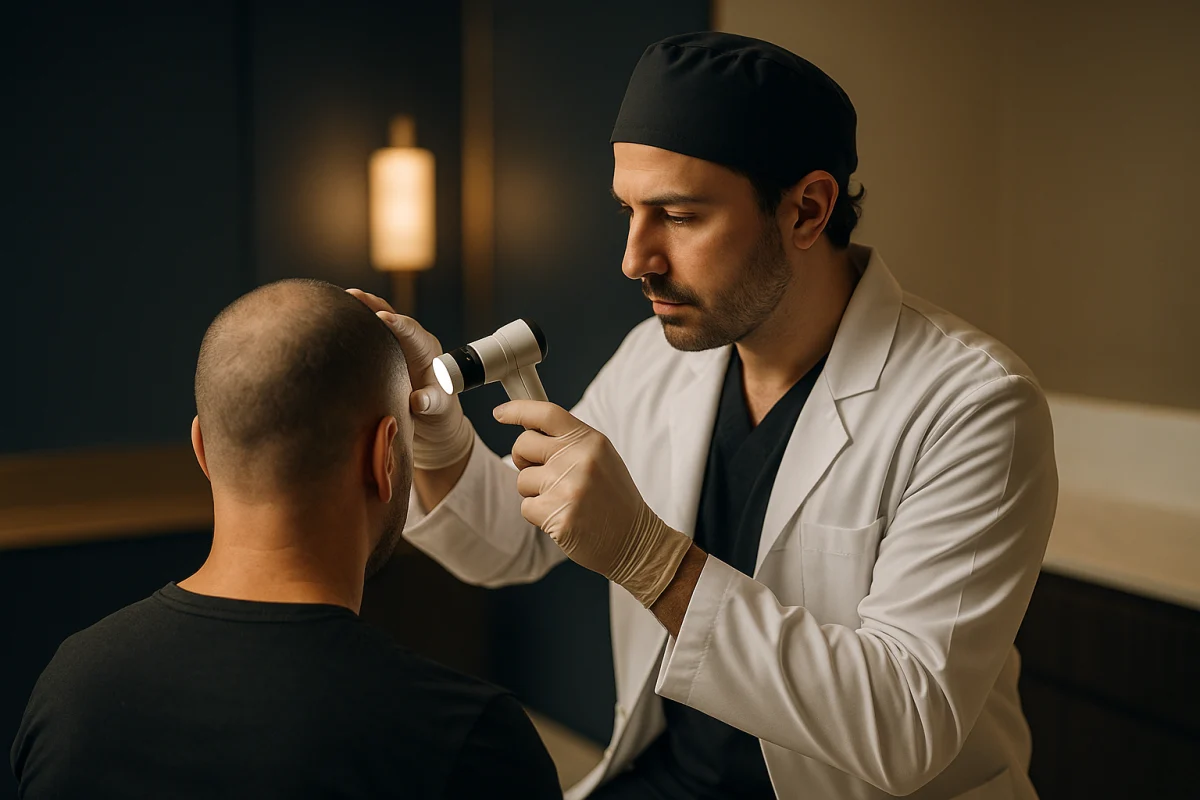
The most useful first step is to identify the likely cause of your hair loss. A doctor may ask when the shedding started, whether it is worsening, whether family members have pattern hair loss, and whether you have had recent illness, major stress, weight changes, medication changes, or scalp symptoms. They may examine the hair distribution and donor area. In some situations, further medical evaluation may be appropriate before a surgical decision is made.
Take clear photographs over time in similar lighting instead of judging change from day to day. This can help show whether a hairline, crown, part line, or patch is stable. Avoid making major decisions based only on a temporary improvement in hair texture after using an oil. Cosmetic conditioning can be valuable, but transplant planning requires a longer-term view of hair loss and a realistic understanding of what donor hair can achieve.
Patients travelling internationally can start with a free online hair analysis reviewed by doctors at Acibadem Hair Transplant Center. The team typically replies on WhatsApp within around two hours. Images and history can support initial guidance, although an online review cannot replace the clinical checks needed to confirm suitability. The clinic is licensed by the Turkish Ministry of Health and has treated patients from 38 countries over 12 years.
08A practical scalp-care approach before consultation
Keep your routine simple in the period before a hair-loss consultation. Use a gentle method of cleansing that you tolerate well, avoid picking at flakes or scabs, and limit new products if your scalp is already reactive. If you use coconut oil on the hair lengths for dryness, mention it during your consultation and ask whether you should pause it before any planned procedure. Bring a list of topical products, supplements, medicines, and previous treatments if possible.
Seek prompt medical advice for sudden patchy hair loss, scalp pain, burning, marked redness, pustules, bleeding, or shiny areas with reduced follicle openings. These symptoms do not always indicate a serious condition, but they should not be covered with oils while waiting for a transplant assessment. Early evaluation may help protect remaining hair and identify conditions for which surgery is not the first option.
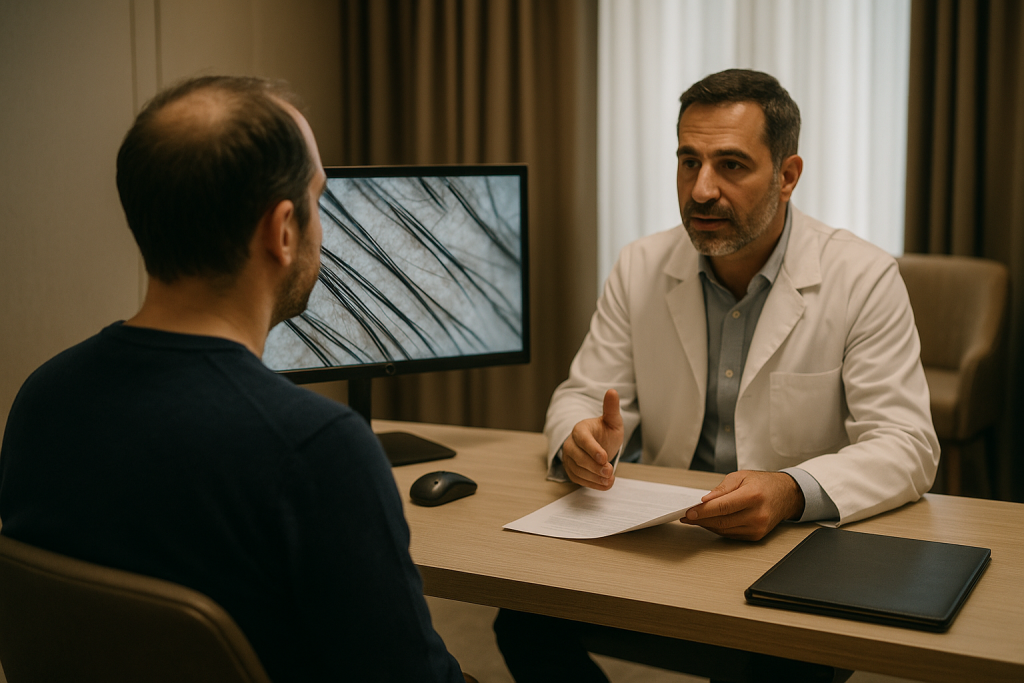
A careful transplant consultation should include more than selecting a technique or estimating graft numbers. It should consider your diagnosis, age, hair characteristics, donor capacity, family pattern, future hair-loss risk, and goals. At month 12, Acibadem Hair Transplant Center measures results through trichoscopic graft survival and documents a 98% rate under its written guarantee. Your doctor will still explain that each patient’s healing, hair characteristics, and overall result can vary.
09Frequently Asked Questions
Which oil is best for alopecia?
There is no single oil that is proven to be the best treatment for all types of alopecia. Coconut oil and other carrier oils may condition dry hair, but they do not usually treat the underlying reason for follicle-related hair loss. The best next step is to identify the type of alopecia with a qualified clinician.
Can coconut oil regrow bald spots?
Coconut oil is unlikely to regrow bald spots caused by pattern hair loss, alopecia areata, or scarring alopecia. It may reduce hair-shaft breakage and improve softness, which can make existing hair look healthier. New or enlarging bald patches should be medically assessed.
Can coconut oil stop or fix hair loss?
Coconut oil cannot typically fix hair loss because hair loss has many possible causes, including genetic, hormonal, autoimmune, inflammatory, and medical factors. It can be part of a cosmetic hair-care routine if your scalp tolerates it. It should not delay assessment when shedding or thinning is persistent.
What oils can help with alopecia areata?
No oil has been established as a reliable treatment for alopecia areata. Some essential oils are promoted online, but they may irritate the scalp and should not replace a dermatologist’s assessment or treatment plan. If you choose to use a cosmetic oil, discuss it with your clinician and stop if irritation occurs.
Should I use coconut oil before a hair transplant?
Use it only if your transplant team has said it is acceptable. Most patients will be asked to follow a clean-scalp preparation routine and avoid unapproved leave-in products close to the procedure. Your doctor will confirm when to stop and when it may be safe to restart any scalp product.
This article is for general information only and is not a substitute for professional medical advice.
 06
06 12
12