
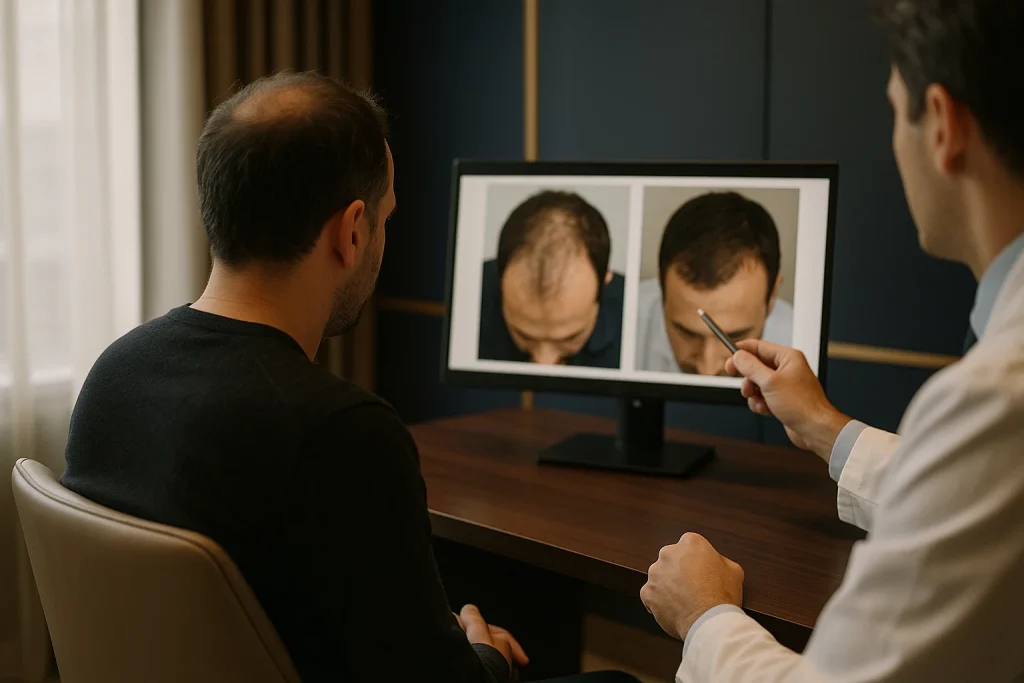
For male pattern hair loss, 0.5mg finasteride vs 1mg is a discussion about balancing potential benefit, tolerability and consistent long-term use. A 1 mg daily dose is commonly used for this condition, while some doctors may consider 0.5 mg for selected patients; the right approach should be confirmed through medical assessment.
- Finasteride lowers dihydrotestosterone, a hormone involved in male pattern hair loss.
- A 1 mg daily dose is commonly prescribed for male pattern hair loss, but lower-dose plans may be considered by a doctor.
- Hair changes are gradual, and treatment response is usually assessed over several months rather than weeks.
- Possible sexual, mood and breast-related side effects should be discussed before starting treatment.
- Stopping finasteride can allow the underlying hair-loss process to resume over time.
01Finasteride 0.5 mg vs 1 mg: Questions for Hair Loss Care
When comparing 0.5mg finasteride vs 1mg, the most important point is that both doses are intended to reduce the hormonal influence that contributes to male pattern hair loss. Finasteride is a prescription medicine that reduces conversion of testosterone into dihydrotestosterone, usually called DHT. In genetically sensitive scalp follicles, DHT can gradually shorten the hair-growth phase and make hairs finer. The dose decision is not only about choosing the strongest option; it is also about medical suitability, possible side effects and whether a person can follow the plan consistently.
For many adult men with androgenetic alopecia, also called male pattern hair loss, 1 mg once daily is the commonly used dose. However, some patients ask about 0.5 mg because they are concerned about tolerability, are considering a cautious starting approach, or have discussed a lower-dose regimen with their prescribing clinician. A lower dose may still reduce DHT, but its expected effect and suitability can vary. Your doctor should review your hair-loss pattern, health history, current medicines and treatment goals before recommending a dose.
Finasteride is not an instant solution and does not create new follicles in areas where follicles are no longer viable. Its purpose is typically to slow further miniaturisation and help preserve existing hair. Some patients also see improved hair thickness or density over time. Results differ between individuals, and treatment generally needs to continue to maintain any benefit.
02How finasteride works in male pattern hair loss
Male pattern hair loss is mainly driven by genetics and sensitivity to DHT. It often appears as recession at the temples, thinning around the crown, or a gradual reduction in overall density. DHT attaches to receptors in susceptible follicles, causing a process called miniaturisation. Over repeated growth cycles, each new hair may become shorter, thinner and less pigmented until visible scalp coverage is reduced.
Finasteride blocks an enzyme known as type II 5-alpha-reductase. This enzyme plays a role in producing DHT from testosterone. By lowering DHT levels, finasteride can reduce the hormonal pressure on susceptible scalp follicles. It does not remove the genetic tendency for hair loss, which is why the benefits generally depend on ongoing use under medical supervision.
Hair follows a slow biological cycle. A person may need several months before noticing reduced shedding or a more stable appearance, and a full assessment is often made later than that. Early shedding changes can be difficult to interpret without photographs or trichoscopic review. A clinician can help distinguish between androgenetic alopecia and other causes of shedding, such as illness, nutritional issues, scalp inflammation or telogen effluvium.
030.5mg finasteride vs 1mg: what changes with the dose?
The main difference between 0.5 mg and 1 mg is the amount of medicine taken. Both doses may lower DHT, although the degree of hormone reduction and the individual clinical response may not be identical. The relationship between dose and hair outcome is not always simple: increasing a dose does not guarantee a proportionally larger visible improvement for every patient. This is one reason a doctor may focus on the overall treatment plan rather than dose alone.
The 1 mg daily dose is widely used for male pattern hair loss and is the dose commonly referenced in prescribing information for this indication in many settings. A 0.5 mg dose may be discussed in selected cases, but it should not be viewed as automatically equivalent to 1 mg. The expected balance of effectiveness and tolerability needs to be considered individually, especially when a patient has experienced unwanted effects or has concerns about them.
Some people split tablets to obtain a lower dose, but this should only be done when the prescribed tablet can be divided safely and the clinician or pharmacist agrees. Tablet splitting can result in uneven portions and handling precautions may apply. In particular, pregnant people or people who may become pregnant should not handle crushed or broken finasteride tablets because of the potential risk to a male fetus.
04Is 0.5 mg finasteride an effective option?
A 0.5 mg finasteride plan may be effective for some men with androgenetic alopecia because it can still reduce DHT activity. However, effectiveness is not something that can be predicted precisely before treatment begins. The degree of hair loss, family pattern, age, duration of thinning, scalp health and consistency of use can all influence the visible outcome. Your doctor will confirm whether a lower dose is a reasonable option in your situation.
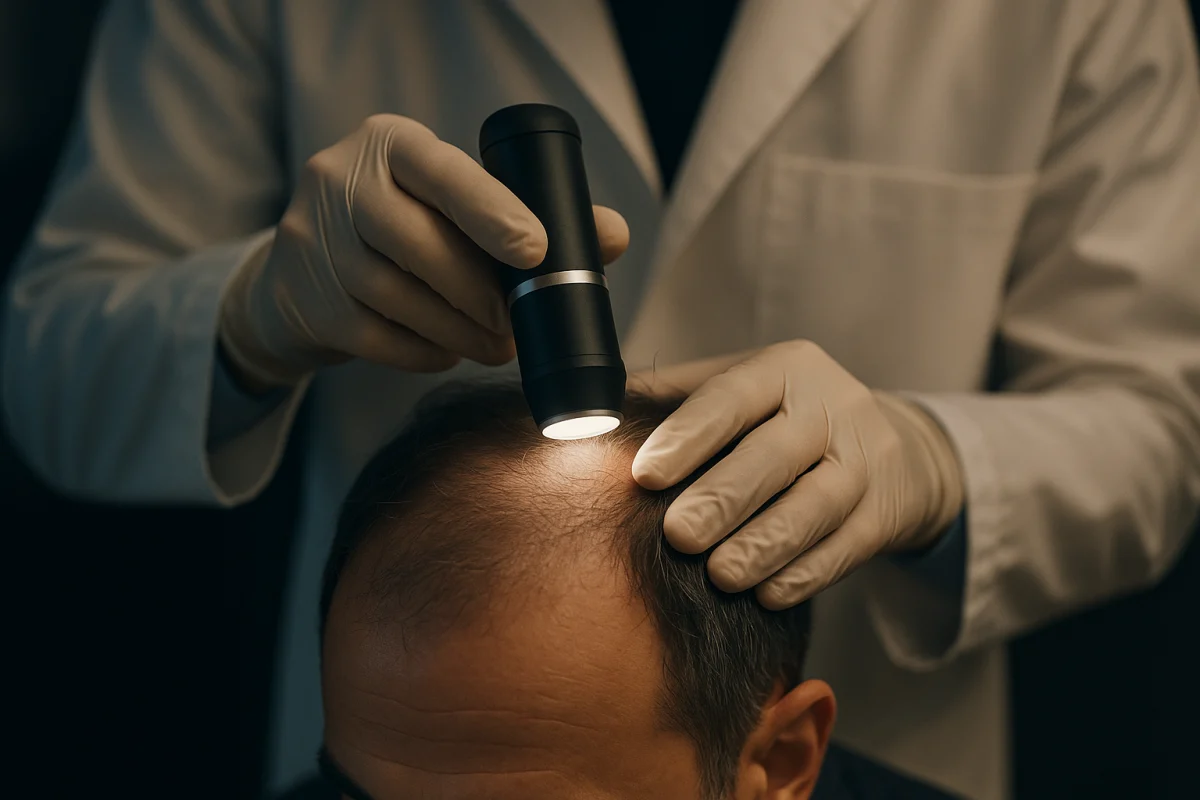
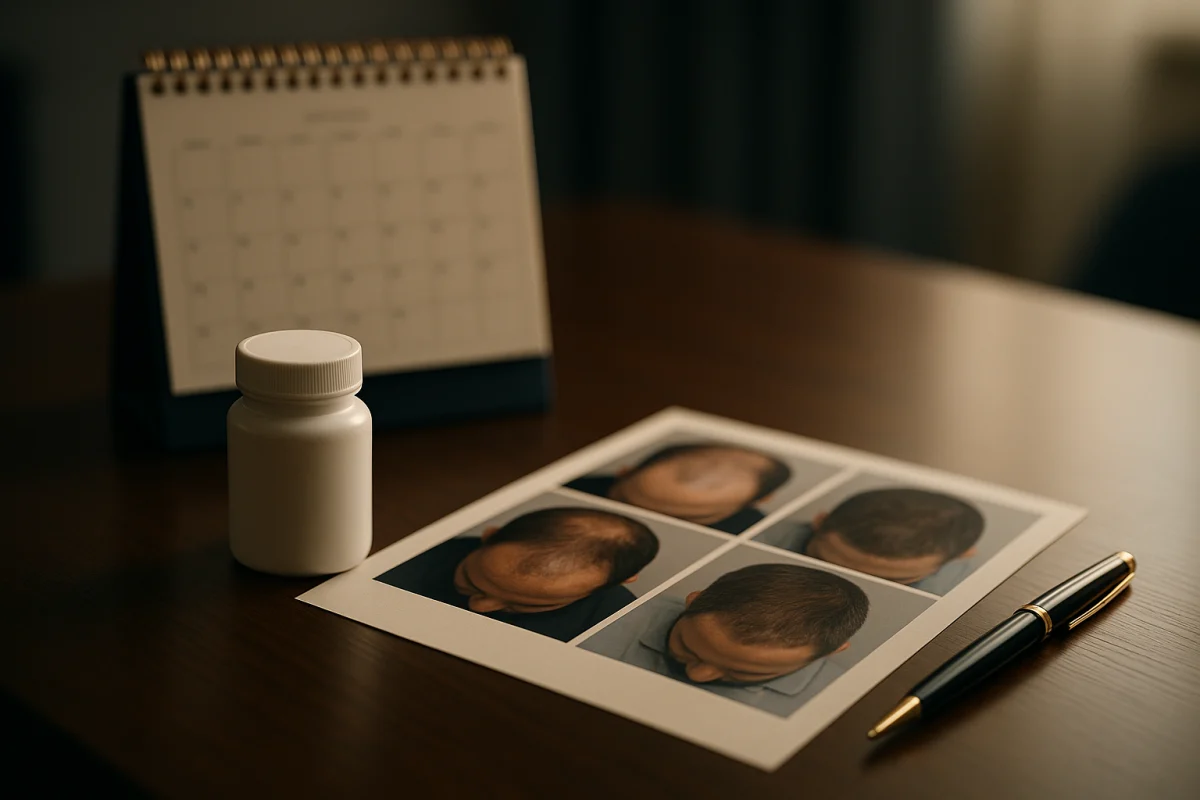
A useful way to assess treatment is to track the same areas of the scalp under similar lighting over time. Standardised photographs and scalp examination can be more informative than checking the mirror each day. Daily changes are not reliable indicators because hair shedding naturally fluctuates. In a clinical setting, trichoscopic assessment can help monitor hair calibre, density patterns and signs of miniaturisation.
Patients should not change from 1 mg to 0.5 mg, increase their dose, or take medicine on an irregular schedule without discussing it with their prescriber. A lower dose may be part of a carefully considered plan, but self-adjustment can make it harder to judge response and side effects. If concerns arise, speak with the prescribing doctor rather than stopping or restarting treatment repeatedly.
05Possible side effects and important safety discussions
Like all prescription medicines, finasteride can cause side effects, although not everyone experiences them. Reported concerns can include changes in sexual desire, erectile function, ejaculation volume or fertility parameters. Some patients also report mood changes. Breast tenderness, breast enlargement, nipple discharge or a breast lump should be assessed promptly by a clinician. The likelihood, duration and significance of symptoms differ between individuals.
Before prescribing finasteride, a doctor will usually ask about your medical history, current medicines, sexual health concerns, mental health history and fertility plans. Finasteride can affect prostate-specific antigen, often called PSA, test interpretation. Anyone having PSA testing or prostate assessment should tell their healthcare professional that they use or have used finasteride. This helps the clinician interpret the result appropriately.
Finasteride is generally prescribed for male pattern hair loss in adult men. It is not suitable for everyone, and use in women, particularly during pregnancy or when pregnancy is possible, requires specific medical caution. If you develop troubling symptoms, do not ignore them. Contact your prescribing clinician for advice on the next step, which may include reassessment of the treatment plan.
06Finasteride compared with dutasteride for hair loss
Dutasteride 0.5 mg works through a related but broader mechanism than finasteride. It inhibits both type I and type II 5-alpha-reductase enzymes, whereas finasteride mainly inhibits type II. As a result, dutasteride typically produces a greater reduction in DHT. This is why people often ask whether dutasteride 0.5 mg may be more effective than finasteride 1 mg for hair loss.
Clinical evidence suggests that dutasteride can provide stronger hair-growth effects for some men with androgenetic alopecia. However, a stronger reduction in DHT does not make it the best choice for every patient. Its approval status for hair loss differs by country, and in many locations it may be used off-label for this purpose. A doctor should explain the potential benefits, uncertainties, safety considerations and monitoring needs before any switch is considered.
It is not advisable to combine finasteride and dutasteride or move between them without medical direction. Both medicines affect hormonal pathways and may have overlapping side-effect considerations. A clinician may first consider the pattern and progression of hair loss, prior response to treatment, tolerance, reproductive plans and the availability of appropriate follow-up before recommending either medicine.
07Building a realistic hair-loss treatment plan
Medicine is only one part of hair-loss care. A complete assessment begins with confirming the cause of thinning. Pattern hair loss may occur alongside other issues, including scalp conditions or temporary shedding triggers. Your doctor may examine the scalp, review your history and decide whether blood tests or further investigation are appropriate. This avoids treating every type of shedding as if it were androgenetic alopecia.
For suitable patients, finasteride may be used alongside non-hormonal treatment options, scalp care or hair restoration planning. The choice depends on the area of thinning and the quality of the donor hair, as well as medical suitability. A hair transplant can redistribute permanent donor follicles, but it does not stop ongoing thinning in untreated native hair. Medical management is therefore often discussed when progressive male pattern hair loss is present.
At Acibadem Hair Transplant Center in Istanbul, a free online hair analysis can be reviewed by doctors to help patients understand whether their pattern may need medical evaluation, hair restoration planning or both. The clinic is licensed by the Turkish Ministry of Health and offers Sapphire FUE and DHI techniques for appropriate candidates. An online assessment does not replace an in-person medical examination or prescription consultation, but it can be a useful first step.
08Questions to ask before choosing a finasteride dose
Before starting treatment, ask what diagnosis is being treated and whether finasteride is appropriate for you. It is reasonable to ask why 1 mg, 0.5 mg or another approach is being considered, how response will be monitored and when a review should take place. Clear expectations are important: the goal may be slowing loss and maintaining coverage rather than achieving dramatic regrowth.
You may also wish to ask about side effects, fertility considerations, interactions with your current medicines and what to do if you miss doses. If you have a history of depression, anxiety, sexual dysfunction, prostate monitoring or breast symptoms, mention this during your consultation. Open discussion helps your doctor make a more informed recommendation and gives you a clear route for reporting concerns.
Finally, ask how long treatment should be continued before making a judgement about the result. Hair loss treatment requires patience, and frequent dose changes can make evaluation less clear. A planned follow-up schedule, consistent photographs and professional scalp review can support safer, more realistic decisions about 0.5mg finasteride vs 1mg over time.
09Frequently Asked Questions
Can a 0.5 mg dose of finasteride help with hair loss?
It may help some men with male pattern hair loss because 0.5 mg can still reduce DHT activity. However, response varies, and 1 mg daily is the commonly used dose for this condition. A prescribing doctor can advise whether a lower-dose plan is appropriate based on your medical history and treatment goals.
What is the practical difference between 0.5 mg and 1 mg finasteride?
The difference is the amount of medicine taken and potentially the degree of DHT reduction. A 1 mg dose is commonly used for male pattern hair loss, while 0.5 mg may be considered in selected situations. Neither dose can guarantee a particular hair result, and dose changes should be medically supervised.
Is dutasteride 0.5 mg stronger for hair loss than finasteride 1 mg?
Dutasteride 0.5 mg generally lowers DHT more strongly than finasteride 1 mg because it acts on two forms of the relevant enzyme. It may be more effective for some patients, but it is not automatically the right choice and may be off-label for hair loss depending on the country. A doctor should review its potential benefits and risks before prescribing it.
What is finasteride 0.5 mg usually used for?
A 0.5 mg finasteride regimen may be used as a doctor-directed approach for male pattern hair loss when a lower dose is considered suitable. Its use can vary by local prescribing practice and the individual patient. It should only be taken with a prescription and appropriate clinical guidance.
This article is for general information only and is not a substitute for professional medical advice.
 06
06 12
12