
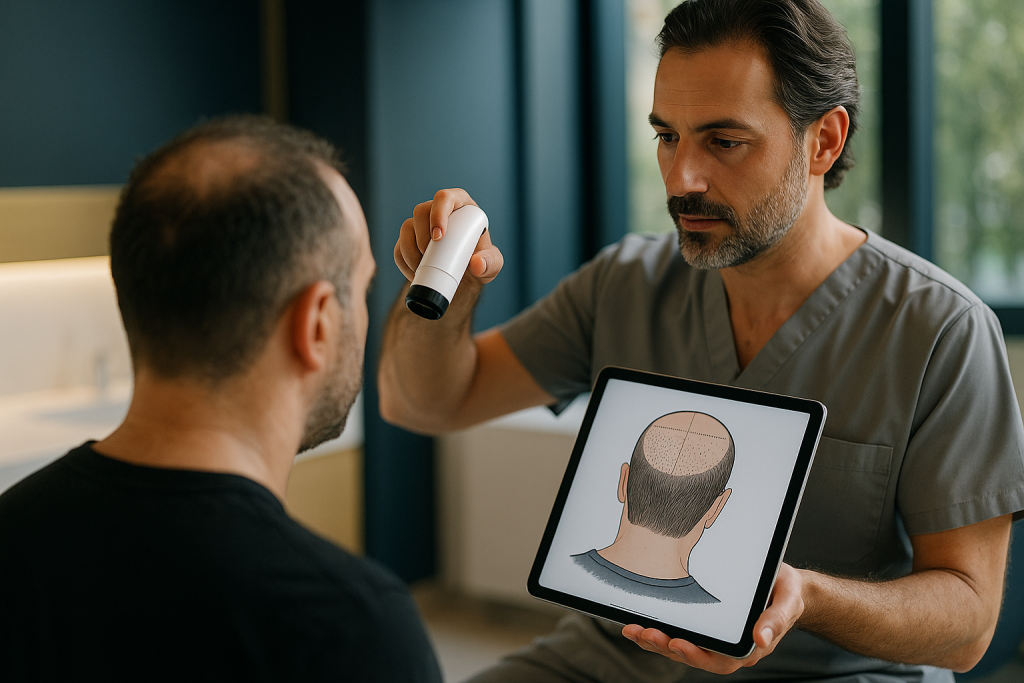
Hair graft turkey planning is based on the size of the thinning area, the quality and available supply of the donor area, hair characteristics, and long-term hair-loss patterns. A responsible plan aims to create useful coverage while keeping enough donor hair for a natural-looking result and possible future needs.
- A graft is a naturally occurring follicular unit that may contain one to several hairs.
- The number of grafts needed depends on the treatment area, desired density, hair type, and donor capacity.
- A larger graft count is not always a better plan because the donor area must be protected.
- Hairline design and future hair-loss progression are central to safe, long-term planning.
- A doctor-reviewed analysis is needed to confirm whether a proposed graft range is suitable.
01Hair Graft Turkey: How Graft Numbers Are Planned
Hair graft turkey planning begins with a careful medical and visual assessment, not with a fixed number chosen from a menu. During a consultation, the doctor usually reviews where hair loss has occurred, how stable it appears, the quality of the hair at the back and sides of the scalp, and the patient’s goals. The aim is to balance coverage, density, and donor-area protection. This is important because every scalp has a limited donor supply, while the visible area of hair loss may continue to change over time.
A graft is also called a follicular unit. It is a small natural grouping of hair follicles that may contain one, two, three, or sometimes more individual hairs. For this reason, 3,000 grafts do not always mean the same number of hairs from one patient to another. Doctors plan using graft numbers because grafts are the units that can be safely extracted and implanted, but they also consider the expected hair count and the cosmetic effect of each graft.
The first consultation often produces a graft range rather than an exact final figure. This range may be refined after the scalp is examined more closely and the donor area is assessed. A plan should not be based only on photographs of another person, since hair calibre, curl, scalp contrast, and the pattern of loss can make the same graft number look very different. Your doctor will confirm the suitable treatment approach after reviewing your individual findings.
02What Doctors Count When They Estimate Grafts
Graft planning starts by measuring the areas that require treatment. These may include a receding frontal hairline, the temples, the mid-scalp, the crown, or several zones together. A small frontal area may need fewer grafts than a broad area of diffuse thinning, even if both concerns appear similar in a photograph. The doctor also considers whether the goal is to rebuild an absent area, improve existing density, or blend transplanted hair into thinning native hair.
Hair density is not planned as one identical number across the full scalp. The frontal hairline normally requires careful placement and gradual density changes to avoid an artificial edge. The mid-scalp may need enough coverage to connect the front with the crown, while the crown often needs a different distribution because its natural swirl pattern can expose the scalp more easily. This is why dividing the graft total between zones is usually more meaningful than focusing only on one large total.
The thickness and texture of the hair can influence the visual coverage achieved. Coarser hair generally creates more visual volume than very fine hair, while curly or wavy hair may cover more scalp than straight hair of the same number of grafts. The contrast between hair colour and scalp colour also matters. When contrast is high, the scalp can be more visible through the hair, so the doctor may discuss realistic density expectations before planning treatment.
03Assessing the Donor Area Before Extraction
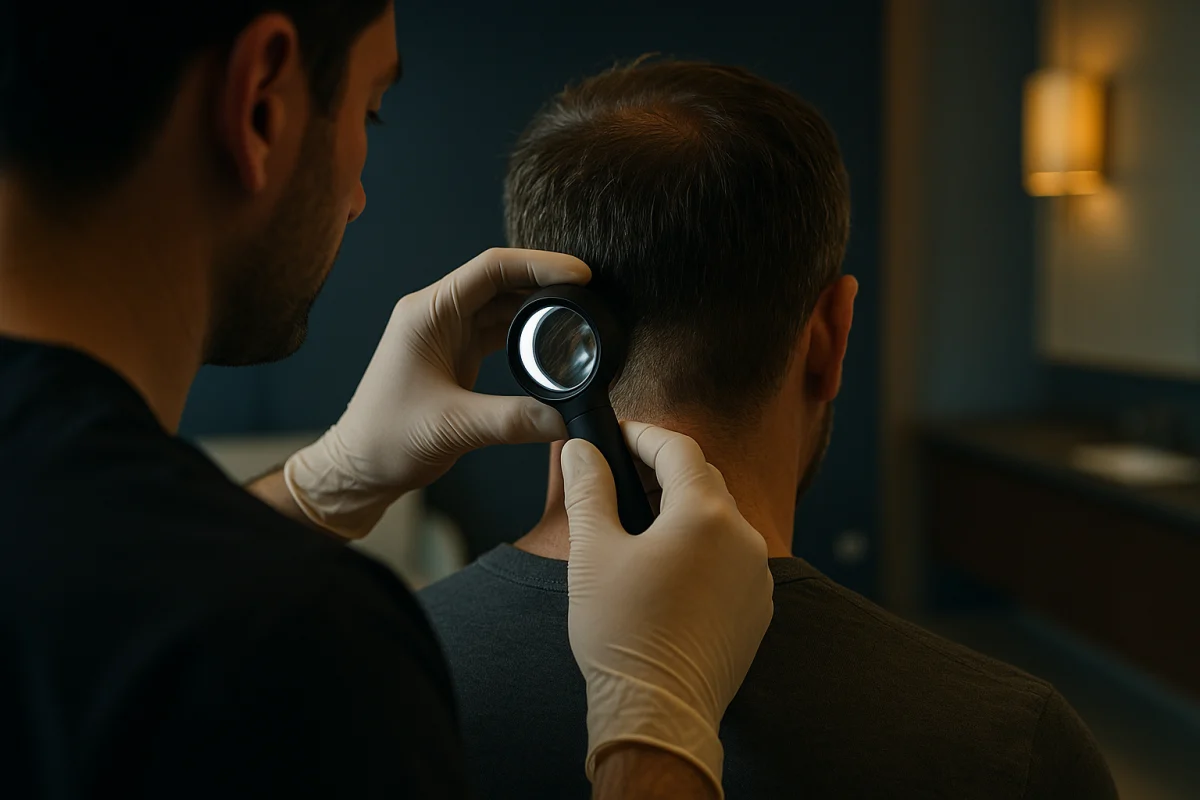
The donor area is usually located at the back and sides of the scalp, where hair may be more resistant to the effects of pattern hair loss. However, donor hair is not unlimited. Doctors assess density, hair thickness, scalp condition, and the width of the stable donor zone before recommending a graft range. They also look for signs of diffuse thinning, miniaturisation, scarring, or other features that may affect whether extraction is appropriate.
A safe plan considers how the donor area may look after healing. Taking too many grafts from one zone can increase the risk of a visibly reduced density or an uneven appearance. For this reason, extraction is normally spread carefully across the suitable donor area rather than concentrated in one small place. The appropriate number is therefore not simply the highest number that can be removed in one session; it is the number that supports an acceptable balance between the donor and recipient areas.
At Acibadem Hair Transplant Center, a dedicated hair restoration clinic in Istanbul licensed by the Turkish Ministry of Health, donor-area assessment is part of the doctor-reviewed planning process. Online photographs can provide an initial indication, but they cannot replace direct clinical evaluation. If the donor supply does not support the desired coverage, the doctor may discuss a more conservative design, a staged approach, or whether treatment should be reconsidered.
04Matching the Graft Plan to the Pattern of Hair Loss
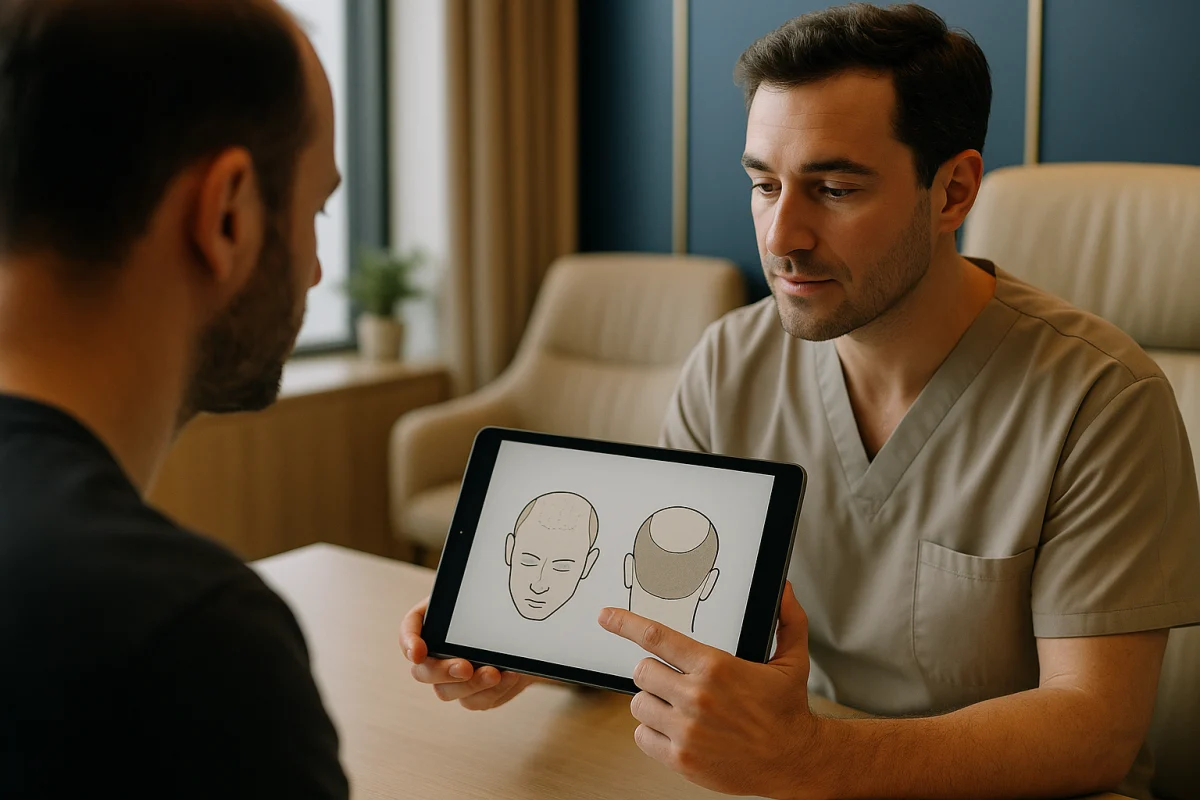
Hair loss pattern strongly affects graft planning. A person with a high but stable frontal recession may need a different strategy from someone with thinning across the front, top, and crown. In many patients, it is safer to give priority to the front and mid-scalp because these areas frame the face and are seen most often. The crown may then be treated within the limits of the remaining donor supply and the likely future pattern of loss.
Age and the history of hair loss can also influence the design. In a younger person or someone whose loss appears to be progressing, an extremely low or dense hairline may not remain balanced if hair behind it continues to thin. Doctors typically plan with the future in mind, leaving room for natural maturation and possible additional loss. This does not mean every patient will need another procedure, but it helps avoid using too much donor hair too early.
For hair graft turkey consultations, it is helpful to share clear images of the front, top, crown, donor area, and both side profiles in good light. Previous transplant history, scalp procedures, regular medicines, and relevant medical conditions should also be disclosed. This information allows the medical team to make a more cautious initial assessment and to explain what cannot be reliably determined from photos alone.
05Why a Natural Hairline Does Not Mean Maximum Density
A successful-looking hairline usually depends on design as much as graft quantity. Natural hairlines are not straight, uniform lines. They have small irregularities, soft transitions, and a changing density from the front edge to the denser hair behind it. Fine single-hair grafts are commonly considered for the leading edge, while grafts with more hairs may contribute behind it where extra coverage is needed. The exact placement depends on the patient’s facial proportions and existing hair pattern.
Planning only for a very dense frontal zone can use a large portion of the available donor supply. This may leave fewer grafts for the mid-scalp or crown, which can become more noticeable later. A doctor may therefore recommend a density that looks balanced rather than attempting to copy the density of unaltered adolescent hair. In most patients, a well-designed transition and good distribution are more important for a natural appearance than an unusually high graft count in one narrow band.
The direction and angle of implantation are equally important. Hair grows forward, sideways, and in different directions across the scalp, especially around the temples and crown. Grafts need to be placed in a way that follows these patterns. Even a suitable number of grafts may look less natural if the angles, directions, or hairline shape are poorly planned. This is one reason a graft total alone cannot describe the expected cosmetic outcome.
06How Sapphire FUE and DHI Fit Into Graft Planning
The extraction and implantation method may support the graft plan, but it does not remove the biological limits of the donor area. Sapphire FUE involves extracting follicular units individually and creating recipient channels with sapphire instruments before placement. DHI generally uses an implantation tool to place grafts into the recipient area. Both methods can be considered depending on the scalp, the target area, hair characteristics, and the clinical plan confirmed by the doctor.
Hair graft turkey patients sometimes assume that one technique automatically allows far more grafts or guarantees denser results. This is not a safe assumption. The suitable graft number still depends on how many follicular units can be extracted without unnecessarily compromising the donor area and how many can be placed appropriately in the recipient area. Technique selection should follow the assessment, rather than being used as a reason to pursue an unrealistic graft total.
Acibadem Hair Transplant Center offers Sapphire FUE and DHI techniques, with needle-free anaesthesia available for suitable patients. The medical team can explain the expected steps, recovery considerations, and the reasons a particular technique may be proposed. Anaesthesia options and procedural suitability are confirmed after medical review, including discussion of health history and any factors that could affect treatment or comfort.
07From Online Analysis to a Confirmed Treatment Plan
An online hair analysis can be a practical first step for international patients, especially when it is reviewed by doctors. It commonly starts with photographs and information about the history of hair loss, previous treatments, and general health. At Acibadem Hair Transplant Center, free online hair analysis is reviewed by doctors, and WhatsApp replies are typically provided within around two hours. The initial response can help patients understand the likely graft range and the information needed before travel.
The final plan should include more than the estimated number of grafts. Patients should understand which areas are intended for treatment, how the donor area will be protected, which technique is being considered, and what recovery and follow-up involve. It is also sensible to ask whether the estimate may change after in-person assessment. A clinic that explains the limits of planning from photographs is taking an appropriately cautious approach to a medical procedure.
International patients may also value practical support alongside clinical information. The center provides all-inclusive packages that include VIP transfer, a 4-star hotel, a care kit, and 12 months of follow-up. These services can make travel arrangements easier, but they do not replace the need for informed consent, a medical assessment, and realistic discussion of graft availability, healing, and long-term hair-loss management.
08Understanding Results, Follow-Up, and Long-Term Coverage
Transplanted hairs usually follow a growth cycle after surgery. In the early weeks, shedding of the implanted hair shafts can occur, and this is commonly part of the normal process. New growth is often gradual rather than immediate. The timing and visibility of change vary between patients, so it is important to follow the aftercare guidance provided by the clinical team and attend scheduled follow-up reviews when possible.
The long-term appearance depends on graft survival, healing, the quality of the donor hair, and changes in non-transplanted hair. Transplanted follicles from a stable donor zone are typically selected for their resistance to pattern hair loss, but native hair around them may continue to become thinner. This is why a conservative graft plan can be valuable: it seeks to create a result that remains visually balanced even if future hair loss occurs.
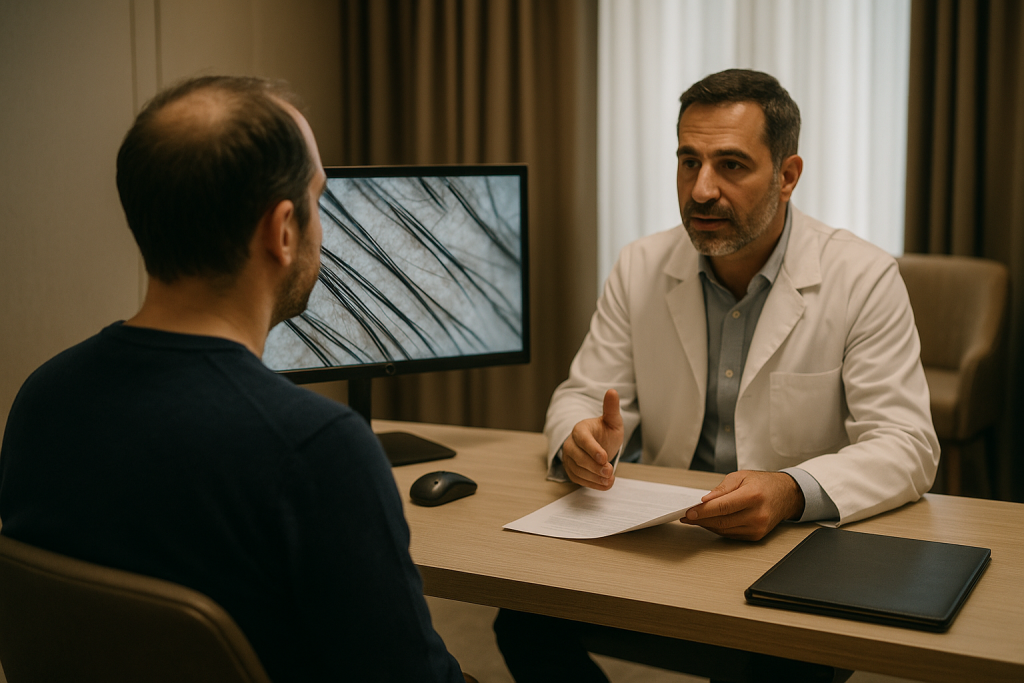
Results should be assessed with appropriate clinical follow-up rather than only early photographs. At Acibadem Hair Transplant Center, graft survival is measured with trichoscopy at month 12, with a documented 98% rate under a written guarantee. This documented measurement reflects the center’s stated follow-up standard and does not mean that every patient will have the same cosmetic result, healing experience, or future hair-loss pattern.
09Frequently Asked Questions
What is the price of 3,000 hair grafts in Turkey?
There is no single reliable price for 3,000 grafts in Turkey because the total cost can depend on the clinical plan, chosen technique, donor-area assessment, included services, and follow-up arrangements. A responsible clinic should provide a clear written quotation after reviewing your case rather than promising a price based only on a graft number. Ask what medical care, accommodation, transfers, aftercare, and follow-up are included.
Is travelling to Turkey for a hair transplant safe?
Travelling for a hair transplant can be appropriate when patients choose a properly licensed medical provider, receive a doctor-led assessment, and follow travel and aftercare instructions. Safety depends on factors such as medical suitability, clinical standards, infection-control processes, anaesthesia assessment, and access to follow-up. Acibadem Hair Transplant Center is licensed by the Turkish Ministry of Health, but your doctor should still confirm whether treatment and travel are suitable for you.
How much does a 3,000-graft hair transplant cost?
A 3,000-graft procedure does not have one universal cost, either in Turkey or elsewhere. The fee may vary according to the treatment plan, technique, level of medical care, and services included before and after the procedure. It is important to compare written treatment details, not only headline graft prices, because a safe plan should include appropriate assessment and follow-up.
How long do hair transplants performed in Turkey last?
Hair transplanted from a stable donor area is typically intended to provide long-term growth. However, the appearance over time can change because existing, non-transplanted hair may continue to thin, and individual healing and hair-loss patterns differ. Ongoing follow-up and a long-term plan discussed with your doctor can help support a balanced result.
This article is for general information only and is not a substitute for professional medical advice.
 06
06 12
12