
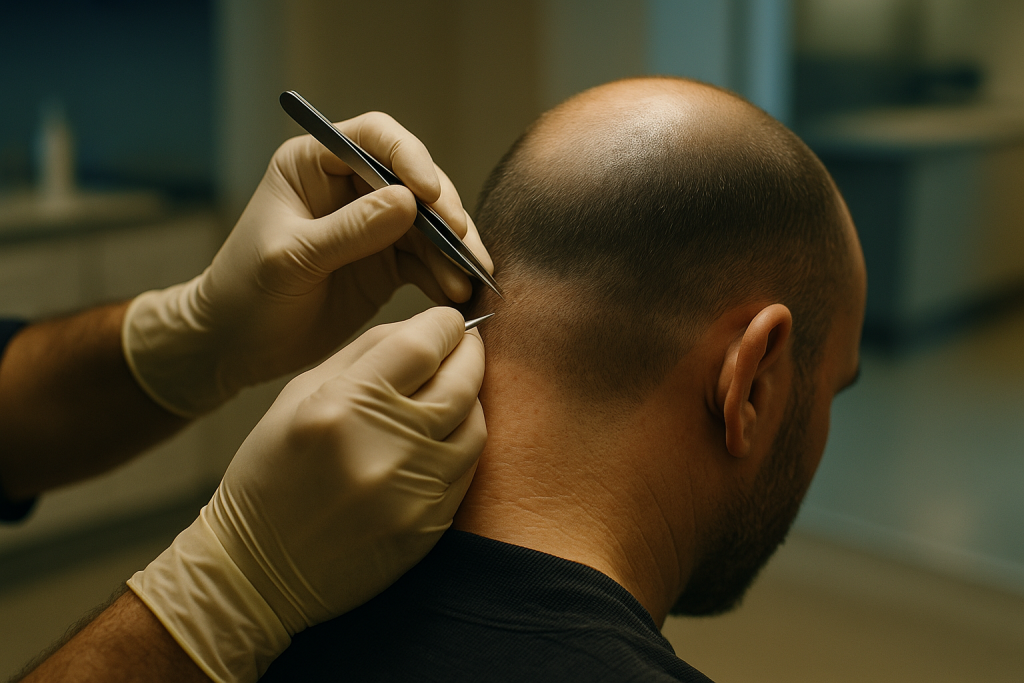
In a fue hair transplant turkey procedure, a surgeon-led team removes naturally grouped follicular units one by one from the donor area, usually at the back and sides of the scalp. Each graft is selected, extracted with a fine punch, checked under magnification, and kept protected until implantation. Careful planning is essential because the donor supply is limited and each follicle should be handled gently.
- FUE extracts naturally occurring follicular units individually rather than removing a strip of scalp tissue.
- Donor-area assessment and safe graft distribution are as important as the extraction method itself.
- A fine punch surrounds each follicular unit before the graft is gently removed and preserved.
- Most patients have tiny extraction sites that heal over time, but recovery and scarring patterns vary between individuals.
- A reputable clinic should explain the medical plan, graft estimate, aftercare, follow-up, and total package terms clearly before treatment.
01What Happens During Follicle Extraction in FUE?
A fue hair transplant turkey procedure is based on the careful extraction of individual follicular units from a donor area with stable hair growth. A follicular unit is a natural group that may contain one, two, three, or sometimes more hairs. Instead of taking a long section of scalp, as in strip-based techniques, FUE collects these groups separately. The main aim is to harvest enough suitable grafts for the planned recipient area while protecting the appearance and long-term density of the donor region.
Before extraction begins, the medical team confirms the treatment design, reviews the donor area, and prepares the scalp. The donor hair is usually trimmed short so the direction and spacing of each follicular unit can be seen more clearly. Local anaesthesia is commonly used to keep the area comfortable. At Acibadem Hair Transplant Center, needle-free anaesthesia is also available for appropriate patients. Your doctor will confirm whether this option is suitable within your treatment plan.
During the extraction stage, a very small circular instrument, called a punch, is placed around a follicular unit. The instrument follows the natural angle of the hair beneath the skin before the graft is loosened and removed. This angle matters because hair follicles do not grow straight downward. Excessive depth, poor alignment, or forceful handling may damage a graft, so extraction should be performed with careful technique and clinical oversight. The collected grafts are then sorted and protected until they are ready for placement.
02The Donor Area: Where FUE Grafts Usually Come From
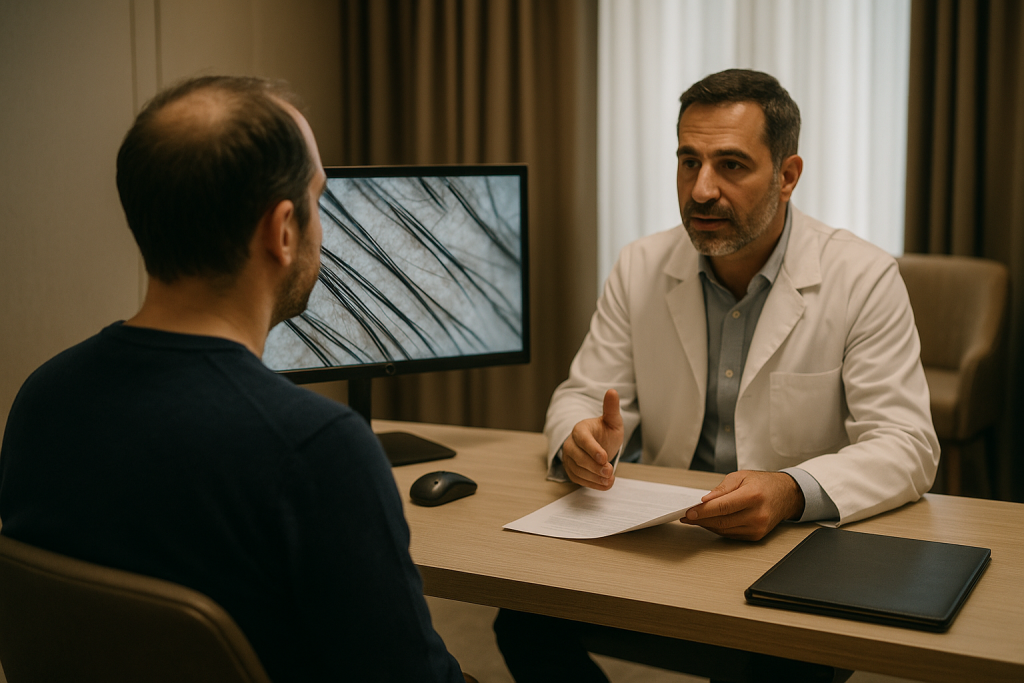
For most scalp hair transplants, the main donor area is the permanent zone around the back and sides of the head. Hair in this zone is often more resistant to the hormonal process linked with common pattern hair loss. However, donor stability is not identical in every person. Your doctor assesses hair calibre, density, scalp condition, family history, the pattern of hair loss, and the likelihood of future thinning before deciding whether the area can safely provide grafts.
A strong donor area does not simply mean that a person has thick hair. The distribution of follicles, the number of hairs in each graft, the contrast between hair and scalp, and the planned coverage all affect what may be achievable. For example, a patient with finer hair may need a different design approach from a patient with coarser hair. The medical plan should balance immediate cosmetic goals with the need to preserve donor hair for the future.
FUE extraction is spread across the donor zone rather than concentrated in one small patch. This distribution helps reduce the risk of visible thinning after healing. Even so, overharvesting can make the donor area look sparse, especially with very short haircuts. A responsible plan leaves sufficient hair between extraction points and avoids treating the donor supply as unlimited. If body hair or beard hair is discussed, it should be assessed separately because its texture, growth cycle, and cosmetic role can differ from scalp hair.
03Why fue hair transplant turkey Requires Individual Donor Planning
People searching for fue hair transplant turkey often focus first on the number of grafts advertised or the appearance of a hairline in before-and-after photographs. Graft numbers can be useful for discussion, but they should not replace a medical evaluation. A safe estimate depends on the size of the thinning area, current hair density, hair characteristics, future hair-loss risk, donor capacity, and the result the patient hopes to achieve. Two people with a similar-looking hairline may need very different plans.
The extraction plan is especially important when hair loss is still progressing. If a large number of grafts are placed low in the frontal hairline without considering later thinning behind it, the appearance may become less balanced over time. Doctors commonly consider age, the pattern and speed of hair loss, medical history, and realistic expectations before recommending treatment. In some cases, postponing surgery, using medical management where clinically appropriate, or planning a more conservative design may be discussed.
International patients should receive enough information before travel to make an informed decision. Acibadem Hair Transplant Center is a dedicated hair restoration clinic in Istanbul, licensed by the Turkish Ministry of Health. A free online hair analysis is reviewed by doctors, with WhatsApp replies typically available within about two hours. Online photos are helpful for an initial assessment, but the final treatment plan, donor evaluation, and suitability confirmation require medical review and may be refined in person.
04From Punch Selection to Graft Preservation
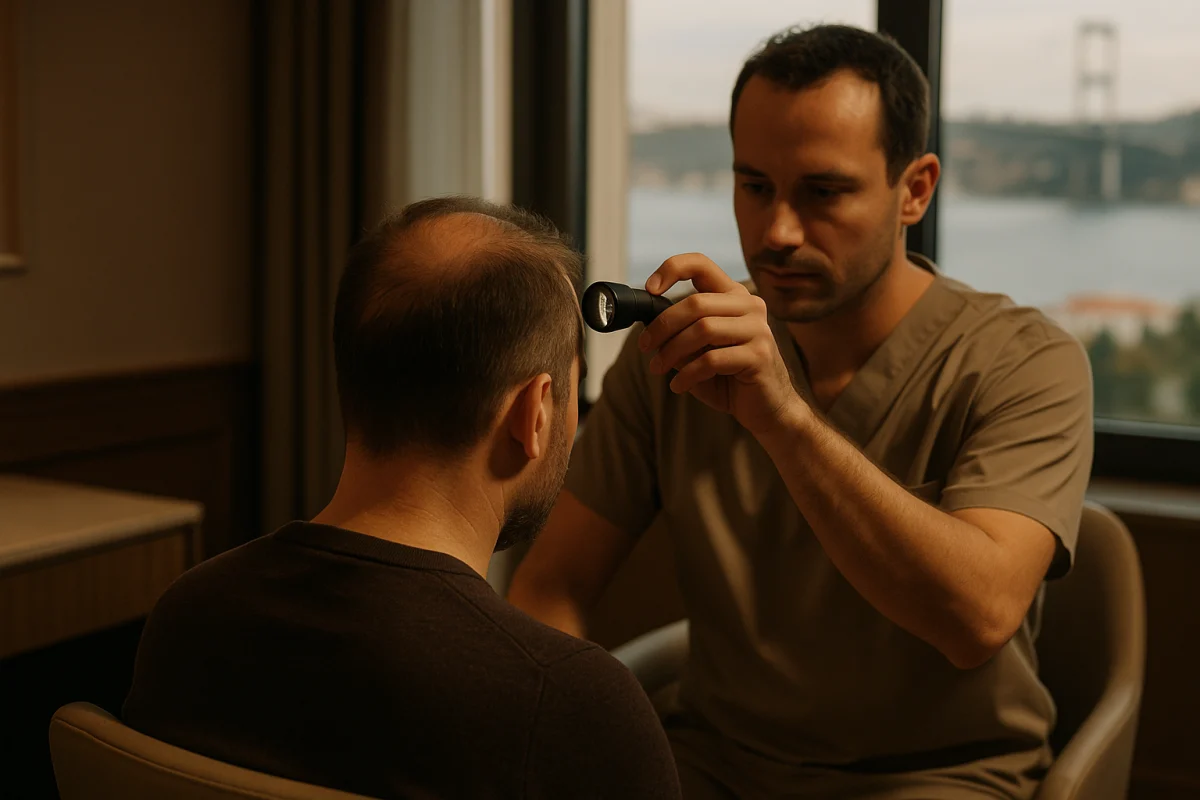
The extraction instrument is selected according to the patient’s follicular characteristics and the clinical technique being used. Punches are fine instruments, but their size and use should be adapted to the hair shaft, curl pattern, follicle grouping, and scalp properties. A punch that is not properly matched or aligned may increase the chance of transection, which means cutting through part of a follicle during harvesting. The goal is to remove viable grafts while causing as little unnecessary tissue trauma as possible.
After a graft is loosened, it is removed gently with specialised instruments. The team examines the grafts and places them in a controlled storage solution until implantation. Keeping grafts moist, cool when clinically indicated, organised, and handled minimally is an important part of the process. The time between extraction and placement is also planned carefully. Patients may not see these laboratory-style steps in detail during treatment, but they are central to graft protection.
At Acibadem Hair Transplant Center, Sapphire FUE and DHI techniques are available. Sapphire FUE refers to the use of sapphire blades during recipient-site preparation, while DHI uses an implantation approach designed to place grafts with a specialised implanter. These approaches relate mainly to how channels are created or how grafts are implanted; FUE describes the individual graft extraction method. Your doctor will recommend the approach that fits the scalp, planned density, hair direction, and clinical needs rather than presenting one technique as automatically best for everyone.
05How Extraction Sites Heal After FUE
Once a follicular unit is removed, it leaves a small extraction site in the donor scalp. Tiny crusts commonly form during the early healing period. Patients are usually given washing instructions and asked not to scratch, rub, or pick the area. The exact aftercare plan can vary, particularly if there are skin conditions, previous procedures, or individual healing considerations. Following the clinic’s written instructions is important for both donor healing and the protection of newly implanted grafts.
In most patients, the small extraction sites close and become much less noticeable as the scalp heals. The visibility of any marks can depend on skin type, hair length, the number and distribution of extracted grafts, the healing response, and whether aftercare instructions are followed. FUE is often chosen because it avoids a linear strip scar, but it does not mean that there is no scarring at all. A clinic should explain this clearly before treatment, especially for patients who prefer very short hairstyles.
Temporary numbness, tightness, redness, itchiness, or sensitivity may occur during the early recovery phase. These experiences are often temporary, but every patient should know which symptoms require contacting the clinic. Signs such as increasing pain, unusual swelling, persistent bleeding, fever, discharge, or any concern about healing should be reported promptly to the medical team. A structured follow-up plan helps patients receive support during the recovery process rather than managing questions alone after they return home.
06How Extracted Grafts Are Used to Build a Natural Result
Extraction is only one half of an FUE procedure. The way grafts are placed can strongly affect whether the result looks natural. Single-hair follicular units are commonly reserved for the softer leading edge of a hairline, while grafts containing more hairs may be useful behind it to build visual density. This is not a fixed rule for every patient, but it shows why graft sorting and placement planning are closely connected.
The angle, direction, and spacing of implanted hair should reflect the patient’s natural growth pattern. Hair at the front generally grows differently from hair in the temples, mid-scalp, crown, eyebrows, or beard area. A hairline should also suit the patient’s facial proportions, age, and expected future hair loss. Very dense packing or an unusually low hairline may not be appropriate for every donor supply. An experienced medical team aims for a balanced result that can continue to look appropriate as time passes.
Newly transplanted hairs usually go through a normal shedding phase before visible regrowth begins. This can surprise patients, but shedding after the procedure does not necessarily mean the grafts have failed. Growth timing differs between individuals, and results develop gradually over several months. At Acibadem Hair Transplant Center, results are measured by trichoscopic graft survival at month 12, with a documented 98% rate under a written guarantee. Your team can explain the terms of the guarantee, the assessment method, and what follow-up appointments involve.

07Choosing a Safe FUE Journey in Istanbul
A fue hair transplant turkey journey should begin with medical transparency, not with a rushed decision based only on a low headline price. Ask who will assess your donor area, how the graft estimate is determined, which parts of the procedure are performed under medical supervision, and what aftercare is included. You should also receive clear information about potential risks, expected recovery, limitations of the donor supply, and what may happen if future hair loss continues.
Turkey is a major destination for hair restoration, but standards can vary between providers. It is sensible to verify that the clinic is properly licensed, that doctors review suitability, and that treatment planning is individual rather than copied from a standard package. Acibadem Hair Transplant Center has welcomed patients from 38 countries over 12 years and is licensed by the Turkish Ministry of Health. These facts can support confidence, but every patient should still review the proposed plan carefully and ask questions before consenting to treatment.
Travel arrangements should support a calm recovery period. Acibadem Hair Transplant Center offers all-inclusive packages that include VIP transfer, a 4-star hotel, a care kit, and 12 months of follow-up. Package details, clinical inclusions, and eligibility should always be confirmed directly because individual needs may differ. Before booking, patients should also consider time away from work, the need to protect the scalp after treatment, travel timing, and the practical support they may need when they return home.
08Frequently Asked Questions
What does an FUE hair transplant in Turkey usually cost?
The cost of an FUE procedure in Turkey varies according to the clinic, medical plan, donor complexity, technique, number of grafts, and what is included in the package. It is safer to request a written, personalised quotation after a doctor-reviewed assessment than to choose based on a general advertised price. Ask whether accommodation, transfers, medication or care products, follow-up, and any guarantee terms are included.
What is the price for 3,000 FUE grafts in Turkey?
There is no single reliable price for 3,000 FUE grafts because clinics may use different graft-counting methods and offer different levels of medical care and support. The right number of grafts should also be confirmed from donor capacity and the area being treated, rather than selected as a fixed package. Request a written breakdown of the proposed treatment and all included services.
Is having a hair transplant in Turkey a sensible choice?
It can be a sensible choice when the clinic is licensed, the treatment is doctor-reviewed, and the patient understands the plan, risks, aftercare, and travel arrangements. Turkey has experienced hair restoration providers, but quality and safety standards are not the same everywhere. Check licensing, medical oversight, transparent communication, follow-up support, and whether the plan is appropriate for your individual hair-loss pattern.
How long can a hair transplant performed in Turkey last?
Transplanted follicles from a stable donor area are typically selected because they are more resistant to common pattern hair loss, so they may continue growing for many years. However, results vary, and non-transplanted hair can continue to thin over time. Long-term appearance depends on donor quality, the treatment design, graft survival, future hair loss, health factors, and appropriate follow-up with your doctor.
This article is for general information only and is not a substitute for professional medical advice.
 06
06 12
12