
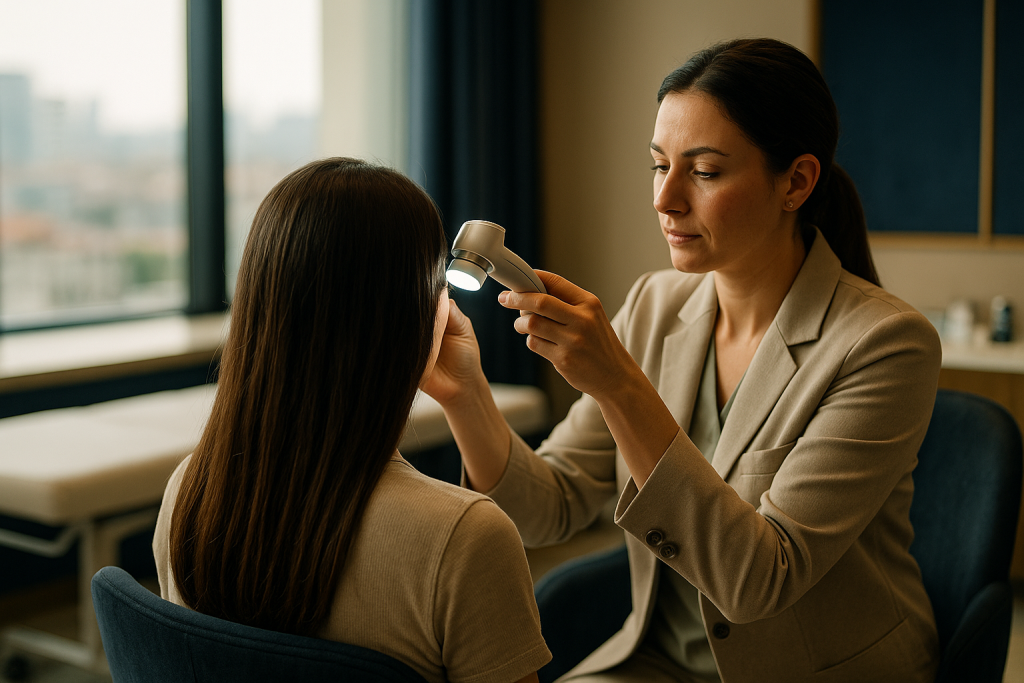
Hair transplant for women can be a suitable option when hair loss is stable, the donor area has enough healthy follicles, and the underlying cause has been properly assessed. Treatment planning usually includes a medical review, scalp and donor-area examination, realistic density goals, and a plan to protect existing hair. Your doctor will confirm whether surgery, medical management, or a combination approach is most appropriate.
- Female hair loss needs a careful diagnosis because not every pattern is suitable for transplantation.
- A strong and stable donor area is essential for planning a natural-looking result.
- Sapphire FUE and DHI may be considered depending on the treatment area, hair characteristics, and clinical plan.
- Transplanted follicles are designed to provide long-term growth, but existing non-transplanted hair may continue to thin.
- A clear consultation should cover candidacy, expected density, recovery, costs, and long-term follow-up.
01Hair Transplant for Women: Candidacy and Treatment Planning
Hair transplant for women is not a one-size-fits-all treatment. It may be considered for women with certain forms of stable hair loss, especially when there is a healthy donor area and a clearly defined area requiring coverage. Female hair loss can look different from male-pattern hair loss, and it may affect the hairline, temples, parting line, crown, or the scalp more diffusely. For this reason, a detailed assessment is important before any surgical plan is discussed.
A suitable candidate usually has sufficient hair density in the donor area, commonly at the back and sides of the scalp. These follicles are assessed for their quality, thickness, distribution, and expected long-term stability. The doctor will also look at the contrast between the hair and scalp, the degree of thinning, and the patient’s desired coverage. The aim is to create an outcome that looks balanced and appropriate for the person’s existing hair pattern rather than simply placing the highest possible number of grafts.
Treatment planning also considers whether hair loss is still active. When shedding or thinning is progressing quickly, it may be better to investigate and stabilise the cause before surgery. A transplant can add hair to selected areas, but it does not stop an underlying condition from affecting native hair. A responsible plan therefore considers both graft placement and the future of the surrounding, non-transplanted hair.
02Why Identifying the Cause of Hair Loss Comes First
Before a transplant is planned, the cause of hair loss should be explored. Women may experience thinning due to female-pattern hair loss, traction from tight hairstyles, hormonal changes, nutritional factors, stress-related shedding, inflammatory scalp conditions, previous surgery, or certain medical treatments. Some causes are temporary or can improve with medical care, while others may lead to more permanent loss. A transplant is generally considered only after the clinical picture is clear.
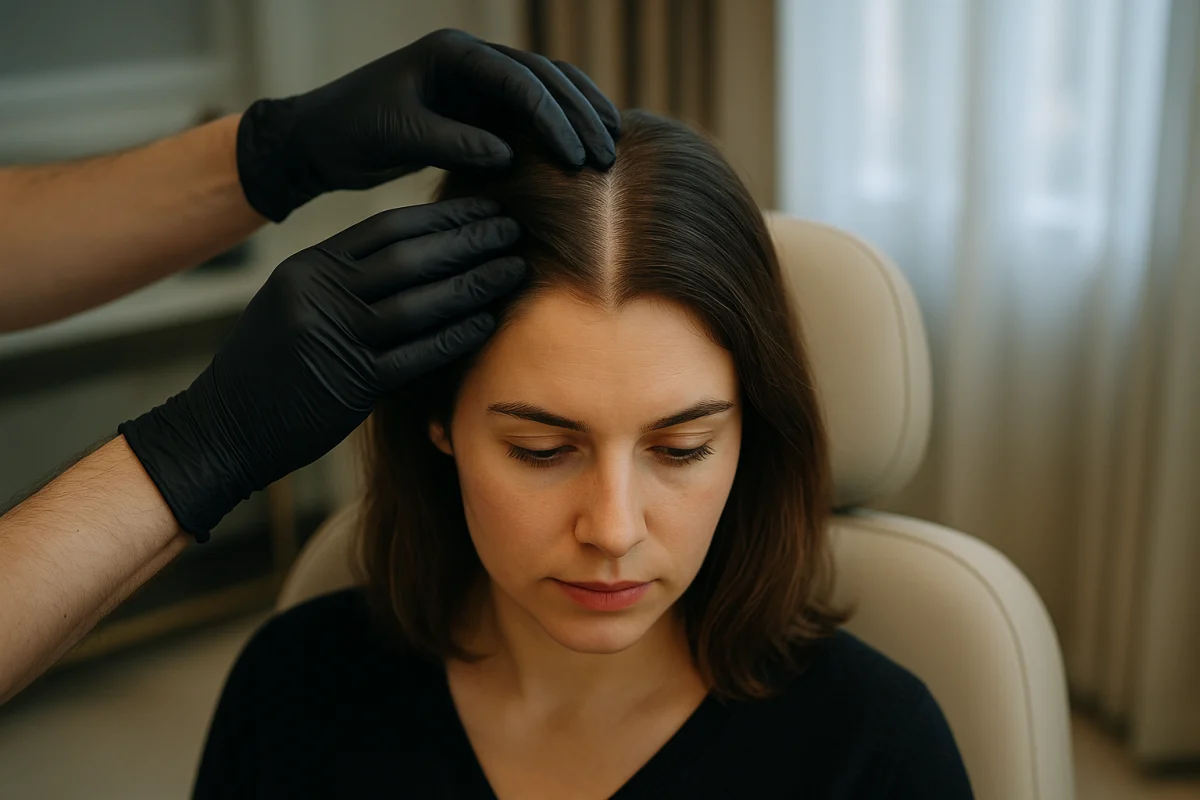
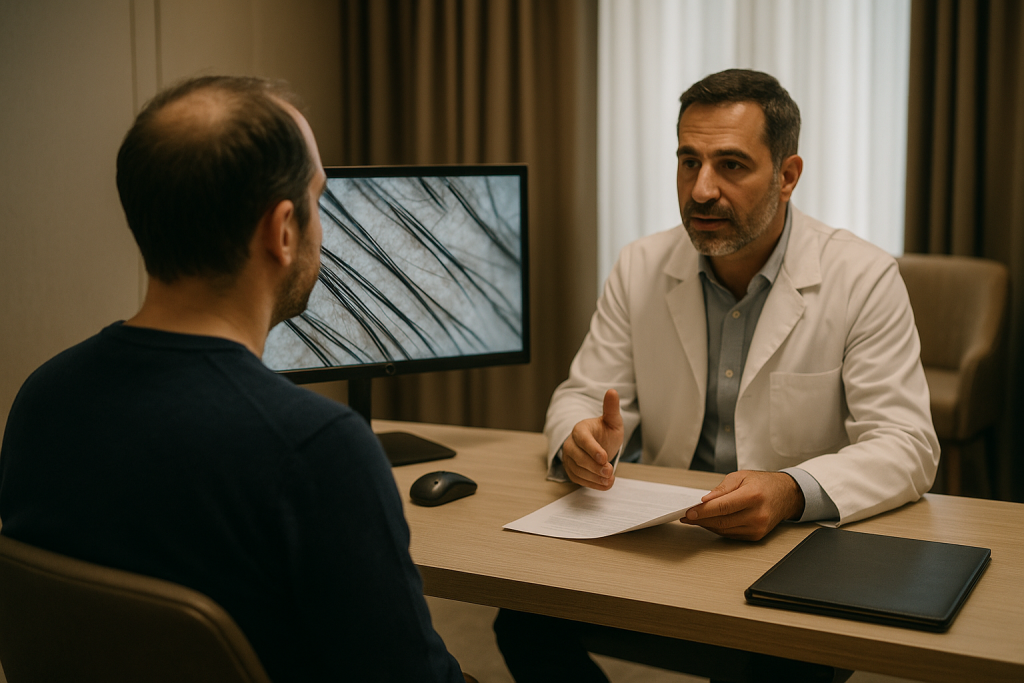
Diffuse shedding deserves particular attention. In diffuse hair loss, thinning may affect both the top of the scalp and the potential donor area. If donor hairs are also becoming weaker or less dense, harvesting follicles may not be advisable. Examination with magnification or trichoscopy can help the medical team assess hair shaft thickness, follicle grouping, miniaturisation, and donor stability. Blood tests or specialist medical review may also be suggested where clinically appropriate.
Scarring forms of hair loss require especially cautious evaluation. In some cases, an active inflammatory process can damage follicles and make transplantation less predictable. Surgery may be postponed until the condition has been inactive for a suitable period and a doctor believes the scalp is stable. This approach helps reduce unnecessary risk and supports more realistic planning. Your doctor will explain if further dermatological assessment is needed before a decision is made.
03Donor Area Assessment and Graft Supply in Women
The donor area is the foundation of any transplant plan. Follicular units are usually taken from areas where hair is more resistant to thinning, often the back or sides of the scalp. However, women may have less clearly defined donor zones than many men, particularly when thinning is widespread. The medical team needs to assess whether the donor area can provide grafts without making it look noticeably less dense after extraction.
During assessment, doctors consider the number of follicular units available, the average number of hairs within each unit, hair calibre, curl pattern, and the natural direction of growth. Fine hair may require a different strategy from thick hair, while curly hair can create visual fullness with fewer grafts in some areas. These features affect how much coverage may be possible. They also influence where grafts should be placed to support a soft, natural-looking transition with existing hair.
Donor preservation is particularly important in female patients because future needs can be difficult to predict. A conservative plan may leave reserve grafts available if thinning develops later in another area. It may also reduce the risk of overharvesting, which can make the donor region appear sparse. Rather than focusing only on the first procedure, good planning considers the scalp as a long-term resource.

04Choosing Between Sapphire FUE and DHI Techniques
Sapphire FUE and DHI are two techniques that may be used in hair restoration planning. With follicular unit extraction, individual grafts are removed from the donor area and then placed into carefully prepared recipient sites. Sapphire blades may be used to create channels for graft placement. The size, angle, direction, and distribution of these channels are planned to follow the natural growth pattern of the hair.
DHI involves implanting extracted follicles with a specialised implantation tool. This technique may be considered when the clinical plan requires controlled placement between existing hairs or careful work in a defined area. It is not automatically better for every patient. The best approach depends on factors such as the size of the treatment area, available grafts, hair characteristics, scalp condition, and the density goal discussed during consultation.
For hair transplant for women, the technique should support the overall treatment strategy rather than determine it. Some patients may be suitable for one method, while others may benefit from a different approach or a combination of planning principles. The surgical team should explain why a technique is being proposed, what it can reasonably achieve, and how the recipient area will be protected. Needle-free anaesthesia may also be available for eligible patients as part of comfort planning.
05Designing a Female Hairline and Parting-Line Plan
Female hair restoration often focuses on areas beyond the frontal hairline. Some women seek improved density along a widening part, temple recession, a high forehead, localised scars, or areas affected by traction. The treatment plan should reflect the pattern of loss and the person’s facial proportions. A natural design usually avoids a harsh, overly low, or overly straight hairline that may not suit future hair changes.
Hairline work needs fine graft selection and careful placement. Single-hair follicular units may be placed at the soft leading edge, while naturally occurring groups of hairs can be used behind that area to build gradual density. The direction and angle of every implanted graft matter, particularly around the temples and front of the scalp. These details help the new hair blend with existing hair as it grows.
Parting-line treatment may require a different strategy. The goal is often to reduce scalp visibility and improve the appearance of density rather than to create an entirely new hairline. Because native hairs may still be present, implantation must be planned carefully to avoid unnecessary trauma to them. In many patients, the most satisfactory plan balances selective grafting with measures intended to support the existing hair.
06Preparing for Surgery and Understanding Recovery
Once candidacy is confirmed, preparation usually includes a review of medical history, current medicines, allergies, previous procedures, and relevant lifestyle factors. Patients should disclose any supplements, smoking or nicotine use, blood-thinning medicines, and scalp treatments to the medical team. The clinic will provide pre-procedure instructions based on the agreed plan. These instructions should be followed carefully, as they are designed to support safety and graft protection.
In most procedures, the donor area is trimmed or shaved to allow accurate extraction. In selected cases, a more discreet trimming approach may be discussed, but feasibility depends on the technique and the extent of treatment. Local anaesthesia is typically used during the procedure. Some patients may be eligible for needle-free anaesthesia, subject to medical assessment and availability. The treatment day may vary in length according to the number of grafts and the complexity of placement.
After surgery, small crusts, temporary redness, swelling, or tenderness can occur. Patients are usually given guidance on sleeping position, washing, activity, headwear, and avoiding friction during the early healing phase. Newly transplanted hairs often shed before regrowth begins, which is a normal part of the process in many patients. The clinic should explain the recovery timeline clearly and provide a contact route for questions during follow-up.
07Timelines, Density Expectations, and Long-Term Planning
Hair growth after transplantation is gradual. In many patients, the initial shedding phase is followed by a period in which little visible change occurs. Early new growth may then appear over the following months, with hair continuing to mature in texture, length, and coverage. Final assessment is commonly made around 12 months, although individual timelines can vary and some areas may continue to develop beyond that point.
A transplant can improve coverage, but it cannot always recreate the density of untouched hair. The visible result depends on graft supply, hair thickness, the contrast between hair and scalp, the size of the thinning area, and the condition of existing hair. A doctor should discuss realistic density targets before treatment. In some cases, planned density may be concentrated in the areas that are most important cosmetically, such as the frontal framing, central part, or a visible scar.
Long-term planning is essential because transplanted follicles and native hairs do not always behave in the same way. Transplanted follicles are generally selected from more stable donor areas and are intended to provide lasting growth. However, surrounding native hair may continue to thin if the underlying hair-loss process remains active. Follow-up, scalp care, and medically appropriate management may therefore remain part of the overall plan after a hair transplant for women.
08Cost Discussions, Clinic Standards, and Follow-Up Care
The cost of a female hair transplant varies according to the number of grafts, the technique selected, the complexity of the recipient area, the level of donor assessment required, and what is included in the treatment plan. A responsible quote should follow a clinical review rather than be based only on photographs or a general package description. Patients should ask what services are included, whether post-procedure care is covered, and how follow-up will be organised.
Acibadem Hair Transplant Center is a dedicated hair restoration clinic in Istanbul licensed by the Turkish Ministry of Health. The centre offers Sapphire FUE and DHI procedures and provides free online hair analysis reviewed by doctors, with WhatsApp replies typically within around two hours. Its all-inclusive packages can include VIP transfer, a 4-star hotel, a care kit, and 12 months of follow-up, depending on the agreed arrangement.
Follow-up is important because it allows the team to guide patients through washing, shedding, new growth, and the final evaluation period. At Acibadem Hair Transplant Center, graft survival is assessed with trichoscopy at month 12, with a documented 98% rate under a written guarantee. This measure relates to documented graft survival assessment and should not be interpreted as a guarantee of identical cosmetic density or appearance for every individual. Patients from 38 countries have been treated over 12 years, with planning tailored to each patient’s medical and hair characteristics.
09Frequently Asked Questions
Can a hair transplant be successful for women?
A hair transplant can be successful for women when the cause of hair loss is suitable for surgery, the donor area is healthy, and the treatment area is planned carefully. Results depend on factors including the stability of hair loss, graft quality, hair characteristics, and realistic density goals. Your doctor will confirm whether transplantation is appropriate after a proper assessment.
How long can transplanted hair last in women?
Follicles transplanted from a stable donor area are generally intended to continue growing long term. However, existing non-transplanted hair can still thin over time if the underlying hair-loss condition progresses. Long-term planning and follow-up help address the difference between transplanted and native hair.
What does a female hair transplant cost?
The cost depends on the required graft number, the chosen technique, donor-area complexity, treatment goals, and included services such as accommodation and follow-up. A reliable cost estimate should be provided after a medical review and donor assessment, not as a universal price. Ask for a clear written breakdown of what the plan includes.
What may make someone unsuitable for a hair transplant?
Possible reasons to delay or avoid surgery include unstable diffuse hair loss, an inadequate donor area, active scalp inflammation or infection, uncontrolled medical conditions, and unrealistic expectations about density. Some patients need diagnosis or treatment of the underlying cause before transplantation can be considered. A doctor should assess these factors before confirming candidacy.
This article is for general information only and is not a substitute for professional medical advice.
 06
06 12
12