
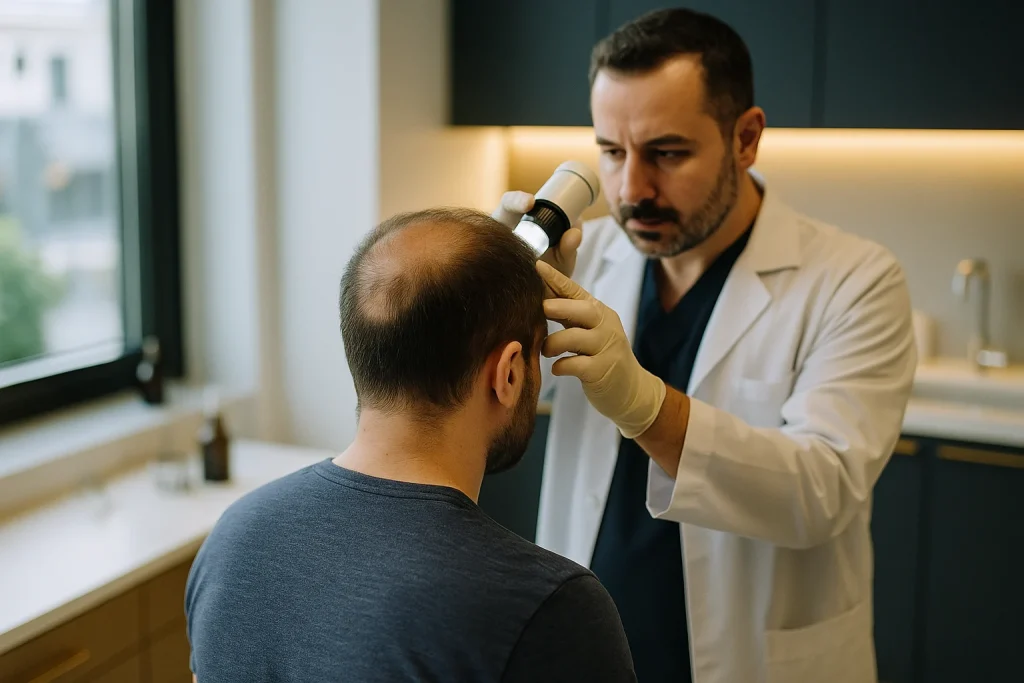
Is hair transplant permanent? In most patients, transplanted follicles continue to grow for many years because they are usually taken from areas that are more resistant to pattern hair loss. However, permanence does not mean that every graft survives or that your surrounding, non-transplanted hair will not continue to thin over time.
- Transplanted hair follicles are usually selected from the donor area because they tend to retain their growth characteristics after relocation.
- A hair transplant result develops gradually, with meaningful growth commonly visible over several months and the final result assessed around month 12.
- Graft survival depends on careful planning, correct surgical handling, healing and following the aftercare instructions provided by the clinical team.
- Native hair may continue to thin after surgery, so a long-term plan should consider both transplanted and existing hair.
- A hair transplant has practical limits, including donor hair availability, recovery time, possible complications and the need for realistic expectations.
01Is hair transplant permanent? The direct answer
A common question is, is hair transplant permanent? A hair transplant is designed as a long-term treatment because the follicles moved during surgery are typically taken from the back and sides of the scalp, known as the donor area. These follicles often have a stronger resistance to the hormonal process involved in common pattern hair loss. After they are transplanted into thinning or bald areas, they generally keep many of their original biological characteristics.
However, permanent does not mean unchanged forever. A successful transplant depends on graft survival, the quality and availability of donor hair, the healing process and the ongoing condition of your natural hair. Transplanted follicles may keep growing for many years, while hair that was already present around them may still become finer or thinner as part of the normal progression of hair loss.
For this reason, doctors plan a transplant as part of a longer-term hair restoration strategy rather than as an isolated cosmetic procedure. The aim is usually to create a result that looks balanced as the patient ages. Your doctor will assess your pattern of hair loss, donor area and expected future changes before confirming whether surgery is appropriate.
02Why transplanted follicles can keep growing
The principle behind hair transplantation is called donor dominance. Follicles from the permanent zone of the scalp are less sensitive, in many patients, to the effects that cause male or female pattern hair thinning. When these follicles are carefully moved to a recipient area, they can continue their normal growth cycle in the new location.
During a follicular unit extraction procedure, individual naturally occurring follicular units are removed from the donor area and implanted into tiny channels or sites in the recipient area. Each unit may contain one or more hairs. In Sapphire FUE, sapphire blades may be used to create recipient channels, while DHI uses a specialised implantation approach. The most suitable technique depends on clinical findings and the agreed treatment plan.
The transferred follicles still need to establish a blood supply and recover from the procedure. This early healing period is important for graft survival. Once established, the follicles usually enter their natural cycle of shedding, resting and growing. Their hair shafts may vary in thickness and length over time, just as natural hair does.
03Graft survival: what it means and why it matters
Graft survival describes how many transplanted follicular units remain viable, heal successfully and produce growing hair after the procedure. It is one of the most important measures of a hair transplant’s quality, but it should not be confused with the final cosmetic appearance. Coverage, density, hair calibre, scalp contrast, hairline design and the condition of existing hair all influence how full a result appears.
Several stages may affect survival. These include selecting healthy donor follicles, removing them with minimal trauma, keeping them protected outside the body, creating recipient sites at an appropriate angle and depth, and placing the grafts carefully. The patient’s healing response and following post-procedure guidance also matter. No ethical clinic can suggest that every single graft will survive in every patient.
At Acibadem Hair Transplant Center, graft survival is assessed by trichoscopic evaluation at month 12. The clinic documents a 98% graft survival rate under a written guarantee. This measurement focuses on graft survival rather than promising that every patient will achieve the same visual density, since individual characteristics and the progression of native hair loss can differ.
04The normal timeline from surgery to month 12
Immediately after a transplant, the recipient area usually has small scabs and redness, while the donor area also needs time to heal. Your clinical team will explain washing, sleeping, activity and scalp-care instructions. Protecting the grafts from rubbing, scratching and accidental impact is particularly important during the early recovery period, when they are still settling into the scalp.
In the first weeks, many transplanted hairs shed. This is commonly called shock shedding, although the follicle itself often remains under the skin. The temporary shedding phase can feel concerning, but it is generally an expected part of the process. New visible growth commonly begins gradually over the following months rather than appearing all at once.
Results are usually evaluated over a full year because hair growth is slow and each follicle follows its own cycle. Early new hairs may look fine before becoming stronger with further maturation. Some patients may notice continued refinement after month 12. Follow-up appointments help the team monitor healing and discuss the progress in a structured way.
05Why the surrounding hair can still change
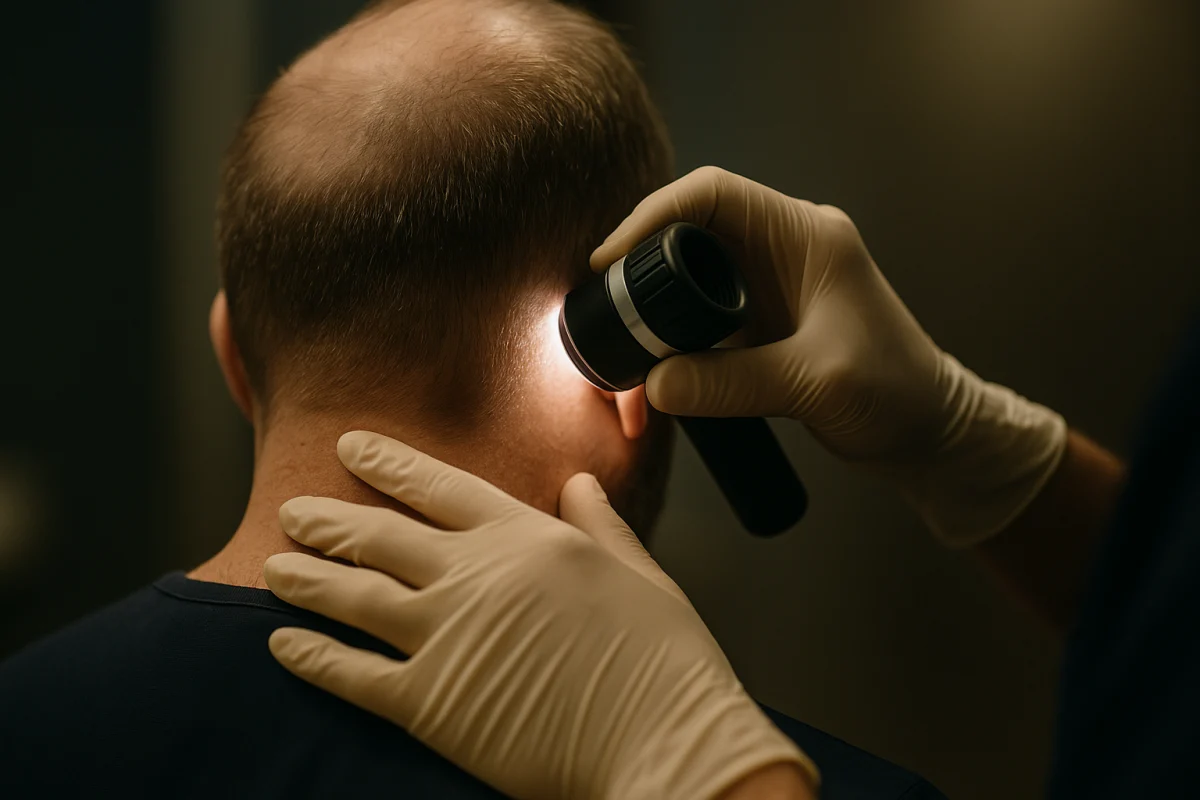
A transplant redistributes existing donor hair; it does not stop the biological process that may be affecting non-transplanted follicles. If you have genetic pattern hair loss, your original hair in the frontal, mid-scalp or crown area may continue to miniaturise over time. This can create a contrast between stable transplanted hair and thinner native hair if future loss was not considered during planning.
This is why a conservative, age-appropriate hairline is often an important part of a sustainable result. Placing a hairline too low or using too much donor hair in one area may make it harder to maintain a balanced appearance if loss progresses later. The doctor considers facial proportions, donor capacity, current hair density and likely future hair-loss patterns before recommending a design.
When people ask is hair transplant permanent, it is useful to separate the long-term behaviour of the transplanted follicles from the ongoing health of native hair. A doctor may discuss medical or non-surgical options that could be suitable for preserving existing hair, but the right approach depends on your medical history and should be confirmed during a consultation.
06Factors that may influence long-term appearance
Donor area quality is a major factor. A person has a limited supply of donor follicles, and these follicles must be used carefully. Hair thickness, curl pattern, colour contrast between hair and scalp, and donor density can affect how much coverage may be achieved. A smaller number of thicker or curlier hairs can sometimes create a fuller visual effect than a larger number of fine, straight hairs.
Surgical planning also influences how natural the result looks over time. The direction, angle and distribution of grafts should follow the patient’s natural hair pattern. Hairlines need irregularity and softness, while crown work needs particular care because the natural spiral pattern can require significant graft numbers. A responsible plan should avoid using more grafts than the donor area can safely provide.
Lifestyle and general health may affect healing, although they do not change the genetic properties of a healthy transplanted follicle. Smoking, scalp trauma, untreated skin conditions and failure to follow aftercare may interfere with recovery. Before surgery, disclose medications, allergies, medical conditions and previous procedures so the doctor can assess safety and provide appropriate guidance.
07The limits and potential disadvantages of hair transplantation
Hair transplantation is surgery, so it involves limitations and possible risks. Temporary swelling, redness, scabbing, discomfort, itching and numbness may occur during recovery. Less common complications can include infection, prolonged inflammation, folliculitis, visible scarring, poor growth or an unnatural-looking direction of hair. A qualified medical team should explain the potential risks and how they are managed before you decide.
Another disadvantage is that donor hair is finite. A transplant cannot create new follicles, and it may not be suitable for every degree or pattern of hair loss. People with an unstable loss pattern, limited donor density, certain scalp disorders or some medical conditions may need further assessment or may be advised to consider an alternative approach. The doctor should set realistic expectations about coverage rather than promising maximum density.
The process also requires patience. You may need to take time away from some activities during early recovery, and the visual result develops over months rather than days. In some cases, a future session may be discussed if hair loss advances or if additional coverage is clinically appropriate. This should never be assumed in advance, as protecting the donor area remains essential.
08Planning for a result that ages naturally
The strongest long-term transplant plans usually focus on natural appearance, careful donor management and the possibility of future hair changes. Instead of only trying to fill the current thinning area as densely as possible, a doctor considers how the result may look in later years. This is especially important for younger patients or those with active, progressive hair loss.
A detailed assessment can include reviewing photographs, discussing family history, examining the scalp and evaluating the donor zone. A free online hair analysis can provide an initial review, but it does not replace an in-person medical assessment when this is needed. At Acibadem Hair Transplant Center in Istanbul, doctor-reviewed online hair analysis requests receive WhatsApp replies in around two hours in typical circumstances.
The centre is licensed by the Turkish Ministry of Health and provides Sapphire FUE and DHI procedures, with needle-free anaesthesia available. All-inclusive packages can include VIP transfer, a 4-star hotel, a care kit and 12 months of follow-up. These services support the treatment journey, but your doctor will still need to confirm the most suitable clinical plan, expected coverage and aftercare needs.
09The first 14 days: practical aftercare that protects newly placed grafts
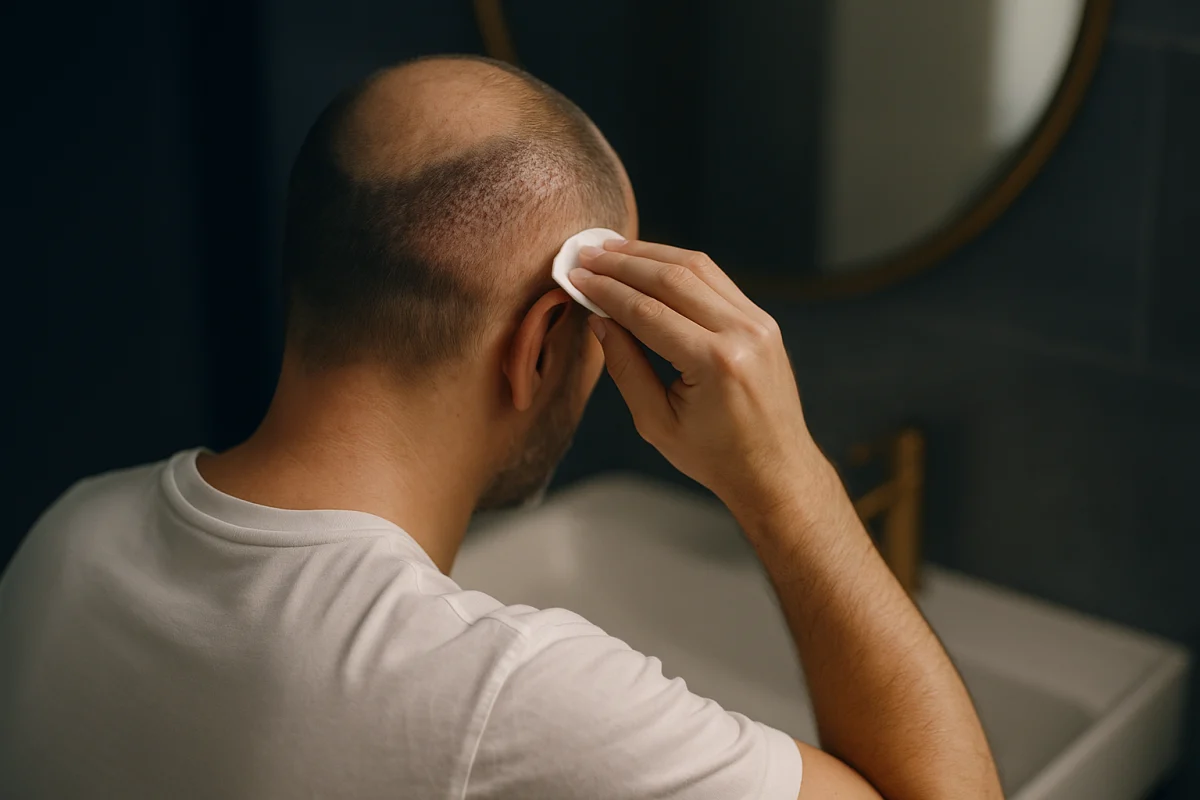
The first two weeks are the period when careful handling matters most. Newly placed grafts should not be rubbed, scratched, picked or exposed to pressure from hats, helmets, bedding or hands unless the clinical team has specifically confirmed it is safe. Small scabs commonly form around the recipient sites. They should be allowed to soften and come away according to the washing plan provided, rather than being removed with fingernails.
Your team will give detailed instructions for washing the donor and recipient areas. In many protocols, this involves gentle application of the recommended products, avoiding strong water pressure and patting rather than rubbing the scalp dry. Sleeping position can also be important in the first nights. Some patients are advised to keep the head elevated to help limit swelling and to avoid direct contact between the recipient area and the pillow. Your doctor will confirm how long these precautions are needed for your procedure.
Avoiding activities that cause sweating, scalp friction or accidental impact is usually advised during early healing. This may include intense exercise, swimming, saunas and contact sports for a period specified by the clinical team. Contact the clinic promptly if you develop worsening pain, spreading redness, discharge, fever, marked swelling or any concern about healing. These symptoms do not always indicate a complication, but they should be assessed by a qualified professional.
10Travel planning after a hair transplant in Istanbul
International patients should plan their travel around the need for a calm early recovery period. It is helpful to choose loose, comfortable clothing that does not need to be pulled over the head after surgery. Keep your aftercare products, written instructions and the clinic contact details easy to access. During transfers and flights, take care not to bump or rub the scalp against headrests, luggage or overhead compartments.
Before booking a return flight, confirm the recommended travel timing with your clinical team. The appropriate schedule can depend on the procedure, your general health, the condition of the scalp and whether an early wash or review appointment is planned. If you are travelling with another person, they can provide practical support with luggage and help you avoid unnecessary strain during the first days.
Acibadem Hair Transplant Center offers all-inclusive packages that can include VIP transfer, a 4-star hotel, a care kit and 12 months of follow-up. These arrangements can make the treatment journey more straightforward, but patients should still review their itinerary carefully, allow time for post-procedure instructions and ensure that they can be reached after returning home. Follow-up photographs or video reviews may be requested so the team can monitor recovery at appropriate stages.
11Who may need a more careful candidacy assessment
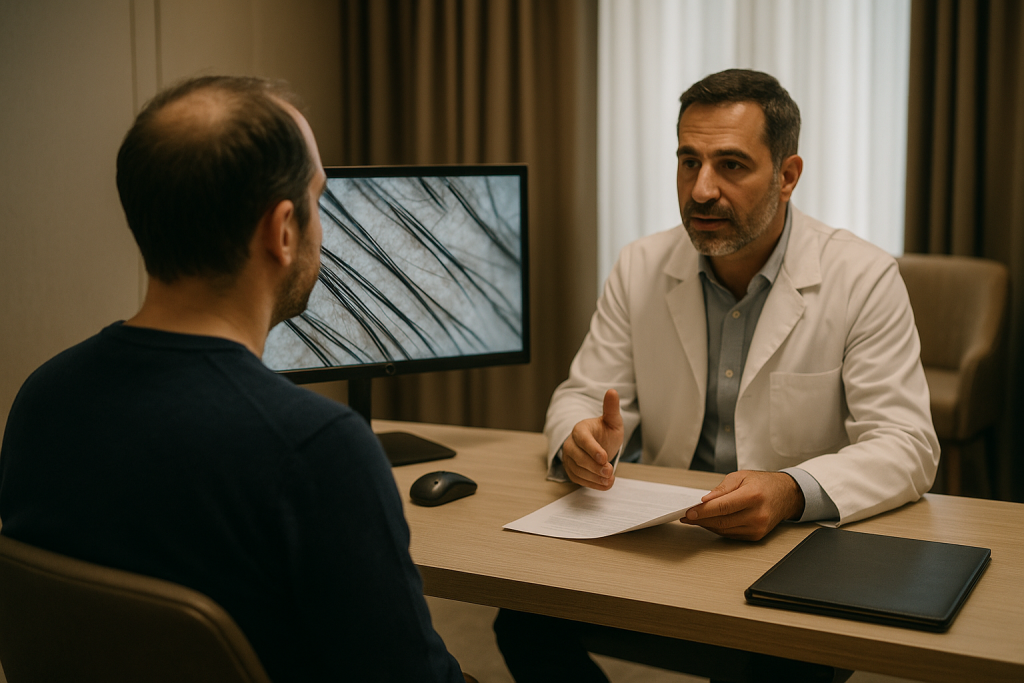
A transplant assessment is not based on the visible bald area alone. A doctor also considers whether hair loss is stable or actively progressing, the quality of the donor zone, scalp health, family history and the difference between the hair and scalp colour. For example, diffuse thinning may require a different strategy from a clearly defined receding hairline, while extensive crown loss can place greater demand on a limited donor supply.
Age can be relevant, but there is no single age that automatically makes a person suitable or unsuitable. In younger adults, the future pattern of hair loss may be less predictable. A doctor may therefore recommend a conservative design or advise monitoring the hair-loss pattern before surgery. The purpose is to preserve options for the future and reduce the risk of an isolated transplanted area as native hair changes.
People with inflammation, infection, scarring conditions or other scalp concerns may need these issues assessed before a procedure is considered. Medical history also matters. It is important to disclose medicines, supplements, allergies, previous scalp surgery and any health condition that could affect surgical safety or healing. A doctor-reviewed online hair analysis can help start the discussion, but your doctor will confirm candidacy only after an appropriate clinical assessment.
12Frequently Asked Questions
How long do hair transplant results usually last?
In most patients, successfully transplanted follicles can continue to grow for many years and may last for life because they are generally taken from hair-loss-resistant donor areas. The appearance of the overall result can still change if surrounding native hair continues to thin. Long-term planning and follow-up help address this possibility.
What may happen 20 years after a hair transplant?
Twenty years later, transplanted follicles may still be growing if they survived and healed well after the procedure. However, ageing, changes in hair texture and continued loss of native hair may alter the overall appearance. A carefully planned hairline and sensible use of donor hair are important for helping a result remain natural over a long period.
What may happen 10 years after a hair transplant?
After 10 years, many patients still have growing transplanted hair, although individual outcomes vary. The main long-term concern is often progression of the original hair loss around the transplanted area rather than loss of the transplanted follicles themselves. A doctor can assess whether the existing hair remains stable and whether any further treatment should be considered.
What are the disadvantages of hair transplants?
Hair transplantation has limits because donor hair is limited, recovery takes time and the final result is gradual. Possible surgical risks include swelling, scabbing, infection, scarring, uneven growth and an unnatural appearance if planning or technique is poor. It also does not prevent future thinning of non-transplanted hair, so realistic expectations are essential.
This article is for general information only and is not a substitute for professional medical advice.
 06
06 12
12