

Stem cell hair restoration is a promising research area, but current evidence does not yet support it as a proven, standard treatment for common pattern hair loss. Some early studies suggest that cell-based approaches may influence hair growth, but larger, well-controlled studies and clear regulatory standards are still needed.
- Hair follicles naturally contain stem cells, but activating or transplanting them reliably remains scientifically complex.
- Current human research on cell-based hair treatments is early and does not establish a predictable result for every patient.
- PRP, exosomes, growth-factor products and stem cell procedures are not the same treatment and should not be presented as interchangeable.
- A careful diagnosis is essential because hair loss type, donor supply, scalp condition and medical history affect suitable options.
- For suitable candidates with stable pattern hair loss, established surgical techniques such as Sapphire FUE or DHI may offer a more evidence-based route to hair redistribution.
01Stem Cell Hair Restoration: What Current Evidence Supports
Stem cell hair restoration refers to treatments designed to use stem cells, stem-cell signals or related regenerative materials to support hair follicle activity. The idea is scientifically interesting because follicles contain their own stem-cell populations. However, research findings should be separated from marketing claims: at present, cell-based treatment is not a universally accepted, standard solution for androgenetic alopecia, also called male or female pattern hair loss.
In simple terms, current evidence supports the biological possibility that cellular signals can affect follicle cycling and tissue repair. It does not yet show that a commercially offered procedure can consistently create a full new head of hair, replace a well-planned transplant, or work equally well for all forms of thinning. Study methods, cell sources, preparation techniques, participant numbers and follow-up periods vary greatly, making direct comparison difficult.
For patients, the most useful conclusion is balanced. A doctor should first identify the cause of shedding or thinning, as this may include pattern hair loss, temporary shedding, inflammation, nutritional factors, medication effects or scarring disease. A regenerative procedure may be discussed in selected settings, but it should be explained with clear limits, realistic expectations and a transparent discussion of alternatives.
02Why Hair Follicle Stem Cells Matter in Hair Growth
Hair growth follows a repeating cycle. During the active growth phase, known as anagen, a follicle produces a hair shaft. It then moves through transition and resting phases before beginning another cycle. Stem cells located in parts of the follicle, especially the bulge area, help maintain the follicle and contribute to the renewal process when the right biological signals are present.
In pattern hair loss, follicles usually do not disappear all at once. Many gradually become smaller through a process called miniaturisation. The growing hairs become finer, shorter and less visible over time. Researchers are studying whether changes in stem-cell function, surrounding support cells, inflammation, hormones, blood supply and molecular signalling all contribute to this process. The biology is more complex than simply having too few stem cells.
A key research goal is to understand how to reactivate a weakened follicle safely and predictably. This may involve cells taken from a patient's own tissue, specialised follicle-related cells, laboratory-grown cell cultures, or substances released by cells. Yet an effect seen in a laboratory dish or an animal model cannot automatically be expected in human scalp skin. Hair follicles need the correct location, structure, blood supply and growth signals to produce normal hair.
03What Human Studies Can and Cannot Tell Us
Human research into stem cell hair restoration includes small clinical studies of autologous cell preparations, meaning material prepared from the patient's own tissue. Some reports describe improvements in hair density, shaft thickness or photographic appearance over months of follow-up. These findings are encouraging, but many studies remain limited by small sample sizes, different treatment protocols, short observation periods or the lack of a strong comparison group.
A reliable treatment recommendation normally requires repeatable results from larger, well-designed clinical studies. Researchers need to define exactly which cells are used, how they are processed, what dose is delivered, where the product is injected or applied, and how outcomes are measured. They also need to monitor safety over an appropriate period. Without this consistency, a positive result from one setting may not apply to another clinic, device or preparation method.
It is also important to distinguish improvement from regeneration. A treatment might temporarily support a thicker appearance in existing miniaturised hair without producing entirely new follicles. True follicle neogenesis, meaning the creation of new functional follicles, remains a major scientific challenge. Patients should ask whether a claimed result concerns reduced shedding, improvement in existing hair, wound healing support, or confirmed new hair follicle formation.
04Different Treatments Marketed Under Similar Names
The term stem cell hair restoration is often used broadly, although the procedures offered under this label can be very different. One provider may describe a preparation made from scalp tissue, while another may use fat-derived material, blood components, cell-conditioned media or a topical product. These approaches should not be assumed to have the same evidence, safety profile or regulatory status simply because they are described with similar language.
Platelet-rich plasma, commonly called PRP, is not a stem cell treatment. It uses a concentration of platelets from the patient's blood and is studied separately for several medical and aesthetic uses. Likewise, products described as exosomes or growth factors are not automatically equivalent to live stem-cell therapy. Exosomes are small particles involved in cell communication, and their quality, sourcing, processing and clinical evidence require careful evaluation.
If a clinic discusses a regenerative option, patients can ask practical questions. What is the exact material being used? Is it taken from the patient or from another source? How is it prepared and handled? What medical purpose is being claimed? What evidence supports that specific protocol? A responsible consultation should provide understandable answers rather than relying on broad labels, dramatic before-and-after images or guarantees.
05Who Needs a Diagnosis Before Considering Regenerative Care
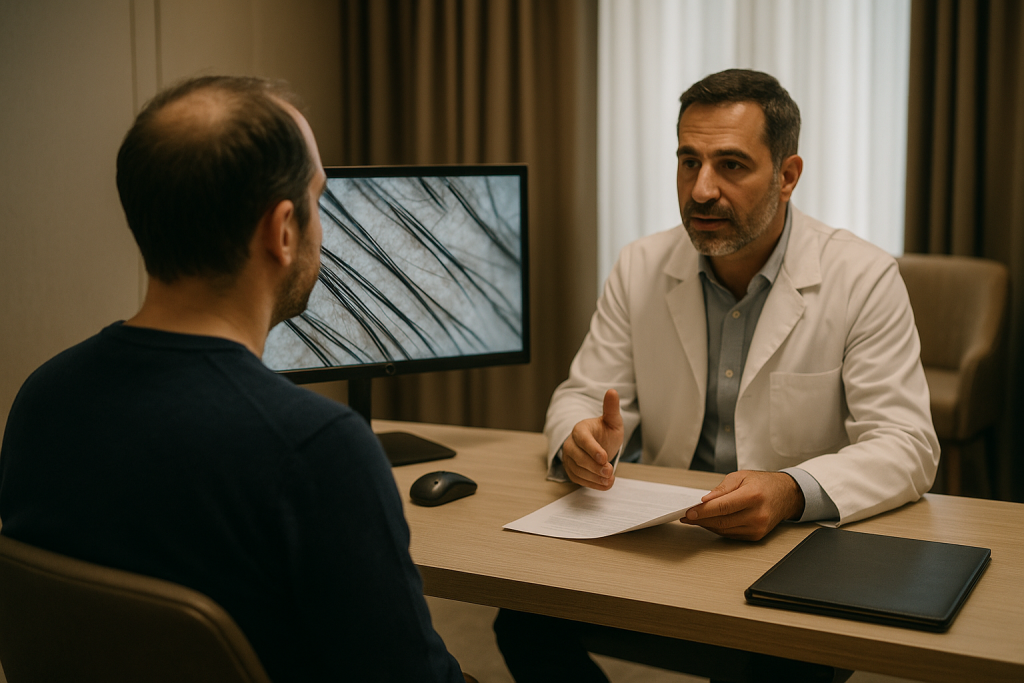
Hair loss has many possible causes, and the same visible thinning pattern can have different underlying reasons. A clinician may review the speed of shedding, family history, medications, recent illness, scalp symptoms, hormonal factors and nutritional risks. Examination of the scalp and hair shafts can help distinguish common pattern loss from conditions that need medical investigation or treatment before any cosmetic procedure is considered.
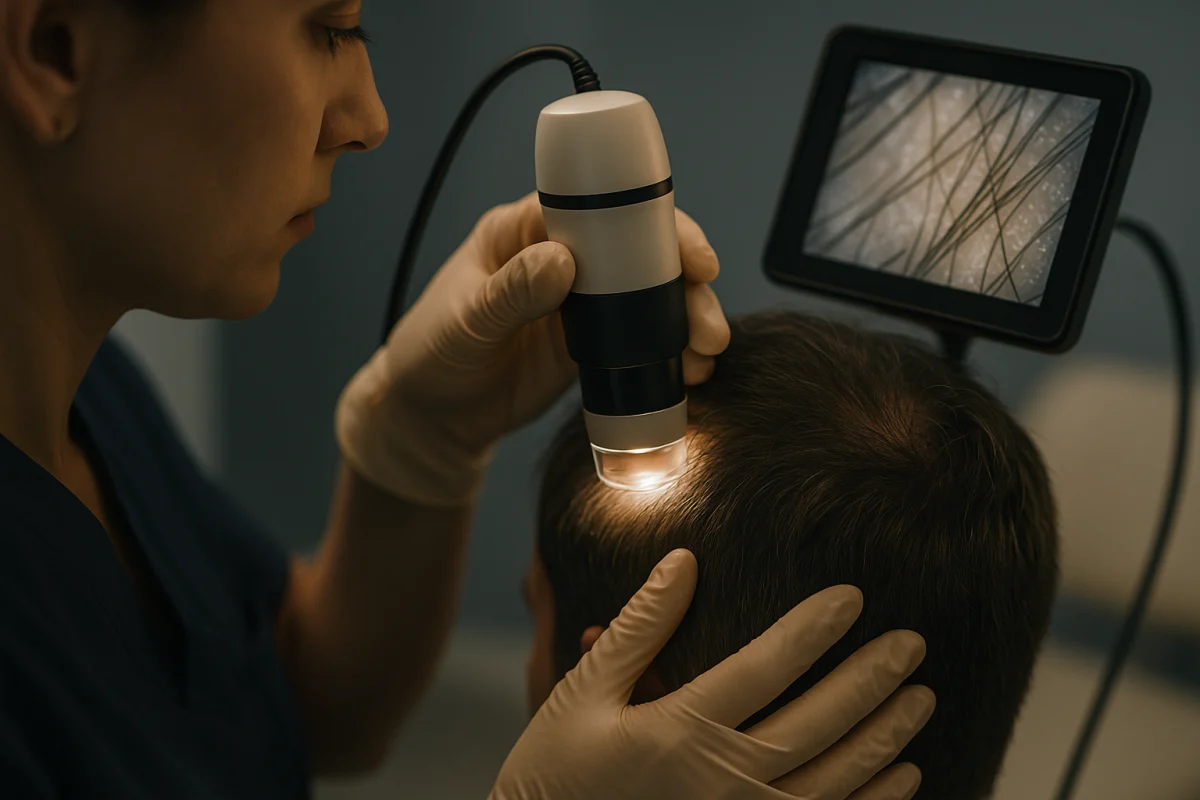
Trichoscopy is a non-invasive examination that magnifies the scalp and hair follicles. It can help doctors assess variation in hair shaft diameter, follicle density, signs of miniaturisation and possible scalp inflammation. This type of assessment is valuable because a treatment intended to support existing follicles may not be appropriate where follicles are permanently destroyed, where active inflammatory disease is present, or where sudden shedding has another cause.
A person with early thinning and many miniaturised but living follicles may have different options from a person with advanced hair loss and a limited donor area. Age alone does not decide suitability. The pattern and stability of hair loss, family history, scalp health, expectations and available donor hair all matter. Your doctor will confirm whether further medical assessment, non-surgical management, observation or surgical restoration is more appropriate.
06Safety, Regulation and Claims to Review Carefully
Cell-based medicine requires high standards because tissue collection, processing and administration can introduce risks if not managed correctly. Depending on the method, possible concerns may include pain, bruising, swelling, infection, scarring, inflammation, uneven cosmetic response or an unexpected reaction. The level of risk depends on the material used, whether it is minimally processed, the delivery method and the patient's own health factors.
Regulatory oversight differs between countries and can change as research develops. A treatment being available to purchase does not, by itself, mean it has been proven effective for pattern hair loss. Patients should be cautious if they are told that a procedure is completely risk-free, works for every degree of baldness, permanently stops all hair loss, or can replace a diagnosis. Such statements do not reflect the uncertainty that remains in this field.
Before consenting to any procedure, ask for written information about the treatment, expected benefit, known limitations, possible side effects, follow-up plan and total costs. It is reasonable to ask how results are assessed and whether the assessment is based on standardised photographs, hair counts, trichoscopy or patient opinion alone. Clear documentation helps patients make an informed decision and compare options fairly.
07Where Established Hair Restoration Fits Today
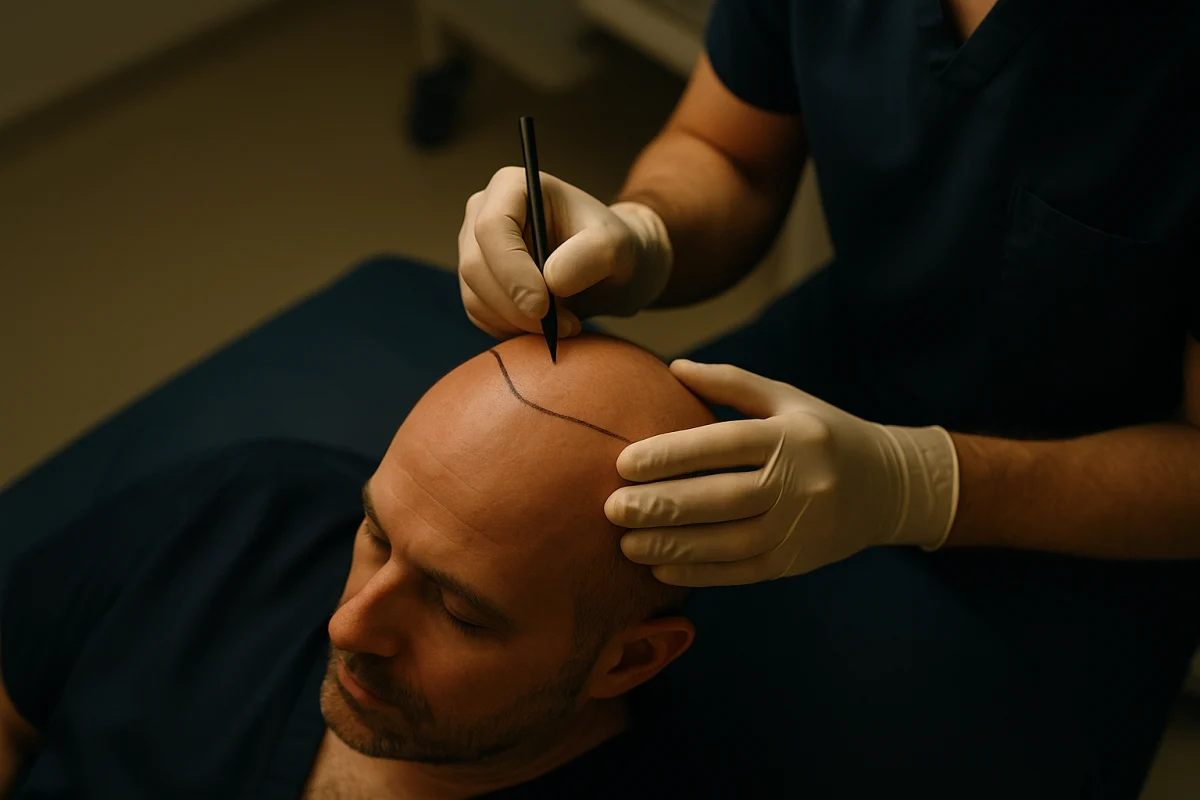
For some people with stable pattern hair loss, hair transplantation remains the more established method of improving coverage because it redistributes existing, permanent donor follicles to areas of thinning. It does not create new donor hair, and it does not necessarily stop future loss in untreated areas. Careful donor-area planning is therefore essential, particularly for younger patients or people whose thinning pattern may continue to change.
At Acibadem Hair Transplant Center in Istanbul, doctors assess patients before recommending a technique. Sapphire FUE and DHI are established transplant approaches used to place grafts in planned recipient areas. The clinic is licensed by the Turkish Ministry of Health and provides a free online hair analysis reviewed by doctors, with WhatsApp replies typically within around two hours. This assessment can help clarify whether a transplant discussion is appropriate rather than assuming a regenerative approach is the answer.
For transplant patients, the centre measures results using trichoscopic graft survival at month 12 and documents a 98% rate under a written guarantee. This measurement relates to the clinic's transplant process and should not be interpreted as evidence or a guarantee for stem-cell procedures. Needle-free anaesthesia is available, and international packages can include VIP transfer, a 4-star hotel, a care kit and 12 months of follow-up, depending on the selected plan.
08Making a Realistic Plan for Future Hair Growth
A thoughtful hair restoration plan starts with the right question: what is causing the hair loss, and what outcome is medically realistic? Some patients mainly want to slow visible thinning or improve hair quality, while others want greater coverage in a specific area. These goals may require different approaches. A doctor may also recommend monitoring changes over time before deciding on a procedure, especially if shedding is recent or the pattern is not yet stable.
When evaluating stem cell hair restoration, consider it an evolving area rather than a finished answer. In the future, better cell characterisation, controlled production methods and longer clinical trials may clarify which methods are useful and for whom. Until then, patients should look for precise explanations of what a treatment is intended to do and should avoid making decisions based only on celebrity stories, social media claims or unverified testimonials.
If you are considering any hair restoration treatment, prepare for your consultation by noting when thinning began, whether shedding changed suddenly, what treatments you have tried and what result you hope to achieve. Share clear photographs if you are using an online assessment service. A professional review can explain the likely limits of treatment, discuss established options and help you decide whether waiting for further research is more suitable than proceeding now.
09Frequently Asked Questions
Does stem cell hair restoration work?
Early research suggests that some cell-based approaches may influence hair growth signals or improve the appearance of existing miniaturised hair in selected patients. However, current evidence does not establish stem cell treatment as a predictable, standard cure for common pattern hair loss. Results may vary, and the exact protocol matters, so a doctor should explain the evidence for the specific treatment being considered.
How much does stem cell hair regeneration cost?
There is no single standard price because procedures marketed as regenerative or stem cell-based differ widely in the material used, preparation method, number of sessions, location and medical supervision. Cost should not be used as a measure of clinical quality or effectiveness. Ask for a written treatment plan that explains what is included, the follow-up arrangements and the evidence behind the proposed procedure.
What did Elon Musk use to regrow hair?
It is not possible to confirm a person's medical treatment from photographs, media reports or changes in appearance. Elon Musk has not provided a definitive public medical record that would allow a clinic to identify the exact method used. In general, visible improvement in hair density can result from several factors, including styling, medication, hair transplantation or other cosmetic choices.
How long does it take for stem cells to regrow hair?
There is no proven standard timeline because stem cell-based hair procedures are not yet standardised and study protocols differ. In early research, changes are often assessed over several months, but this does not mean every patient will see regrowth or that a result will last. Your doctor can explain the expected review schedule for any specific procedure and whether objective monitoring is planned.
This article is for general information only and is not a substitute for professional medical advice.
 06
06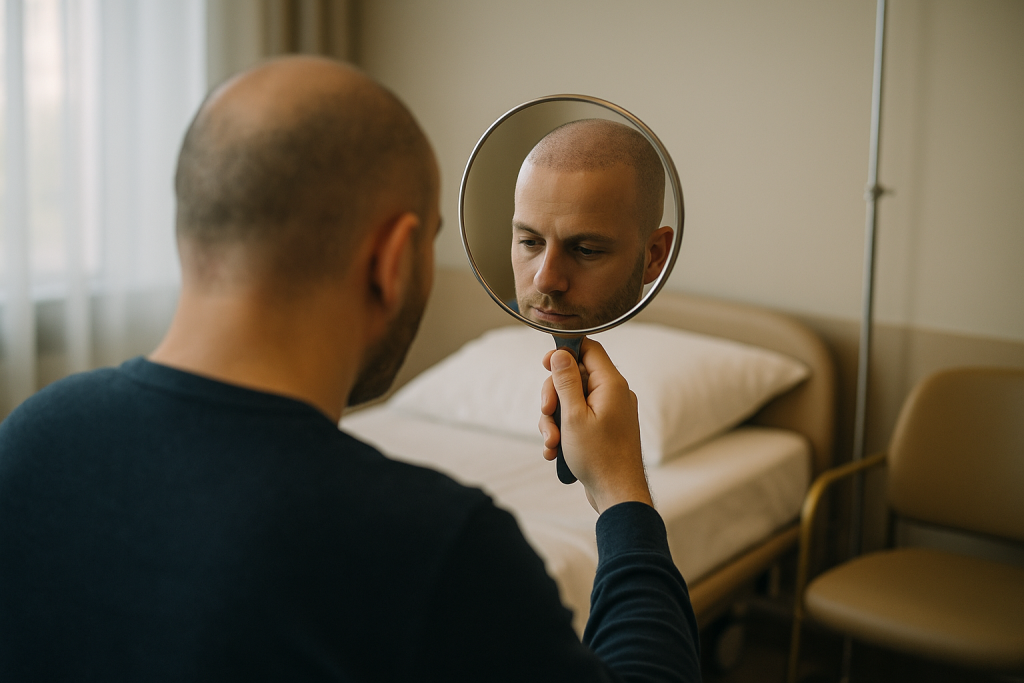 12
12